
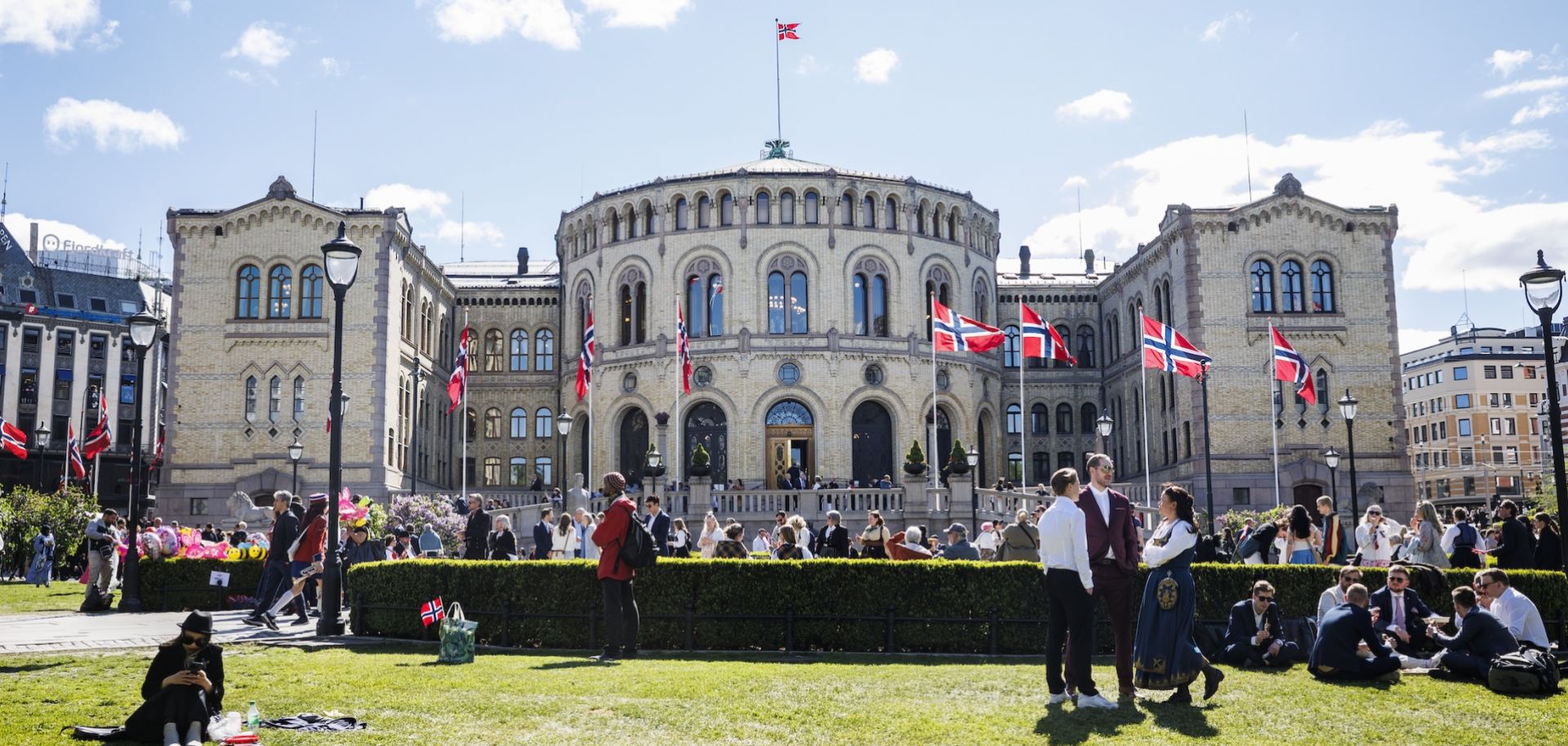
Editor's Note: For significant elections, RANE publishes a series of scenario analyses focused on different outcomes of major elections, describing how an election outcome might unfold with implications for each potential outcome. In 2025 so far, we have profiled Germany, Canada, Australia, Poland, South Korea, Japan and Guyana. We now profile Norway.
Norway will hold parliamentary elections on Sept. 8 following a period of political turbulence that saw the collapse of the Labour-Centre ruling coalition in January. The collapse left Labour Prime Minister Jonas Gahr Store at the head of a minority government. Minority governments are a recurring feature of Norway's political landscape, meaning coalition governments do not necessarily need to control an outright majority to take shape. There are three primary ways the election and post-election government formation process could play out.
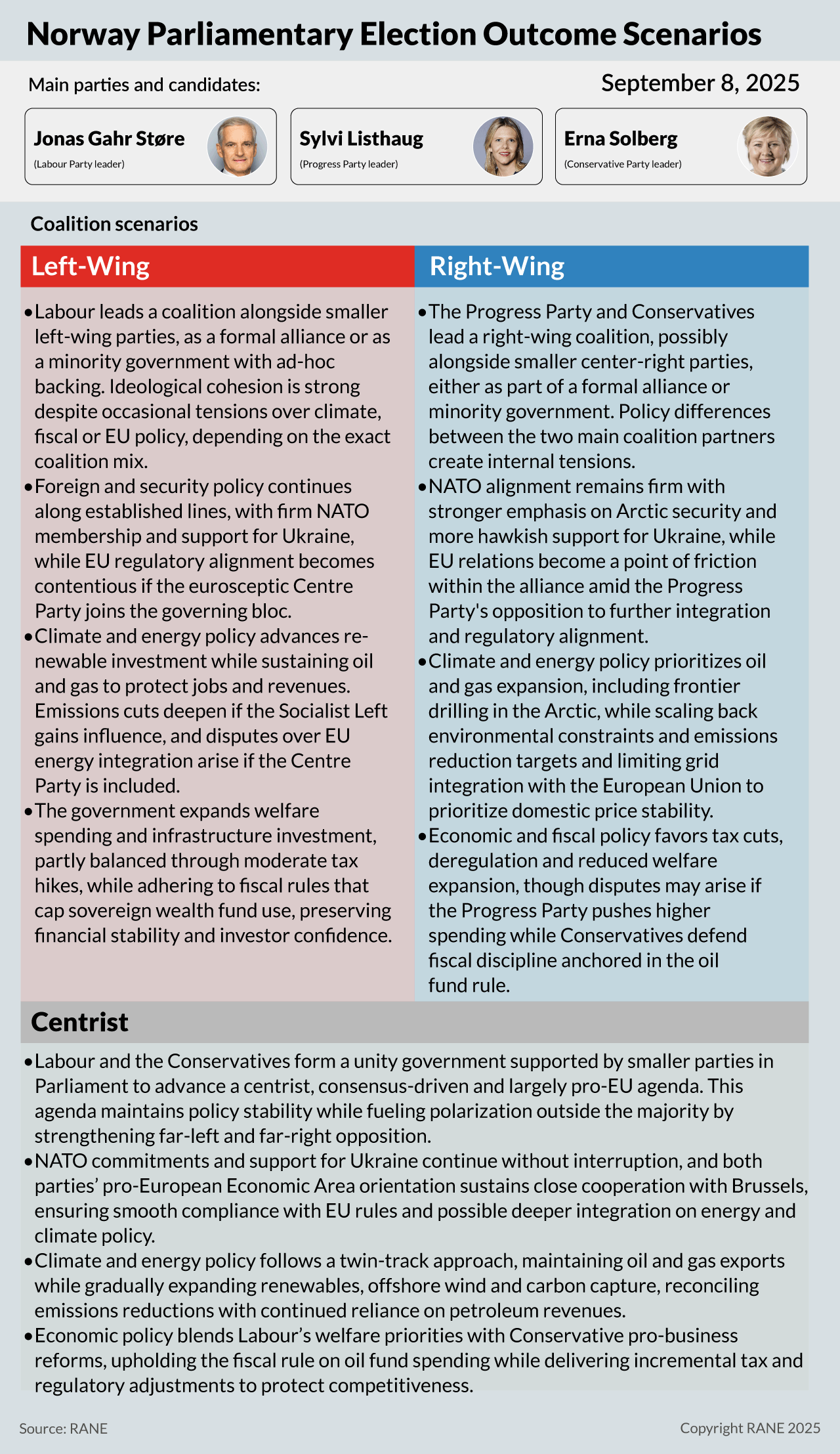
In an outcome that would be reminiscent of the previous coalition government, the center-left Labour Party leads a left-leaning coalition with smaller parties such as the Socialist Left, the Red Party, the Greens and potentially again the Centre Party. This outcome would reflect continued momentum for center-left policies in Norway that combine welfare expansion and an ambitious climate policy with a commitment to the country's long-standing fiscal discipline. Ideological alignment on fiscal policies and the energy transition would give such a government a degree of coherence, though past experience shows that differences over EU regulatory alignment could resurface if the Centre Party is part of the ruling coalition, as a disagreement over aligning with EU energy market rules was a primary driver of the Labour-Centre collapse in January. A left-wing government would preserve continuity in foreign and defense policies and relations with the European Union, while gradually tilting domestic priorities toward green investment and social spending.
A second outcome would see a right-wing coalition led by the populist right-wing Progress Party and the center-right Conservative Party taking office, potentially with support from smaller center-right parties like the Christian Democrats or the Liberals. A right-wing coalition would shift toward conservative economic policies, including tax cuts, deregulation and a more assertive push to expand domestic oil and gas production, including in frontier Arctic areas. This coalition would maintain strong NATO commitments and hawkish support for Ukraine while emphasizing sovereignty and deterrence in the High North, combining expanded resource exploitation there with a stronger defense posture. Relations with the European Union would likely become more contentious, as Progress resists deeper regulatory alignment on climate and energy even while Conservative and centrist allies seek to preserve collaboration under the European Economic Area (EEA) framework.
A final outcome envisions an unprecedented grand coalition between Labour and the Conservatives, backed by smaller centrist allies. This arrangement would deliver a large parliamentary majority and short-term policy stability but also reinforce polarization outside the centrist bloc, strengthening far-left and far-right narratives against the establishment. Internal ideological differences would also occasionally generate frictions that stall decision-making and create pockets of policy uncertainty. Such a government would blend Labour's focus on welfare and climate with Conservative priorities on business competitiveness. While both parties are traditionally supportive of EU membership, public skepticism and Norway's history of failed referendums make renewed accession efforts unlikely in the near term, with cooperation instead advancing incrementally within the European Education Area (EEA) framework. In foreign and defense policy, continuity prevails, with strong NATO commitments and support for Ukraine remaining central pillars.
A Left-Wing Coalition Government
Norway's Labour Party leads a left-wing government alongside smaller parties such as the Socialist Left, the Red Party and potentially the Centre Party, either as a formal coalition or as a minority administration reliant on ad hoc parliamentary backing. Amid broad policy continuity, the government pursues moderately more ambitious climate and social welfare initiatives, supported by ideological alignment among progressive coalition partners. Climate and energy policy advances ambitious renewable investment, with greater emphasis on offshore wind, carbon capture and efficiency measures, while at the same time sustaining oil and gas production to safeguard jobs, export revenues, growth and energy security. The policy balance shifts depending on the exact coalition mix, with deeper emissions cuts likely if the Socialist Left and/or the Greens secure a central role within the alliance, while disputes over EU energy market integration would reemerge if the Centre Party is included. Economic and fiscal policy continues to prioritize welfare and infrastructure investment, supported by modest tax hikes for high-income earners. Although left-wing parties push for stronger redistributive measures, the government remains committed to Norway's fiscal rule, which limits annual budget spending from the sovereign wealth fund to its long-term expected return, thereby safeguarding financial stability and investor confidence. The level of integration and regulatory alignment with the European Union emerges as a potential fault line should the coalition include the eurosceptic Centre Party, which has long opposed deeper EEA integration and brought down the previous Labour-led coalition over disagreements about compliance with EU energy market rules. On defense policy, continuity prevails, with strong support for NATO and Ukraine remaining central pillars of Norway's foreign and security policies.
Implications
- Expanded welfare, public services and infrastructure investment boost disposable income for low- and middle-income households, supporting consumer demand in sectors such as retail, housing and construction and creating opportunities for suppliers in health, transport and digital services.
- Higher taxation on top earners, alongside potential wealth or inheritance tax reforms, raises investor concerns about Norway's tax competitiveness. These measures create uncertainty for high-net-worth individuals and businesses, potentially prompting limited capital outflows toward lower-tax jurisdictions in the region.
- The government upholds the fiscal rule limiting oil fund withdrawals, safeguarding macroeconomic stability and sustaining investor confidence. This reassures international markets but narrows the scope of deficit-financed stimulus, constraining large-scale procurement and infrastructure expansion unless offset by higher borrowing or corresponding tax adjustments.
- Labour's push for closer EU energy market alignment creates opportunities for renewable developers and grid projects. Expanded interconnectors lower prices in northern Europe but slightly raise them in Norway. If the Centre Party joins the coalition, however, disputes over Brussels' role erode regulatory certainty, delaying renewables and transmission investment and creating long-term uncertainty that complicates planning for multinational energy and industrial companies.
- Petroleum exploration in already-open areas of the Norwegian shelf sustains output and reassures European buyers of stable supply, but stronger influence from the Socialist Left and Greens accelerates restrictions on licensing, confining activity to mature fields. This narrows investment horizons and weakens incentives for new upstream development, gradually diverting capital toward renewables, carbon capture and storage (CCS), and electrification projects supported by state funding.
- More ambitious emissions targets accelerate the electrification of offshore platforms and the expansion of CCS, boosting demand for grid infrastructure, engineering services and clean tech suppliers. At the same time, compliance costs erode profitability for operators and may trigger earlier decommissioning of mature assets, heightening risks for petroleum-focused contractors while shifting supply chain activity toward low-carbon projects.
- The presence of the Greens and/or the Socialist Left pushes more aggressive emissions reductions, accelerating demand for carbon capture, offshore wind and electric vehicle-charging infrastructure, benefiting green tech suppliers. Meanwhile, ongoing reliance on domestic oil and gas production continues to shield energy-intensive industries.
- Labour's ambitious offshore wind target of 30 GW by 2040 creates significant opportunities for developers, equipment suppliers and grid operators, particularly in floating wind technology. Expanded state funding and tenders support accelerated growth but risk crowding out private financing models, heightening investor concerns over profitability and creating market distortions, while slow permitting processes may further delay commercial scale-up and export potential.
- NATO membership and support for Ukraine remain central pillars of Norway's foreign and security policy, ensuring continuity in allied defense cooperation and alignment with U.S. priorities, particularly in the Arctic, where deterrence against Russia is increasingly central to regional planning. Support for Ukraine will sustain demand for aerospace, cyber defense and maritime security cooperation.
- Norway's active role in sanctions enforcement and military aid to Ukraine continues to expose government institutions, energy infrastructure and private companies to heightened risks of Russian cyber operations, disinformation campaigns and hybrid sabotage, keeping the burden on national security services and operational risks for companies linked to critical sectors.
A Right-Wing Coalition Government
The Progress Party and the Conservative Party lead a right-wing coalition government, potentially joined by smaller center-right parties such as the Christian Democrats or the Liberals, either as part of a formal alliance or as a minority government reliant on ad hoc parliamentary support. Such a government would likely have only a slim governing majority, and lingering policy differences between the two main coalition partners generate persistent internal tensions over fiscal discipline, immigration policy and relations with the European Union. In contrast with the left-wing parties that have been in power since 2021, the right-wing coalition implements tax cuts, reduces red tape (particularly in the energy, fisheries and construction sectors), and restrains expansion to stimulate private-sector growth, with a focus on lowering the burden on households and businesses while promoting competitiveness and limiting state intervention in the economy. Their climate and energy strategy prioritizes expanded oil and gas production, with policies to extend the life of mature fields, accelerate permitting, encourage frontier exploration — including in the Arctic — and relax environmental constraints. This energy strategy also sidelines EU-aligned grid interconnector projects and electricity market reforms to preserve domestic price stability, potentially straining ties with Brussels. More broadly, while Conservatives and smaller, center-right allies defend Norway's EEA commitments, the Progress Party resists deeper regulatory alignment with the European Union, demanding greater national control over energy and climate policy. On national security policy, the coalition maintains a strong commitment to NATO and support for Ukraine, increasing defense spending and regional deterrence coordination. The new government places an even stronger emphasis on Arctic security due to its focus on resource exploitation in the High North and implementing changes to the country's large sovereign wealth fund to allow investment in defense companies and support European rearmament efforts.
Implications
- Limited tax cuts and deregulation reduce the cost of doing business, boosting competitiveness in energy-intensive sectors. However, fiscal conservatives in both the Progress Party and Conservative Party limit the scope of new public spending, constraining infrastructure development, creating recurring disputes over budget priorities and generating uncertainty over long-term budget planning.
- Incremental adjustments to labor market regulations slightly ease cost pressures for employers, particularly in energy and construction, by loosening rules on temporary contracts, working hours and employer obligations. While core protections and collective bargaining frameworks remain intact, these targeted reforms contribute to improving flexibility, reducing overheads and stimulating investment in capital-intensive projects, making Norway more attractive to international companies and strengthening competitiveness in high-cost sectors.
- Restrained welfare expansion limits increases in unemployment, disability and parental benefits while tightening eligibility. This reduces fiscal pressures and lightens employer contributions, but also risks political backlash as the coalition is seen as undermining Norway's welfare model and social solidarity.
- The combination of labor market deregulation and restrained welfare expansion generates periodic tensions with trade unions, creating limited risks of business disruptions. Organized labor will likely resist reforms perceived as undermining collective protections and social benefits. Strikes, protests and negotiations may flare up particularly in energy and construction, where union density is strong, resulting in project delays and sporadic disruptions, though without threatening systemic stability.
- The sovereign wealth fund's mandate expands to allow defense sector investments, channeling significant capital toward European and U.S. defense manufacturers and benefiting companies supplying NATO militaries with advanced aerospace, maritime and cyber defense systems.
- The use of sovereign wealth fund resources and state-owned enterprises skews toward sustaining oil recovery and extending field lifespans, as Progress pushes back against large-scale green funding. While CCS may advance to cut emissions from the oil and gas sector, investment in offshore wind and other renewables slows, reducing opportunities for clean tech developers but extending predictability for oil service companies and supply chains tied to traditional hydrocarbons.
- Expanded exploration in the Arctic and Barents seas creates opportunities for oil field services, seismic surveyors, shipping and equipment suppliers, while ensuring long-term upstream activity. However, looser environmental rules and heightened opposition increase the likelihood of legal disputes and reputational risks, complicating financing and insurance decisions for multinationals exposed to ESG pressures and undermining Norway's credibility in international climate negotiations.
- The government prioritizes domestic energy affordability over EU interconnector projects, reducing electricity price volatility in Norway but limiting opportunities for grid operators and clean energy exporters. This stance strains relations with Brussels over market integration and climate directives, delaying cross-border energy cooperation and discouraging foreign renewable investment.
- A rollback of offshore platform electrification and resistance to aggressive climate targets shift policy toward petroleum expansion, lowering costs for operators and extending mature field lifespans. This sustains demand for upstream suppliers and contractors under a favorable tax regime, while CCS and hydrogen remain supported. However, reduced backing for renewables curtails grid infrastructure growth, leaving clean tech companies facing weaker demand, slower timelines and less certain profitability.
- A stronger emphasis on Arctic sovereignty and security drives expanded investment in maritime surveillance, air defense and Arctic-capable infrastructure, including ports, radar systems and patrol aircraft. This creates procurement opportunities for aerospace, naval and defense technology companies while reinforcing Norway's role as a front-line state in northern deterrence.
- Strong NATO commitments and participation in EU joint procurement initiatives anchor Norway firmly within allied defense frameworks. This alignment creates opportunities for U.S. and European defense joint ventures and technology partnerships.
- Hawkish, sustained support for Ukraine keeps Norway consistently exposed to Russian hybrid, cyber and information operations targeting its defense sector and critical infrastructure. These threats increase security costs, heighten vulnerability to periodic disruptions and reinforce the need for deeper coordination with NATO allies on resilience measures and deterrence.
- A populist tilt in immigration policy restricts the supply of low-cost labor, particularly in agriculture, construction, and logistics. This raises costs for labor-intensive industries and potentially slows and increases the costs of major infrastructure projects.
A Centrist Grand Coalition
The Labour and the Conservative parties form a grand coalition government, supported in parliament by smaller center-left and center-right parties to advance a centrist, consensus-driven agenda. Such a government, unprecedented at the national level in Norway, secures a large parliamentary majority and ensures political stability, despite fueling polarization outside the governing bloc by strengthening far-left and far-right narratives against an entrenched establishment. On economic policies, the coalition largely aligns around preserving the oil and gas sector as a pillar of Norway's economy and European energy security, while scaling up investment in offshore wind, renewables and carbon capture to reconcile emissions targets with continued hydrocarbon reliance and maintain credibility in international climate negotiations. However, frictions likely emerge over the pace of cutting emissions, with the Conservatives prioritizing competitiveness and Labour supporting a faster transition. The government's economic and fiscal policy blends Labour's defense of welfare and public services with Conservative demands for pro-business reforms, respecting the fiscal rule that governs withdrawals from the sovereign wealth fund to preserve financial stability, while introducing incremental changes in taxation and regulation to promote competitiveness and private investment. Sporadic tensions likely emerge over the balance between welfare spending and market-oriented reforms, with Labour resisting cuts to public provision and Conservatives pushing to expand private-sector roles in health and education. A Labour-Conservative unity government brings together the two parties traditionally most supportive of EU membership in Norway, though tangible, significant steps towards EU accession remain unlikely due to the country's history of referendum defeats, persistent public skepticism and the need for broad consensus. Instead, the government pursues incremental deepening of cooperation through the EEA framework, ensuring smooth compliance with EU rules and opening space for gradual deepening of integration on energy, climate and regulatory matters. On foreign and defense policy, the coalition maintains an unambiguous commitment to NATO and continued support for Ukraine.
Implications
- A broad parliamentary majority ensures political and policy stability and reassures investors, though entrenched polarization outside parliament strengthens far-left and far-right opposition, raising the prospect of a non-centrist government at the next election.
- Ideological differences within the coalition create periodic frictions, occasionally generating uncertainty that can delay decisions and complicate long-term business planning. This is most likely seen regarding welfare and taxation issues, where Labour prioritizes preserving public provision and Conservatives press for market-oriented reforms, as well as over the pace of the green transition, where divisions on emissions cuts and energy policy potentially slow decision-making.
- Both parties' pro-EEA stance sustains smooth compliance with EU regulations, benefiting firms reliant on stable regulatory frameworks, though any reopening of EU membership debates remains cautious and contingent on external shocks, limiting near-term prospects for substantial developments in this sense.
- The government upholds fiscal rules capping annual withdrawals from the sovereign wealth fund at 3%, which preserves macroeconomic stability and investor confidence in Norway's long-term fiscal discipline. Though Labour's welfare expansion plans and Conservative demands for tax relief periodically create budget frictions, the coalition manages them through incremental tax and regulatory adjustments that balance competitiveness with social priorities. This approach offers predictability for businesses, but also limits major reforms or transformative opportunities for investors and households.
- Labour's push for faster decarbonization collides with Conservative priorities of competitiveness, which creates a degree of regulatory uncertainty in sectors like shipping and manufacturing, delaying capital-intensive investments until a clear compromise emerges.
- Oil and gas licensing rounds are confined to mature parts of the Norwegian shelf. This provides stable upstream investment opportunities for oil and gas operators and suppliers, but limits long-term growth potential by excluding frontier regions such as Lofoten and the Arctic. International majors and domestic producers benefit from predictable rules, yet the lack of new acreage creates pressure to maximize enhanced recovery and efficiency gains from aging fields.
- Offshore wind ambitions advance with bipartisan support, targeting 30 GW by 2040 and creating major opportunities for developers, turbine manufacturers and grid suppliers. A hybrid funding model combining Labour's state-backed support with Conservative preferences for private financing ensures project continuity but risks disputes over cost allocation and profitability, which potentially dampen investor appetite and limit competitive participation in large-scale tenders.
- The government's commitment to decarbonizing the petroleum sector via electrification and CCS increases demand for engineering services, subsea contractors and grid upgrades, while giving oil operators a pathway to extend production under stricter climate rules.
- The coalition mobilizes sovereign wealth fund returns and state-owned enterprise capacity to support these technologies, creating long-term revenue opportunities for energy service providers. But recurring disputes over the balance of state and private financing still risk slowing implementation and complicating business planning.
- Incremental alignment with EU energy and climate directives provides regulatory predictability for renewables, transmission and industrial energy users, safeguarding Norway's access to European markets. However, compliance raises adaptation and reporting costs for domestic producers, while deeper integration through grid connections and market reforms also modestly raises Norwegian electricity prices. This adds pressure on energy-intensive industries, even as investors in renewables and transmission benefit from expanded opportunities.
- Norway maintains firm commitments to NATO and European defense integration, ensuring continuity in defense policy and allied cooperation. Procurement expands steadily in aerospace, maritime and cyber capabilities, with joint programs in patrol aircraft, submarine upgrades and Arctic surveillance creating openings for transatlantic and European defense contractors. Growth remains largely incremental, reflecting the coalition's preference for stable, long-term planning over sharp spending surges compared with other possible coalition scenarios.
- Norway's sustained support for Ukraine and active NATO role keeps it consistently exposed to Russian hybrid activity, including disinformation campaigns, cyberattacks on critical infrastructure and GPS jamming in the High North, raising operational risks for companies in strategic industries like energy and defense.
