
The growing prospect of Donald Trump re-entering the White House next year is fueling concerns in Europe that the United States may soon scale back its security commitments to the region. Yet a flurry of defense agreements recently signed by the United States in the Nordic-Baltic region suggests not a withdrawal but rather a transformation of Washington's strategic engagement in the region in the coming years, regardless of who wins the U.S. presidential election in November. Three separate defense agreements with Sweden, Finland and Denmark — which, together, grant U.S. troops and weapons access to 35 new military bases across the Baltic and the Arctic regions — offer a glimpse of NATO's transforming deterrence and collective security approach in the region in the wake of Russia's invasion of Ukraine, and of the role the United States will play in this transformation.
Symbolically, the agreements underscore Sweden and Finland's departure from their traditional stance of non-alignment, which became explicit with their 2022 NATO membership bid and that is now being operationalized through permits to the U.S. to deploy troops and develop military infrastructure on their territories, sometimes in close proximity to Russia's border. Conceptually, the agreements strengthen the view of the broader Northern European region as a fully interconnected and coherent security space stretching the Baltic Sea, the North Sea and the European Arctic, underscoring the region's increasingly central role as the main stage of confrontation between NATO and Russia. In practice, the deals will enable the United States and its regional allies to bolster NATO's deterrence and defense against the threat of a potential Russian offensive in Northern Europe by addressing existing gaps and shoring up tripwire forces.
But most importantly, the agreements underscore a strategic pivot for the region. They will help create the conditions for the alliance to move toward a deterrence-by-denial strategy in Northern Europe, enhancing security against Russia's looming threat in the short term while paving the way for a more self-reliant European defense mechanism in the longer term. While addressing immediate security concerns, this strategy also anticipates a future where Northern European countries assume greater responsibility in their own defense, eventually enabling the United States to shift its focus toward the Indo-Pacific and the strategic challenges posed by a rising China.
The Significance of New U.S. Defense Cooperation Agreements
In December 2023, the United States signed three separate defense cooperation agreements (DCAs) with Sweden, Finland and Denmark, solidifying military ties with the three Nordic countries. The same month, Washington also renovated bilateral defense cooperation roadmaps with Estonia, Latvia and Lithuania, reiterating commitments to the three Baltic countries' defense. The agreements with Sweden, Finland and Denmark will allow U.S. troops to operate in all three countries for training missions, establish a permanent logistical presence, construct new military infrastructure, and fast-track deployment for personnel and equipment in case of emergency.
Sweden is giving U.S. forces access to 17 of its bases and facilities, including two air bases in the Arctic Circle and one base in the strategically important island of Gotland in the middle of the Baltic Sea. Finland granted U.S. troops access to 15 military bases and facilities across the country, including a key southern naval base, four air bases, a storage area alongside a railway that leads to the Russian border, and five bases in Lapland, north of the Arctic Circle. The agreement with Denmark, while not including the autonomous territories of Greenland and the Faroe Islands, gives U.S. troops access to, among others, the bases of Karup, Skrydstrup and Aalborg, at the entrance of the Baltic Sea.
Meanwhile, the update of existing agreements with Estonia, Latvia and Lithuania deepens U.S. defense cooperation with the three Baltic states in areas such as air and missile defense, cyber and irregular warfare, international military operations, infrastructure development and training while stating the intention to provide ''heel-to-toe persistent rotational presence of U.S. forces'' in each of the countries. The six agreements follow existing ones the United States had previously signed with Norway and Iceland, which means Washington now has legal frameworks to deploy troops across all Northern European countries.
Northern Europe's Changing Strategic Outlook
These deals complement an existing web of regional defense cooperation agreements, a history of close coordination and deep operational integration of regional countries' armed forces, and an ongoing shift in NATO's deterrence and defense approach in Northern Europe. Since Russia annexed Crimea in 2014, which revived the threat of Russian military aggression in Europe, Nordic countries have been reorienting the focus of their defense cooperation from decreasing military-related costs to actively increasing their joint military capabilities. Sweden and Finland, meanwhile, have started to exercise and train more closely with NATO. Russia's full-scale invasion of Ukraine in 2022 then removed the last remaining barriers to defense cooperation in the region, with Finland (and soon Sweden) abandoning decades of formal neutrality to join NATO and Denmark, ending 30 years of opting out of the European Union's Common Security and Defense Policy.
Why the Baltic Sea Matters
The Baltic Sea is a key strategic location for both NATO and Russia. Its shipping lanes, natural resources, and critical energy and communication infrastructure make it a hub for economic activity. The Baltic Sea also serves as a crucial maritime route, providing access to the North Sea, the European Arctic and the Atlantic Ocean, crucial for both military and economic reasons. But its complex geography as a small, shallow and enclosed sea, with narrow chokepoints, irregular coastlines and very low levels of salinity, makes it particularly difficult to defend and a potentially volatile theater for military activities, as any military movement would likely occur near NATO or Russian forces.
Meanwhile, Northern Europe and particularly the Baltic Sea region began acquiring growing attention within NATO, with the alliance deploying in 2017 a ''tripwire'' enhanced forward presence (eFP) consisting of four multinational battalion-size battlegroups in the region as part of a broader strategy defined as ''deterrence by reinforcement.'' But Russia's full-scale invasion of Ukraine in February 2022 called this approach into question, and NATO began moving toward a significantly more ambitious strategy of ''deterrence by denial'' in the region. In other words, the alliance's approach to deterring potential Russian aggression in the Baltic is evolving from one based on deploying reinforcements to repel an occupying aggressor from allied territory to one in which the alliance would have the capacity to deny any attack on allied territory in the first place. Besides significantly scaling up the battlegroups, this shift requires ''credible rapidly available reinforcements, prepositioned equipment, and enhanced command and control'' per NATO's 2022 Madrid Summit Declaration.
Against this backdrop, the flurry of bilateral defense agreements signed by the United States should be seen as a necessary step in NATO's broader evolving posture and military strategy in the region. Once ratified by the respective national parliaments, the agreements will give Washington the option to increase its military presence across all domains throughout the Nordic-Baltic region, thus enhancing the alliance's preparedness for early response, intelligence and deterrence capabilities.
Defense and Deterrence Against Conventional Threats
The nature of the threat that NATO countries in the region currently face is dramatically different from the threat they faced during the Cold War; Russia's Baltic Fleet, significantly reduced in size and capability, now poses limited conventional naval threats. However, Russia maintains important conventional and non-conventional capabilities that could threaten regional stability, including anti-access/area-denial capabilities from its Kaliningrad exclave, de-facto control of Belarus and significant undersea capabilities.
NATO, on the other hand, still has key vulnerabilities in responding to such threats, such as limited undersea domain awareness, military mobility and infrastructural challenges that limit the capacity to respond quickly in a crisis situation, and a lack of hardened prepositioned conventional military storage facilities with good connections to rail, road and maritime transportation routes (like the ones the United States has developed in Norway). The three nearly identical DCAs signed with Sweden, Finland and Denmark include provisions aimed at addressing precisely these challenges.
While, with time, Nordic and Baltic countries are expected to gain increasing responsibilities in defending the region and deterring possible Russian aggressions, the agreements show how the United States will remain the ultimate security guarantor and (alongside the United Kingdom and Germany) the main security provider in the region for the foreseeable future, despite Washington increasingly seeing Europe as a secondary theater in comparison to the Indo-Pacific.
Protecting Critical Infrastructure
Besides bolstering defense and deterrence capabilities against conventional threats, efforts to strengthen NATO's northern frontier also requires improving protection for critical maritime and undersea infrastructure against unconventional threats. This is particularly the case as Finland and soon Sweden's NATO accession will most likely see some form of reprisal from Russia besides rebuilding and repositioning its conventional forces accordingly, which might include covert operations aimed at critical infrastructure in the Baltic Sea and the North Sea. In fact, evidence shows Russia is already actively mapping undersea infrastructure in both seas.
Natural gas pipelines, power interconnectors, data cables, liquified natural gas (LNG) floating installations and offshore wind farms have all become prime targets, particularly as Europe transitions away from Russian energy supplies. Recent incidents affecting the Nord Stream gas pipelines and the Baltic connector data cables in the Baltic Sea highlighted the vulnerability of subsea infrastructure to potential sabotage by hostile actors. Russia wasn't behind either of these incidents (one was sabotage likely perpetrated by Ukrainian forces, and the other was likely an incident caused by a Chinese vessel dragging an anchor across the seafloor). However, Russia does have both the interest and the capability to carry out similar operations in the Baltic Sea.
Despite its greater distance from the frontline, the North Sea is also increasingly exposed to these threats given the gas pipeline network linking Norway (now Europe's largest gas supplier) to the rest of the Continent and the planned scale-up of offshore wind installations in the area that will effectively work as a key piece of many European countries' energy transition strategies. Moreover, Norway is now moving to increase oil and gas extraction activities in the Barents Sea, in the Arctic region, over the next few years as well as to begin deepsea mining activities on a commercial scale, including on the Arctic seabed.
NATO acknowledges the threat, but still lacks a defined strategy for deterrence in this sense as well as sufficient measures to protect critical energy and communication infrastructure. Bolstering surveillance in the region and enhancing immediate incident response and recovery capabilities – both of which U.S. DCAs will contribute to – is a key step in the process.
The Arctic Connection
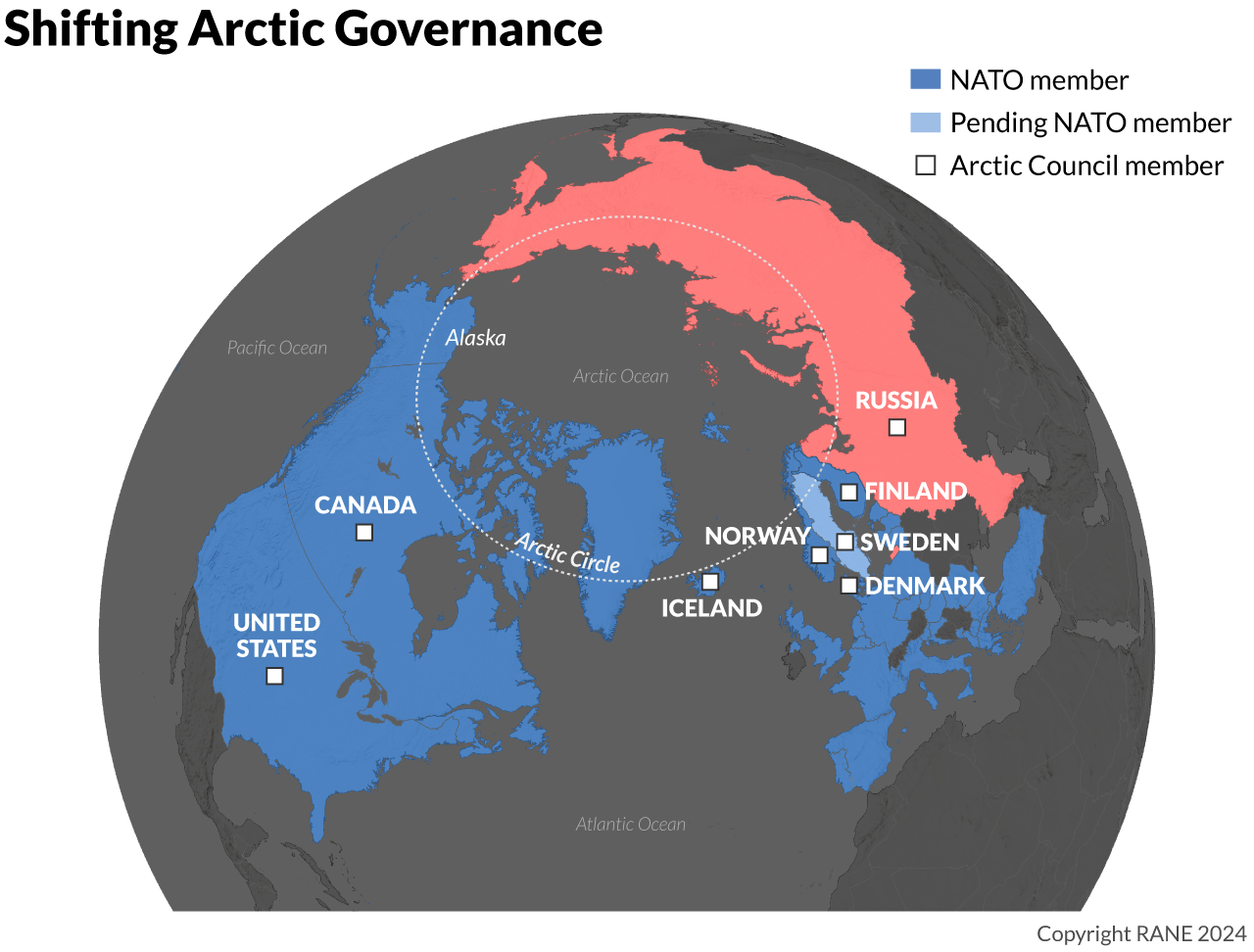
Finally, the geography of the DCAs — with many of the bases open to U.S. troops located across the Arctic Circle — indicates how the perception of Northern Europe as a broader strategic area comprising the Baltic Sea, the North Sea and the Arctic is now taking hold in NATO's northern strategy with Finland and Sweden's accession to the alliance. While the security situations in each of these areas of Northern Europe all have different dynamics, they are also deeply interconnected: the territories (and thus the respective security concerns) of NATO's Nordic members stretch across all three regions, with an eventual conflict in the Baltic Sea inevitably escalating to the North Sea and the Arctic waters.
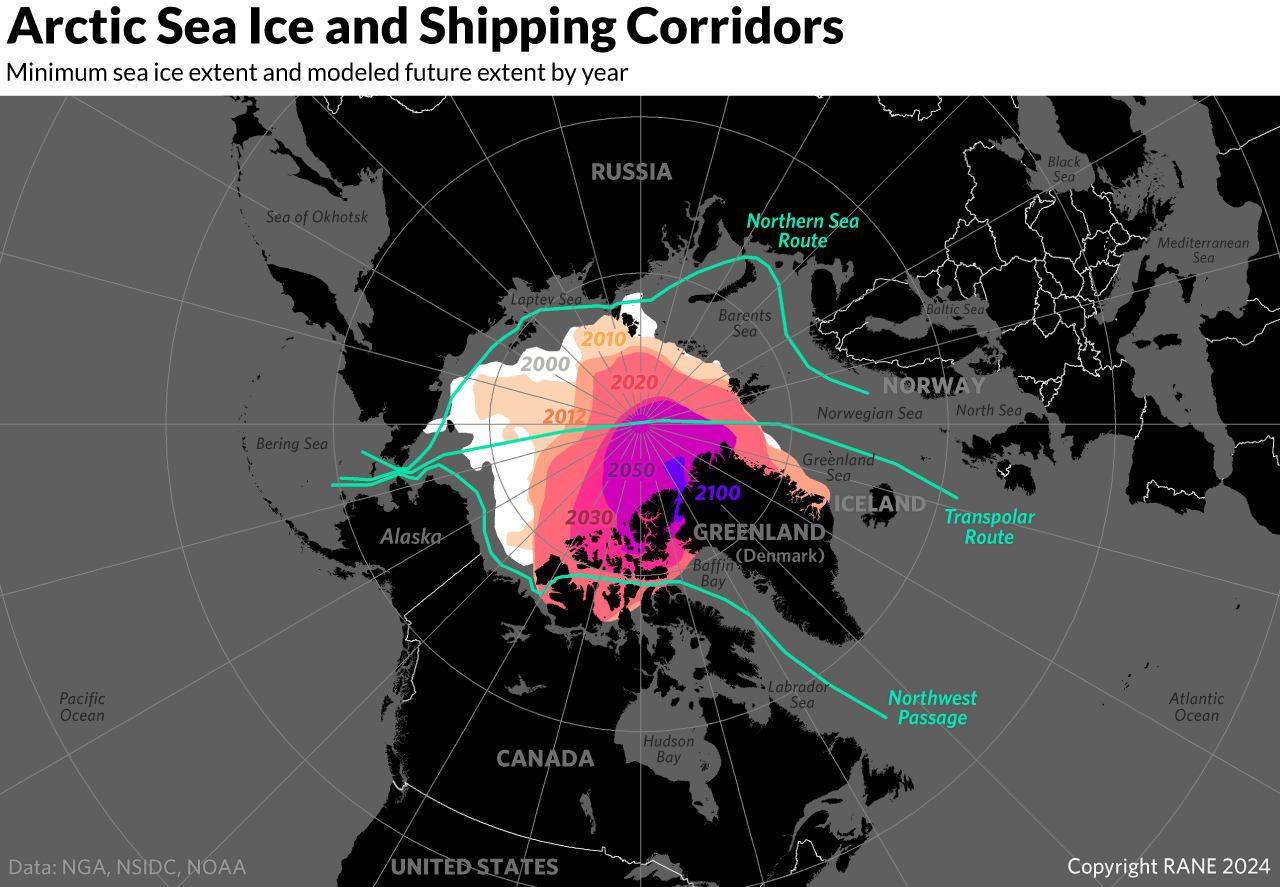
Pursuing NATO's new deterrence-by-denial strategy in the region thus requires considering the whole of Northern Europe as a single security space. The addition of Sweden and Finland is accelerating this strategic shift, as the alliance will be able to capitalize on the two countries' geography, expertise and existing defense cooperation across the Baltic and the Arctic to bolster regional defenses and deterrence. This will also enable NATO to take a more robust role in the European Arctic (where the alliance has so far lacked a clear strategic approach) and increase its influence over an increasingly strategically relevant area where thawing ice is both unlocking access to new natural resources and transit routes and exposing new vulnerabilities for an ever more aggressive Russia.
Looking Ahead
While questions about the United States' commitment to Europe's security are re-surfacing in light of Trump's potential return to the White House, the recent wave of U.S. defense agreements in the region signals Washington's intent to strengthen NATO's defense and deterrence capabilities in Northern Europe as the alliance moves toward a deterrence-by-denial strategy. A growing U.S. military footprint in the region would cement the short-term security of NATO's northern flank against what is considered the alliance's most immediate threat, Russia. At the same time, it would also help forge a deterrence architecture that would eventually enable Washington to delegate more responsibility to its European allies and refocus its resources and attention on containing China's rise in the Indo-Pacific, which the United States sees as the most pressing threat to its strategic interests.
In fact, besides being necessary for deterrence purposes, an increased U.S. presence in Europe would encourage the development of regional partners' capabilities that, in the medium term, would enable the greater burden-sharing among NATO allies that Trump himself has been demanding for years. Europe is not yet in a position to defend itself in a high-intensity conflict against a major adversary like Russia without the presence and leadership of U.S. troops, and building a robust deterrence-by-denial structure in the region would precisely help avoid such a scenario. By contrast, a premature U.S. departure from the Continent could undermine the development of European forces that would eventually free Washington to concentrate its resources elsewhere. A stronger commitment now is what would allow an eventual U.S. disengagement later on.
These considerations will incentivize Washington to remain committed to the region's security even under a potential second Trump presidency, likely while putting greater emphasis on European allies increasing their contributions compared with the current administration. Moving forward, the United States will thus remain the ultimate security guarantor for the region with its nuclear deterrence while providing key support in certain domains in case of crisis (such as air power, long-range fires and intelligence, surveillance and reconnaissance). However, regional countries will provide a higher contribution of both capabilities and leadership in deterring and potentially defending against Russian military aggression.
