
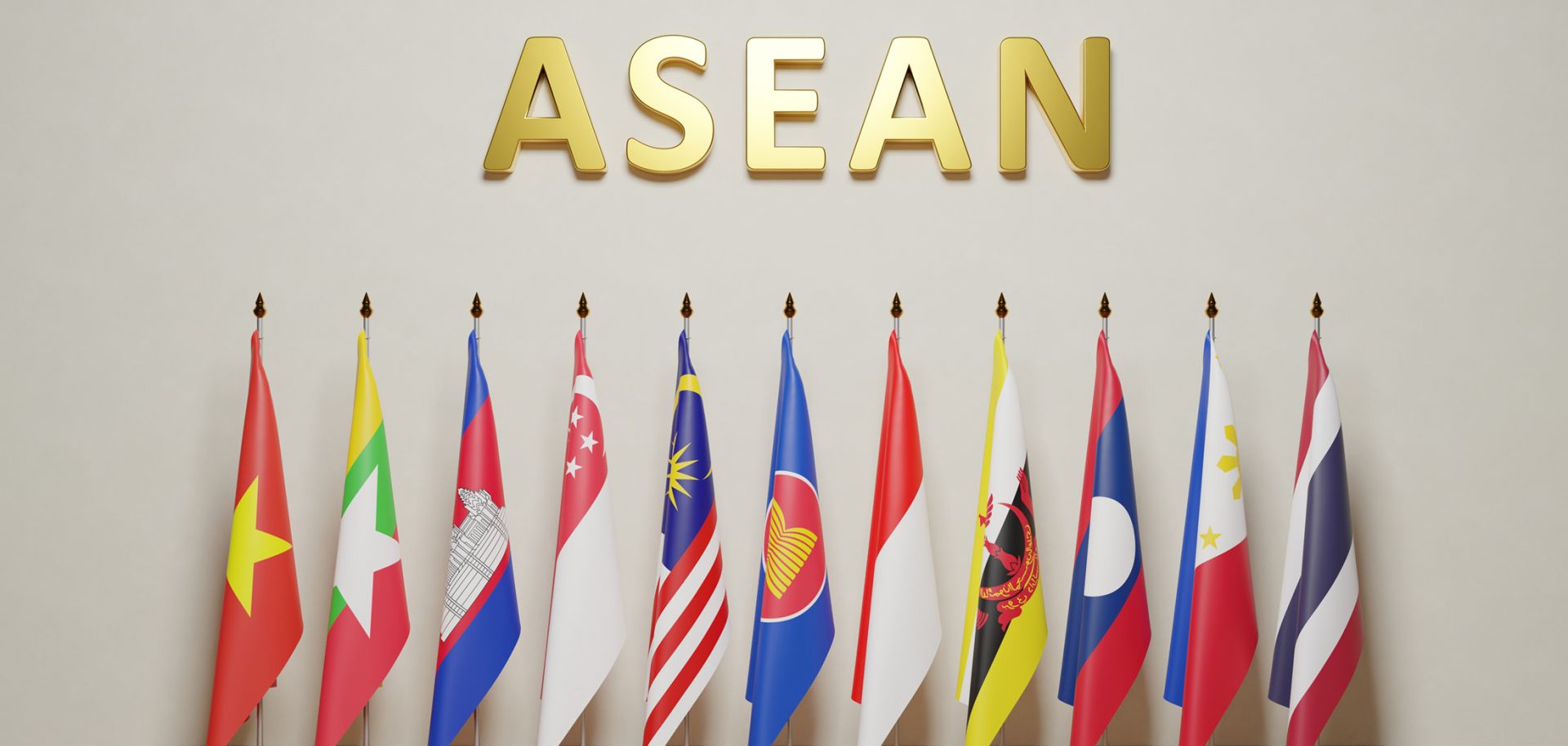
Malaysia's 2025 ASEAN chairmanship will be pivotal in navigating intensifying U.S.-China competition and intra-ASEAN divisions, balancing regional security issues while mitigating risks from U.S. trade restrictions, potential Chinese economic coercion, and supply chain realignments that threaten ASEAN's cohesion and strategic autonomy. Malaysia's term as rotating chair of the Association of Southeast Asian Nations, or ASEAN, began on Jan. 1 in a year marked by intensifying geopolitical competition and economic uncertainty. Prime Minister Anwar Ibrahim's government has signaled that its ASEAN chairmanship will prioritize reinforcing the bloc's centrality doctrine — the principle that ASEAN should emerge as its own geopolitical pole in the evolving multipolar world and that it, rather than external powers, should lead regional decisionmaking and maintain unity in addressing geopolitical challenges, advance regional economic resilience and manage external pressures on the bloc's neutrality. Major agenda items include drafting the ASEAN Community Vision 2045, addressing escalating South China Sea tensions, mitigating intra-ASEAN economic fragmentation, and responding to the Myanmar crisis, the latter of which has severely undermined ASEAN's credibility as a mediator. The timing of Malaysia's chairmanship coincides with major global shifts, including the start of Donald Trump's second presidency in the United States, heightened U.S. competition with China, and leadership changes within key ASEAN member states. These developments will test Malaysia's ability to steer the regional bloc through what could be one of ASEAN's most consequential years in recent history.
- The ASEAN Community Vision 2045 is the long-term roadmap for the bloc's integration and global role, focusing on economic resilience, digital connectivity, sustainability and security cooperation.
- Malaysia's chairmanship comes amid a wave of leadership transitions across ASEAN, with a new president in Indonesia, new prime ministers in Thailand and Singapore, and Cambodia's leadership reshuffle in 2023. Vietnam and Laos are also preparing for leadership changes ahead of their respective 2026 National Congresses. As newer leaders are typically focused on domestic matters and less assertive in shaping regional affairs (particularly but not exclusively Indonesian President Prabowo Subianto, given Indonesia's traditional de facto leadership role in the bloc), this could grant Malaysia more influence in shaping ASEAN's agenda, though it could also complicate decision-making.
- The ASEAN chair rotates between the 10 member states each year. The chair's responsibilities include setting the regional agenda, facilitating high-level meetings and coordinating joint initiatives among member states. However, the chair's powers are limited. ASEAN makes its decisions based on the principles of consensus and non-interference, meaning all 10 member states must agree before a decision is adopted. This means the chair cannot unilaterally drive policy but must instead act as a facilitator to build consensus among diverse member states with differing interests. ASEAN also does not have a formal voting mechanism; decisions are instead made through negotiations and mutual agreement and presented in the form of joint statements, declarations or communiques. The chair can shape the agenda and influence discussions but lacks enforcement power if a consensus cannot be reached.
Malaysia faces a far more complex geopolitical landscape than during its last tenure as chair, with ASEAN credibility as a sovereign strategic bloc under increasing strain. Malaysia's last ASEAN chairmanship in 2015 focused on economic integration. This culminated in the launch of the ASEAN Economic Community, or AEC, which aims to create a single market among the bloc's members. However, the geopolitical landscape in 2025 is significantly more complicated, with ASEAN under pressure — both from the United States and its allies via diplomatic channels, and internally via member state actions and concerns over the bloc's credibility — to adopt a more cohesive stance on regional security issues, especially the open-ended conflict in Myanmar and China's increasingly assertive behavior in the South China Sea. As both a claimant state and the current ASEAN-China relations coordinator, Malaysia will play a central role in overseeing South China Sea code of conduct negotiations in 2025, with shifting interests in Beijing offering the best chance of an agreement being reached in decades. Internal divisions on how to deal with China persist, with the Philippines and Vietnam taking an increasingly confrontational stance toward Beijing, while Cambodia and Laos maintain a more accommodating approach. Beyond maritime disputes, Malaysia will also be burdened with addressing the economic fallout from shifting global trade policies, particularly U.S. tariffs and restrictions that will impact ASEAN economies.
- The AEC created the framework for a single ASEAN market and production base, facilitating the free flow of goods, services, investment, skilled labor and capital among the bloc's 10 member states. While progress has been made in tariff reductions and trade facilitation, progress toward full integration has been slow due to non-tariff barriers, regulatory inconsistencies, contradicting priorities and varying levels of economic development among ASEAN states.
- Malaysia is among the most vocal critics of Myanmar's military government and has called for stronger institutional measures, including engaging directly with groups in the country opposed to the junta. By contrast, Thailand has pursued backchannel diplomacy, hosting informal talks with Myanmar's junta and inviting ASEAN and non-ASEAN stakeholders, at times without ASEAN consensus. Cambodia and Laos, during their respective 2022 and 2024 chairmanships, were also more accommodating toward the junta, favoring engagement over punitive measures. This divergence has weakened ASEAN's Five-Point Consensus peace plan for the ongoing Myanmar conflict, which the junta has largely ignored, further eroding the bloc's credibility as a regional mediator.
Code of Conduct Negotiations in the South China Sea
During its ASEAN chairmanship, Malaysia will seek to advance long-stalled negotiations on a legally binding code of conduct in the South China Sea, which would govern claimants' behavior in the waterway. While ASEAN has aimed to finalize the code of conduct by 2026, the issue has been in stasis for decades due to China's preference for non-binding guidelines and disputes among ASEAN claimant states (Philippines, Vietnam, Malaysia, Brunei) over territorial rights and enforcement mechanisms. However, expectations are building in ASEAN capitals that the code of conduct will make progress this year. The earliest possible signing date would be at a China-ASEAN summit in July. Though this early date remains unlikely, strategic realities mean that it is becoming more likely, with a more realistic target of 2026 to complete it. China has already solidified its position in the South China Sea through extensive land reclamation and military infrastructure, reducing the impetus to delay resolution. At the same time, Vietnam is now the chief island builder, expanding its reclamation and militarization efforts, which a code of conduct would theoretically significantly slow or halt. China could also attempt to use the code of conduct's legal mechanism to box out outside powers like the United States, Japan and Australia.
During its ASEAN chairmanship in 2025, Malaysia will focus on deepening the bloc's economic integration and supply chain coordination. Malaysia will accelerate the next phase of the AEC by enhancing supply chain connectivity, reducing intra-ASEAN non-tariff barriers and strengthening financial integration. Key priorities include investment facilitation, digital transformation and sustainable economic policies, aligning with ASEAN Community Vision 2045 and the ASEAN Digital Economy Framework Agreement, or DEFA. Building on Laos' 2024 efforts, Malaysia aims to finalize DEFA by the end of 2025 per the framework's 2023 guidelines. This is achievable but faces constraints largely inherent in the widely varying digital infrastructure readiness of the member countries. However, at least some progress will likely be made toward harmonizing digital trade regulations, boosting e-commerce and improving infrastructure, with the ultimate aim of adding $2 trillion to ASEAN's economy by 2030. Malaysia will also push for deeper supply chain integration to leverage the growing number of companies adopting so-called ''China Plus One'' strategies, which involve reducing reliance on China by diversifying production into ASEAN countries like Malaysia. To capitalize on this shift and position ASEAN as a top investment hub amid global trade shifts, Malaysia will also seek to attract investment in key and emerging industries, such as semiconductors and electric vehicle manufacturing.
However, the Trump administration's proposed tariffs — including reciprocal tariffs and a 25% levy on automobiles, semiconductors and pharmaceuticals — pose additional risks to ASEAN. U.S. tariffs on firms with Chinese exposure threaten intra-ASEAN trade by disrupting regional supply chains, as ASEAN economies are deeply integrated with China's manufacturing networks. At the same time, Malaysia, Thailand and Vietnam — which run trade surpluses with the United States and are growing players in semiconductor and electronics supply chains — face high risk of disruptions in their exports to the United States. Malaysia, which has the most mature semiconductor sector in the region after Singapore, is particularly at risk. Singapore, for its part, has seen some of its entities implicated in so-called ''Singapore washing,'' or the illicit transshipment of high-end chips to China, raising concerns about regulatory gaps and pressure from Washington. Indonesia and Thailand's growing automotive industries are also vulnerable. Suspicions in Washington that ASEAN supply chains are being used to transship tariffed Chinese goods also raise the likelihood of blanket tariffs being enforced on ASEAN countries (i.e., no carveouts or exemptions), as well as new tariffs materializing later in Trump's term on certain ASEAN members found to be transshipping tariffed Chinese goods. Meanwhile, U.S. trade restrictions on China will have secondary impacts on ASEAN economies by disrupting supply chains, shifting investment flows, restricting tech access, intensifying competition from Chinese exports and complicating regional economic diplomacy. While Malaysia (and Singapore) will benefit from increased foreign investment, other less diversified members with less developed infrastructure such as Indonesia, Thailand and Vietnam risk economic fragmentation if the United States enforces new trade barriers on firms with Chinese exposure, potentially restricting market access, diverting investment flows and deepening regional divides between U.S.- and China-linked supply chains. Chinese retaliatory tariffs on U.S. goods further complicate ASEAN's economic trajectory and stratify supply chains by pushing U.S. firms to further diversify supply chains into ASEAN while prompting China to deepen its trade ties with more China-aligned ASEAN members, which would exacerbate the divide between economies integrating with the United States and those predominantly in China's orbit. As such, Malaysia's chairmanship will prioritize economic resilience through DEFA and supply chain coordination while navigating tariff risks that could strain ASEAN's economic cohesion and fragment regional integration efforts.
- Post-pandemic economic recovery will remain a key agenda item, which has been uneven in ASEAN, with tourism-dependent economies like Thailand and Cambodia still struggling to regain pre-COVID stability.
- On Feb. 20, the Malaysian government announced that it is seeking to hold talks with the United States on Trump's proposed 25% tariffs on automobiles, semiconductors and pharmaceuticals. Malaysia also announced plans to host a joint summit in May 2025 with China, ASEAN and the Gulf Cooperation Council.
- If U.S. restrictions target Chinese-affiliated firms operating in ASEAN, trade flows within the bloc would be affected, particularly for industries like electronics, semiconductors and automotives that rely on cross-border production. This could force ASEAN countries to individually pursue supply chain adjustments, such as by reducing dependence on China-linked production or seeking exemptions, potentially fragmenting regional trade dynamics.
Should Malaysia fail to unify the bloc on security, it will risk ASEAN's credibility, regional stability and ultimately its broader relevance in the evolving multipolar world order. Malaysia will aim to advance efforts to assert the bloc's strategic autonomy while avoiding overt alignment with either the United States or China. However, the South China Sea remains a flashpoint, and attempts to push for a unified ASEAN response risk exposing further divisions. If Malaysia is perceived as leaning too closely toward China, it risks losing trust among claimant states like the Philippines and Vietnam. Conversely, if it takes too strong a stance against Beijing, it risks economic retaliation. Meanwhile, Myanmar will continue to be a credibility test for ASEAN. Unless Malaysia can bridge the divide between ASEAN member states on how to handle the crisis, the bloc's reputation as a conflict mediator will continue to deteriorate. Ultimately, Malaysia's ability to navigate these competing pressures will define the success of its chairmanship. If Anwar's government can effectively balance ASEAN's economic and security priorities, Malaysia could reinforce the bloc's role as a stabilizing force in an era of great power competition. However, failure to unify ASEAN on key issues — particularly U.S. trade risks, the South China Sea and Myanmar — would further expose the bloc's strategic paralysis, reinforcing external perceptions that ASEAN is struggling to maintain relevance in an increasingly contested region, while undermining the premise that it serves to forestall regional conflict. This would force member states to increasingly seek security and economic alignments outside the bloc (like the Philippines), which would deepen regional security dissonance and accelerate great power competition in Southeast Asia by weakening ASEAN's role as a stabilizing force and increasing the risk of external powers dictating regional security and trade dynamics.
- In 2023, China conducted over 200 maritime incursions into the Philippines' exclusive economic zone, prompting Manila to strengthen defense ties with the United States, Japan, India and Australia. Vietnam has also intensified land reclamation efforts in disputed waters, adding over 320 acres of new landmass to contested islands and features in the South China Sea since 2021. Malaysia recorded 89 Chinese naval and coast guard incursions near its claimed waters from 2020 to 2023.
- China remains ASEAN's largest trading partner, with bilateral trade exceeding $970 billion in 2023, while Malaysia alone saw $114 billion in two-way trade. However, Beijing has previously used economic coercion against ASEAN members, including by restricting Philippine agricultural imports in 2023 following Manila's pushback on South China Sea claims. If Malaysia runs afoul of Chinese interests vis-a-vis the South China Sea or trade issues, China could slow investments in the country or impose trade restrictions, which would undermine Malaysia's economic agenda as ASEAN chair.
