
Editor's Note: In the first of this two-part series exploring political instability across sub-Saharan Africa, we examine the governments in Central Africa and the Sahel that are most at risk of experiencing a coup in the near future. In part two, which can be found here, we examine the most at-risk governments in West Africa and East Africa, as well as the greater implications of such mass upheaval.
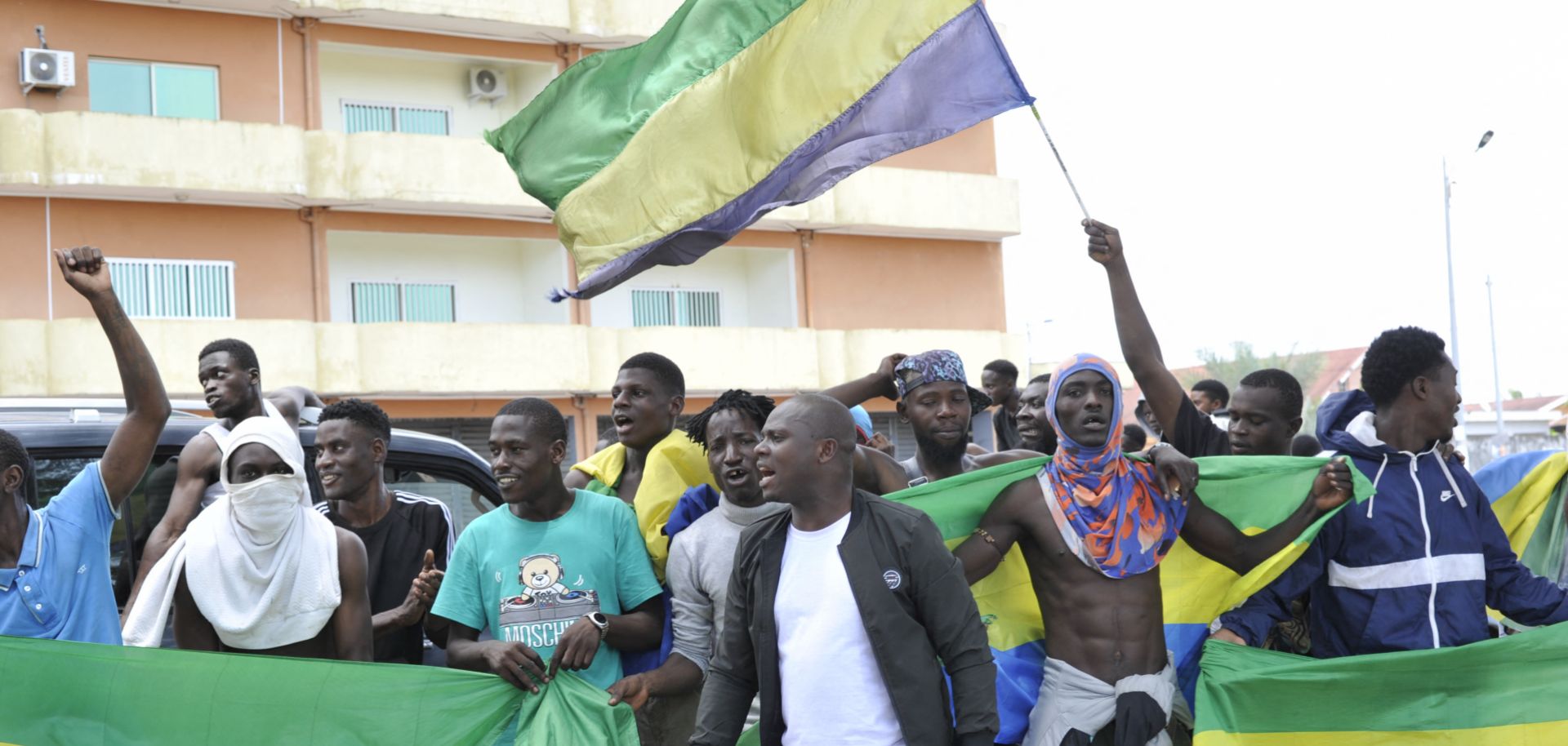
Countries across Africa — from the embattled governments of the Sahel to the dynastic leaders of Central Africa, and even the former French colonies of West Africa and the authoritarian regimes of East Africa — face risks of military overthrows amid perceptions of weak consequences for coup leaders, posing heightened threats of political and economic instability across the sub-continent. The Aug. 30 coup in Gabon, the July 26 coup in Niger and prior coups in Burkina Faso, Guinea, Mali and Sudan have raised alarms over a ''coup contagion'' across sub-Saharan Africa. While the precise triggers for additional coups vary widely by country, would-be coup plotters' perceptions that they can successfully overthrow a government without major domestic or foreign repercussions — regardless of veracity — has laid the groundwork for opportunistic military leaders to attempt their own power grabs in the future. An unexpected military takeover could happen in tens of countries across the continent amid perceptions of limited resulting fallout.
In Central Africa, dynastic presidents, potential succession crises and patronage politics present favorable circumstances for opportunistic military leaders in Cameroon, Equatorial Guinea and the Republic of Congo (ROC). Central Africa's propensity for geriatric presidents without clearly appointed successors presents heightened risks of political crises amid a coup-prone environment. The regimes in Cameroon, Equatorial Guinea and the Republic of Congo employ heavy-handed tactics to suppress dissent, limit freedom of the press and prevent opposition groups from mobilizing, while popular opposition to all three regimes is muted and their organizing power is weak. Authoritarian tendencies very likely obscure the true extent of simmering discontent, although this does not necessarily translate into widespread support for popular opposition to Cameroon's 90-year-old president Paul Biya, Equatorial Guinea's 81-year-old president Teodoro Obiang Nguema Mbasogo, and the Republic of Congo's 79-year-old president Denis Sassou Nguesso. International media and human rights organizations report widespread disillusionment resulting from each administration's willingness to employ violence against civilians, electoral fraud, corruption and nepotism to serve the ends of political elites. Against this backdrop, military elites who are either afraid of losing access to state resources or who see an opportunity to gain access and resources may use ''prevention of a political crisis'' — and potentially align with political leaders to increase their legitimacy — before or during a succession scramble as an excuse to seize power. As seen in Gabon, coup leaders would likely position themselves in opposition to the political dynasty as a means of gathering popular support, rather than relying almost exclusively on anti-French sentiment to build support as recent coup leaders have done in the Sahel.
- Cameroon: President Paul Biya's son, Franck Biya, is widely suspected of attempting to secure his father's blessing to succeed him. But no official announcement has been made, and several additional political insiders are reportedly also in the running, including Finance Minister Louis-Paul Motaze, Director of the Civil Cabinet of the Presidency Samuel Mvondo Ayolo, and Economy Minister Alamine Ousmane Mey. In the event that 90-year-old Biya dies before he chooses a successor, elites within the ruling Cameroon People's Democratic Movement (CPDM) party will compete for the top spot and associated opportunities for self-enrichment, potentially triggering a larger political crisis. The president of the Senate, 88-year-old Marcel Niat Njifenji, would be constitutionally responsible for organizing a presidential election within 120 days of the presidential post becoming vacant — a period that would very likely be fraught with potentially violent infighting. Anticipating this, opportunistic Cameroonian military leaders could attempt to ''prevent a political crisis'' by taking control of the government either before or after Biya's death. Conversely, the military could seize upon turmoil triggered by a scramble for power following Biya's death or incapacitation.
- Republic of Congo: Allegations of a military coup in the ROC surfaced online after President Denis Sassou-Nguesso landed in New York for the U.N. General Assembly on Sept. 17. Information Minister Thierry Lezin Moungalla quickly took to social media to deny the allegations and the Nguesso regime still appears to be in control. However, the rumors highlight Nguesso's heightened vulnerability following the coup in neighboring Gabon. If Nguesso were to die or become incapacitated before choosing a successor, ROC opposition parties — including the Democracy and Development Party, the Movement of Republicans party, and the People's Party — would very likely call for free and fair snap elections to decide the next president. However, given political elites' dominance over the political system, deep patronage networks and limited opposition organizational capacity, the success of these demands would likely depend heavily on levels of popular support. While opposition parties have some grassroots support and economic discontent runs high (especially against the backdrop of exorbitant wealth displayed by the Nguesso family), it is unclear whether this support would be sufficient to catalyze a movement large enough to displace the political establishment. Opportunistic military leaders could seek to capitalize on this uncertainty.
- Equatorial Guinea: 81-year-old President Obiang is Equatorial Guinea's longest-serving president, having spent more than half (44 years) of his life reigning over the country. Obiang has no clear successor, similarly providing the military with an opportunity to seize power in the event of a succession crisis. In general elections in 2020, Obiang's ruling Democratic Party of Equatorial Guinea (PDGE) and coalition won all of the 55 seats in the senate and 100 seats in the lower house, after which the president appointed the remaining 15 senate seats, illustrating the absence of opposition parties in Equatorial Guinea's political establishment. Mbasogo's son Teodoro Obiang Mangue, who is speculated to be his father's successor, was convicted on embezzlement charges in 2020 and is currently being investigated by the Spanish high court in tandem with federal security forces for allegedly kidnapping and torturing two Spanish citizens in 2020. While the security apparatus has been loyal to Obiang and his inner circle for decades, a succession crisis could cause splintering and heightened competition if certain factions perceive power structures to be in flux.
The Wild Card: Democratic Republic of Congo
In the Democratic Republic of Congo (DRC), there are several factors that will leave President Felix Tshisekedi vulnerable to a coup in the months surrounding his likely reelection, although likely less so than other Central African leaders. Those factors include a highly contentious political climate, upcoming elections in December that will likely suffer from fraud and violence, an ongoing civil war in the country's eastern provinces, pervasive state capture, and deep factionalism within the military. Members of the military who remain loyal to former President Joseph Kabila (a political rival of Tshisekedi) and/or those loyal to opposition leaders popular in the country's southeast and eastern provinces could attempt to overthrow the embattled government, particularly if they perceive the possible blowback to be limited and/or the December elections to be fraudulent.
In the Sahel, rampant insecurity and factionalism create a permissive environment for opportunistic military leaders to harness anti-French sentiment to overthrow their predecessors, posing heightened threats to Chad and risking repeat coups in Burkina Faso, Mali and Niger. Expanding insurgencies drive discontent among civilians and within security establishments in the Sahel region of sub-Saharan Africa. Major jihadist attacks on Burkinabe security forces preceded both of the country's last two coups. In Mali, transitional President Asimi Goita's rise to power was also facilitated by the civilian government's failure to curb jihadist attacks. The recent military coup in Niger against civilian leader Mohamed Bazoum was justified to the public by Bazoum's closeness with France and failure to stop jihadist groups encroaching on Niger's eastern border. In all three cases, government failure to address insecurity bred public discontent, which opportunistic military leaders then blamed on France's presence in the country and catalyzed into support for the new regime. Given that subsequent regimes have not successfully stemmed the jihadist threat, factionalism among regional militaries persists. This — combined with the fact that the Economic Community of West African States failed to follow through on the regional bloc's threat to intervene after Niger's last coup — raises the possibility for subsequent coups in these three countries. Circumstances are slightly different in Chad as jihadist groups do not occupy territory to the same extent, but a similar sequence of events could lead to a military overthrow. Chadian President Mahamat Deby, son of former President Idriss Deby, took power when his father unexpectedly died in April 2021, and despite the non-democratic transfer of power, his rule has been strongly backed by France. French troop presence and training in Chad have significantly bolstered the capabilities of the Chadian military, but some factions within the security establishment are critical of what they see as a continuation of French imperial influence in sovereign affairs. This, coupled with a resurgence of rebel activity in the country's north that adds pressure to already-stretched security resources, could create an opportunity for Deby's overthrow, especially amid perceptions of lackluster regional and international response.
Up next: Assessing the Risk of Future African Coups, Part 2: West and East Africa
