
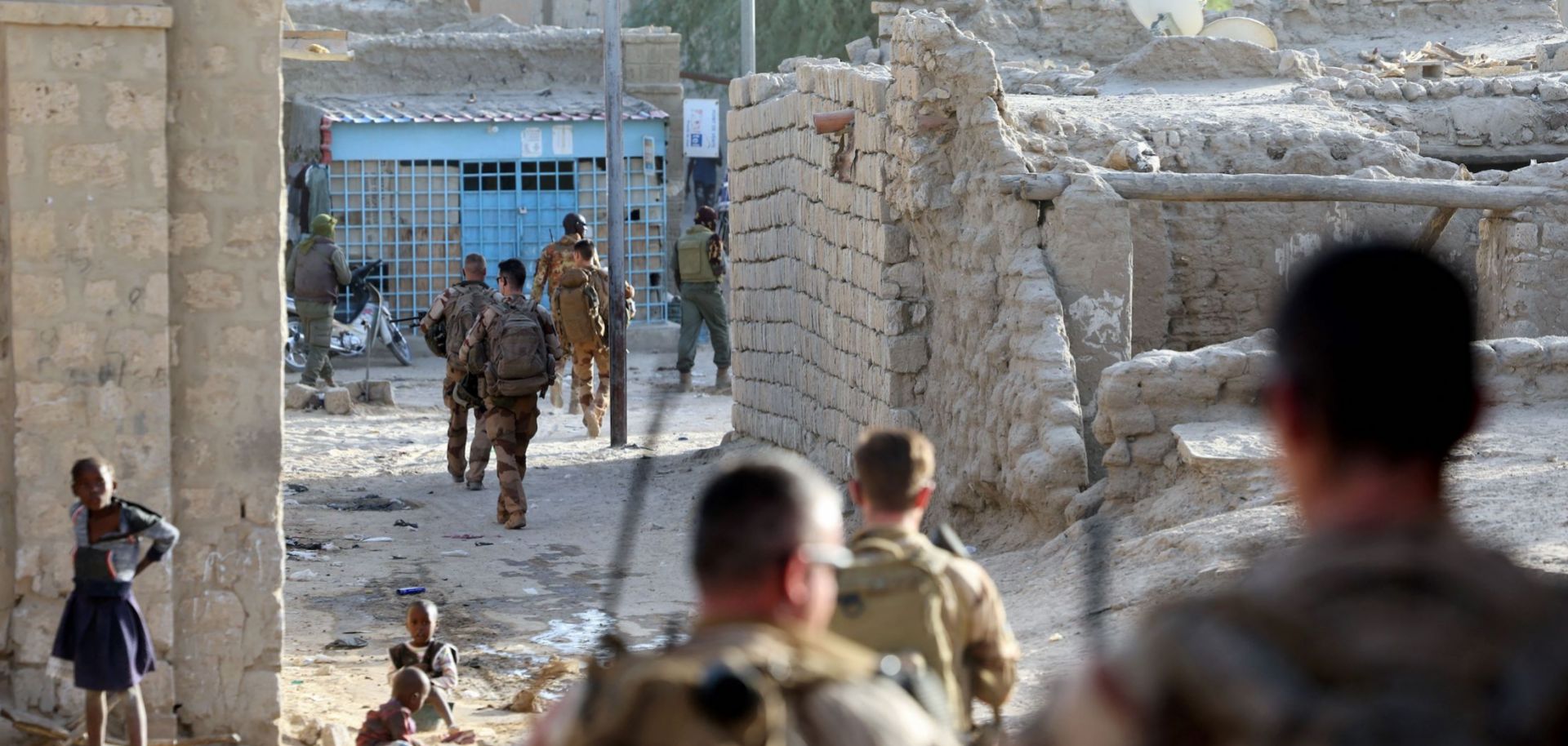
France's inability to engage in broad counterterrorism cooperation with Niger would mark a failure of Paris' latest strategy in the Sahel. Since announcing its withdrawal from Mali in February 2022, France's strategy in the Sahel has focused on greater training and intelligence sharing with local militaries. Close cooperation with Niger had become the cornerstone of this strategy, given the Malian and Burkinabe juntas' hostility toward Paris. However, despite the comprehensive support it received from France, the Nigerien military ultimately rallied behind coup leader Abdourahamane Tchiani against Nigerien President Mohamed Bazoum following the July 26 putsch. In the absence of a military intervention by the Economic Community of West African States (ECOWAS), the Nigerien junta will continue to strengthen its grip on the country by shifting the domestic narrative against France and ECOWAS. The junta's insistence that French troops leave the country suggests that France will likely be compelled to at least scale down its military presence in Niger in the medium term, but it is unclear whether Paris will yield to these demands in the coming months. Regardless, Macron's unwavering condemnation of the junta, together with the latter's ongoing consolidation of power, suggests that broad counterterrorism cooperation between France and Niger is unlikely for the foreseeable future, short of a reinstatement of President Bazoum. Given the central role played by Niger in France's recent regional counterterrorism strategy and the impossibility of cooperation with Mali and Burkina Faso, this would mark a failure of Paris' latest approach to the Sahel.
- France first intervened in the Sahel in January 2013 at the demand of the Malian government to halt rapid progress by jihadist groups toward the capital city, Bamako. Thereafter, France expanded its presence to most of the Sahel through Operation Barkhane, which was terminated in November 2022 following a series of coups in Mali and Burkina Faso.
- Prior to the July 26 coup, Niger's relatively democratic institutions had made it an appealing ally in the fight against jihadist groups in the Sahel for France, other EU countries and the United States. Washington currently retains 1,100 troops in Niger.
- On Aug. 3, the junta denounced Niger's five bilateral military agreements with France, which formed the basis of the two countries' defense cooperation. This included an agreement on basing 1,500 French troops in the country.
France's Uranium Supply
Although Niger did not halt exports of uranium to France in the immediate aftermath of the July 26 coup, misinformation on social media claiming otherwise prompted concerns over a potentially imminent supply shock that would disrupt France's electricity production, which heavily relies on nuclear power. But even if Niger does halt uranium supplies to France, France's power production would not be threatened given that state-owned utility company EDF has sufficient uranium stockpiles to produce electricity for two years. Additionally, Paris would be able to accelerate long-standing efforts to diversify its supply of uranium by tapping Canada and Kazakhstan and accelerating new mining projects in Uzbekistan and Mongolia.
Even in the unlikely event that Bazoum is reinstated, the Niger crisis will fuel the decline in French influence over West Africa in the long term. France has been on the back foot in the Sahel since Mali's August 2020 coup, and it has proven unable to effectively counter Russian misinformation in the region. This weakened position is highlighted by the impossibility of a French intervention to reinstate Bazoum — which might have been straightforward a decade ago — given the profound backlash it would generate across the Global South and the risk of vindicating narratives that Paris remains a neocolonial overlord. Cognizant of these new political realities, France has instead thrown its support behind ECOWAS' strong stance against Tchiani's coup. But regardless of the outcome of the Niger crisis, it appears set to fuel a progressive decline in French influence across West Africa in the long term. On one hand, a successful ECOWAS intervention to reinstate Bazoum would cement the fact that West African states — not France — are taking the lead on the region's defense and security matters. Conversely, the Nigerien military's consolidation of power for the next several years would risk paving the way for more coups across the region, which could further isolate Paris given local militaries' propensity to leverage anti-French sentiment for their own political gains. Nonetheless, France’s influence is likely to decline at a slower pace in countries that remain close French allies, such as Senegal and Cote d'Ivoire.
- While France's inability to press ahead with a unilateral intervention in Niger partly stems from its weakened position in the region, it also is a result of a new generation of French decision-makers coming to power who reject unilateral involvement in the affairs of African countries. Such involvement characterized France's approach to its former colonies in the second half of the 20th century.
Although Paris will look to sustain close military cooperation with Chad in the aftermath of its likely departure from Niger, Chad's political instability will likely prevent it from replacing Niger as the cornerstone of France's counterterrorism strategy in Africa. France has maintained tight-knit political and military ties with Chad since decolonization, which it retains to this day in spite of transitional President Mahamat Idriss Deby's violent takeover in April 2021 and his unilateral extension of an 18-month transition period by a further two years in October 2022. But Deby's hold over the country remains fragile, as he lacks legitimacy in the eyes of many Chadians. Together with the country's deteriorating security environment, Deby's weak grip on power makes fertile ground for a military coup. As in other Sahelian countries, potential new coup leaders would likely look to leverage anti-French sentiment to consolidate their power and demand a departure of French troops from Chad. A major redeployment of French troops to Chad is thus an unattractive option for both Deby and Paris, as it would risk hindering the Chadian leader's legitimacy ahead of the country's 2024 presidential election by fanning the flames of anti-french sentiment, while also increasing the political risk to which France would be exposed in the event of a coup. Instead, France is more likely to sustain its military cooperation with Chad at its current level, which could involve redeploying some of its military assets and a small number of troops to Chad following its likely military drawdown from Niger.
- France currently retains around 1,000 troops in Chad.
- Chad faces a plethora of security challenges, including a recent resumption of clashes with rebels in the north, intercommunal violence in the south, attacks by the Islamic State West African Province in the Lake Chad tri-border region with Niger and Nigeria, and the risk of a spillover of the Sudanese civil war in the eastern part of the country.
- In January, Deby's junta announced that it foiled a "destabilization attempt" by a group of 11 officers, which hints at growing discontent against him within the ranks of the Chadian military.
The Niger crisis will lead France to shift the focus of its counterterrorism strategy in Africa from fighting jihadist groups in the Sahel to strengthening the defense capabilities of coastal West African states. The deterioration of the security environment in the western Sahel in recent years has heightened security risks in the northern parts of coastal West African states like Benin, Togo, and Cote d'Ivoire with which Paris holds good relations and shares a strong opposition to military coups. While France would rather prevent the formation of jihadist safe havens in the Sahel from which attacks can be launched toward littoral West Africa, the impossibility of engaging in broad military cooperation with western Sahelian states following the Niger crisis means that Paris' best option will be to focus on limiting the spillover of militant activity to neighboring countries, namely Chad and coastal West African states. France is likely to prioritize ramping up military cooperation with the latter given its already-strong security partnership with Chad and the fact that the northern parts of coastal West African states are most exposed to the likely deterioration of the western Sahel's security environment in the coming years. But as part of Macron's desire to overhaul France's relations with its former colonies, Paris is unlikely to press ahead with significant new troop deployments in littoral West Africa, instead favoring greater training, intelligence sharing and equipment provision with local militaries. In addition to strengthening bilateral security cooperation, France will likely leverage its remaining influence in the region to encourage greater multilateral counterterrorism cooperation between coastal West African states, including Nigeria.
- France currently retains 950 troops in Cote d'Ivoire. While Paris was due to scale down its military presence in the country prior to the coup in Niger, it may reverse its decision should the Ivorian government express concerns about a further deterioration of the security environment in northern parts of the country.
As part of its outreach to coastal West African states, France will attempt a rapprochement with Nigeria, but historical mistrust and Nigeria's domestic challenges will likely limit the scope of this partnership. While French influence in West Africa is set to shrink in the long term, France will nonetheless retain strategic and financial interests in the region that it will seek to preserve. Many of Paris' interests in the region are in line with those of Nigerian President Bola Tinubu, including a resolute opposition to military coups, the fight against jihadist groups, support for ECOWAS-led regionalism and opposition to more deployments by Wagner Group personnel in West Africa. Together with Nigeria's political, military and economic heft, this makes Abuja an appealing partner for Paris, and France will likely seek to increase cooperation with Nigeria in the hope of encouraging it to expand its role in West Africa's security. But while Tinubu's firm stance against the Nigerien junta suggests that he may be more willing to cooperate with Paris than his predecessor, the fraught history of Franco-Nigerian relations and France's colonial legacy will remain important constraints that are likely to discourage Abuja from striking a strategic partnership with France for the foreseeable future. Furthermore, Nigeria's ongoing economic difficulties, political turmoil and domestic jihadist militancy will limit its ability to play a more proactive role in preserving regional stability. Despite this, both countries' shared interests at a tactical level mean that there is room for greater bilateral counterterrorism cooperation, as well as coordination in strengthening ECOWAS' "anti-coup" coalition.
- France supported Biafran secessionists during Nigeria's civil war (1967-70) in the hope of breaking up the West African giant and strengthening its influence in the region. This history continues to fuel Nigerian mistrust of Paris to this day.
