
The recent suggestion that the Wager Group will refocus on operations in Africa could see small influxes of mercenaries support the longevity of military rule through enhanced personal security support, while the repercussions for ongoing conflicts ranging from Libya to Sudan will be much more varied. On July 19, Yevgeny Prigozhin, head of the Russian paramilitary Wagner Group, appeared in a video reposted by Prigozhin's press service on Telegram, in which he told soldiers and supporters that they would no longer take part in the Ukraine war for the time being but to prepare for "a new path to Africa." Prigozhin apparently spoke from Belarus and called the war in Ukraine "a disgrace that we do not need to get involved in," despite the Wagner Group's heavy participation in Russia's invasion of Ukraine until Prigozhin's failed mutiny on June 23-24, which ended with a reported deal between Prigozhin and Russian President Vladimir Putin to allow Wagner troops to relocate to Belarus from Ukraine, retire or join the Ministry of Defense. Since then, Wagner-aligned information outlets claim that up to 10,000 Wagner troops may relocate to Belarus.
- On June 23-24, Prigozhin led a convoy of Wagner mercenary forces on a "march of justice" from the Russia-Ukraine border to about 300 kilometers (186 miles) short of the Russian capital Moscow. Prigozhin initially said that the march was to protest the Ministry of Defense's mishandling of the war, specifically naming Defense Minister Sergey Shoigu and General Staff Chief Valery Gerasimov — rather than President Putin — as the targets of the revolt. High-profile disputes between Prigozhin and the tandem of Shoigu and Garasimov had been escalating throughout recent months.
Since Prigozhin's failed mutiny, the Wagner Group's Africa operations have continued largely uninterrupted, despite uncertainty over the future of the paramilitary group. Wagner troops are deployed across the continent, including in the Central African Republic (CAR), Mali, Libya, Sudan and potentially Burkina Faso (reports of a small Wagner presence are unconfirmed). Prigozhin's failed uprising generated significant uncertainty over the future of Wagner's command structure, its ability to pay troops, the loyalty of mercenaries to mid- and high-level commanders, and organizational cohesiveness — all of which have cast doubt on the longevity of Wagner deployments in Africa. However, Wagner operations in most, if not all, African theaters have continued business as usual. In CAR, Wagner forces numbering in the low hundreds arrived in the capital Bangui on July 17 to supplement the 1,000 mercenaries already in-country to ensure security ahead of a constitutional referendum scheduled for the end of the month. In Mali, approximately 1,200 Wagner troops continue to conduct training for the Malian military, provide close protection for government officials and carry out counterterrorism missions. In Libya, approximately 2,000 Wagner forces provide military hardware maintenance services and training to Khalifa Hifter's Libyan Arab Armed Forces and allied militias. In Sudan, Wagner has reportedly been supporting the paramilitary Rapid Support Forces (RSF) in its conflict with the Sudanese military by supplying weapons, training and military advising. Finally, reports suggest a small contingent of Wagner mercenaries present in Burkina Faso to support the transitional military government, although such activity is unconfirmed, and the junta denies Wagner's presence.
If the Wagner Group does, in fact, seek a "new path to Africa," small influxes of mercenaries across the continent could markedly bolster the personal security of authoritarian leaders, while the repercussions for ongoing conflicts will be much more varied. The Russia Africa Summit, scheduled for July 27-28 in St. Petersburg, Russia, may provide more insight into African interest in new or enhanced security partnerships. While cooperation deals are unlikely to be highly advertised, discussions of Wagner and other Russian private military groups' capabilities are likely to be a significant source of interest, discussion and speculation on the sidelines of the summit. However, it appears unlikely at this point that all — or even the majority — of Wagner's estimated 10,000 members allegedly destined for Belarus will deploy to Africa. The Wagner Group — and by extension Russia — has used a relatively light paramilitary footprint to gain immense influence in African states without the financial, logistical and other costs that would come from more troops. Despite Prigozhin's remarks in the July 19 video, there is little indication that Russia seeks to alter what has hitherto been a reasonably successful strategy. Furthermore, while some African governments have the financial means to pay for an influx of mercenaries, many do not and have already promised access to state-owned natural resources for years as payment. However, even a small increase in the number of Wagner forces deployed could supplant personal protection details enough to lengthen the tenure of some military leaders, support the Libyan Arab Armed Forces' potential military assault into Western Libya, prolong the civil war in Sudan and/or facilitate the introduction of Wagner troops into new African countries.
- Burkina Faso, CAR and Mali: A small increase in Wagner forces to political protection details in these states where mercenaries are already stationed could further support authoritarian leaders' efforts to postpone elections and/or usurp existing constitutional term limits, potentially sustaining military rule in the three countries. However, more Wagner forces in Burkina Faso and/or Mali are very unlikely to turn the tide against jihadist encroachment, given that paramilitary forces have been failing to help regional militaries recapture territory for years, and in some cases, their human rights abuses have only fed jihadist recruitment.
- Libya: Hifter and his allies in Eastern Libya have threatened a return to military action if their rivals in Western Libya do not meet their demands for an oil revenue-sharing mechanism by the end of August. A surge in Wagner forces in Libya aligned with Hifter may give the field marshal the confidence needed to launch another military assault into Western Libya. In his failed attempt to seize Tripoli in 2019-20, Wagner troops were instrumental in the fighting along the front lines. For Russia, any escalation of the Libyan conflict would be desirable strategically, as it would force Europe to divert more attention to another conflict theater on its border. Additionally, a flare-up in the war in Libya would serve Russian interests by forcing European states to divert more attention to another conflict theater besides Ukraine, given the likely resulting increase in refugee streams into the European Union.
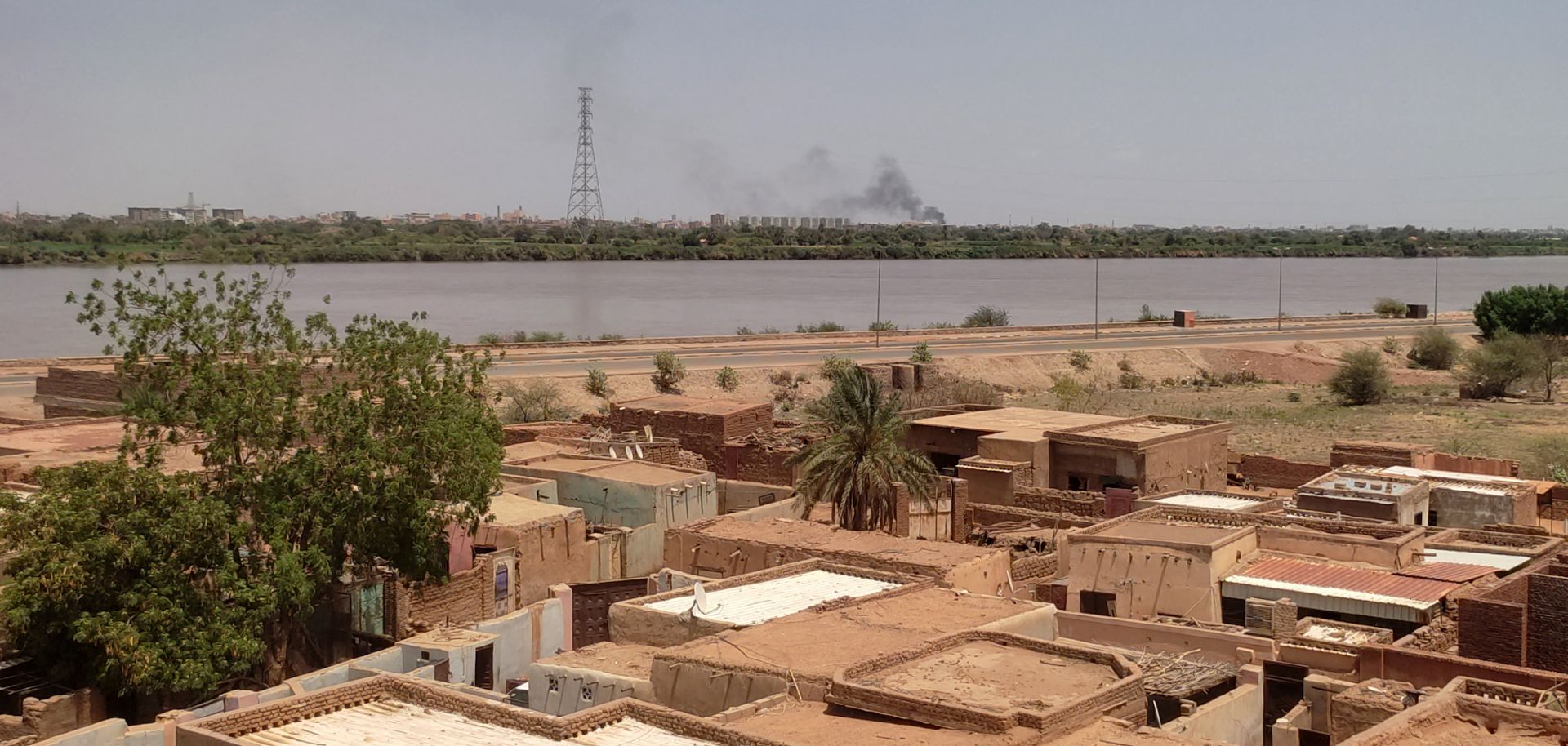
- Sudan: A surge in Wagner support for the RSF would likely extend the duration of the conflict at great humanitarian cost, as the two sides remain deadlocked and civilians continue to flee to neighboring countries. However, Russia's strategic interest in maintaining access to Sudan's port on the Red Sea, which is currently controlled by the Sudanese military, may constrain Wagner's support for the RSF in the long term.
- New frontiers: Finally, Wagner expansion in Africa may include paramilitary forces' introduction to new countries, many of which may be amenable to the group's presence. The heads of state of Guinea (currently governed by Colonel Mamady Doumbouya, who is likely to seek to postpone the transition to democratic rule) and Cameroon (where President Paul Biya has ruled since 1982 and has been attempting to end an insurgency in the country's Anglophone regions since 2017) are two such leaders who may be interested in Wagner's security assistance.
