
Editor's note: In the second of this two-part series, we examine the governments in West Africa and East Africa that are most at risk of experiencing a coup in the near future, as well as the greater implications of such mass political instability. In part one, which can be found here, we looked at the most at-risk governments in the Sahel and Central Africa.
In West Africa, the relatively robust institutional strength of governments means that the risk of military coups is comparatively low. However, opportunistic leaders may still attempt to take advantage of a potential succession crisis in Togo and simmering social unrest in coastal countries like Cote d'Ivoire and Senegal. Beyond Guinea, West Africa has not experienced coups at the same frequency as its Sahelian neighbors in recent years. This is likely due to the relative institutional strength of governments in littoral West Africa, where most countries hold elections on reliable schedules (although not necessarily free and fair), have established judiciaries (although not necessarily independent), and experience militantism at far lower rates than countries in the Sahel.
- Togo: Togo poses somewhat of an exception to West Africa's relative institutional strength. President Faure Gnassingbe has ruled over the country for nearly 20 years, and has maintained power by using security forces to prevent dissenting groups from assembling, as well as through self-enrichment, fraudulent elections and state capture. At only 57 years old, Gnassingbe could remain in power for many more years. However, the government's reliance on patronage and relationship-based politics means that the system is vulnerable to instability if Gnassingbe becomes unable to govern and/or does not appoint a clear successor. Togo has also experienced increasing jihadist attacks in its northern border areas in recent months as jihadists in neighboring Burkina Faso expand southward, perhaps granting military leaders an excuse to depose Gnassingbe.
- Cote d'Ivoire and Senegal: Elections in these countries are far from fair, and anti-French sentiment simmers in both nations as well. However, institutions are in place that give their governments a higher degree of legitimacy than their Sahelian neighbors. Senegal, in particular, has experienced high levels of social unrest in recent years resulting from ruling party abuses (including persecution of opposition leaders, egregious police violence and purging of voter rolls), prompting some observers to raise alarms about a potential military takeover. Senegal has never experienced a coup, and while it's not off the table, it would require an unprecedented break between the military and the executive, which appears unlikely.
In East Africa, the risk of military coups is low relative to Central Africa and the Sahel, but embattled leaders in Sudan and South Sudan and potential succession crises in Eritrea and the Great Lakes countries still pose latent risks. In general, East African governance institutions tend to be more robust than those in Central Africa and the Sahel. While this does not necessarily translate into democratic tendencies (most governments in the region lean authoritarian), the risk of military coups is lower relative to other regions due to the strength of central governments and (barring Sudan) civilian political dominance over the military. In addition, anti-colonial sentiment — namely, anti-French sentiment in Rwanda, anti-British sentiment in former United Kingdom colonies like Sudan and Uganda or anti-Italian sentiment in Eritrea) does not carry the same political utility in the East as it does in other parts of Africa. As such, would-be coup leaders are far more likely to tap into security, economic and governance concerns in order to vilify the deposed regime as a common enemy, rather than seek to blame colonial influences for popular grievances.
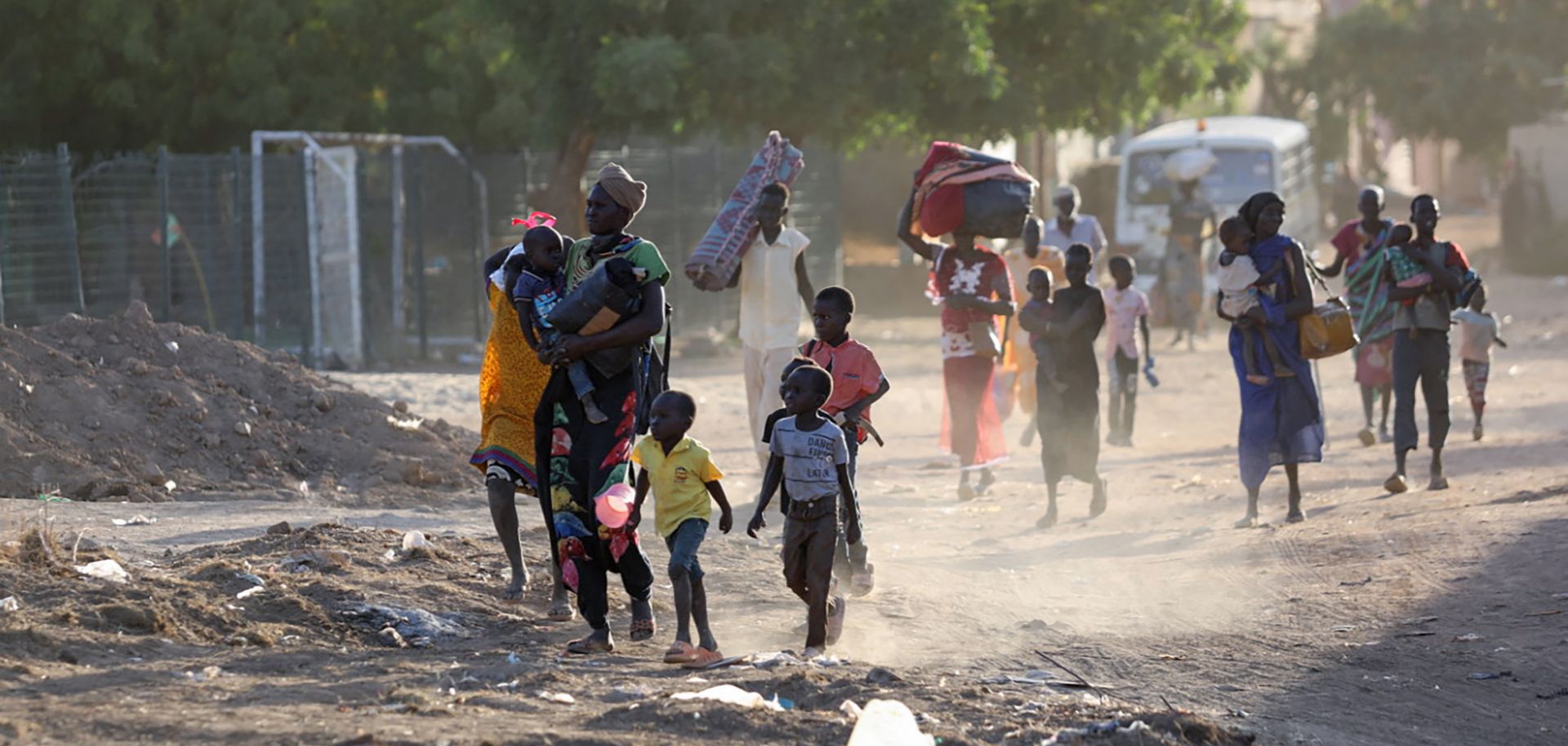
- Sudan and South Sudan: In both of these countries, opportunistic military leaders and/or politicians aligned with security forces could attempt to oust their president. In Sudan, General Fattah al-Burhan, the head of the country's transitional council and army, is leading a war effort against the paramilitary Rapid Support Forces, which has so far killed 20,000 people and displaced over 5 million from their homes since April. While Burhan's grip on power appears to be strong, the ongoing war and the history of factionalism within the Sudanese military means his grip could eventually weaken, particularly considering that he himself seized power in a military coup in 2021. Meanwhile, in South Sudan, spillover effects of the war to the north, along with inter-communal violence and deep-seated political rivalries, risk undermining the rule of Salva Kiir — especially as opposition leader and Vice President Riek Machar seeks to depose Kiir in the 2024 presidential elections.
- Eritrea: President Isaias Afwerki's long domination over Eritrean politics raises risks similar to those faced by Central Africa's dynastic leaders, as widespread popular resistance to the Isaias regime's abuse of power could catalyze a military take-over should a succession crisis arise. Given Isaias' strict repression of political dissent, rejection of civil liberties and embedded system of political clientelism, the 77-year-old's incapacitation or death could trigger a crisis. Even if he appoints a successor ahead of time, a new, younger strongman may still struggle to dominate Isaias' patronage network, particularly as opportunistic individuals seek to capitalize on political uncertainty for personal gain. The military's outsized role in politics suggests that it may be more likely to intervene under such circumstances, especially if a former Isaias ally attempts to seize power.
- Uganda: 79-year-old president Yoweri Museveni faces a fairly robust opposition movement, despite attempts by security forces to shut down opposition demonstrations and severely restrict press freedoms. The president's son, General Muhoozi Kainerugaba, is widely thought to be his father's successor. But Muhoozi's tendency to take to social media to air diplomatic grievances (occasionally triggering political disputes) has cast doubt on his ability to maintain his father's power structure, perhaps opening the door to an internal power struggle within the military.
- Rwanda: President Paul Kagame is perhaps the least likely East African leader to suffer a coup. Kagame has been in power since 2000, but despite the absence of credible elections or strong civil liberties, the 65-year-old enjoys the support of the majority of Rwandans, largely due to the country's development progress and economic stability.
In addition to breeding further political instability, subsequent military overthrows would likely worsen investor sentiment, hamper economic growth and risk exacerbating existing security crises in both the African countries experiencing the coup and their neighbors. Military overthrows tend to worsen investor interest due to market uncertainty and the possibility of policy change, including the nationalization of resources and assets. However, worsening investor sentiment does not only affect the country with the deposed regime, as investor interest in neighboring countries also tends to decline as investors perceive a heightened regional risk. In Central Africa, for example, the yields on dollar-denominated debt in Cameroon and the Republic of Congo increased by 100-basis points (12.34%) and 16-basis points (12.46%), respectively, in the days following the Aug. 30 coup in nearby Gabon. Additionally, international sanctions on military coup leaders and regimes can significantly curb trade, create supply chain disruptions and depress economic activity, depending on their severity. For example, in response to the July 26 coup in Niger, the Economic Community of West African States (ECOWAS) imposed its strictest sanctions on Niger's new junta since Mali's 2021 coup. The consequent border closures and trade restrictions have significantly reduced Niger's economic activity with West Africa in recent months, leading to the decay of food stores meant for export. Lastly, military coups tend to exacerbate security crises, as security forces' preoccupation with maintaining a grip on power draws attention and resources away from other threats. This bodes ill for containing the Anglophone separatist conflict and Islamic State West African Province (ISWAP) insurgency in Cameroon, the jihadist insurgencies in the Sahel, and/or the rebellion in northern Chad, among other security challenges. Furthermore, regimes fearing for their own longevity — whether the threat is real or perceived — are more likely to call on external security support. Given Russia's demonstrated interest in ingratiating itself in African countries via paramilitary forces, the heightened threat of coups in Cameroon and elsewhere could facilitate the Wagner Group's entry into more African countries, which would likely exacerbate conflict drivers given the Russian paramilitary organization's propensity for violence against civilians.
