
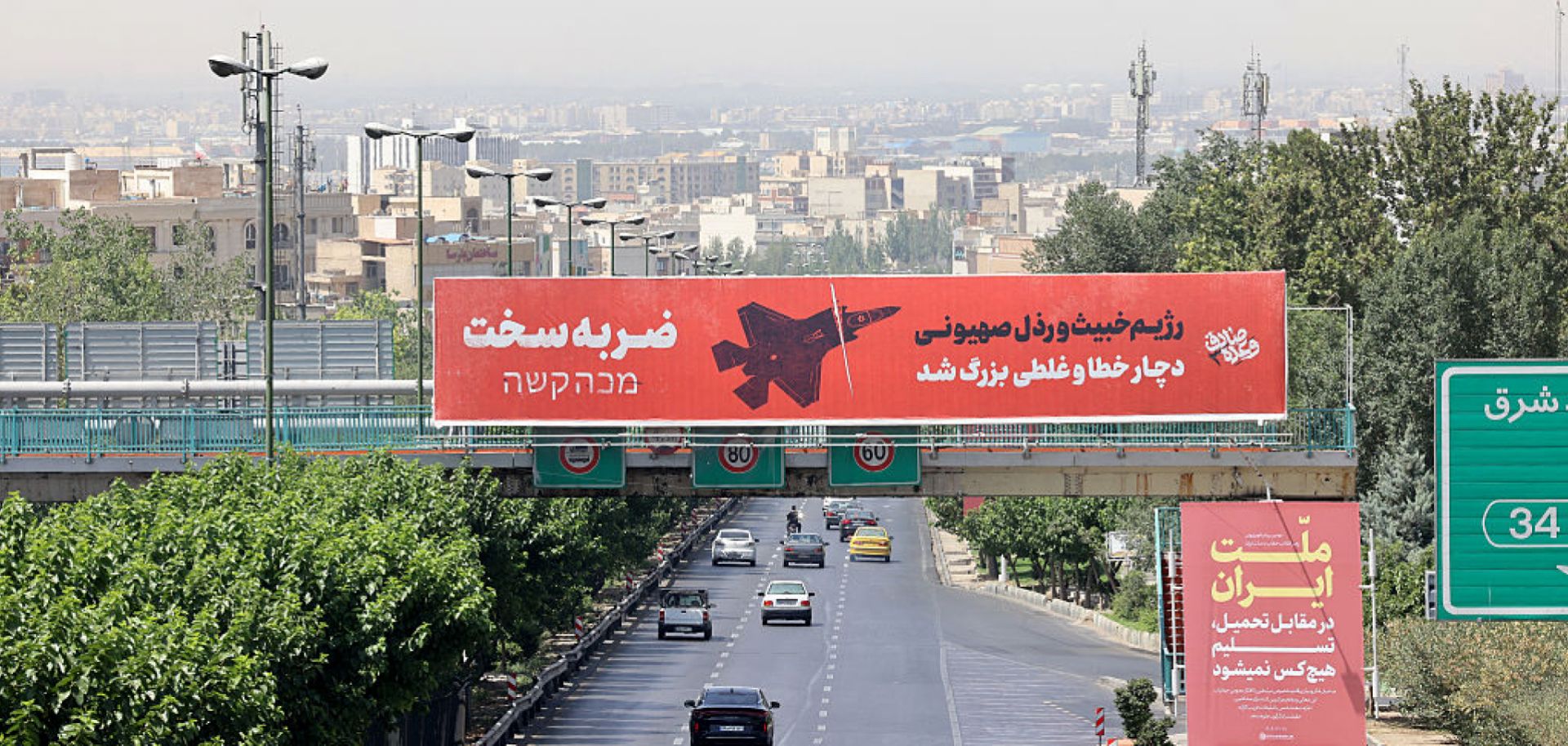
Editor's note: This is the second of a two-part series on the unfolding consequences of Iran's weakened regional position following its 12-day war with Israel. Part one can be found here.
Israel's sudden attack on Iran on June 13 not only took the latter by surprise, but also shocked Saudi Arabia, the United Arab Emirates, Qatar and Oman, which had all worked tirelessly in the preceding months to prevent such an attack. These Gulf Arab countries were alarmed due to the attack's potential to trigger a wider conflict, and also because they now perceived Israel as the primary instigator and threat to Middle Eastern stability, consequently impacting their own regional strategies. Furthermore, Gulf states, namely Saudi Arabia, discovered that despite inking multi-billion-dollar deals with the United States, they still don't have the degree of influence over Washington that Israel enjoys. Indeed, in the weeks leading up to the attack, Saudi Arabia had tried to pressure the United States to dissuade Israel from striking Iran, only to later learn that Washington was already coordinating with Israel to do just that. The attack also, in turn, revealed that U.S. President Donald Trump seems unwilling and unable to rein in his Israeli counterpart, Benjamin Netanyahu, to avoid regional escalation.
With the Israel-Iran war now paused with a fragile ceasefire, Gulf states will scramble to exert diplomatic pressure to prevent another round that would prove more costly and escalatory, as these countries understand that a weakened Iran will not bring regional stability. Instead, the Middle East faces a continuation of decades of instability, with Israel's increasingly militarily heavy-handed and diplomatically disengaged policies now at the forefront.
The Gulf, Turkey and Iran: A History of Shaky Relations
Iran's relationship with Gulf Arab states has long been shaped by mutual suspicion, strategic rivalry, and competing visions for regional leadership. Since the establishment of the Islamic Republic in 1979, Tehran's revolutionary ideology and its efforts to export Shiite political Islam across the region have alarmed Sunni-led monarchies, particularly those in Saudi Arabia and the United Arab Emirates. These tensions have deepened over the past decade, driven by Iran's controversial nuclear program, as well as its support for Shiite militias and proxy groups in Lebanon, Iraq, Syria and Yemen. The Gulf states viewed Iran's growing regional footprint and ballistic missile program as existential threats, prompting them to strengthen defense ties with the United States and, more recently, to explore regional alignments through normalization with Israel. However, this adversarial posture has not been entirely static. Since 2023, signs of cautious rapprochement have emerged, most notably with Saudi Arabia and the United Srab Emirates restoring diplomatic ties with Iran, driven by economic pragmatism, mutual fatigue from prolonged conflicts, and a shared interest in de-escalating regional tensions. Remarkably, this diplomatic thaw has held even amid high levels of violence in Gaza and numerous military exchanges between Israel and Iran, particularly the 12-day war in June, suggesting a growing Gulf preference for stability and compartmentalized engagement with Tehran.
Concurrently, under President Recep Tayyip Erdogan, Turkey has pursued an increasingly assertive and independent foreign policy, often positioning itself as both a regional power broker and a vocal critic of Western-led alliances. Ankara's involvement in northern Syria, its backing of various Islamist factions across the Middle East, and its military footprint in countries like Libya and Iraq reflect its broader ambitions. In recent years, Turkey has also emerged as one of the most prominent advocates for the Palestinian cause, using strong rhetoric and diplomatic gestures to bolster its image among Arab and Muslim populations. This positioning became more pronounced as Arab normalization with Israel accelerated under the Abraham Accords, which Turkey viewed with skepticism. While Iran and Turkey share opposition to Israeli policies, their rivalry persists, particularly in Syria, where their interests often collide. Nonetheless, both countries see value in tactical coordination when it serves their broader strategic aims. With Iran's military capabilities and regional influence weakened following its war with Israel, Turkey is seeking to position itself as the main rival to Israel in terms of security, especially now that Turkey is the main security backer of the new Syrian authorities and stands to gain more regional influence through Syria. However, this will also place Turkey at odds with Israel, whose ongoing military operations in Syria and diverging vision for the country's future stand in contrast to Ankara's approach.
The Gulf's Evolving Perception of Israel
For the past few years, the United States has vowed to usher in a new era for the Middle East under the umbrella of the Abraham Accords, promoting normalization between Israel and Arab states as a pathway to regional stability. However, this vision has increasingly clashed with the realities on the ground — especially with the persisting high-level violence and humanitarian crisis in Gaza, the collapse of deterrence between Israel and Iran, and growing public discontent across the Arab world.
Before the Hamas-led attacks of Oct. 7, 2023, Saudi Arabia had been nearing a historic diplomatic agreement to recognize Israel, following years of careful negotiations. Such a deal would have strengthened an Israeli-Arab alliance aimed at countering Iran, ensured robust U.S. security guarantees for Saudi Arabia, and paved the way for broader acceptance of Israel across Arab and Muslim nations. Since the Oct. 7 attack and ensuing violence between Palestinians and the Israelis, Saudi Arabia, the leading Sunni power in the Arab world, has consistently maintained that normalization with Israel is contingent on progress toward a two-state solution to the Israeli-Palestinian conflict. However, events over the past year have pushed the prospect of a Palestinian state even further out of reach, making such a resolution more unlikely than ever. Compounding these prospects is the fact that Saudi Arabia and the Gulf countries have grown weary of the far-right Israeli government led by Benjamin Netanyahu, and while they have traditionally seen Iran as the source of instability in the region, Gulf countries are now increasingly seeing Israel as the region's disruptor.
In a post-war weakened Iran, and a regional order dominated by Israeli military prowess, Saudi Arabia, Qatar, Kuwait and others are likely to grow increasingly skeptical of further deepening their diplomatic and economic ties with Israel, particularly due to the aggressive military stance demonstrated by its government during the conflict, and the fact that the United States did not show a willingness or ability to reign in its Israeli allies.
While the United Arab Emirates and Bahrain are unlikely to exit the Abraham Accords, they will grow skeptical of Israeli actions that contribute to destabilizing a region they need to be stable for their economies to flourish. Initially optimistic about normalization through the Abraham Accords, Saudi Arabia and Qatar will likely reassess their strategic alignment, concerned that a militarily dominant yet diplomatically intransigent Israel could compromise regional stability and their own long-term economic ambitions. Saudi Arabia's normalization with Israel now appears even more unlikely, particularly in an evolving regional order marked by Israeli dominance following its recent conflict with Iran. Riyadh views Israel's aggressive military posture as destabilizing, reinforcing Saudi wariness towards normalization. In response, Saudi Arabia has publicly strengthened diplomatic ties with Tehran, signaling a strategic decision to stabilize relations with its powerful neighbor across the Gulf. Riyadh will likely determine that normalization with Israel would impose significantly higher reputational costs for the kingdom, and would also risk triggering domestic backlash, both of which would complicate the Saudi government's domestic legitimacy and regional leadership aspirations. Furthermore, the United States has continued pursuing defense and economic cooperation agreements with Saudi Arabia independently of normalization with Israel. While previously these deals were linked to Saudi-Israeli normalization, Washington recognizes that normalization is now increasingly unlikely. As a result, both the United States and Saudi Arabia are set to advance their bilateral cooperation, reducing this as an incentive for the Saudi government to normalize with Israel. Cognizant of all these factors and constraints moving forward, Saudi Arabia will likely adopt a more assertive stance on the Palestinian issue, further dampening prospects of diplomatic breakthroughs with Israel.
Israel is set to hold elections in 2026. With the far-right gaining prominence following the current Israeli government's decision to go after Iran, there is a high likelihood that Israel will elect a nationalist government. There is also a smaller, but still present, chance of another far-right coalition emerging. Both scenarios would make annexation of the West Bank and continued occupation and military operations in Gaza more likely. However, the distinction lies in degree and flexibility: a far-right government would be far more ideologically rigid, less responsive to external pressure, and more openly hostile to Palestinian rights and democratic checks. A nationalist government, while still hawkish, may be more pragmatic and susceptible to U.S. or regional pressure, potentially taking limited steps toward normalization with Arab states. In contrast, a far-right coalition would all but guarantee stalled normalization, including with Saudi Arabia, due to its uncompromising stance and extremist rhetoric. Nevertheless, in both cases, the likelihood of more aggressive Israeli policies would continue to deter Saudi Arabia from normalization.
Gulf leaders may thus pivot toward a more balanced diplomacy, reducing overt collaboration with Israel while re-engaging cautiously with Iran and other regional actors. Ultimately, this recalibration could manifest as a slower pace of normalization, greater diplomatic hedging, and an increased effort by Gulf countries to diversify their international security partnerships beyond reliance on Israel and the United States.
What About Turkey?
Meanwhile, Turkey will increasingly emerge as the major rival to Israeli military dominance in the region, particularly as Iran struggles to rebuild its diminished capabilities. Ankara is now positioned to be the security guarantor of Syria, which, other than Lebanon, separates Turkey from Israel. Turkish and Israeli strategies for Syria's future diverge, with Israel aiming to create sectarian enclaves while Ankara seeks to unify the country under its transitional government allies. Additionally, despite early diplomatic and security mechanisms to control friction between Turkey and Israel in Syria to avoid direct clashes between the two entities, Turkey's growing political influence and military expansion in Syria will become more at odds with Israel's own military and security expansion in Syria's south.
Going forward, this strategic rivalry will heighten bilateral friction between Israel and Turkey, especially around sensitive flashpoints like Jerusalem and Gaza, given Turkey's likely championing of the Palestinian and Islamic cause. Additionally, Turkey will seek to exploit Israel's isolation from other regional states by deepening its own influence through political and economic outreach, potentially enhancing its ties with Gulf and Arab countries wary of Israeli intentions. As Turkey positions itself as the new principal regional counterweight, episodes of diplomatic tension, periodic trade disruptions and even indirect proxy confrontations and possible direct clashes in places such as Syria and the Eastern Mediterranean may become more frequent, raising regional tensions considerably in the coming years.
The Risk of Nuclear Proliferation
Finally, the June 24 ceasefire between Iran and Israel does not mark the end of regional instability; rather, it has opened a new, uncertain chapter for nuclear non-proliferation. Israel's aggressive military actions, including targeted strikes against Iranian nuclear and military infrastructure alongside U.S. participation, have dramatically demonstrated the vulnerabilities that middle powers face without nuclear deterrence. Consequently, Gulf Cooperation Council (GCC) states like the United Arab Emirates and Saudi Arabia, alongside regional powers like Turkey and Egypt, may increasingly perceive nuclear capability as a potential security guarantee, despite existing diplomatic or economic ties with Israel. The same applies to Iran, which, despite the recent setbacks, will likely lean more heavily on strategic ambiguity surrounding its nuclear program. This approach would enable Tehran to quietly advance toward nuclear weapons capability if it chooses to, a prospect that has become more plausible following the war, which exposed the limits of Iran's deterrence and revealed key weaknesses in its military capacity.
The precedent set by the brief Israel-Iran war, as well as Israel's likely coming military dominance and aggressiveness in the region, could lead these nations to reassess their security doctrines, possibly initiating nuclear hedging strategies or covert nuclear programs. Additionally, whether Iran emerges weaker or transforms into a more nationalist and military regime rather than a theocracy, the existential threat it experienced will likely reinforce Tehran's commitment to nuclear capability as a defensive measure in the future. Such dynamics risk triggering a regional arms race, severely undermining global nuclear non-proliferation frameworks and potentially extending the nuclear threat far beyond the Middle East.
The Cycle of Instability Continues
Israel is poised to be the region's dominant military power, reflected in its strategic doctrine of preventive action — often referred to as a ''war between the wars.'' This approach will involve launching strikes on perceived threats before they fully materialize, leveraging its aerial superiority and operational freedom across the airspaces of Lebanon, Syria, Iraq and potentially Iran. Confident that its adversaries are either incapable or unwilling to respond effectively, Israel appears comfortable with repeated escalation, knowing it can emerge with relatively minimal consequences while further degrading its opponents' capabilities. Yet, even as Iran is weakened, regional stability remains elusive. Contrary to Israeli expectations, a diminished Iran will not automatically usher in peace, as Iran will likely rebuild, and Israel's strategy will likely create hard-liners in each country it has bombed in the past few years, as well as fuel skepticism in others.
Diplomatically, while Gulf states may welcome a weakened Iran, they are increasingly uneasy with Israel's aggressive, security-first posture, particularly as the United States shows limited willingness to restrain it. Israel's strategy, viewed as militarily heavy-handed and diplomatically disengaged, runs counter to the Gulf's long-term economic and geopolitical goals. The concern isn't just about Israel's military actions, but also its lack of a sustainable exit strategy and post-war plans, which further contribute to instability. Without a broader vision for what comes after the wars, Israel risks isolating itself and fostering a cycle of instability that undermines both regional peace and its own strategic objectives. All of this means that the region is headed to an uncertain path, but not one that leads to economic stability and security.
