
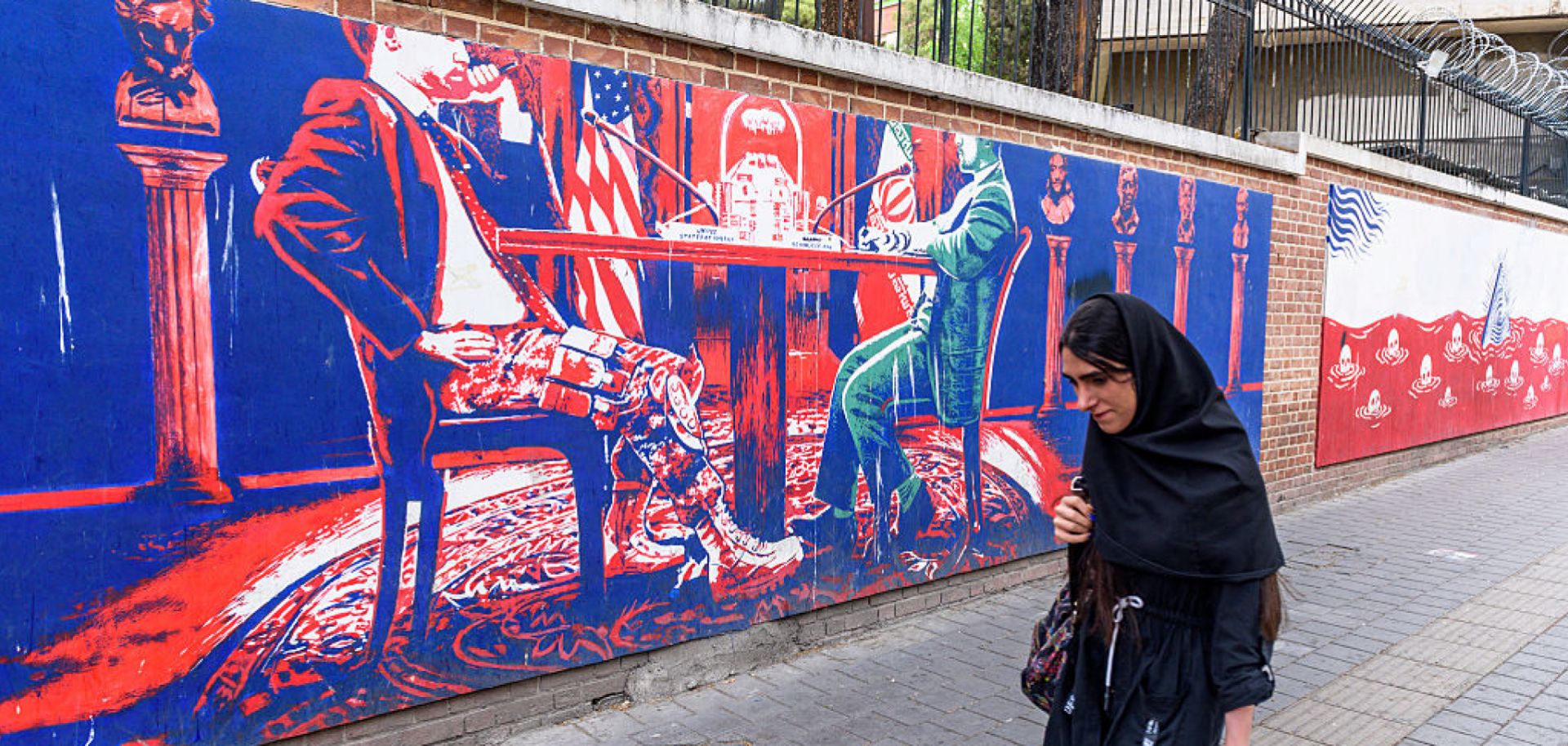
The United States will likely have to allow some Iranian uranium enrichment in order to ink a nuclear deal, likely resulting in Saudi Arabia seeking similar provisions for a civilian nuclear program. But U.S. concerns over proliferation will result in a continued impasse in talks with Riyadh and constrain the kingdom's energy diversification efforts. On April 26, the United States and Iran held their third round of nuclear talks in Muscat, Oman. The talks came amid some uncertainty regarding the United States' position on whether Iran would be allowed to enrich uranium and, if so, to what level. Previously, in public comments made toward the start of negotiations, U.S. envoy Steve Witkoff indicated a possibility that Iran could be allowed limited uranium enrichment up to 3.67%, the level of enriched uranium needed for a civilian nuclear energy program. However, he later called for the complete dismantling of Iran's uranium enrichment capabilities and nuclear weapons development. Then, adding to the confusion, U.S. Secretary of State Marco Rubio said on April 22 that the United States would only be willing to let Iran maintain its civilian nuclear energy program if the country agreed to halt all domestic uranium enrichment, and rely instead on imported fuel enriched no higher than 3.67%. This mixed messaging on Iranian uranium enrichment came amid signs the White House was also softening its stance on Saudi Arabia's nuclear energy development. On April 13, during a visit to Riyadh, U.S. Secretary of Energy Chris Wright said that the United States and Saudi Arabia were on a "pathway" toward a cooperative agreement to develop a civilian nuclear program in the kingdom, and opened the door to allowing Saudi uranium enrichment.
- The administration of U.S. President Donald Trump held the first round of indirect nuclear talks with Iran in Oman on April 12, in which the two sides established the framework and timeline for negotiations. Then, on April 19, Iranian and U.S. negotiators held the second round of talks in Rome, Italy, with Omani mediators. Both sides expressed cautious optimism about the progress of discussions following each round of talks, though major sticking points remain, especially over Iranian uranium enrichment.
- In March 2025, the Trump administration sent a letter to the Iranian government via intermediaries giving Iran a 60-day deadline, starting from April 12, to reach a new nuclear deal. On March 16, U.S. National Security Advisor Mike Waltz said that Iran needs to "hand over and give up" all parts of its nuclear program.
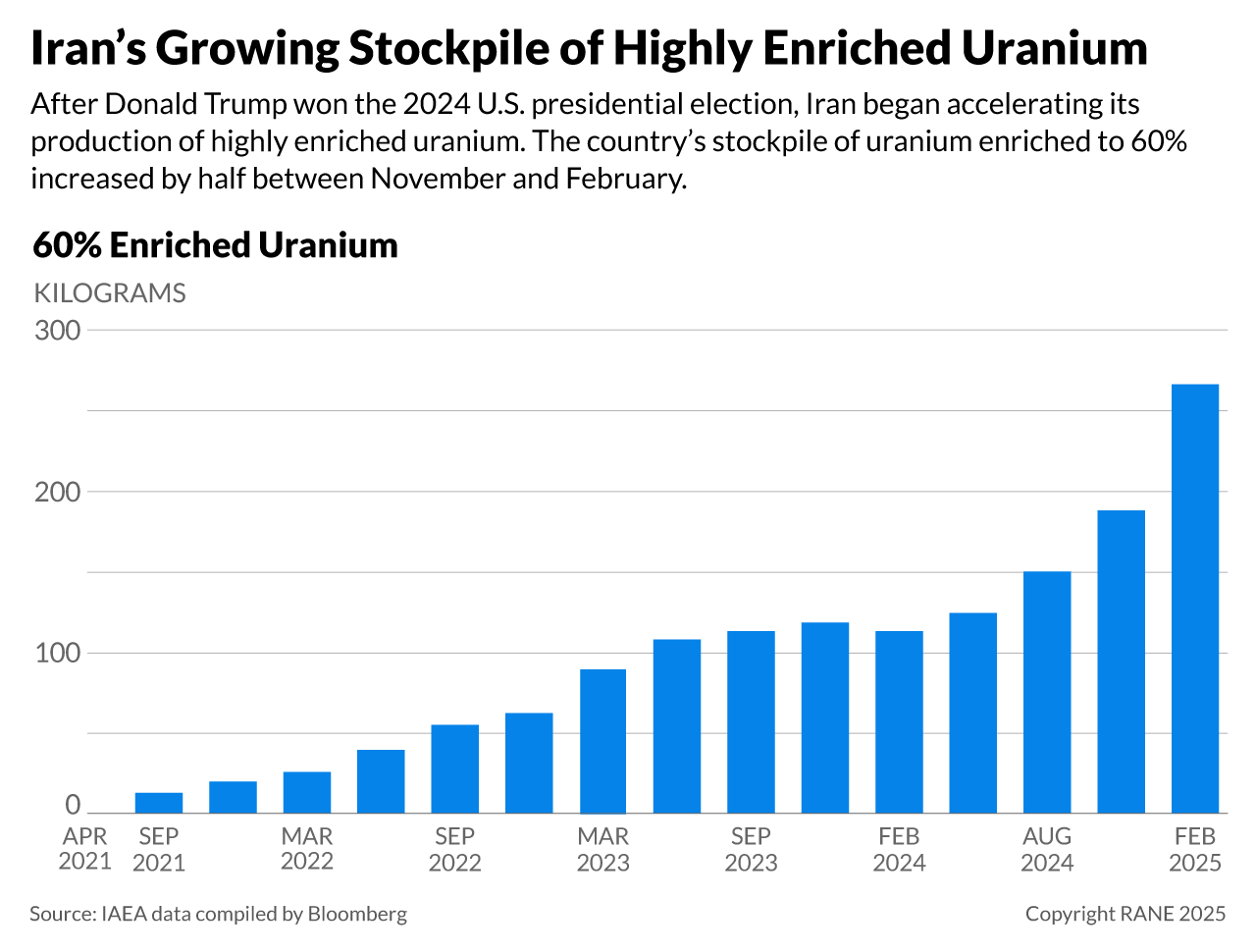
To prevent the proliferation of nuclear weapons, the United States has long sought to restrict other countries' ability to enrich uranium, particularly Saudi Arabia and Iran, due to their previously suspected nuclear weapons ambitions. The United States has a long-standing policy of opposing countries controlling the uranium enrichment process and fuel cycle while developing a nuclear energy program. This is driven by U.S. concerns that control of the uranium enrichment process could lead to future nuclear weapons development. Washington has historically been most concerned with Iran and Saudi Arabia, which have both expressed desires to potentially develop or otherwise acquire a nuclear weapon. Although Tehran has publicly said it is not interested in obtaining a nuclear bomb, Iran has previously had a nuclear weapons program. The country has also conducted nuclear research and pursued uranium enrichment up to 60%, beyond the 3.67% enrichment levels needed for civilian nuclear energy programs and close to the 90% enrichment level needed for a nuclear weapon. Saudi Arabia, meanwhile, has previously expressed ambitions to develop a nuclear weapon if Iran did, with Saudi Arabian Crown Prince Mohammed bin Salman saying in 2018 that "if Iran developed a nuclear bomb," his country would undoubtedly "follow suit as soon as possible." More recently, tensions between Iran and Saudi Arabia have decreased since the two countries reached a China-brokered normalization deal in 2023. This has seen Riyadh make repeated efforts to reaffirm its neutrality in the Israel-Iran conflict, especially when Iranian allies and proxies have threatened to retaliate against Gulf Arab oil and gas infrastructure. However, deep-seated skepticism between Saudi Arabia and Iran persists, and the two have made limited progress to significantly improve diplomatic or economic relations.
- The United States has previously signed agreements with allies to export U.S. nuclear technology, but typically conditioned them on abandoning a uranium enrichment program. For example, in 2009, the United States and the United Arab Emirates reached a deal in which Abu Dhabi agreed not to have a domestic uranium enrichment process. As part of the deal, the United Arab Emirates also said that it would not reprocess spent fuel, and consented to more extensive inspections under the International Atomic Energy Agency's Additional Protocol. However, Saudi Arabia has shown little willingness to agree to the same strict protocols since this would prevent the kingdom from potentially obtaining a nuclear weapon in the future, and would also prevent it from exporting enriched uranium to global markets.
- In Iran, there is internal debate over whether developing a nuclear weapon would help or hinder the country's regional security position. The recent collapse of the Iranian-allied Bashar al Assad regime in Syria, as well as Israel's degradation of Hamas and Hezbollah's fighting capabilities, has materially weakened Iran's regional proxy network, a crucial aspect of its regional deterrence strategy. While developing a bomb would help offset this strategic loss by increasing Iran's deterrence capability, it also would risk inviting Israeli and/or U.S. military action.
- Prior to the 1979 Iranian Revolution, the United States provided some foundational technologies for Iran to develop a civilian nuclear energy program as part of the "Atoms for Peace" initiative. In 1967, under the U.S.-allied regime of Shah Mohammad Reza Pahlavi, the United States provided Iran with a five megawatt nuclear research reactor and enriched uranium fuel. Though the shah denied pursuing nuclear weapons, he left open the possibility of future development if the regional balance of power shifted or if additional countries obtained nuclear weapons. This caused friction with Washington, which, after the revolution in 1979, ceased nuclear energy cooperation with Iran and stopped providing the country with enriched uranium supplies.
If the United States does not let Iran enrich some uranium, talks could collapse without a deal, which would risk driving Iran to secretly develop weapons and/or embroiling the United States in a wider regional conflict. Despite Trump's tough rhetoric toward Iran, his administration has so far pursued diplomacy in the hopes of reaching a new nuclear deal. Otherwise, to limit Iran's nuclear activity, the United States has threatened to launch a military operation against Iran (or support an Israeli one), which would carry significant risks. For one, such military action would risk embroiling the United States in a wider regional conflict, as Iran's allies and proxies in Yemen and Iraq would likely conduct reprisal attacks against U.S. assets and partners in the region, including potentially Gulf Arab states like Saudi Arabia and the United Arab Emirates. A U.S. and/or Israeli military campaign against Iran would likely also drive Tehran to exit the Nuclear Non-Proliferation Treaty and expel the U.N. inspectors monitoring the country's nuclear activities, thereby enabling Iran to conduct increasingly clandestine nuclear research and development initiatives with limited oversight. For these reasons (especially given Trump's fears of getting dragged into another war in the Middle East), the White House currently prefers a diplomatic solution that would prevent Iran from obtaining a nuclear weapon and agree to increased oversight in exchange for U.S. sanctions relief. However, the Trump administration's mixed messaging on uranium enrichment risks jeopardizing this effort, as Iran has reiterated it will not agree to any deal that would bar it from enriching uranium, with Foreign Minister Abbas Araghchi stressing this was a "non-negotiable" on April 16. The success of nuclear talks thus likely hinges on the United States softening its stance to allow some uranium enrichment. There is precedent for this, as the previous Iran nuclear deal signed in 2016, known formally as the Joint Comprehensive Plan of Action (JCPOA), permitted limited enrichment to support Iran's civilian nuclear program. However, after the first Trump administration unilaterally withdrew from that deal in 2018, Iran will likely also demand guarantees from the White House that ensure future U.S. administrations cannot do the same with the new agreement.
- According to an April 16 report in The New York Times, Trump has so far rebuffed Israeli plans to attack Iran's nuclear program. Israel estimates that such military operations would only delay the development of an Iranian nuclear weapon by around a year.
- The JCPOA, which was adopted by the administration of then-U.S. President Barack Obama in 2016, allowed Iran to enrich uranium up to 3.67% for its civilian nuclear energy program. However, just two years later, the first Trump administration unilaterally withdrew from the deal and re-imposed sanctions on Iran. Since then, Iran has increased its uranium enrichment to near-weapon grade levels.
- If negotiations with the United States fail, Iranian hard-liners may push for the development of a nuclear bomb — especially amid the recent weakening of Iran's regional proxy network, which has increased the imperative for alternative methods of deterrence.
Saudi Arabia will likely push the United States to permit it to enrich uranium, but allowing this would impede the White House's talks with Iran, and would likely also face pushback in the U.S. Congress by opening the door to Riyadh pursuing weaponization in the future. Several U.S. presidents have held discussions with Saudi Arabia about the kingdom's desire to build a civilian nuclear energy program. Most recently, the former Biden administration discussed this idea as part of a broader deal that would also include U.S. security guarantees in exchange for Saudi Arabia normalizing ties with Israel. However, these talks have continuously stalled, due largely to Riyadh's repeated demands that it be allowed to enrich its own uranium for the nuclear energy program. Wright's recent comments about progress toward a potential civilian nuclear agreement with Saudi Arabia indicate a potential softening of the U.S. stance on Saudi enrichment under the Trump administration. However, this could complicate the White House's nuclear negotiations with Iran, as if the United States permitted enrichment for Saudi Arabia while restricting it for Iran, Tehran would accuse Washington of setting a double standard. Moreover, if Saudi Arabia uses its enriched uranium to build a nuclear weapon in the future, it would further stoke regional tensions and increase Iranian imperatives to obtain its own nuclear weapon, potentially fueling a nuclear arms race in the Middle East. As such, given that it has the prerogative to review and, if it chooses, block exports of U.S. nuclear technology, the U.S. Congress will likely oppose any efforts by the Trump administration to grant Riyadh allowances for enrichment amid concerns that this could eventually facilitate nuclear proliferation in the region. Congress would be much more willing to approve such efforts if Riyadh agreed to adhere to the non-proliferation conditions laid out in the U.S. Atomic Energy Act of 1954 (as the United Arab Emirates did as part of its 2009 nuclear cooperation deal with the United States). However, Saudi Arabia has not yet agreed to any of these conditions.
Saudi Arabia's likely impasse with the United States on a civilian nuclear energy program will constrain the kingdom's energy diversification efforts, forcing it to remain heavily reliant on oil and natural gas for domestic consumption. Saudi Arabia has long sought to build domestic uranium enrichment capabilities, which would give the kingdom the future option to develop a nuclear weapon in response to shifting security dynamics (e.g., if relations with the United States deteriorate or tensions with Iran worsen). Such capabilities would also provide an economic opportunity by enabling Saudi Arabia to export enriched uranium to global markets. Given these imperatives, Riyadh is unlikely to abandon its ambitions to control the fuel cycle for a civilian nuclear energy program, which means it will likely remain at an impasse with the United States on the issue. But Saudi Arabia will struggle to find alternative partners willing to support its enrichment ambitions, as other countries that export nuclear technologies, such as Russia and China, will also be wary of exporting enrichment technologies to Saudi Arabia for similar proliferation concerns. Riyadh's insistence on enriching its own uranium thus risks ultimately undermining its plans to build a civilian nuclear energy program. This will impede Saudi Arabia's ability to diversify its energy sources for domestic consumption by limiting the kingdom's options to greater investments into wind, solar and green hydrogen technologies, which currently only comprise a small portion of the country's energy mix. This means that, as Saudi Arabia's domestic energy demand increases due to population growth and rising temperatures, the country will still continue to heavily rely on oil and natural gas for the foreseeable future.
- Developing a civilian nuclear energy program aligns with Saudi Arabia's Vision 2030 goals to diversify its energy sources away from oil and gas, especially as domestic energy demand rises. As part of its energy diversification goals, Saudi Arabia intends to incorporate nuclear energy into its energy mix; however, even if Saudi Arabia began developing its nuclear energy program in 2025, it would miss its Vision 2030 goal due to the multi-year process of building a nuclear reactor.
- Renewable energy only accounted for around 3.2% of Saudi Arabia's energy mix in 2023, despite government investments in projects like the National Renewable Energy Program, the Sakaka Solar Power Plant and the Dumat Al Jandal Wind Farm.
