
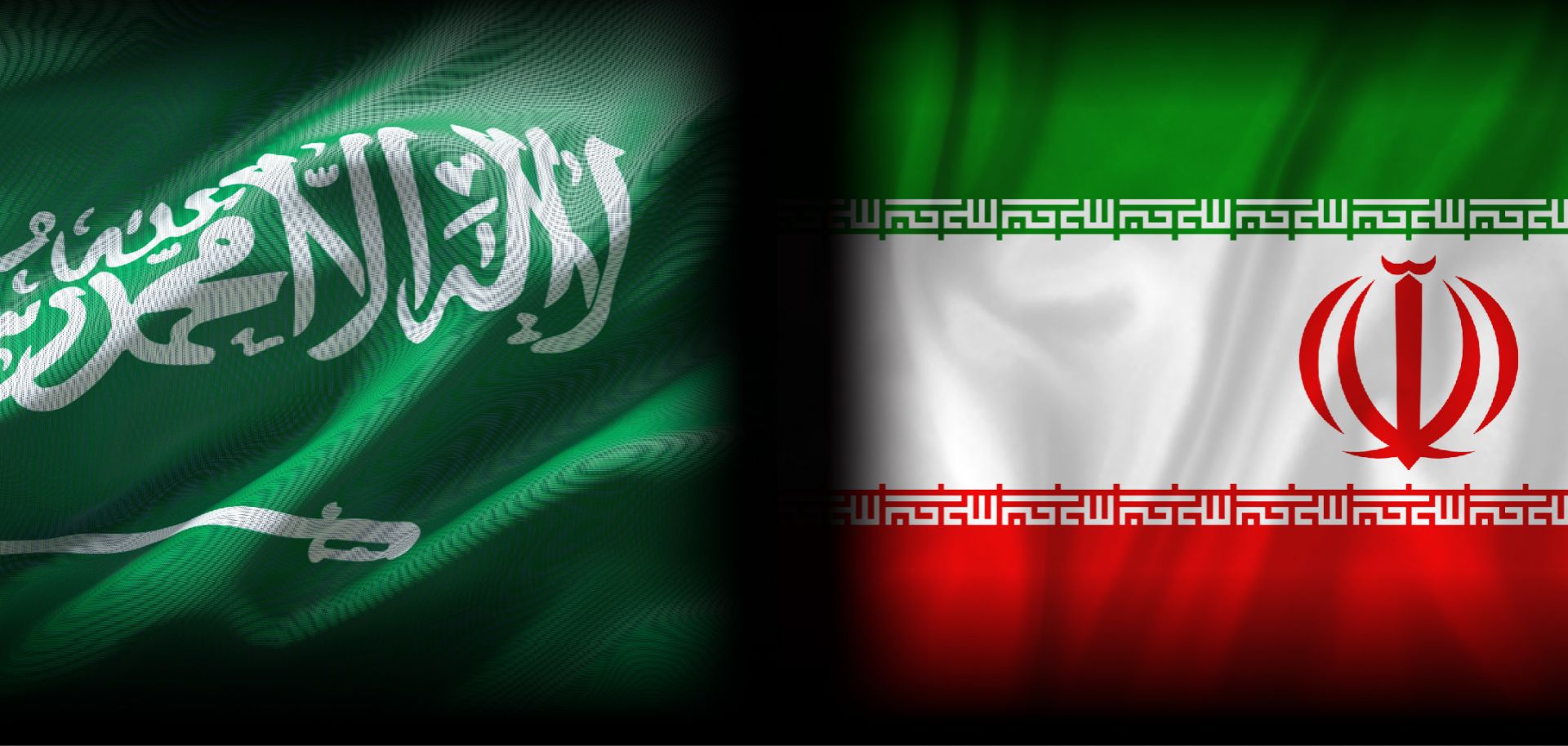
A China-brokered deal restoring Saudi-Iranian ties reflects Riyadh's fears of getting caught in the crossfire of escalating U.S.-Iran tensions and could help ease regional security concerns. It also underscores Beijing's growing diplomatic role in the Middle East amid the United States' waning regional focus. On March 10, Saudi Arabia and Iran agreed to restore bilateral relations and reopen embassies within the next two months, ending a seven-year rift between the Persian Gulf's two biggest rivals. The joint trilateral statement was struck in Beijing and signed by China's top diplomat Wang Yi, Saudi national security adviser Musaad bin Mohammed al-Aiban and head of Iran's Supreme National Security Council, Ali Shamkhani. The agreement affirms principles including ''non-interference in internal affairs of states'' and ''sovereignty of states,'' and referenced that Iran and Saudi Arabia want to re-implement the security cooperation agreement they signed in 2001 and the general cooperation agreement they signed in 1998.
- Saudi Arabia formally cut off diplomatic ties with Iran in January 2016, after demonstrators in Tehran attacked the Saudi embassy in the wake of Saudi Arabia's execution of a prominent Shiite cleric. Since then, relations between the two Middle Eastern countries have ebbed and flowed, with numerous official and behind-door talks taking place over the past seven years.
By re-establishing ties with Iran, Saudi Arabia is hoping to reduce its exposure to direct Iranian attacks, as well as collateral damage from deteriorating U.S.-Iran ties. The Saudi-Iranian deal comes as nuclear negotiations between Iran and the West have failed to make headway, and as the United States shifts its security focus toward Chinese threats in the Indo-Pacific and the ongoing Russia-Ukraine war. These developments have left Saudi Arabia increasingly on edge by fueling fears about Washington's commitment to its security and the potential for the breakdown in U.S.-Iran nuclear talks, which could lead to Iranian escalation against the United States, Israel and their regional partners. With Israel and U.S.-Iran tensions likely to rise in the coming months, Riyadh hopes that re-establishing ties with Iran will reduce the likelihood of those tensions boiling over and resulting in Iranian attacks against Saudi Arabia akin to the devastating 2019 strikes against the kingdom's Abqaiq and Khurais oil processing plants.
- Concerns about the threat of Iranian nuclear and missile proliferation have driven Saudi Arabia to pursue de-escalation talks with Iran numerous times over the years.
- Iran-backed Houthi rebels in Yemen claimed responsibility for the 2019 drone attack that damaged Saudi Arabia's Abqaiq and Khurais oil processing plants. But both Saudi and U.S. officials believe Iran itself was behind the attack, which knocked more than half of the kingdom's oil production offline.
- Amid the United States' slow shift of focus and withdrawal of some military forces from the Middle East, some of Washington's most powerful regional partners – including Saudi Arabia, the United Arab Emirates, Egypt and even Israel — have begun deepening their diplomatic, military and economic ties with their former regional rivals, as well as U.S. adversaries like China and Russia.
- The United States' efforts to reduce its military presence in the Middle East and its failure to ink a nuclear deal with Iran have recently strained U.S.-Saudi ties. This was highlighted in a March 9 published by The Wall Street Journal report that, citing unnamed sources, claimed Riyadh wanted nuclear technology and security guarantees from the United States in exchange for making progress on Israeli normalization.
Iran, for its part, is hoping the deal will deter Saudi Arabia from further deepening relations with Tehran's primary regional rival, Isreal. Over the last few decades, Iran has repeatedly expressed its opposition to the U.S. military maintaining a footprint in the Persian Gulf region. U.S. troops are currently deployed in multiple Arab Gulf countries. The United States also maintains close security cooperation with Saudi Arabia, which Iran views as a threat. Tehran's national security concerns have more recently been exacerbated by Saudi Arabia's warming relations with Israel, as Riyadh seeks to expand its partners in the face of growing Iranian aggression and waning U.S. interest in Middle East security. Israel has long been Iran's biggest regional enemy in contrast to Saudi Arabia, with which Iran has often had a pragmatic relationship over the decades despite their lack of formal diplomatic ties over the past seven years. By restoring ties with Riyadh, Tehran thus hopes to reduce the tensions that are currently driving Saudi Arabia to consider normalizing ties with Israel.
The agreement will ease, but not remove, the risk of direct conflict between Iran and Saudi Arabia. Restoring relations increases the communication channels between Saudi Arabia and Iran, which will further reduce the already low risk of an armed conflict breaking out between the two countries. The agreement will also decrease the threat of direct Iranian attacks on Saudi oil infrastructure and disruptive Iranian cyberattacks on Saudi organizations, as both sides have reasserted their commitment to upholding their 2001 security cooperation pact. However, Iran's escalating tensions with the United States and ongoing shadow war with Israel will continue to incentivize Tehran to conduct cyberattacks against both U.S. and Israeli targets, as well as physical attacks against oil tankers and other commercial vessels transiting Persian Gulf waters, as a way to gain leverage in nuclear negotiations. This means that a Saudi-Iranian deal will only go so far in easing broader regional tensions. In this respect, should Israel attack Iranian nuclear, missile or other defense targets (as it has many times in recent years), Iran will respond in ways that stoke regional tension, regardless of the recent deal with Saudi Arabia.
- Crushing international sanctions have left Iran unable to inflict the same kind of economic pain or conventional military attacks on the United States and Israel that the latter could inflict on it. This has seen Tehran instead use its arsenal of asymmetric offensive and defensive capabilities to build up leverage in nuclear negotiations, protect its missile and nuclear program and retaliate against Western pressure.
The normalization deal could also lead to progress in peace talks in nearby Yemen, where Saudi Arabia is reportedly pushing the Yemeni government to negotiate with the Iran-backed Houthis. The main location where Saudi Arabia and Iran are at odds is Yemen, where a civil conflict between the Iran-backed Houthis and a Saudi-backed regional coalition has raged for the last seven years. The fighting is not directly tied to Saudi Arabia and Iran's conflict with each other, but their discord has exacerbated and prolonged it. In the wake of its new deal with Saudi Arabia, Iran could use its influence over Houthi rebels to encourage them to accept a settlement. And Saudi Arabia would be open to signing such an agreement if Iran can help guarantee that the Houthi rebels ease their attacks on Saudi territory.
- Houthi rebels in Yemen receive much of their funding, weapons and military equipment from Iran. This Iranian support has enabled Houthis to launch missile and drone attacks on Saudi territory, mostly against targets near its southern border with Yemen. But Houthi strikes have occasionally hit more populous areas deeper into the kingdom's borders.
- A recent report in The Wall Street Journal highlighted growing discord between Saudi Arabia and the United Arab Emirates — driven largely by their diverging goals in Yemen, where Riyadh is increasingly seeking a settlement with the Iran-backed Houthi rebels. The United Arab Emirates has historically been a key partner in the Saudi-led coalition in Yemen. But in recent years, Abu Dhabi has become less concerned with ending the country's civil conflict and more concerned with preserving its economic, political and security ties with Yemen's southern separatists, which the United Arab Emirates believes will help it maintain influence in southern Yemen regardless of the war-torn country's political future.
Finally, the agreement's brokerage by China demonstrates Beijing's rising influence in the Middle East and highlights the impact of Washington's deprioritization of the region. China was able to broker an agreement between Saudi Arabia and Iran thanks to having functional ties with both countries. This gives it a unique advantage over the United States, which only has a functional diplomatic relationship with Riyadh (and not Tehran). Compared with the United States, China is also less concerned with Saudi Arabia and Iran’s governance styles and human rights records. Beijing has leveraged this dynamic — along with Washington’s waning interest in the region — to deepen its ties with both Riyadh and Tehran in recent years, as well as other Arab Gulf states. This has seen Chinese business delegations ramp up their activity in the Persian Gulf as part of Beijing's massive Belt and Road Initiative, which seeks to expand and multiply Chinese investments across Central Asia, Africa and the Middle East. Its involvement in the recent diplomatic breakthrough between Saudi Arabia and Iran further showcases China's desire to support a stable Middle East that can reliably accommodate its energy needs, as well as Beijing's growing influence in the region vis-a-vis Washington. It also sets the stage for more regional engagement by demonstrating that Beijing can help resolve challenges the United States has proven unwilling or unable to do. For China, maintaining pragmatic relationships with both Iran and Saudi Arabia could help Beijing maximize its commercial engagements across the broader region.
- Chinese President Xi Jinping hosted Iranian President Ebrahim Raisi for a state visit in February. Xi also traveled to the kingdom in December, where he met with Saudi King Salman and Crown Prince Mohammed bin Salman.
