
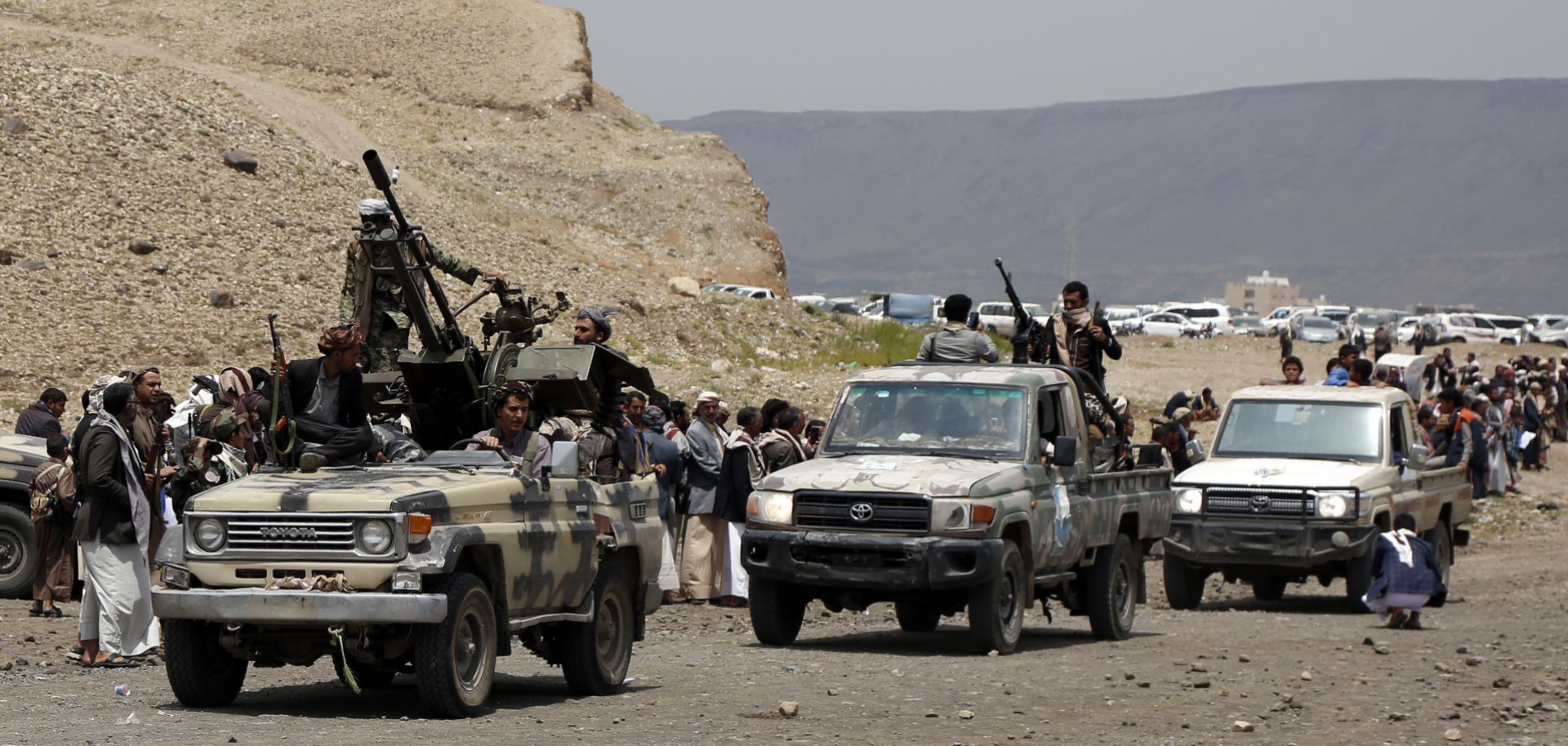
Houthi-allied tribesmen ride trucks mounted with machine guns on the outskirts of Sanaa, Yemen, on July 8, 2020.
Saudi Arabia’s window to exit the conflict in Yemen without jeopardizing all of its gains is quickly closing, as the United States transitions to a less Riyadh-friendly government, and as Houthi rebels seek deeper concessions on the ground. On Nov. 17, Saudi Arabia reportedly offered the Houthis a buffer zone along the Saudi-Yemeni border in exchange for drawing down its forces in the country. This move marks a significant downgrade to the original Saudi objectives in the country, as well as a tacit acknowledgment of the likely longevity of the Houthi political and military presence in Yemen.
Waning external support for the Yemen war, combined with economic pressures from low oil prices and the COVID-19 pandemic, has increased Saudi Arabia's impetus to withdraw from Yemen, forcing Riyadh to accept the failure of its five-year military intervention. Riyadh’s ongoing operation in Yemen has failed to accomplish its primary goal of ousting the Houthi movement from the country’s capital, Sanaa, and restoring President Abed Rabbo Mansour Hadi to power. But Saudi Arabia has endured significant casualties of soldiers and military equipment in its efforts to do so. The kingdom’s intervention has also increasingly outraged U.S. lawmakers in Congress, which has voted multiple times to end U.S. support for the intervention. Saudi Arabia has struggled with waning support from its regional allies as well, with the United Arab Emirates recently withdrawing its forces from Yemen in an effort to reduce Abu Dhabi’s vulnerability to associated militant attacks.
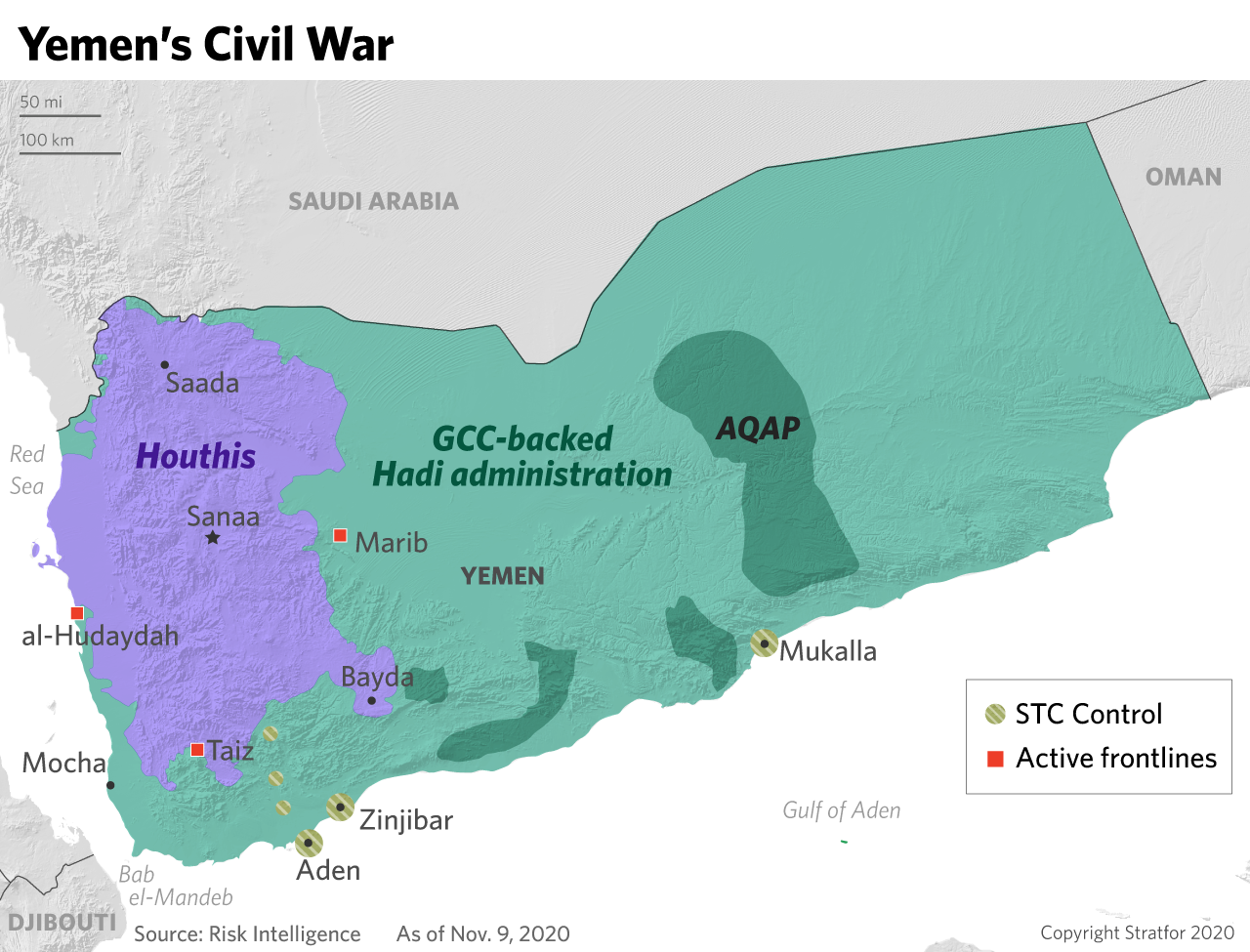
- Beyond regaining control of large swathes of southern Yemen, the Saudi coalition’s advances have been limited. Major frontlines near Taiz, Marib, and Houdeidah have remained largely unchanged for years, with recent small Houthi advances underscoring the difficulty in maintaining control of the territory.
- Saudi Arabia’s heavy reliance on airstrikes and blockades in Yemen has come at the cost of civilian casualties and the interruption of much-needed food and fuel supplies to the already impoverished Yemeni population.
- In April 2019, the U.S. Congress voted to end military support for Riyadh’s intervention in Yemen, which Trump ultimately vetoed.
Saudi Arabia’s relationship with the United States will become more adversarial once U.S. President-elect Joe Biden takes office in January and increases Riyadh’s exposure to U.S. political pressure, deepening distrust between the two allies. Compared with Trump, Biden is also far less likely to block Congressional attempts to end American support for the Saudi intervention in Yemen, which Biden has also vocally condemned. Indeed, after its Jan. 20 inauguration, the Biden administration may decide to quickly downgrade its involvement in the conflict, leaving Saudi Arabia without the logistical and intelligence support it has utilized for its airstrikes and operations in Yemen. Riyadh may perceive such a decision as the beginning of a greater U.S. diplomatic pressure campaign to draw down its intervention in Yemen after years of the Trump administration’s strident support, pushing the kingdom to further diversify its ties away from Washington.
- Saudis are already concerned about the Biden administration’s approach to Iran and Saudi Arabia’s own human rights record, particularly after Biden threatened to turn Saudi Arabia into a “pariah” for its assassination of Jamal Khashoggi in 2018.
- Saudi Arabia and the United States’ defense ties and economic relationship are substantial. But a decline in the need for Saudi oil due to lower global energy prices and increased fracking operations in the United States has helped Washington consider a looser relationship with the kingdom.
- Saudi Arabia has been seeking new defense and economic partners to offset the loss of a close relationship with the United States, including increased defense ties with China and a potential warming relationship with Israel to gain access to Israeli technologies.
The Saudi coalition’s drawdown, along with increased fighting between the secessionist Southern Transitional Council (STC) and the Hadi government, will also further embolden Houthi militants who believe they face a weakened enemy along the frontlines. This will compel the Houthis to seek even greater concessions with Saudi Arabia, including more territorial control and greater influence in political negotiations with the Hadi government. The longer the Houthis are able to force the Saudis to remain militarily engaged in Yemen, the more likely it is that U.S. pressure to end the war will force Riyadh to grant those concessions. A potential U.S. designation of the Houthis as a foreign terrorist organization could also further complicate Riyadh’s ability to reach a political settlement with the rebel group, as the Houthis could demand the removal of the designation as a prerequisite for negotiations.
- Nominally on the same side, the STC and Hadi government have engaged in fighting in Abyan province as diplomatic agreements to end their rivalry have faltered.
- The ongoing combat threatens to divert resources from the Marib frontline, where the Houthis are undertaking an offensive to capture the key city.
