

Tribesmen loyal to the Houthis ride in the back of a vehicle during a gathering to mobilize more fighters on Nov. 1, 2016, on the outskirts of Sanaa, Yemen. With Iran proper the greater threat, Saudi Arabia is hoping to wind down the war against the Houthis in Yemen.
Editor's Note: This assessment is part of a series of analyses supporting Stratfor's 2020 Annual Forecast. These assessments are designed to provide more context and in-depth analysis of key developments over the next quarter and throughout the year.
After close to half a decade involved in Yemen's conflict, Saudi Arabia appears to be changing tack. No longer as determined to vanquish the Houthis, the desert kingdom is increasingly trying to protect itself economically and security-wise from a conflict that Riyadh cannot realistically hope to win militarily. In adjusting its strategy, Riyadh is now acknowledging that it will have to allow the Houthi rebels a permanent place in Yemen's political future, even if this leaves the Yemen conflict unresolved to Riyadh's liking, opens the door to semi-permanent Iranian influence on the Arabian Peninsula and — most crucially for the Saudis — fails to give them the peace they crave on their southwestern front.
Facing the Facts
At first glance, Saudi Arabia's gradual disengagement from Yemen might seem counterintuitive. The Houthis, after all, are close to Iran and have received increasing amounts of military and political aid from Tehran in recent years. What's more, the rebel group has posed a potent missile threat to Saudi Arabia over the course of the conflict. But working more pragmatically with the Houthis to minimize the spillover from Yemen's conflict would allow Riyadh to shift its focus to Iran proper — a far more serious threat at present. The Sept. 14 attacks on Saudi Arabia's Abqaiq and Khurais oil facilities clearly terrified Riyadh, as it proved Tehran's ability and willingness to directly attack the kingdom's most important economic sector. (Although the Houthis did claim the Sept. 14 attacks, Saudi and U.S. intelligence believe Iran was the actual perpetrator.) Saudi Arabia's involvement in Yemen, after all, is draining military and economic resources, as well as morale — all things it will need to marshal more of in any conflict with Iran.
Saudi Arabia also wishes to reduce the high material and diplomatic costs it is incurring in Yemen. In the year to come, Riyadh will be keen to foster a positive image of the kingdom on a global scale and attract much-needed investments for its economic reforms — something it can't do if it piques international anger by aggravating Yemen's humanitarian catastrophe with its bombing campaign. Furthermore, because Saudi Arabia wants to bolster its defensive capabilities as much as it can, it wants to dissuade Western powers from halting arms sales over the Yemen conflict.
To this end, Riyadh is slowly turning away from its four-year-old attempt to dislodge the Houthis. In late November, Saudi Arabia repatriated 128 Houthi captives via the International Committee of the Red Cross. And after several years of long closures at the Sanaa airport, Riyadh announced this month that it would permit the facility to open so that sick and injured Yemenis can travel abroad for medical treatment. Militarily, too, the Saudi-led coalition against the Houthis has geared down its airstrikes against the group: Last month, it conducted the fewest air attacks against the group in four years, conducting a mere 39 strikes, a far cry from the monthly average of 370 since March 2015. Moreover, the coalition — which itself has dwindled in recent months with the United Arab Emirates and Sudan's decision to withdraw troops — has not conducted any significant ground offensive in several months.
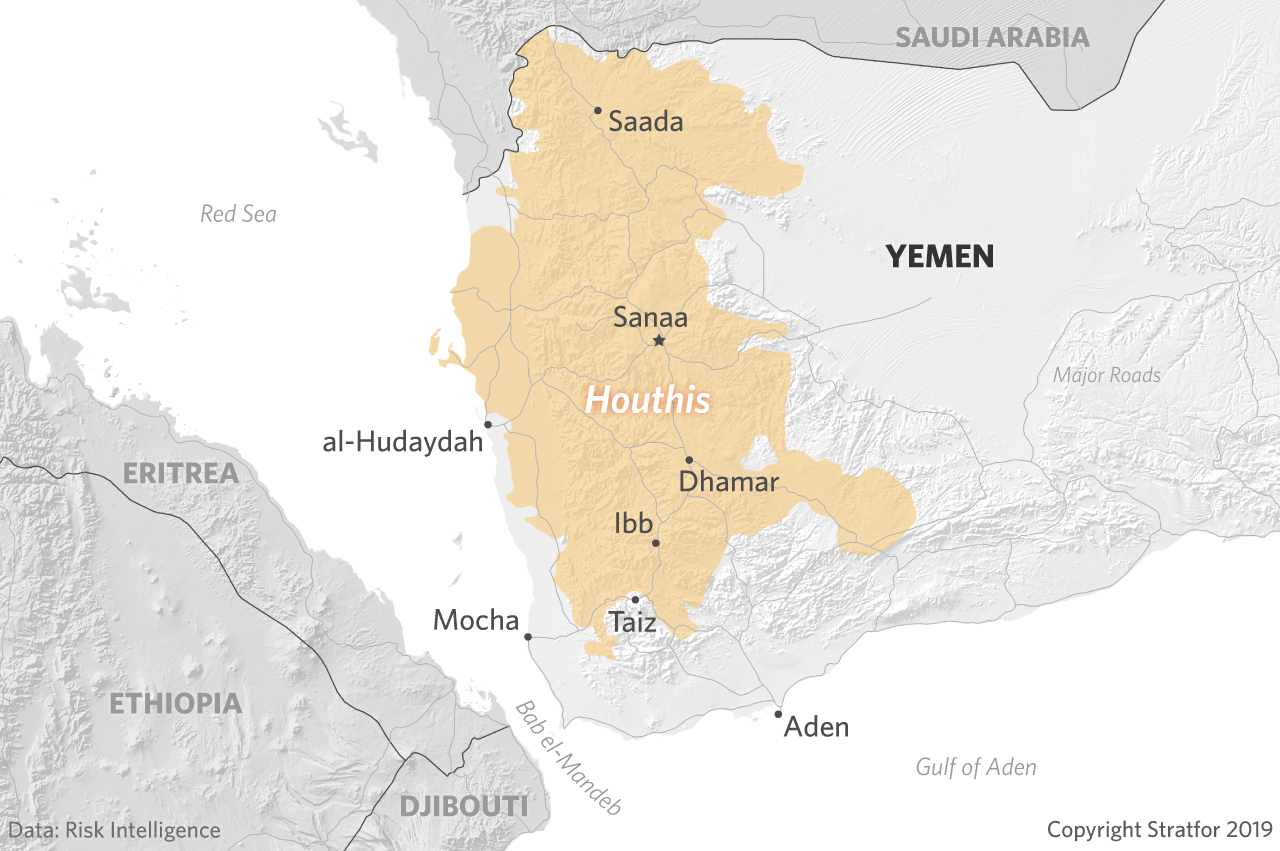
In addition to these signs of adjustment, Saudi Arabia is choosing to be more public than ever about its contact and diplomacy with the Houthis, with Prince Khalid bin Salman, Crown Prince Mohammed bin Salman's brother and the vice minister of defense, now heading up high-level meetings with the rebels. At the same time, prominent Saudi leaders and officials, including King Salman and Minister of State for Foreign Affairs Adel al-Jubeir, have overtly discussed the prospects of peace in Yemen, while the United Nations is also cautiously optimistic that change is afoot in the bloody stalemate.
On the other side, the Houthis have also displayed an openness to dialogue. In September, the group directly offered a cease-fire and "comprehensive national reconciliation"; in response, Prince Khalid said the kingdom was seriously considering the proposal. The United States, too, seems to be adjusting its perceptions of the Houthis, as a recent State Department statement indicated that the White House was beginning to consider the Houthis as belligerent actors in their own right — rather than a proxy force solely doing Iran's bidding. In truth, the shifting position is somewhat ironic, as the Houthis are more dependent than ever on Iran due to the war, although Washington and Riyadh's attempts to decouple the rebels and Tehran — at least rhetorically — reflect their attempts to at least calm one front in their wider battle with the Islamic republic.
Pragmatism Doesn't Guarantee Success
Still, just because Riyadh is choosing pragmatism in Yemen doesn't mean it has solved its security concerns emanating from the country, especially as such a stance is not likely to produce a long-term political resolution that pleases the kingdom or its closest Yemeni allies. Instead, Saudi Arabia is likely hoping that a pragmatic relationship with the Houthis could persuade the group to adopt a more Riyadh-friendly position and even distance it somewhat from Tehran. This, however, will require the Houthis to cooperate with Riyadh far into the future and secure the support of other Yemeni stakeholders, especially the internationally recognized government of President Abd Rabboh Mansour Hadi that Riyadh supports. This is a gamble because Riyadh will no doubt upset others in Yemen's political spectrum by publicly acknowledging, at long last, the elephant in the room: that their inability to win the war military means their Houthi adversaries must join a future Yemeni government in some way. Even that, however, wouldn't guarantee lasting peace in Yemen, as flareups between the Houthis and Hadi government — which were at odds long before the Saudis ever intervened in Yemen — would be all but inevitable in the future.
Iran, naturally, is unlikely to sit idly by as the kingdom strives to peel off one of its regional allies. For one, it could try to intensify its involvement in Yemen, forcing Saudi Arabia to continue maintaining attention and military assets on its southwestern flank.
In the end, Saudi Arabia's efforts to pragmatically court the Houthis could go a couple of ways. On one hand, they could play directly into Iran's hands as the Houthis become a viable and legitimate part of the Yemeni political landscape that Tehran can forever manipulate. On the other, they could harm Iran's interests if the Houthis cease their battle against the Saudis once they get what they really want: political permanence in Sanaa. All will ultimately depend on whether Riyadh or Tehran maintains the closest and most functional ties with the Houthis and the rest of the Yemeni government. But for Saudi Arabia, just securing the Houthis' acquiescence might not be enough to guarantee that all will be quiet on the Yemeni front. After all, Tehran has also trained and supported southern separatists in the past, meaning that Iran will have more ways than one to use Yemen to harass Saudi Arabia, the kingdom's best-laid plans notwithstanding.
