
Editor's Note: This is the first of a two-part series on the unfolding consequences of Iran's weakened regional position following its 12-day war with Israel.
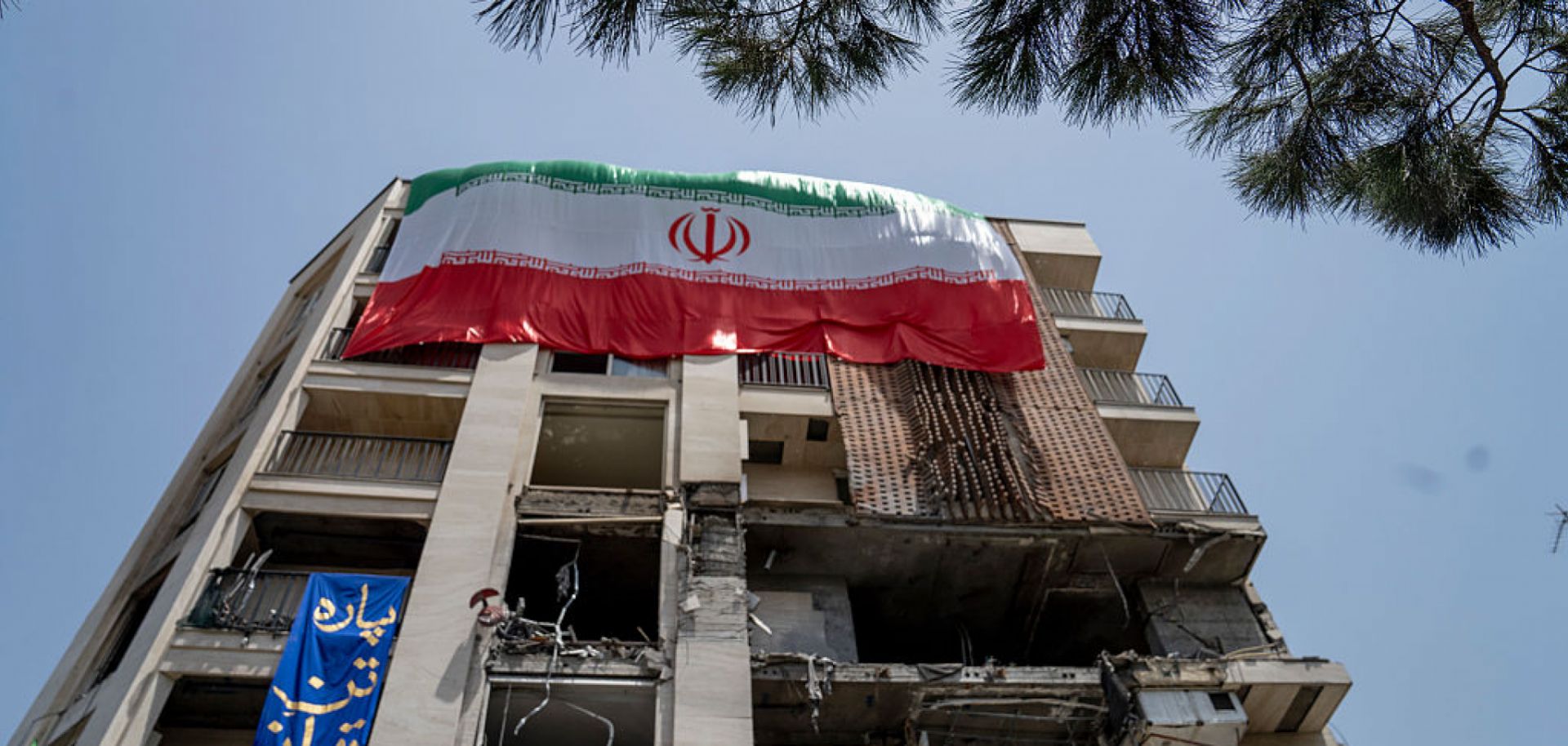
For the first time in decades, Iran finds itself on the back foot of a changing regional order, led by Israel's government under Prime Minister Benjamin Netanyahu, with the support of the United States under President Donald Trump. The 12-day war launched by Israel took Iran's government and its military by surprise since it occurred while Tehran and Washington were engaged in nuclear talks. With the conflict now paused by a fragile ceasefire, Iran's strategic trajectory is set to enter a period marked by diminished regional influence and reduced capacity for power projection.
The 12-day war significantly degraded Iran's capabilities through personnel losses and damage to critical infrastructure and military assets, particularly its ballistic missile arsenal. And the high risk of renewed conflict, stemming from unresolved underlying causes, threatens further potential losses for Iran. Moreover, Tehran's failure to mount a cohesive and effective initial defense against Israel's coordinated strikes has severely dented perceptions of Iranian military prowess, potentially eroding deterrence and emboldening regional rivals and adversaries alike.
Iran's allies and proxies, from Hezbollah in Lebanon to militias across Iraq and Yemen, may also find themselves strategically constrained, forced to recalibrate their reliance on Iran's previously dependable military and financial support. Consequently, the balance of power across the Middle East may shift, at least temporarily, away from Iranian interests, creating strategic openings for regional and global actors to expand their influence, exploit vulnerabilities, or negotiate favorable arrangements amid Iran's diminished position.
A Series of Blows
Over the past year, the Islamic Republic of Iran has been dealt a series of blows to its regional influence and internal stability, placing it in its most vulnerable state since its early existence in the 1980s. This began after the Iran-backed Palestinian militant group Hamas launched its Oct. 7, 2023, attacks on Israel, which came as a shock to the world, including Iran and its Lebanese proxy Hezbollah. There were reports that Iran was overseeing a plan to eventually conduct a simultaneous, multi-front attack on Israel involving all of its proxies, to be executed at an opportune moment. However, Hamas' then-leader Yahya Sinwar allegedly unilaterally decided Oct. 7 was the date to go, without coordinating with either Iran or Hezbollah.
Since then, Hamas has been decimated by over a year of brutal conflict with Israel. Hezbollah, too, has been severely weakened after entering the war in support of Hamas and incurring significant losses from Israeli attacks, which ultimately forced the Lebanese group to surrender via a ceasefire that grants Israel operational freedom over Lebanon, with Hezbollah unable to respond to Israeli violations and/or aggressions. The Iran-backed Houthi movement in Yemen also joined the conflict by conducting attacks on Israel and Red Sea shipping, but while the Houthis proved resilient in the face of Israeli and U.S. military campaigns, their capabilities have been severely degraded as well. Iran-backed militias in Iraq, meanwhile, largely stayed on the sidelines of the Israel-Hamas conflict amid pressure from their government in Baghdad and threats from the United States.
Together, these losses have effectively robbed Iran of the main proxies it propped up for years to act as a deterrent to any potential Israeli attacks on Iranian soil — a strategy that eventually opened the door to the aggressive military campaign that Israel launched against Iran on June 13. Executed as a rapid and coordinated blitzkrieg, Israel's campaign successfully combined elements of surprise, precision strikes, advanced intelligence gathering and deep infiltration into Iranian defense systems. This sophisticated operation has exposed severe mismanagement within Iran's defensive strategies, allowing Israel substantial tactical gains early in the conflict. Israeli forces quickly degraded Iranian air defenses, effectively granting them near-total freedom of operation in Iranian airspace. Concurrently, Israel intensified targeted attacks on critical nuclear infrastructure and carried out covert sabotage against key military and missile installations. Most notably, the Israeli campaign included targeted assassinations and strikes aimed at decapitating Iran's senior military leadership and nuclear program scientists, reminiscent of Israel's previous strategic approach toward Hezbollah. Collectively, these elements have decisively tilted the tactical elements of the conflict in Israel's favor.
That is not to say that Iran did not have its own achievements during the brief war with Israel. Despite suffering early tactical losses, Tehran was quick to replace commanders and was able to sustain almost daily ballistic missile and drone fire against Israel over a 12-day span, and while Israeli air defenses intercepted the majority of approximately 500 ballistic missiles Iran launched towards Israel, the ones that landed caused significant damage and casualties in central, northern and southern Israel. Additionally, after encountering logistical challenges in its missile launches, Iran changed course by deploying more advanced ballistic missiles in smaller, more dispersed waves, which still landed in Israel despite reduced numbers. This ultimately likely also incentivized Israel — which was also rationing its interceptor missiles due to shortages — to accept the ceasefire for the short term, and means that Iran will still have an arsenal capable of reaching Israel and causing damage in future rounds.
With Israel having secured significant tactical successes in the early stages of the conflict, Iran found itself increasingly cornered, confronted by a narrowing range of unfavorable options. Capitulation in the sense of accepting U.S. and Israeli demands that Iran end its nuclear enrichment and ballistic missile program would've represented a profound humiliation for the Iranian regime, undermining its long-cultivated narrative of resilience and defiance against foreign adversaries and likely spurring domestic instability against the regime. Iran's precarious position was also compounded by the U.S. strikes on Iran's three nuclear facilities in Isfahan, Natanz and Fordow. According to both U.S. and Israeli intelligence, the strikes severely damaged Iran's nuclear program, though uncertainties regarding these claims persist.
Faced with this reality, Iran opted to conduct a symbolic reprisal attack in response to the U.S. strikes on its nuclear facilities, in order to avoid more U.S. and/or Israeli retaliation that could further destabilize the regime. On June 23, Iran launched 14 ballistic missiles at a U.S. military base in Qatar, and issued a warning hours in advance to mitigate potential damage and casualties by allowing enough time for evacuation. Shortly after the attack, Trump announced a ceasefire between Israel and Iran.
Iran Enters Recovery Mode
Iran has suffered setbacks, but for now, its army, enriched uranium and political system — along with much of its ballistic missile arsenal — remain intact. Iran will prioritize rebuilding and strengthening its military infrastructure, including missile launchers, air defense capabilities and command-and-control networks. Additionally, Tehran will likely consider accelerating its nuclear program and enhancing its ballistic missile arsenal to reestablish strategic leverage. Iran will also need to overhaul its counterintelligence apparatus to find ways to counter Israeli and U.S. intelligence in both Iran and elsewhere to prevent future Israeli covert operations from within Iran. However, given the complexity, resource constraints and Iran's continued vulnerability to Israeli and American intelligence and military operations, this comprehensive reconstruction process will take months, if not years.
During this prolonged recovery phase, Iran may also seek to leverage what remains of its existing proxy network — particularly Hezbollah in Lebanon, the Houthis in Yemen, and Iran-aligned militias operating within Iraq — to rapidly rebuild regional deterrence, or at least maintain the ability to activate those allies when needed in the future. This proxy-based strategy will be central to Tehran's short- and medium-term goals, as it provides a more immediate means of projecting power, threatening retaliation and imposing tangible costs on both the United States and Israel. But as it seeks to rebuild core military assets, Iran's primary focus will ultimately remain on preserving what's left of its proxy capabilities, carefully balancing between overt provocations and credible deterrence to avoid escalation into a broader conflict that leads to the complete destruction of these proxies, at least until Tehran is confident in its restored and enhanced military posture.
All of this is also contingent on Iran's economic recovery, as well as the political and institutional impact of the 12-day war with Israel on its regime, with new figures replacing the ones who were assassinated, Iran's Supreme Leader getting older and now also threatened with assassination, and domestic disdain for the regime's current status. After the war, Iran is more likely to become more hard-line and militarized, due to the recent wave of nationalism that surged during the conflict, and perceptions that now is the time to acquire a nuclear weapon as a deterrent and double down on the military. But there is still a chance, albeit slim, that Iran will become more moderate and continue the path of negotiations on its nuclear program while simultaneously preparing for potential military escalation.
The End of the Axis of Resistance?
For decades, Iran invested billions in building a regional alliance of Shiite militias and non-state actors — its so-called ''Axis of Resistance'' — to counter Israel and project power across the Middle East. Yet, the events of the past year have exposed the structural weaknesses and limitations of this strategy. Each member of the Axis — whether in Iraq, Yemen, or Lebanon — has acted independently, constrained by geography and/or domestic pressures. Also compounding the erosion of this alliance is the fact that over the past one-and-a-half years of conflict, Iran did not protect its proxies against Israel's onslaught, which led to their significant weakening.
In the aftermath of Hamas' Oct. 7 attack on Israel, Iraqi militias initially launched waves of drones and rockets toward U.S.- and Israeli-linked targets, only to abruptly declare a ceasefire under threat of overwhelming American retaliation. Yemen's Houthis, while capable of disrupting maritime traffic in the Red Sea and occasionally hitting Israeli targets, remain geographically and logistically limited; the impact of their attacks, though not negligible, did not shift the trajectory of the war nor deter Israel from its objectives in Gaza or Iran. Hezbollah, meanwhile, bore the brunt of Israel's retaliation. Its calculated ''support front'' strategy was meant to pressure Israel into a ceasefire in Gaza, but it instead gave Israel the pretext it had long sought: a chance to degrade Hezbollah's military infrastructure. What began as a conditional engagement ended in a unilateral ceasefire that effectively granted Israel operational freedom over Lebanon's south and opened the door for growing calls — both domestic and external — for Hezbollah's disarmament.
Looking ahead, groups within Iran's Axis of Resistance will try to rebuild as much as possible, in the hopes that Iran will eventually recover and be able to help them again at some point in the future. However, Iran's proxy network appears set to further fracture and weaken in the coming years, with its ''unity of the fronts'' strategy against Israel unlikely to be revived. This is because Iran's proxies will not only face an aggressive Israel ready to prevent their threat from growing again, but also increasing domestic pressure to avoid participating in attacks on Israel that could extend the conflict to their home countries.
Hezbollah, once regarded as Iran's foremost proxy and the most significant non-state threat to Israel, now faces intense scrutiny from international, Israeli and Lebanese entities. With Iran now weakened, Hezbollah will come under even more pressure to disarm, which would risk internal fragmentation, as hard-liners within the group would likely continue their resistance against both disarmament and Israel. Hezbollah's future is thus increasingly becoming a domestic concern, leaving Iran with little sway over its trajectory. Additionally, the group now appears to be looking more inward and prioritizing its own interests above Iran's. Recent reports indicate that Hezbollah declined to participate in Iran's 12-day conflict with Israel, driven by a desire to protect itself against potential U.S. and Israeli retaliation, as well as by Iran's failure to intervene in Hezbollah's own devastating war with Israel the previous year. This will consequently limit Iran's ability to influence Hezbollah in future conflicts.
Meanwhile, Iraqi militias are becoming increasingly constrained by U.S. red lines and internal Iraqi politics. While the Popular Mobilization Forces (PMF) continue to hold significant political influence, Iraq's domestic landscape is shifting significantly, with militias now likely to face diminished logistical and financial support from a weakened Iran. This erosion of Iranian backing will likely fuel internal fragmentation, prompting factions to either seek greater autonomy, integrate more deeply into state institutions, or attempt to fill funding gaps through illicit economic activities. Consequently, the Iraqi government's leverage may strengthen slightly, providing Prime Minister Mohammed Shia al-Sudani a strategic opening to incrementally curb militia influence, albeit cautiously to avoid backlash. Nonetheless, the risk remains elevated that Iraqi militias, feeling cornered, could escalate against U.S. interests or internal rivals to assert relevance, especially with Iran down but not out, and with Iraq being in Tehran's backyard, unlike Lebanon or Yemen.
Finally, the Houthis' operational capacity will likely be severely curtailed as well in the years ahead. They primarily depend on Iran for smuggled weapons, even for components assembled in Yemen, and now face likely reductions in these flows due to mounting international pressure. The group's military capabilities have also been diminished following numerous rounds of tit-for-tat military exchanges with both Israel and the United States. While the Houthis have proved resilient, Iranian support will be more important moving forward, as a lack of this support would not only constrain the group but also embolden opposition forces. Indeed, reports in recent months, though ambiguous and denied by all parties, have indicated that opposition forces supported by Saudi Arabia, the United Arab Emirates and the United States were preparing an offensive against the Houthis. There is a significant risk that these forces could exploit a window of opportunity to strike. This may not occur immediately but could happen in the coming months or years if the Houthis face ongoing domestic economic difficulties, refuse to compromise on a permanent settlement in Yemen, or potentially prioritize internal consolidation and resume the war in Yemen to solidify their rule.
The Upshot
If the events of the past almost two years have demonstrated anything, it's that the Axis of Resistance as it previously existed is effectively over. With Iran significantly weakened and no longer able to provide substantial support, its affiliated groups across the region now face intensified domestic and international pressure. Since the Israel-Hamas war broke out in Gaza in October 2023, these factions have experienced severe limitations, dwindling financial and military resources, and notable military defeats. Iraqi militias and Hezbollah will face growing domestic and international pressure to disarm and integrate in their respective states, while the Houthis may look inwards. All of this will be compounded by an increasingly aggressive and emboldened Israel, with its security and military doctrine shifting toward a more aggressive and preventive approach that is focused on attacking threats before they grow and materialize, meaning that in the case of Hezbollah, Israel will attempt to disarm it by force if the group does not do so through negotiations.
Iran-backed groups will, in turn, have to shift their focus toward self-preservation, seeking to maintain their existing strongholds in hopes of an eventual Iranian recovery. Yet, given the convergence of these overlapping challenges, the operational and strategic capabilities of these groups will likely diminish over time, and while they will continue to resist Israeli actions and regional policies, they will likely only do so rhetorically, unless they decide to throw whatever is left of their capabilities against Israel, which would become a threat to their very existence.
