
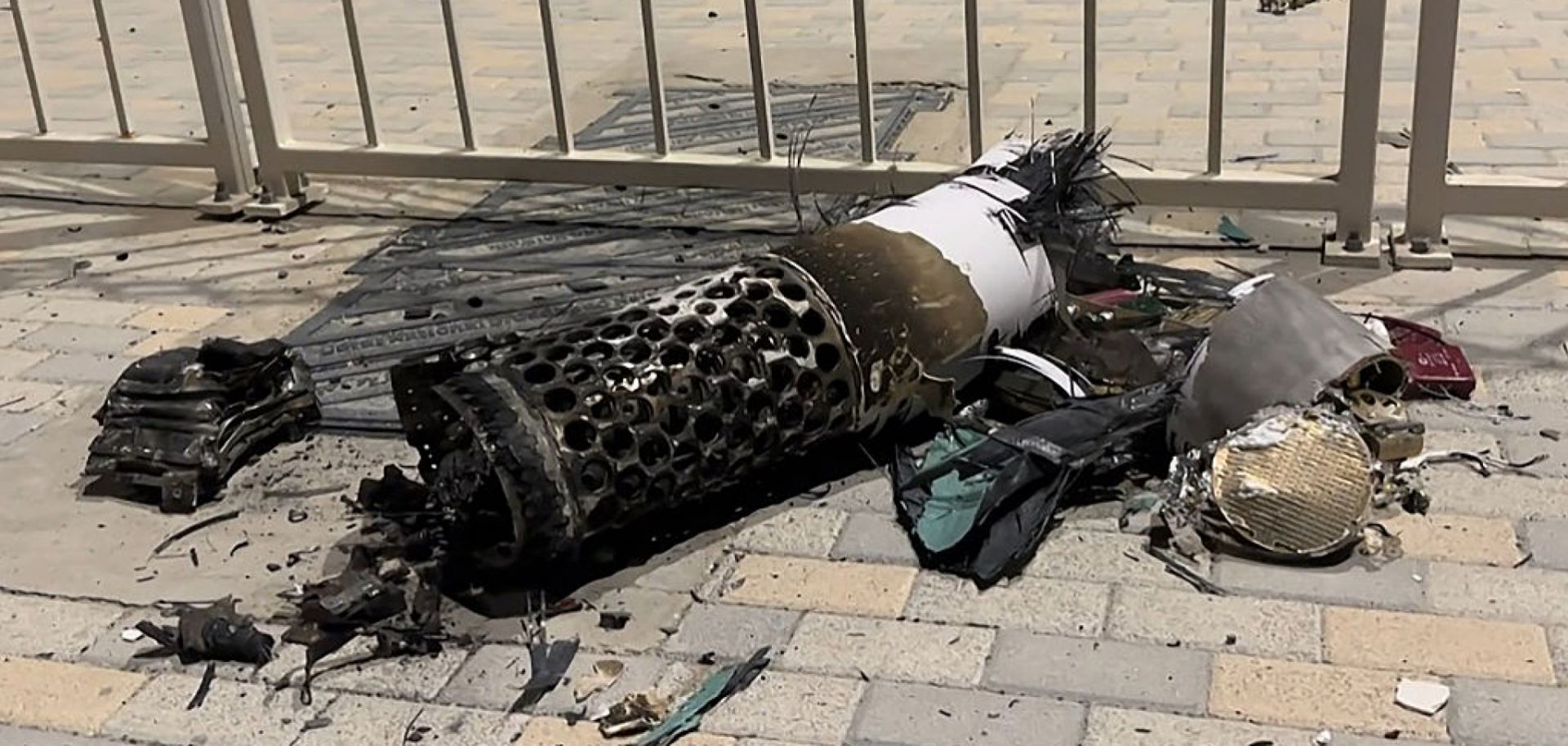
Absent further retaliation, Iran's seemingly limited response to the June 22 U.S. attacks enables a path toward de-escalation between the two sides, but there is still a chance, albeit slim, that additional U.S. strikes trigger a wider conflict. On 23 June, Iran launched multiple missiles against Qatar's al-Udeid Air Base, which houses the largest U.S. military base in the Middle East. Qatar released a statement condemning Iran's attack on the airbase, which had been partially evacuated as a precaution, and noted that Qatari air defenses intercepted the Iranian missiles, which caused no casualties. According to Iranian state-backed media, Iran's Supreme National Security Council claimed that the attack "obliterated" the al-Udeid Air Base — the same word U.S. President Donald Trump used to describe the damage the recent U.S. strikes did to Iran's nuclear facilities — and that Iran deployed the same number of missiles as the number of bombs (14) that the United States used in its June 22 strikes. The Iranian attack was reportedly coordinated with Qatari officials, and the United States received advanced warning.
- Prior to the attack, the U.S. Embassy in Qatar issued a "shelter in place" order for Americans in the country. In addition, Qatar suspended air traffic as a precautionary measure, according to a June 23 statement by Qatar's foreign ministry.
- The Al-Udeid Air Base houses U.S. Central Command's (CENTCOM) forward headquarters and around 10,000 U.S. troops, in addition to other U.S. assets. Between June 5 and June 19, when satellite imagery was taken, the United States reportedly moved more than three dozen military aircraft from the tarmac due to their vulnerability to potential Iranian attacks and/or shrapnel, though it was unclear whether the aircraft were moved to hangars or if they were moved to other U.S. bases in the region.
- Some initial reports claimed that Iran also launched missiles at a U.S. airbase in Iraq, but multiple Iraqi and U.S. sources have since denied this.
Iran's attacks appear carefully calibrated to respond to the U.S. attacks on its nuclear facilities, while simultaneously reducing the risk of pulling the United States into a wider conflict. The Iranian attack comes a day after the United States conducted strikes against three Iranian nuclear facilities: Natanz, Isfahan and Fordow. The U.S. attacks compelled Iran to retaliate to appease domestic hard-liners and avenge what Iran claimed was a violation of its sovereignty and international law. Following the U.S. strikes, Iranian Foreign Minister Abbas Aragchi said on June 22 that the United States "is solely and fully responsible for the dangerous consequences and far-reaching implications of its act of aggression." Iran had reportedly weighed a series of potential responses, ranging from well-telegraphed attacks targeting U.S. bases in the region to more aggressive moves like trying to close the Strait of Hormuz. However, given its weakened air defense systems and the degraded capabilities of its Axis of Resistance, Iran appears to have calculated its response to reduce the risk of pulling the United States, let alone other regional countries, into a prolonged conflict.
- The extent of damage to Iranian nuclear facilities resulting from the U.S. strikes remains unclear. Trump claimed that the strikes "obliterated" the nuclear sites, while Iranian officials downplayed the damage. Regardless, in advance of the U.S. attacks, Iran reportedly moved nearly 400 kilograms of 60% enriched uranium, which is unaccounted for.
- Shortly after the Iranian strikes on Qatar, Iran issued a statement seemingly designed to illustrate its careful calibration, noting that the U.S. airbase was far from civilian residential areas and that the attack "did not pose any threat to our friendly and brotherly country, Qatar, and its noble people."
If this is the extent of the Iranian response, the seemingly limited attack will enable a path toward de-escalation between the United States and Iran, but while less likely, a wider war still cannot be ruled out, depending on how the United States responds to the attack on the al-Udeid Air Base. Iran's heavily telegraphed attack on the military base enabled both Qatar and the United States to take precautionary measures to avoid casualties and physical damage. Thus, Iran's response provides the United States with an off-ramp to potentially de-escalate tensions with Iran, especially given that a sizable portion of Trump's U.S. supporters oppose a prolonged military intervention in Iran. While Iran is unlikely to quickly return to nuclear negotiations with the United States, Tehran could avoid a broader regional escalation of the war if Washington does not respond with further attacks on Iranian soil. This would likely keep the conflict constrained to strikes between Iran and Israel, as the latter is expected to keep targeting Iran's nuclear and military infrastructure over the coming days or even weeks. Following the Iranian attack, Trump wrote on X that "[Iran has] gotten it all out of their 'system'" and suggested "perhaps Iran can now proceed to Peace and Harmony in the Region," suggesting that the United States would not retaliate. That being said, while less likely, further escalation cannot be fully ruled out. This is because, for instance, Iran may not have completed its retaliation, or because future strikes between Iran and Israel may again drag in the United States. Moreover, Trump has publicly demanded that Iran accept a peace agreement, which Iran has so far resisted, preconditioning its willingness to negotiate on a stop to Israeli bombing. Believing that the United States and Israel now have the upper hand, Trump may consider additional attacks on Iran as a way to bring Iran back to negotiations. In addition, hawkish U.S. policymakers in the Trump administration and in the Pentagon may view this as an opportunity to further degrade Iran's nuclear program, especially if the United States's June 22 attacks did not cause as much damage to the targeted nuclear sites as Trump claimed. If the United States attacks more Iranian targets (nuclear, military or leadership), it would keep the door open to a stronger Iranian retaliation that would elevate the risk of a regional escalation, including via potential attacks by Iran or its proxies against Gulf energy infrastructure.
- Iran's regional allies and proxies, including the Shiite militia Kataib Hezbollah in Iraq and the Houthis in Yemen, had previously threatened to attack U.S. targets in the region if the United States hit Iranian nuclear facilities. But these groups have so far limited themselves to rhetorical condemnation in response to the June 22 U.S. strikes on Iran.
- In a June 22 pre-recorded news conference, Israeli Prime Minister Benjamin Netanyahu said Israel would "not be dragged into a war of attrition," but that it would also not end its "historic campaign" against Iran before achieving all of its goals. Israeli media sources have suggested that Israel will likely achieve the military objectives of its ongoing operation against Iran within days.
- In early 2020, Iran responded to the U.S. assassination of Iranian General Qassem Soleimani with a carefully calibrated attack against U.S. forces in Iraq, to which the United States did not respond militarily, ultimately paving the way for de-escalation.
- In the post on X, Trump called Iran's attack "very weak" and thanked Iran for the early notice.
