
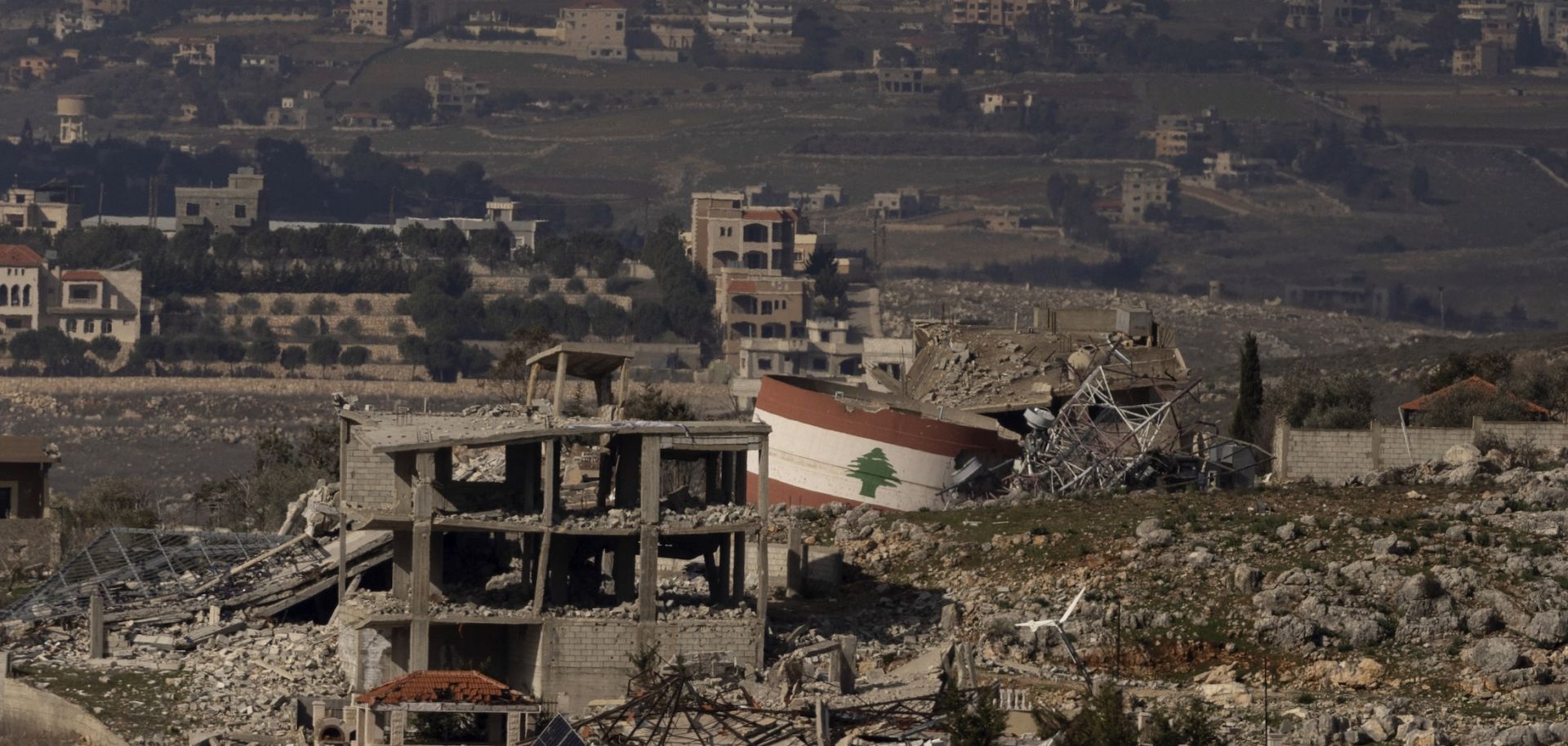
In an April 8 Reuters report, a senior Hezbollah official said the group was ready to hold talks with the Lebanese president about laying down its arms, with the condition that Israel withdraws from the five outposts it captured in southern Lebanon and halts its attacks on Lebanon. The report came amid increasing calls domestically and internationally for Hezbollah to disarm, especially following U.S. special envoy Morgan Ortagus' visit to Beirut, where she emphasized the need to disarm the group.
Hezbollah's announcement marks a pivotal shift in the group's posture since October 2023, when Hezbollah stood as Israel's most formidable foe and as the most well-armed, organized and influential regional nonstate actor — the lynchpin of Iran's Axis of Resistance. Hezbollah had held this position since its war with Israel in 2006, when the group forced the Israeli military to retreat across the Lebanese border, giving Hezbollah a large propaganda victory. This outcome locked Israel and Hezbollah in unwritten rules of engagement that recognized both sides' ability and willingness to inflict significant damage on the other, making an uneasy truce a better option. This mutual deterrence held out for nearly two decades, leading Hezbollah to feel invincible and perceive Israel as "weaker than a spider's web," as expressed many times by its late Secretary General Hassan Nasrallah. However, behind the scenes, Israel had been strategically gathering intelligence and infiltrating Hezbollah's ranks for years.
A year and a half after the surprise Hamas attack against Israel on Oct. 7, 2023, these rules of engagement have eroded to the point of no return, with Hezbollah suffering a major defeat at the hands of Israel's far superior military and intelligence. With the Sept. 27, 2024, assassination of Nasrallah and, since then, the election of a Western-backed Lebanese president and prime minister, Lebanon (and, thus, Hezbollah) has officially entered a new era in its history. This shift began with Israel's campaign of mass airstrikes and pager/walkie-talkie sabotage in September, which significantly weakened Hezbollah militarily, followed by Israel's ground invasion in October, the ceasefire agreement in November, and the fall of Syrian President Bashar al Assad — a key Hezbollah ally — in December. All these events weakened Hezbollah's influence and shaped Lebanon's internal dynamics away from the group's domination.
Hezbollah's Miscalculations
Before the Israel-Hezbollah conflict began, Hezbollah's missile arsenal was widely believed to be extensive in both quantity and variety, including thousands of drones and precision-guided munitions. As a result, Israeli and Western security services, as well as independent analysts, anticipated that a war would spark a massive barrage of missiles on Israeli cities, including Haifa and Tel Aviv. Israeli intelligence analysis from the past few years even suggested that Israel would struggle to withstand Hezbollah's missile capabilities, with studies estimating that Hezbollah could launch at least 500 to 1,000 missiles and drones per day. However, in the war that began in September 2024, the expected storm of Hezbollah missiles did not materialize.
Unlike in 2006 when Hezbollah's arsenal remained largely intact and then grew, the 2024 war was preceded by a year of limited conflict, efficient Israeli precision strikes, Israel's sabotage operations, and the assassination of most of Hezbollah's senior commanders and leadership, including Nasrallah. These blows effectively destroyed most of Hezbollah's military capabilities and its doctrine. Additionally, Iran, Hezbollah's patron, remained unwilling to provoke a broader war with Israel, further constraining the group's options. Combined, these factors amounted to several key miscalculations of Israel's intentions, strengths and capabilities, all while Hezbollah overestimated its own capabilities, believing the group could, like in 2006, wage a limited conflict of attrition that would eventually pressure Israel into negotiations. However, Israel had other plans and had adapted its military strategy to be much more efficient, compounded by its superior air power and technological capabilities.
Hezbollah's Struggle To Adapt
Hezbollah faces many constraints amid its ceasefire with Israel, not least because the group's loss of much of its strategic weaponry deprives Hezbollah of significant negotiating leverage; Hezbollah is also struggling to resupply its arsenal, as previous routes through Syria are no longer functional following al Assad's fall, and many other routes are unusable amid a U.S.-backed Israeli siege. Moreover, the ceasefire requires Hezbollah members south of the Litani River (a former buffer zone area) to surrender their weapons to the state, and recent calls by Israeli and U.S. leaders indicate they may extend this demand to areas north of the Litani as a condition for a permanent cessation of hostilities. Compounding this pressure, political shifts in Lebanon are weakening Hezbollah's domestic influence, with the public increasingly echoing international demands for Hezbollah to disarm and leave decisions of war and peace in the hands of the Lebanese state.
Despite these challenges, Hezbollah is unlikely to surrender its weapons in the near future. While the group no longer possesses the same level of strategic weaponry as before the Gaza war, Hezbollah remains Lebanon's most powerful armed faction, on par with the Lebanese army in many areas and even surpassing it in certain aspects, such as experience and armament. Additionally, Israel's continued presence in southern Lebanon and its continuing airstrike campaign, the extended time required for the Lebanese government to negotiate a broader national defense strategy with Hezbollah, and Hezbollah's desire to portray itself as the vanguard of resistance ahead of Lebanon's 2026 parliamentary elections will further motivate the group to retain its arms. If this were not enough, Hezbollah Secretary General Naim Kassem's latest speech on April 18 closed the door to disarmament by setting preconditions for any talks on a national defense strategy, and he also rejected any form of normalization with Israel.
As a result, Hezbollah will need to recalibrate its military strategy. Foremost, the group will prioritize rearming efforts through Iran, utilizing smuggling routes via land, sea and air. However, these efforts will be inherently slow and carry significant risks of interception by Israeli forces, potentially igniting renewed conflict. To facilitate these arms transfers, Hezbollah will likely pursue strategies to undermine the control of Hayat Tahrir al-Sham, the group leading Syria's transitional government, so Hezbollah can reopen critical smuggling routes through Syria. However, this tactic risks attracting backlash and could draw Hezbollah back into Syrian conflict dynamics, especially if the strategy involves cooperation with the Alawites, who are in an insurgency against the new Syrian authorities.
Politically, Hezbollah will aim to influence border demarcation talks to ensure Shebaa Farms — a disputed land between Lebanon, Israel and Syria, but occupied by Israel and claimed by Lebanon — remains contested. Relinquishing claims there would be perceived as a political defeat unless counterbalanced by concessions, such as the removal of Israeli border posts. Additionally, Hezbollah will pressure the Lebanese state to take action against Israel's presence in southern Lebanon and continued airstrikes, including recently in the capital, Beirut. Such pressure will likely include arguments by pro-Hezbollah lawmakers in the Lebanese parliament, strong rhetoric by Hezbollah's secretary general and threats to resume a high pace of attacks against Israeli positions. While Hezbollah would be unlikely to follow through on such threats amid a need to rebuild intelligence and military capabilities, a significant provocation — such as direct attacks on Iran, targeted assassinations of key leaders or substantial Israeli military incursions — could push Hezbollah into another conflict.
Finally, Hezbollah will resist domestic economic reform efforts, particularly transparency measures that would threaten its ability to rearm and rebuild infrastructure. Instead, the group will tactically slow reform processes in Lebanon while seeking ways to exploit international aid from the European Union, Arab states and the United States.
In the early months of Lebanon's new political era, the state appears poised to adopt a strategy of measured pragmatism in dealing with Hezbollah, one that prioritizes stability and long-term sovereignty over abrupt confrontation. While the government under President Joseph Aoun and Prime Minister Nawaf Salam has signaled its intent to reassert national control and gradually curb Hezbollah's military autonomy, it is unlikely to pursue immediate disarmament, given that this would cause sectarian upheaval in Lebanon and prompt Hezbollah to implement aggressive measures. After all, the last time the Lebanese government tried to dismantle Hezbollah's military and communication infrastructure in Beirut in 2008, the group briefly took over the capital and defeated other sectarian militias.
Instead, the Lebanese government is expected to focus on building internal legitimacy through governance reforms, economic recovery and institutional strengthening, thereby creating the political leverage needed to address Hezbollah's role over time. The leadership seems acutely aware that sudden moves, especially under pressure from Israel and the United States, could spark sectarian unrest, destabilize the fragile post-crisis recovery and derail the reform agenda. Consequently, Lebanon will likely engage in cautious dialogue, attempt to politically integrate Hezbollah within a state-led framework, and demonstrate incremental progress to international actors to buy time. This forward-looking approach recognizes that sustainable change must come from within and that diminishing Hezbollah's influence will require internal cohesion and strategic patience rather than external compulsion.
Three Scenarios for Hezbollah's Future
With these points in mind, the scenarios below detail three plausible ways, listed from most to least likely, that dynamics among Lebanon, Hezbollah and Israel could play out in the coming months.
1. Disarmament Stalls Amid External Pressure, Low-Intensity Fighting
Despite the new Lebanese government's clear declarations favoring national sovereignty and institutional reform, no tangible steps toward Hezbollah's demilitarization are likely to emerge in this scenario. This is primarily due to the fact that the Lebanese state will remain cautious and mindful of sectarian tensions, political fragility and economic vulnerabilities, making it hesitate to confront Hezbollah directly. Instead, the government would be more likely to favor incremental dialogue and symbolic gestures over decisive actions such as outright pressuring the group to disarm, let alone forcing it to do so.
However, external actors would push the Lebanese government to change its tune. The United States would maintain diplomatic pressure on the Lebanese government to demilitarize Hezbollah and establish tangible state control, and Israel would maintain military pressure from the south, continuing to strike Hezbollah targets at will. While the Lebanese government would struggle to resist Israel's military might, bowing to such external pressure would erode the Lebanese government's political credibility and undermine internal reform initiatives by pressuring the state to disarm Hezbollah.
Thus, rather than empowering the government, aggressive external demands would intensify divisions within Lebanese society, enabling Hezbollah to continue to frame itself as a legitimate resistance against foreign intrusion and interference, especially amid Israel's continued military presence and operations in southern Lebanon. Hezbollah would pressure the Lebanese government to force an Israeli withdrawal as a precondition for any negotiations on disarmament or a national defense strategy, betting that Israel would be unlikely to agree, thus sending a message to Hezbollah's constituencies that there is no path other than resistance. Over time, Hezbollah would opt for limited resistance against Israel's outposts in southern Lebanon, with periodic attacks against Israel's north, in a bid to force Israeli troops out.
Israel, wary of Hezbollah's continued military capabilities, ongoing arms buildup and plans to resist over time, would likely intensify precision strikes against critical targets, attempting to degrade the group's strength gradually. Additionally, Israel could, once again, attempt to establish or expand a buffer zone in southern Lebanon as a strategic defensive measure against potential incursions or rocket fire, escalating military friction. These developments would further destabilize Lebanon, causing additional humanitarian distress and economic strain, as well as potentially stoking internal resentment and sectarian polarization. There would not be a return to full-scale war between Hezbollah and Israel, but hostilities along the Israel-Lebanon frontier would reignite, resulting in frequent low-scale clashes between Hezbollah and Israel.
2. Border Demarcation Leads to Israeli Withdrawal, Disarmament of Hezbollah
In this second scenario, sustained international diplomacy, combined with Hezbollah's strategic patience, could eventually create conditions conducive to meaningful negotiations. Recognizing the diminishing returns of continuous confrontation and Israeli military pressure, Hezbollah might strategically choose to moderate its stance, allowing space for international mediation aimed at border demarcation between Lebanon and Israel. As negotiations progress, particularly around disputed territories and maritime boundaries, this diplomatic momentum could effectively reduce tensions along the border and significantly lower the intensity and frequency of Israeli military strikes, fostering an environment of relative stability.
Capitalizing on this improved diplomatic climate — especially in the event of progress between Iran and the United States on nuclear talks — the Lebanese state would gradually engage Hezbollah in serious internal negotiations focused on developing a comprehensive national defense strategy that would shift the decisions of war and peace to the state and limit Hezbollah's autonomy on using arms. These discussions would aim to progressively integrate Hezbollah's military capabilities into Lebanon's formal state institutions, paving the way for eventual disarmament. Hezbollah, aware of shifting regional dynamics and internal Lebanese sentiment increasingly favoring stability and economic reform, might embrace this transition, repositioning itself primarily as a robust political party within Lebanon's democratic framework.
Such a shift would not only enhance Lebanon's sovereignty and institutional credibility but also unlock significant international support, investment and economic aid previously withheld due to Hezbollah's armed status. The successful delineation of borders and the initiation of Hezbollah's demilitarization could further incentivize international stakeholders — particularly the United States, European nations and Gulf states — to support Lebanon's broader recovery and stabilization efforts.
3. Large-Scale Confrontation Resumes Amid Failed Diplomacy
In the final scenario, the escalating intensity of Israeli airstrikes — reaching into the heart of Lebanon, including Beirut — and unrelenting diplomatic and economic pressure from the United States propel Hezbollah toward a more aggressive stance. Facing continuous, targeted Israeli operations intended to weaken its strategic capabilities, coupled with American diplomatic and financial leverage, Hezbollah would likely conclude that its strategic position will only deteriorate further over time. In such a calculation, Hezbollah could perceive immediate military confrontation as preferable to gradual degradation, seeking to maximize its remaining military and political leverage.
Consequently, Hezbollah would likely eventually initiate attacks or respond aggressively to Israeli provocations, significantly escalating tensions along Lebanon's southern border. A new, intense conflict could rapidly unfold, characterized by comprehensive missile exchanges, rocket barrages targeting major Israeli cities, and intensified ground skirmishes. Hezbollah, anticipating extensive Israeli counterattacks, would rely on its deeply embedded military infrastructure and social support networks, banking on widespread public resentment toward external pressures to bolster domestic legitimacy and justify its actions as a defensive posture against external aggression.
Israel, meanwhile, encouraged by robust U.S. backing and eager to capitalize on the perceived momentum to decisively weaken Hezbollah, would respond forcefully, expanding its military operations beyond southern Lebanon and targeting critical Hezbollah infrastructure nationwide, including densely populated urban centers. Israel would also expand its buffer zone in southern Lebanon, mimicking its strategy in Syria and the Gaza Strip. This aggressive response could lead to substantial Lebanese civilian casualties, severe infrastructural damage and a widespread humanitarian crisis, further destabilizing the Lebanese state and crippling its fragile recovery and reform efforts. Internally, Lebanese society would risk significant sectarian polarization and turmoil, exacerbated by Hezbollah's mobilization and Israel's extensive military operations. Although international mediation would intensify, achieving swift de-escalation or lasting ceasefires would prove challenging given the entrenched strategic calculations of both Israel and Hezbollah.
A Fragile Foreseeable Future
Even though recent events have opened the door to a new chapter in Lebanon's history, the stability of Lebanon's newly formed government will remain precarious over the next several months amid pressure from every direction. Hezbollah will dissuade the government from giving in to Israeli and U.S. demands, while the United States will push for Hezbollah's disarmament, and an increasingly aggressive Israel will continue striking Hezbollah at will and maintain its military presence in southern Lebanon. Hezbollah's situation will also remain risky given that its options are limited: full-scale renewed conflict with Israel or disarmament — neither of which it finds attractive. For Israel, a return to former rules of engagement where Hezbollah threatens its borders is no longer acceptable, and with the Israeli military and state emboldened by their victory over Hezbollah in the past war, Israel will almost certainly continue to be aggressive and coercive. While it is unclear how these competing pressures will develop, for the first time in recent history, Hezbollah's position in Lebanon is not assured, and the door is open for the Lebanese state to change course. It is the interplay among the many aforementioned factors that will help decide the trajectory for Hezbollah and Lebanon more broadly, as Israel's preference for aggressive action looms.
