
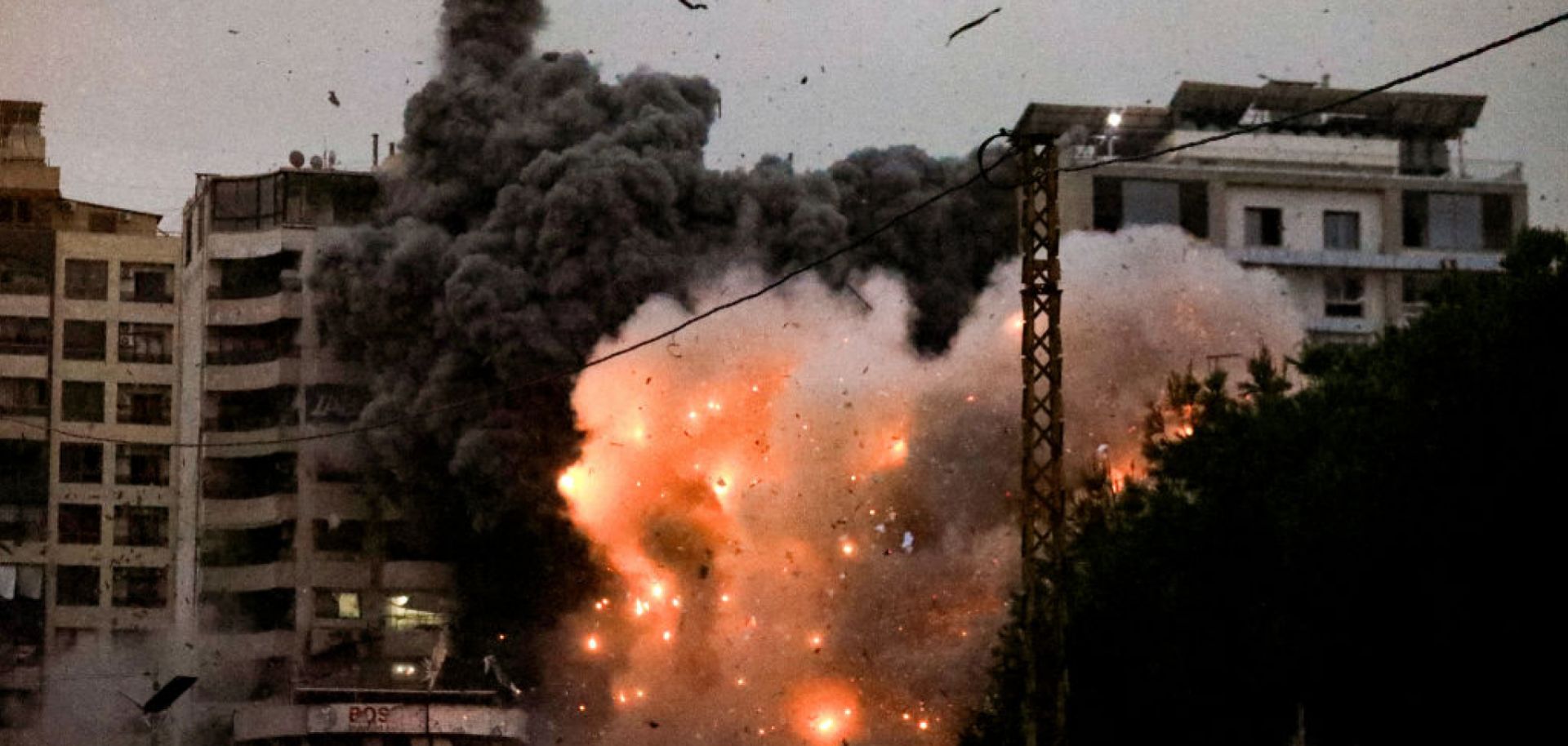
Israel will continue to exploit its freedom of action in Lebanon to attack Hezbollah under the guise of ceasefire enforcement, which will prompt Hezbollah to retaliate as the group tries to reestablish some level of deterrence, portending more tit-for-tat exchanges that could ultimately collapse the current truce. On Dec. 3, Israeli Defense Minister Israel Katz threatened to target the Lebanese state itself if the truce with Hezbollah collapsed and hostilities resumed. This was the most serious threat Israel has made since both sides agreed to a 60-day truce brokered by the United States and France on Nov. 27. Israeli forces have already violated the agreement several times by continuing to strike alleged Hezbollah fighters and positions — at times in response to alleged ceasefire violations by Hezbollah, but at others seemingly on their own initiative. On Dec. 2, following multiple Israeli attacks, including the killing of at least 12 people that same day, Hezbollah retaliated for the first time by shelling an Israeli military post in the Kfar Chuba hills — claimed by Lebanon but occupied by the Israelis — stating that this was an initial defensive response to what it said were Israel's constant truce violations. Meanwhile, the United States has reportedly warned Israel that it is violating the agreement, specifically citing Israeli drone flights over Lebanon's capital Beirut.
- The Nov. 27 ceasefire agreement deescalated the Israel-Hezbollah conflict that began in October 2023 with near-daily cross-border attacks before intensifying in late September 2024 with Israel's assassination of Hezbollah's leader Hassan Nasrallah and subsequent ground invasion of southern Lebanon shortly thereafter.
- Lebanese officials, including Prime Minister Najib Mikati and Speaker of Parliament Nabih Berri, have called on the United States and France to pressure the Israelis to uphold the truce and halt attacks on Hezbollah.
- Despite the tit-fot-tat exchanges, U.S. State Department spokesperson Matt Miller told reporters on Dec. 2 that the United States anticipated possible violations of the Israeli-Hezbollah ceasefire, but asserted that the deal is holding despite these breaches.
- In addition to Israeli airstrikes and shelling, Lebanese local sources have reported Israeli troop movements in towns of southern Lebanon where the Israelis have operated during the ground war, with troops and tanks reportedly staying there and in some places repositioning.
Israel is capitalizing on its freedom of action understanding with the United States that is separate from the ceasefire deal, and will continue to conduct attacks against alleged Hezbollah violations to ensure the group does not use the truce period to reorganize or rearm. The 60-day truce that Israel and Hezbollah agreed to on Nov. 27 seeks to halt escalating hostilities that devastated civilian regions and severely strained military resources on both sides, with the aim of establishing a permanent ceasefire after that period. However, Israel reportedly also reached a separate agreement with the United States that preserves Israel's right to ''maintain full military freedom of action'' in Lebanon in case of ceasefire violations. Specifically, the agreement states that if Hezbollah breaches the truce, the United States will first give a warning to the Lebanese government; but if Lebanese authorities then prove unable or unwilling to address those violations (which is likely, given that the official Lebanese army is far weaker than Hezbollah), Israel has the right to respond, effectively allowing the Israelis to continue military action against any perceived imminent threat. Bolstered by this freedom of action, Israeli forces will continue to use their greater military capacity and superior intelligence to monitor ceasefire violations and act decisively. This aggressive stance will likely include more targeted strikes on Hezbollah operatives and infrastructure under the guise of truce enforcement, in order to prevent Hezbollah from reestablishing positions near the border, which would pose an imminent threat to Israel. These strikes will be focused on preemptively mitigating Hezbollah's ability to regroup and rearm in Lebanon, particularly south of the Litani River but also in other regions like the Bekaa Valley, as Israel seeks to secure the gains it made against the group in the recent conflict.
Hezbollah, meanwhile, is trying to reestablish an informal security arrangement with Israel through deterrence, and will likely continue to launch limited attacks that do not jeopardize the ceasefire but still demonstrate a willingness to respond to recurring Israeli violations. Fatigued by substantial losses, destruction and displacement, Hezbollah will likely use the 60-day truce period to focus on rebuilding its deterrence posture and political capital. Hezbollah's so far limited response to the Israeli ceasefire violations reflects the group's desire to reestablish deterrence with Israel that maintains certain rules of engagement without giving the Israelis an alibi to resume hostilities, which would risk exacerbating the already significant personnel and material losses Hezbollah has suffered over the past year. Through this strategy, Hezbollah is hoping to show that Israeli violations will not go unanswered, while simultaneously signaling that the group does not want to fully collapse the ceasefire. To this end, Hezbollah will likely continue to test Israel's resolve and the boundaries of the truce with more calibrated retaliatory actions. But it will still avoid launching major attacks that would immediately restart a full-scale war with Israel, which would risk not only further weakening the group but alienating segments of Lebanon's already suffering population; while the Lebanese people largely rallied behind Hezbollah following the Israeli ground invasion, a Hezbollah action that collapses the truce would be more likely to stoke pushback from citizens who would probably blame the group for renewed violence.
- War-weariness eventually shaped both parties' acceptance of the truce. Since they began invading southern Lebanon on Oct. 1, Israeli forces have endured high casualties from Hezbollah's entrenched positions along the border, with dozens of soldiers killed and thousands injured from the fighting. Meanwhile, relentless Israeli airstrikes also significantly degraded Hezbollah's leadership and capabilities, which — combined with the conflict's rising civilian and economic toll on Lebanon — eroded the group's will to keep fighting. Additionally, Israel sought to refocus its military efforts on countering Iran and addressing the Gaza conflict, while Hezbollah and its Iranian backers needed time to regroup and rearm after having suffered significant material and personnel losses during the conflict.
- Following the 2006 Israel-Hezbollah war, a covert set of rules of engagement emerged, grounded in mutual deterrence. Both sides, wary of the high costs of direct conflict, operated within tacit understandings that aimed to avoid escalation. Hezbollah refrained from large-scale attacks on Israeli territory, while Israel limited its strikes to specific provocations or defensive measures. This dynamic was underpinned by a balance of threats: Hezbollah's extensive rocket arsenal posed a credible danger to Israel's northern regions, while Israel's airpower and ability to target critical infrastructure in Lebanon acted as a powerful counterweight.
With Israel emboldened and Hezbollah weakened, the stage is set for a long-term security arrangement that enables Israel to strike Hezbollah operatives, weapons stockpiles and other infrastructure in Lebanon, just as Israel currently does against Iranian targets in Syria. Hezbollah is likely hoping to reach a tacit understanding with Israel, akin to the rules of engagement established after the 2006 war, where overt hostilities were avoided in exchange for tacit acceptance of certain operational boundaries. But such a security arrangement is unlikely because the recent conflict eroded the balance of threats and deterrence equation that had previously existed between the two sides, with Israel now more willing to strike Hezbollah after having degraded most of the group's rocket, missile and drone stockpiles. The truce, skewed in Israel's favor with its freedom to maneuver, will enable Israel to continue bombing Hezbollah-related targets under the pretext of maintaining security. Meanwhile, Hezbollah's depleted arsenal, disrupted command structure and the extensive destruction it has faced will force the group to go into recovery mode as it tries to contend with Israel's operational dominance. This dynamic will eventually pave the way for Israel to adopt a long-term strategy of degrading Hezbollah through geographically limited ground raids and surgical strikes against the group's physical assets and leaders in Lebanon — capitalizing on Hezbollah's current vulnerability to further reduce the group's capacity to respond without severe consequences. Such a strategy would mirror Israel's efforts to limit Iranian influence in Syria by targeting assets linked to Iran's Islamic Revolutionary Guards Corps.
- After the 2006 war, Hezbollah built up a large arsenal of advanced missiles and drones that, until recently, had effectively deterred Israel from directly attacking Hezbollah targets in Lebanon. But that deterrence has significantly weakened over the course of the latest war, with Israel claiming Hezbollah has lost somewhere between 70-80% of its missile, rocket and drone launching capabilities.
- For over a decade, Syria's war-torn government has been unable and unwilling to counter any large-scale Israeli military action in its territory, which has given Israel freedom of action against Iran-backed militias in the country.
Israel's hawkish posture and willingness to consolidate its gains from the recent conflict raise the specter of an aggressive response to any alleged ceasefire breach by Hezbollah, even if the violation is comparatively small, lowering the threshold to reignite hostilities and collapse the truce. The Israeli government is seeking to return civilians to communities along the northern border who were displaced by the conflict with Hezbollah, some of whom have criticized the truce as not sufficiently addressing their security concerns. This will incentivize Israel to aggressively go after Hezbollah, to ensure the group remains weak and unable to pose a significant threat to northern Israelis. Against this backdrop, and emboldened by its declared military successes, Israel will likely interpret any Hezbollah retaliatory action as warranting a swift — and what Hezbollah would interpret as a disproportionate — response. This zero-tolerance policy will aim to cement Israel's strategic upper hand, disrupting Hezbollah's recovery efforts and preventing it from leveraging the truce to rebuild militarily or politically. But it will also risk eventually collapsing the truce and renewing widescale hostilities, especially if it prompts Hezbollah to resume a more consistent pace of attacks that would give Israel the pretext for a larger campaign.
- While the incoming administration of U.S. President-elect Donald Trump likely prefers to avoid a return to full-scale war, it is unlikely to restrain Israeli action against Hezbollah and could support further attacks on the group.
