
New U.S. tariffs on Vietnam present a severe threat to the Southeast Asian nation's export-based economy, creating substantial risks that could compel a strategic drift toward China. On April 2, U.S. President Donald Trump announced a sweeping 46% tariff on all U.S. imports from Vietnam, effective April 9, under the White House's new Reciprocal Tariff Program. Vietnam was among the hardest-hit countries in the announcement. The move triggered a rapid, high-level response in Hanoi. On April 4, General Secretary To Lam, the country's de facto top leader, held a direct phone call with Trump during which he offered to eliminate all Vietnamese tariffs on U.S. imports, with Lam urging Trump to adopt a reciprocal approach. Vietnam has also resorted to behind-the-scenes engagement with U.S. stakeholders and key third-party intermediaries, including Japan, South Korea and U.S. industry groups like the American Chamber of Commerce in Vietnam.
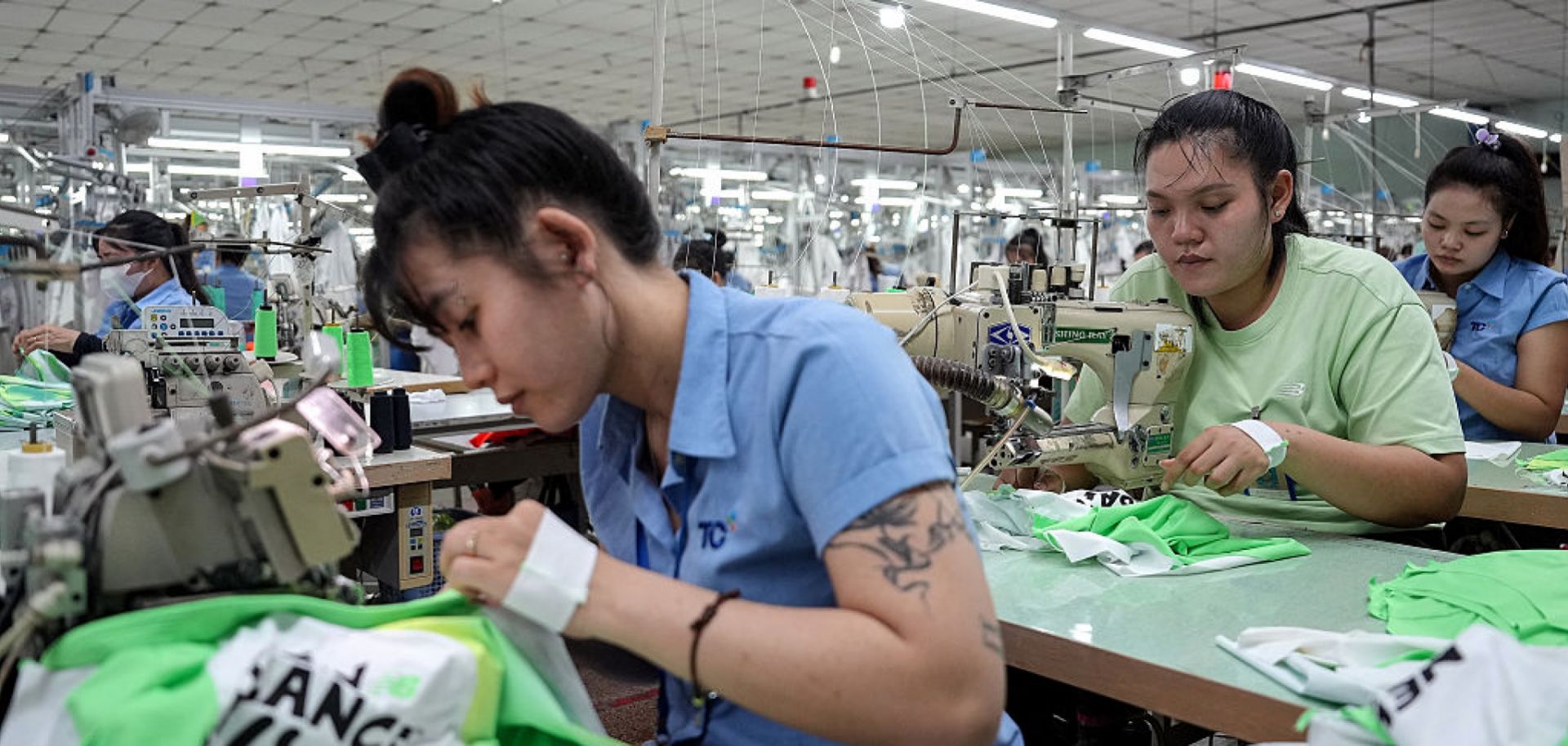
- In the wake of the tariff announcement, the Vietnam Index dropped over 8% within two trading sessions, and panic rippled through sectors like electronics, apparel and furniture, industries where the United States accounts for over 30% of Vietnam's total export volume.
- Vietnam's Ministry of Industry and Trade tasked provincial governments with convening affected manufacturers to gauge the short-term impact of the new U.S. tariffs and identify export diversification options.
- Vietnamese firms that manufacture goods for U.S. companies under contract have reportedly begun reviewing contingency plans for rerouting inventory or reclassifying origin via third countries.
- On April 7, White House trade adviser Peter Navarro dismissed Vietnam's offer to eliminate tariffs on U.S. imports, stating that addressing Hanoi's so-called ''non-tariff cheating'' is more critical. He cited practices such as Chinese products being rerouted through Vietnam, intellectual property theft and Vietnam's value-added tax as unfair trade barriers. Navarro emphasized that mere tariff reductions were insufficient without substantial structural reforms to rectify these issues.
Hanoi's trade overture to Washington reflects the dire threat the new tariff regime poses to Vietnam's economic growth model. Vietnam had anticipated some degree of U.S. pressure after Trump returned to the White House in January, given the massive and growing trade imbalance between the two countries ($124 billion trade surplus for Vietnam in 2024) and preponderance of Chinese goods using Vietnam to sidestep U.S. levies imposed on China. To mitigate this risk, Vietnam had sought to address trade imbalances with the United States in recent months. In March, for example, it reduced (but did not across-the-board eliminate) tariffs on U.S. exports of corn, soybeans, chicken, pistachios, almonds, apples, cherries, raisins, ethanol, liquified natural gas (LNG), automobiles and wood products. In February, Hanoi also committed to importing more U.S. LNG and agricultural products, and is planning to purchase hundreds of millions of dollars worth of Boeing commercial jets as well. Additionally, in March, Vietnam granted SpaceX's Starlink satellite internet provider an operating license on a trial basis (a major concession in the context of tight telecommunications regulations in Vietnam). But despite these efforts, the Trump administration slapped Vietnam with a massive 46% tariff on April 2 — a rate that far surpassed internal expectations in Hanoi. If this tariff remains in place, it will quickly destabilize Vietnam's export-reliant economy, risking a multi-sector contraction, as well as reduced GDP growth and capital outflows. The United States accounts for roughly 29% of Vietnam's total exports and more than 40% in high-margin sectors such as furniture, textiles, electronics and footwear. These industries operate on tight margins and rely heavily on U.S. consumer demand, especially post-2020, as supply chains reoriented away from China. The imposition of a uniform 46% tariff is effectively prohibitive, with early indications already visible as orders from U.S. clients are delayed, downsized or cancelled outright. If sustained, this shock could wipe out 2-3% from GDP growth in 2025 (according to market intelligence firms BMI Research and Dragon Capital), derail the Vietnamese government's 2025 export growth target of 7%, and significantly disrupt foreign direct investment flows from U.S. and U.S.-linked companies.
- Vietnam's economic strategy has long been anchored in export-led growth, with the United States serving as its largest export market.
- Since the U.S.-China trade war that began during Trump's first term, Vietnam has absorbed a significant share of global manufacturing redirected from China, particularly in electronics, textiles and consumer goods. This has made Vietnam a crucial part of many U.S. firms' supply chains, but it has also made the country's economy increasingly reliant on U.S. exports.
- Foreign manufacturers that have invested in Vietnam — particularly those from Japan, South Korea and Taiwan — are pressuring Vietnamese authorities for clarity in light of Trump's sweeping new tariffs, fearing extended disruption to U.S.-bound orders.
- Vietnam's official 2025 growth target is 8%, while the World Bank forecasts 6.8% growth (for now).
Vietnam's efforts to quickly de-escalate tensions with the White House also reflect its imperative to maintain trade with the United States as a balance against China. China has also intensified its economic courtship of Vietnam, offering the country deeper integration with Chinese supply chains and cross-border infrastructure. While Hanoi has welcomed Beijing's overtures, it also views them with caution amid fears of Chinese economic dominance and national security concerns related to territorial disputes, as well as broad public distrust of Chinese influence. Maintaining the United States as both an economic and security hedge against China thus remains a top priority for Vietnam. Against this backdrop, Vietnam's recent concessions to the United States, including Lam's offer to remove all tariffs on U.S. imports, signal Hanoi's desire to maintain this partial alignment with Washington and stabilize relations before Vietnam is forced to recalibrate toward Beijing under duress (and before ill effects set in, like capital flight or domestic blowback).
- The fact that Lam engaged Trump personally by calling him directly underscores the urgency Hanoi attaches to the crisis, as it is highly unusual for the general secretary of the Vietnamese Communist Party to engage in direct trade diplomacy, which is usually handled by the prime minister. This is also notable in the context of Vietnam's leadership reshuffling away from economic liberalization-minded leaders in recent years toward a security-minded bent represented by Lam.
But while Hanoi remains skeptical of deepening economic dependence on China, the loss of U.S. market access could tilt internal cost-benefit calculations in that direction. While China cannot replace lost U.S. demand, deeper Vietnamese economic engagement with Beijing will likely materialize via expanded customs coordination, renminbi-based trade settlement and cross-border infrastructure financing. This will especially be the case if Vietnam's government faces growing domestic political pressure amid job losses in industrial provinces where labor-intensive manufacturing dominates. If sustained, Trump's tariff regime could further alter Vietnam's diplomatic posture as well. While Hanoi has invested heavily in diversifying strategic ties, most notably with Japan, South Korea, the European Union and India, none of these partners offer the scale or short-term economic capacity to offset the loss of U.S. market access. If the U.S. tariffs remain in place, Vietnam will thus likely be compelled to deepen reliance on China, which remains the only actor with the proximity, logistical integration and financial leverage to provide short-term relief. That said, the two economies are not complementary, as many of the goods Vietnam produces compete directly with Chinese exports. Chinese firms operating in Vietnam also do so to re-export to third markets rather than serve demand inside China. This means that while increased economic engagement with China may provide Vietnam some financial and logistical relief, it will not be a true substitution for the U.S. market. Any deeper shift toward China will also risk alienating other key trading partners, such as the European Union and Comprehensive and Progressive Trans-Pacific Partnership (CPTPP) partners, whose firms are in Vietnam to serve global demand, not the Chinese market, and who could reconsider their investments in Vietnam if the country's access to the U.S. market remains compromised. Nonetheless, quiet alignment with China on supply chain and investment flow coordination would likely emerge as a de facto fallback in the short term, particularly if the government's internal calculus prioritizes growth over strategic balancing.
- China and Vietnam are parties to several free trade agreements, including the ASEAN-China Free Trade Area and the Regional Comprehensive Economic Partnership. Vietnam is not a formal signatory to China's Belt and Road Initiative, but it participates selectively in BRI-aligned infrastructure projects, particularly in transport and logistics. In February, Vietnam's National Assembly approved an $8.3 billion railway project connecting to the Chinese border. This railway aims to modernize Vietnam's railway system and facilitate trade with China. Construction is slated to begin this year, with completion targeted by 2030.
- For Vietnam, the European Union and the 10 other countries in the CPTPP collectively represent a larger market in terms of GDP and consumption, though this does not represent a true substitution for the U.S. market either, in terms of demand.
- In force since December 2018, the CPTPP is a high-standard trade agreement among 11 countries, including Australia, Brunei, Canada, Chile, Japan, Malaysia, Mexico, New Zealand, Peru, Singapore and Vietnam. The pact eliminates most (though not all) tariffs between signatories and sets rules on labor, environment and digital trade. Pursuant to its CPTPP commitments, Vietnam has formally committed to eliminating nearly all tariffs and aligning with advanced rules on intellectual property, regulatory transparency and customs procedures. Vietnam also has a similar free trade pact with the European Union, which entered into force in 2020.
The Trump administration currently does not seem interested in a deal with Vietnam to reduce or suspend tariffs, but if one happens, it would likely require Hanoi to move beyond tariff liberalization and address the structural realities driving U.S. grievances regarding trade. Washington's rejection of Hanoi's zero-tariff offer makes clear that rectifying Vietnam's massive trade surplus with the United States remains the Trump administration's top priority, rather than eliminating tariffs. It also indicates that in potential negotiations on tariff relief, the White House's demands will extend well into the regulatory and enforcement domain, specifically regarding Vietnam's non-tariff barriers, rules-of-origin circumvention, opaque licensing procedures, perceived value-added tax discrimination and currency manipulation, which some U.S. trade officials have argued disproportionately disadvantage U.S. exporters. While Vietnam has already made sweeping legal reforms through the CPTPP that, in theory, address the Trump administration's concerns, compliance and enforcement remain uneven at best. Washington also argues that while Vietnam has eliminated tariffs on most goods under the CPTPP and other free trade agreements, including most agricultural goods, Vietnam continues to shield the agricultural sector, where U.S. exporters are most competitive, in trade with the United States. Any viable agreement would thus likely need to include credible commitments from Hanoi on customs modernization, digital origin tracing and enhanced regulatory transparency — particularly in the agriculture sector, as well as other sectors where the United States claims persistent access barriers, such as medical devices, automobiles and digital services. As part of such a deal, Washington could entertain a conditional suspension framework, possibly modeled on past Section 301 standstills, where punitive measures are lifted in phases based on verified implementation milestones. However, Hanoi's capacity to quickly deliver on such structural reforms is constrained by institutional bottlenecks, such as limited regulatory capacity. Separately, Hanoi would likely hesitate to undermine its multi-alignment foreign policy strategy by entering into deep, binding commitments with the United States that China could see as a tilt too far toward Washington. If a deal is made, Vietnam is thus most likely to reach a narrow, sector-specific arrangement with the United States that offers enough concessions to allow the Trump administration to declare political victory, without crossing thresholds that would destabilize its economy or trigger reciprocal demands from other trade partners. While the Trump administration is unlikely to fully remove its tariffs on Vietnam, it could conceivably lower the rate to be more in line with new U.S. tariffs imposed on other regional countries (around 20-35%). But if Vietnam fails to offer the major concessions needed to quickly clinch such a deal, the 46% tariff could become entrenched, which would risk resulting in a structural rupture of the two countries' economic ties that could easily impact their relationship in additional contexts, like defense cooperation and broader geopolitical alignment.
- In potential trade negotiations, the Trump administration could also press Vietnam to accelerate its convergence with World Trade Organization norms on intellectual property enforcement and technical barriers to trade. While Vietnam has aligned its legal framework with such WTO norms, enforcement remains uneven and politically sensitive.
- Vietnam is also routinely criticized for failing to meet its CPTPP commitments in various areas including intellectual property enforcement (which the United Kingdom highlighted in 2023, noting that lack of transparency poses challenges for investors), technical barriers to trade (scrutinized by the CPTPP Committee on Technical Barriers to Trade in 2024), regulatory transparency (with Canada criticizing Vietnam's lack of streamlined procedures in 2024), labor rights (which Canada also alleged does not align with CPTPP standards in 2023) and customs procedures (an area in which the CPTPP Commission said Vietnam was misaligned in 2024).
- Vietnam could offer to increase purchases of U.S. weapons to further ease trade tensions with the Trump administration. Discussions have been underway regarding the acquisition of Lockheed Martin C-130 Hercules military transport aircraft, though much U.S. defense equipment is cost-prohibitive and runs into interoperability problems with Vietnam's mostly Russian-made arsenal. Nonetheless, greater arms cooperation would signal deeper U.S. alignment if a trade deal is reached.
