
Editor's Note: This article is part of an ongoing RANE series on the geopolitical impacts of water stress. The first installment of this series provided a broad overview of how the unequal distribution of freshwater shapes geopolitical patterns. Other installments have examined the impacts of water stress on the global economy, Europe, China, the Sahel region of sub-Saharan Africa, Israel, Central Asia, Chile, the Middle East, the Mekong River region and climate investment.
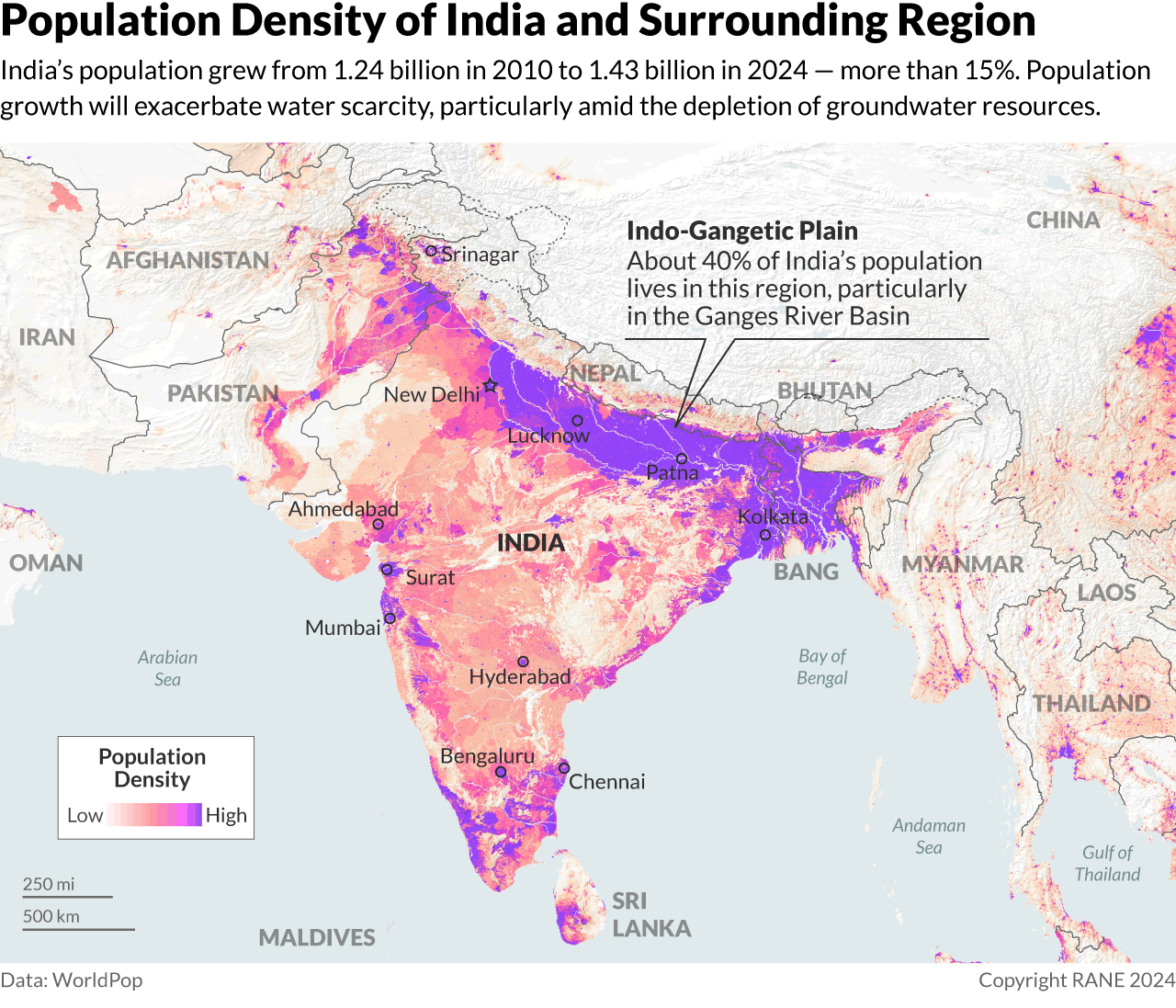
India's groundwater crisis, driven by overexploitation and climate-related challenges, will threaten agricultural productivity and energy production, increasing the risk of food insecurity, social unrest and regional disputes over diminishing resources, all of which could hinder India's economic growth and global competitiveness. India's water crisis is driven by a combination of factors, including rapid urbanization, industrial growth, and unsustainable agricultural practices that increase demands on water resources. This crisis will have far-reaching consequences, including threats to food security, public health and economic stability, making it one of the country's most pressing challenges. Inefficient water management, underdeveloped infrastructure and widespread pollution further aggravate the situation by reducing the availability of clean, usable water. Additionally, climate change worsens the issue amid extended heat waves, the disruption of rainfall patterns and depleted water sources, particularly during the dry summer months when rivers and reservoirs shrink. Meanwhile, India's position as the world's most populous country intensifies the need for clean, safe water, especially as demand continues to rise. According to the World Bank in 2023, India hosts 18% of the world's population but only 4% of its water resources, making it one of the most water-stressed nations globally.
- According to India's Ministry of Water Resources, the country's average annual water availability per person is projected to decrease to 1,367 cubic meters by 2031, down from 1,486 cubic meters in 2021. This decline brings water availability further below the critical threshold of 1,700 cubic meters, which signals water stress, and closer to the 1,000 cubic meter mark that indicates water scarcity.
- Yale University's index for unsafe drinking water in 2024 ranks India 144th out of 180 countries, an increase from its position of 141 in 2022. This underscores the deterioration of water quality and access, emphasizing that India's challenges are intensifying.
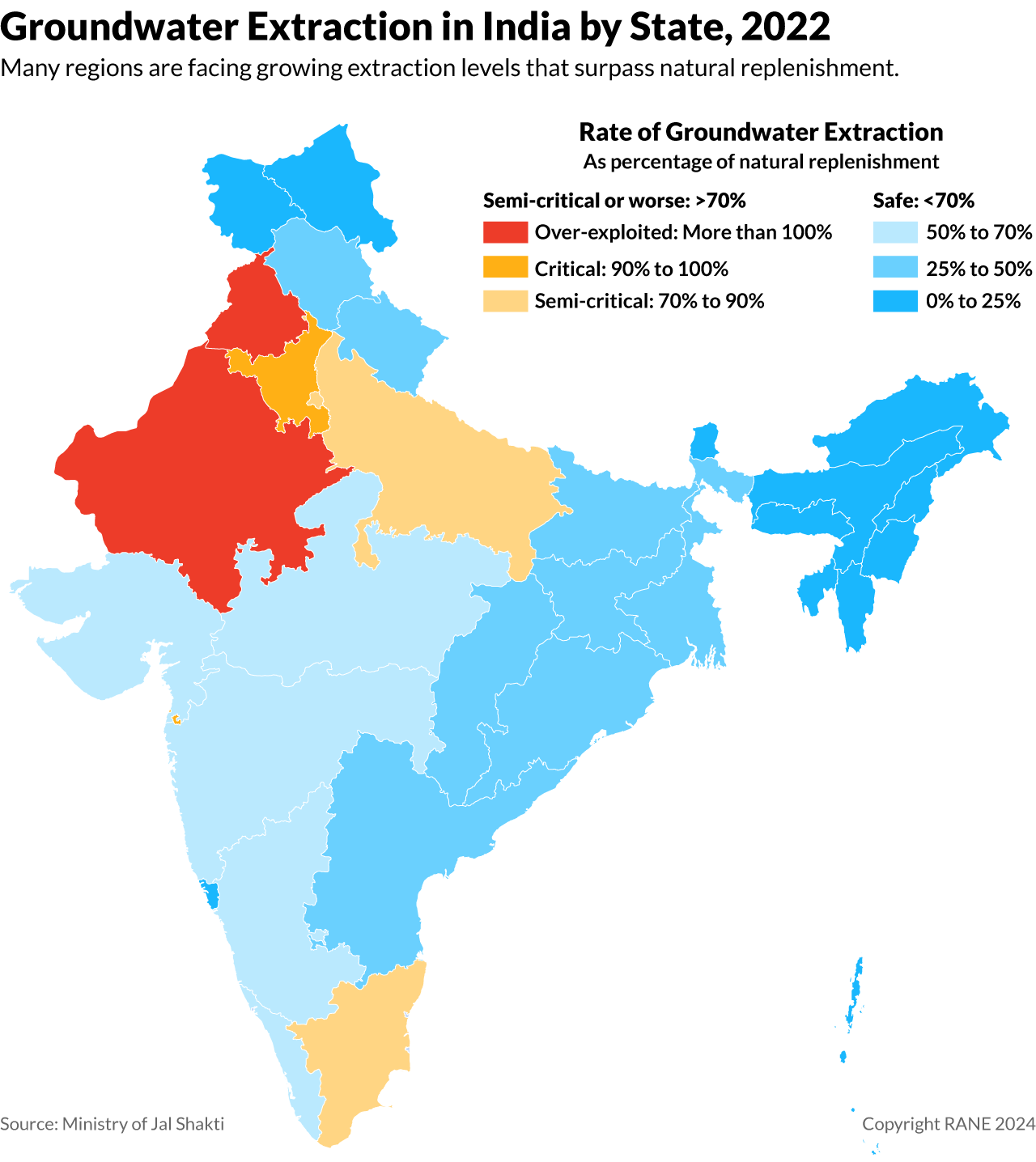
Overexploitation of groundwater, a vital source for agriculture and domestic water supply, will lead to the exhaustion of reserves, particularly amid continued drilling and ongoing climate-related challenges such as heatwaves and rising temperatures. Groundwater is a crucial resource for both irrigation and domestic water supply in rural and urban areas. As highlighted by the United Nations University's Environmental Health Criteria, India ranks as the largest consumer of groundwater in the world, surpassing the combined usage of the United States and China. Approximately 30% of India's fresh water is stored underground in aquifers, primarily beneath the surface, and this groundwater supports over 60% of India's irrigated agriculture while providing 85% of the country's drinking water supply. However, excessive extraction of this vital resource has led to significant depletion, underscoring the challenges India faces in its looming water crisis. NITI Aayog, the premier public policy think tank of the Indian government, released a water management index in 2019 indicating that 21 major cities, including Delhi, Bengaluru and Chennai, are at risk of depleting their groundwater reserves by 2030 — a prediction that aligns with the depletion these cities are currently experiencing. Additionally, reduced rainfall and winter warming contribute to a considerable decrease in groundwater storage due to the diminished replenishment, or recharge, of aquifers and increased pumping to meet irrigation needs. Currently, the most severe overexploitation of aquifers occurs in northwest and southern India, where reliance on groundwater is high due to these regions' status as major agricultural hubs, including states such as Punjab, Haryana, Rajasthan, Tamil Nadu and Karnataka. However, reports suggest this trend will likely extend to aquifers in the southwest, the southern peninsula and central India by 2050.
- Ongoing trends indicate that drier summer monsoon seasons and warmer winters will continue to impact groundwater storage in northern India. Specifically, a projected deficit of 10%-15% in summer monsoon rainfall, combined with a significant winter temperature increase of 1-4 degrees Celcius (34-39 degrees Fahrenheit), is expected to exacerbate groundwater depletion by raising irrigation water demands by 6%-20% and decreasing groundwater recharge by 6%-12%. Additionally, a study by Science Advances, a peer-reviewed journal, projects that groundwater loss in India could triple between 2041 and 2080, even when factoring in rainfall increases.
- Groundwater refers to water found beneath the Earth's surface within aquifers, accessible through drilled wells. Although groundwater is naturally replenished by rainwater and snowmelt, excessive extraction or contamination can lead to depletion, a significant issue facing India.
Growing water scarcity threatens to reduce crop production in India, leading to heightened global food insecurity, increased prices and pressure on supply chains, which will likely prompt the Indian government to enact protectionist measures like export restrictions to ensure domestic supply, further exacerbating global economic instability. Projections suggest that climate change will decrease the yields of India's key staple crops like rice and wheat by up to 20% by the middle of the century. Compounding this challenge, excessive extraction of groundwater for agricultural purposes is rapidly depleting reserves. This growing water scarcity, coupled with changing weather patterns, threatens to endanger the country's food security and impact the livelihoods of more than one-third of India's 1.4 billion people. Given that India is the second-largest producer of common cereal grains like rice and wheat, any reduction in production has global implications such as heightened food insecurity, increased global food prices and pressure on international supply chains, which will disproportionately affect vulnerable populations and contribute to economic instability in both developing and developed countries. This will likely lead India to implement protectionist measures in the coming years, like export restrictions to ensure domestic supply, which will exacerbate global shortages. Without intervention, excessive water extraction could lead to a threefold increase in groundwater depletion over the coming decades, with parts of India already suffering from critical shortages.
- A 2019 report from NITI Aayog projects that the gap between water demand and supply in agriculture may reach 570 billion cubic meters by 2030, highlighting the significant challenges that lie ahead for the sector.
- In 2023, the Indian government implemented export restrictions on several food items to bolster domestic reserves and address the spike in food inflation driven by climate-related disruptions affecting agricultural production. In July, India, the leading global rice producer, halted exports of non-basmati white rice. By August, authorities added a 20% export tax on parboiled rice and a 40% tax on onion exports.
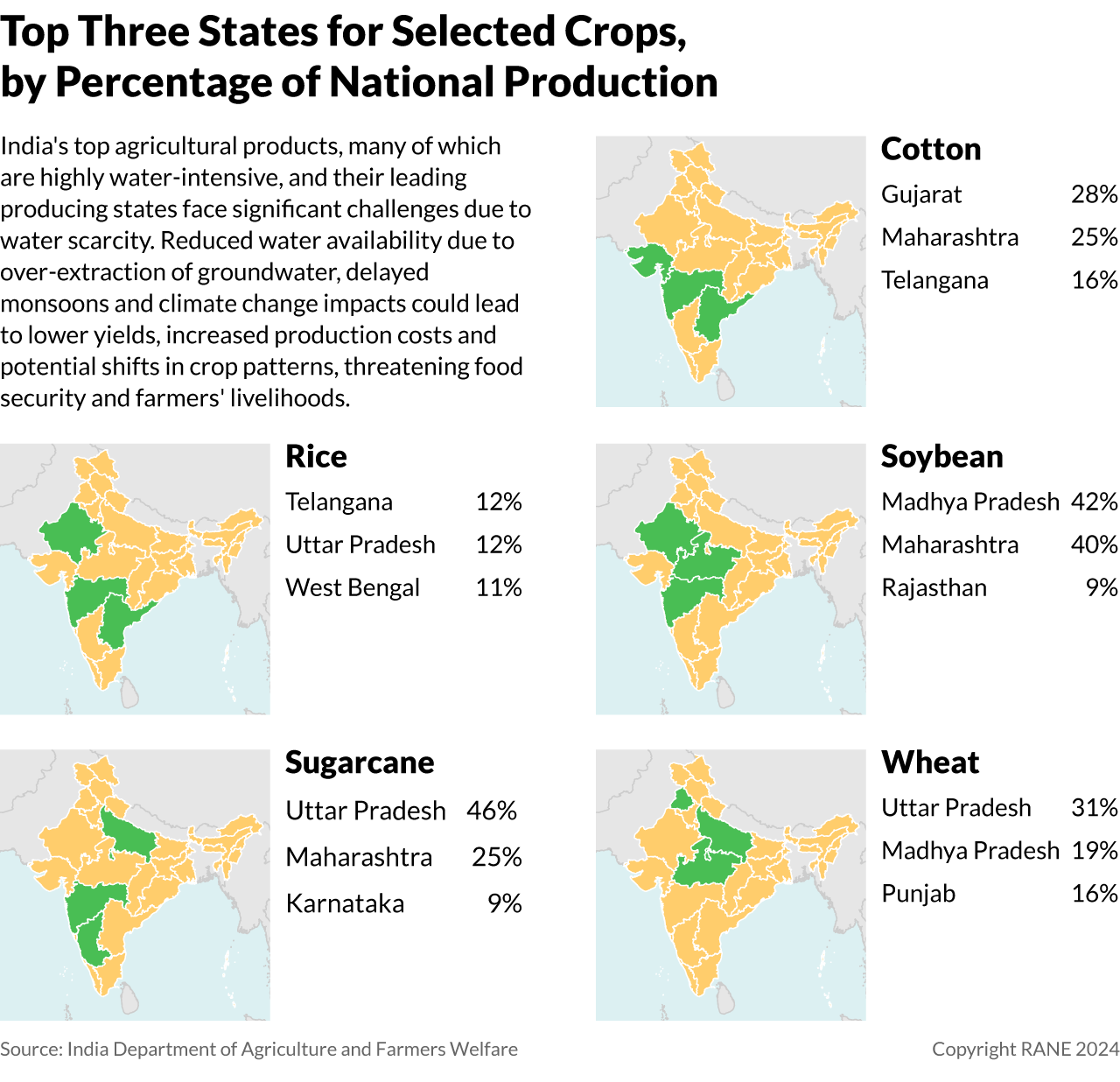
In the next 20 years, water scarcity will likely reduce incomes for Indian farmers and businesses, exacerbate high unemployment rates, and heighten the risk of social unrest, while competition for dwindling water resources will likely intensify disputes between states and communities. Farmers, particularly small-scale ones, will likely face diminishing crop yields, leading to lower incomes and increased economic hardship. Agriculture is a vital sector in India, employing approximately 45.76% of the workforce, according to the Periodic Labour Force Survey in 2022-23. Thus, any disruptions to this sector, such as those caused by water scarcity or climate change, could further aggravate India's already high unemployment rates. With water scarcity pushing up the costs of irrigation and agricultural inputs, some farmers may find it unprofitable to continue farming, which could lead to significant job losses in rural areas. This would further strain India's economy, as the agricultural sector is essential for both domestic food supply and exports. Moreover, growing competition for dwindling water resources will likely intensify water disputes between states and communities. Regions such as Punjab, Haryana and Uttar Pradesh, which are heavily reliant on groundwater for agriculture, may experience increased tensions as water becomes scarcer. Interstate water-sharing agreements, already contentious, could become flashpoints for conflict, threatening social stability. Decreased access to water could also significantly reduce economic growth, as agriculture accounted for approximately 16% of India's gross domestic product in 2023. Any substantial decline in output may create ripple effects throughout the economy, stalling growth and deterring foreign investment.
- The Periodic Labour Force Survey data, a government-led initiative to monitor labor statistics, reveals that India's unemployment rate, which was 3.4% in 2013-14, dropped only slightly to 3.2% in 2022-23. However, unofficial estimates present a starkly different picture. According to the Centre for Monitoring Indian Economy, an independent research institution widely recognized for tracking economic indicators and providing India's most-cited unemployment data, the unemployment rate in 2023 was 8.0%, up from 7.3% in 2022. Official figures are often considered inaccurate due to their infrequency and inclusion of unpaid labor. Additionally, many agricultural workers operate off the books, leaving them unaccounted for in official unemployment rates.
These trends will likely accelerate mass migration to urban areas, straining resources and worsening groundwater depletion in urban and rural regions. As aquifers continue to deplete, the resulting abandonment of farming livelihoods will likely accelerate the ongoing mass migration toward urban areas. With approximately 700 million rural Indians depending on groundwater for daily needs — 85% of rural households compared with only 45% in cities — the migration trend is expected to intensify. The United Nations projects that over 400 million Indians will move to urban centers by 2050. Additionally, climate change is set to exacerbate this trend by disproportionately impacting rural areas, while greater resource availability and policy focus in urban centers may drive the internal migrant population beyond 600 million. As local economies struggle, this influx of migrants into cities like Delhi, Mumbai, and Bengaluru will not only strain resources but also contribute to rising urban unemployment and social tensions. Moreover, inadequate wastewater management in these urban areas poses a significant risk of groundwater contamination, compounding existing challenges and threatening the sustainability of urban and rural livelihoods in the years ahead.
- According to the National Sample Survey Office's 78th round of the Multiple Indicator Survey of India, approximately 67.5% of employed individuals in rural areas left their homes, predominately moving to urban areas, during 2020-21 due to water scarcity.
The absence of a coordinated national policy will worsen groundwater depletion amid regional disparities and conflicts, leading to increased competition for diminishing water resources. Some government policies contribute to India's groundwater problems. For example, policies like rainwater harvesting often redistribute water to upstream farmers, disadvantaging those downstream. Additionally, increased bore well access for farmers and subsidized electricity encourage unregulated groundwater extraction as farmers pump water continuously, driven by cheap electricity and political incentives to keep costs low. In the meantime, policies like the minimum support price promote water-intensive crops such as rice and wheat, further depleting groundwater. Resistance to reform, especially regarding agriculture and water management, is widespread, often creating tension between states and the central government, particularly under coalition leadership, where regional parties tend to prioritize local interests over national initiatives. While states like Karnataka and Punjab have implemented conservation policies — regulating groundwater extraction, monitoring water levels and promoting efficient practices — and will likely continue to do so, the contentious nature of these reforms makes passing nationwide policies difficult. Without a coordinated national framework, states may adopt conflicting or short-term measures that benefit one region at the expense of another, leading to interstate disputes and a lack of long-term sustainability. Given the severity of water scarcity and rapid groundwater depletion, the government will likely work to adopt a more coordinated federal approach to address the issue, potentially in the coming years. However, achieving effective nationwide groundwater management will require India to overcome challenges related to state-level autonomy and varying regional priorities. While central initiatives like the Atal Bhujal Yojana, a groundwater management policy, have laid the groundwork, a more unified strategy will depend on building state cooperation and enforcing consistent policies across diverse local conditions.
- States like Punjab and Haryana, with their extensive canal systems, are considered upstream and tend to extract large amounts of water. In contrast, downstream states such as Uttar Pradesh and West Bengal, which are located farther along the river, often face reduced water availability due to the upstream withdrawals. This upstream-downstream dynamic can cause disputes over water rights and access, especially when upstream usage limits the flow to downstream agricultural regions, intensifying competition for this critical resource.
- The Atal Bhujal Yojana, introduced by Prime Minister Narendra Modi in 2019, focuses on improving groundwater management in seven Indian states, including water-stressed regions like Gujarat, Haryana, Karnataka, Madhya Pradesh, Maharashtra, Rajasthan, and Uttar Pradesh. Punjab has the "Paani Bachao, Paisa Kamao" scheme, which encourages farmers to reduce groundwater consumption. Meanwhile, Bengaluru, Karnataka, leads the "Million Wells for Bengaluru" initiative, aiming to balance groundwater extraction by creating 250,000 recharge wells throughout the city. These efforts are geared toward addressing India's growing water scarcity.
Finally, India's groundwater crisis creates risks for its manufacturing sector and energy production, which could limit domestic and foreign investment critical for sustained economic growth. The impact of water scarcity transcends agriculture, as it impairs energy production, especially considering India's reliance on coal, which requires water for cooling systems. Lack of water could lead to power outages and reduced electricity availability. Such disruptions would slow industrial production and raise operational costs for businesses due to higher water and electricity prices. As a result, water scarcity and power outages impose significant constraints on the manufacturing sector, which has been a cornerstone of India's economic growth, hindering its ability to compete on a global scale. These risks could cool the interest of foreign investors looking for reliable supply chain partners.
- Moody's Ratings warned on June 25 that India's worsening water scarcity and frequent climate-driven disasters could weaken its sovereign credit strength as rapid economic growth drives up consumption. Rated Baa3 stable, India relies heavily on monsoon rains, so disruptions to the water supply could impact agricultural and industrial production, driving food inflation, lowering incomes and potentially sparking social unrest. Moody's noted that, as one of the Group of 20 nations' most water-vulnerable countries, India's swift industrialization and urbanization are further depleting resources, especially amid a rapidly growing population.
