
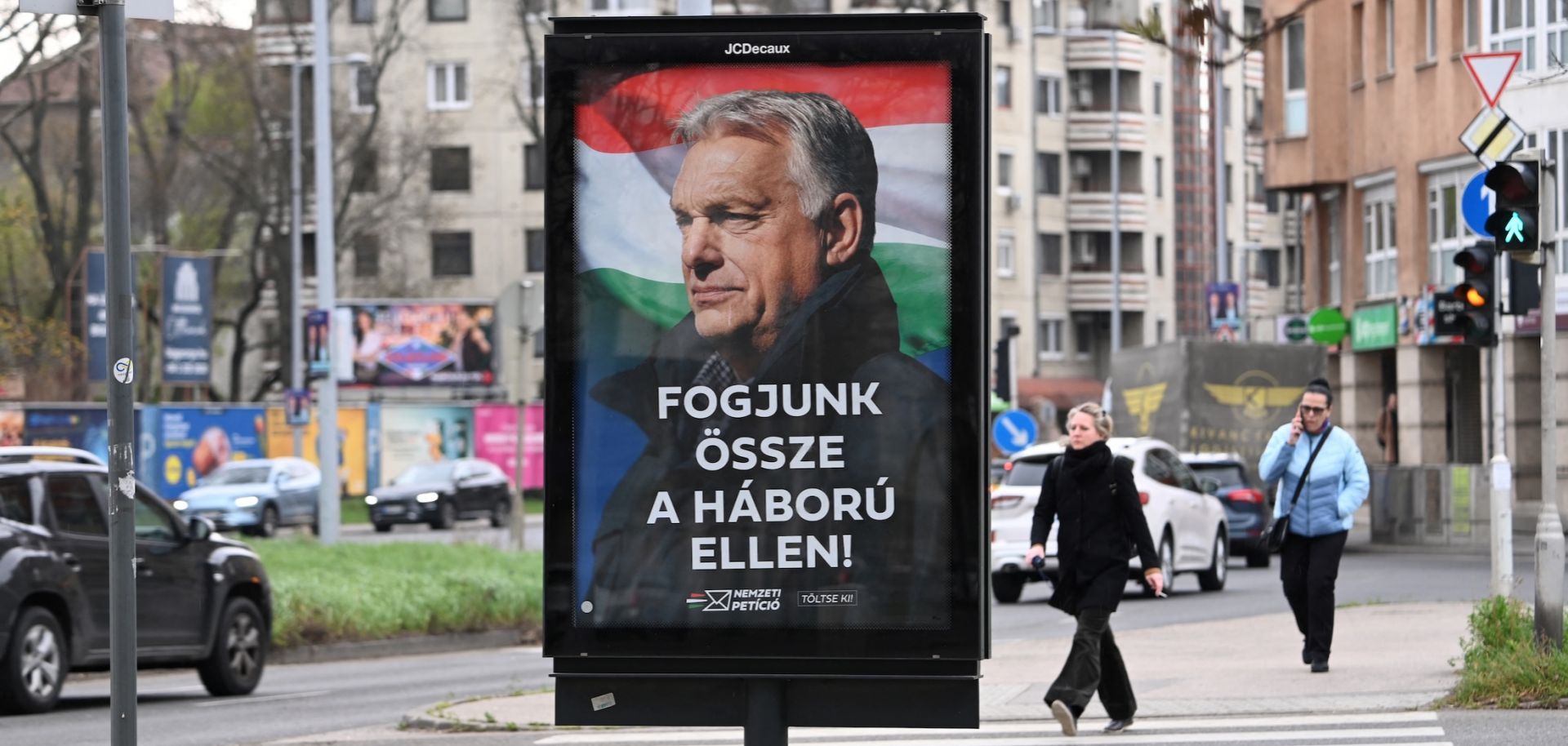
Hungary's upcoming parliamentary elections could put a pro-EU government in power after more than a decade of euroskeptic, nationalist rule under Prime Minister Viktor Orban, but the Fidesz party's entrenched control over national institutions and legal levers would still significantly constrain reforms and could even enable the party to obstruct the transition of power altogether. Hungary will hold parliamentary elections on April 12, in what opinion polls project will be the country's most competitive national vote since Prime Minister Orban took office in 2010. Most surveys show the opposition Tisza party, led by pro-European reformist Peter Magyar, polling at around 47%, compared with roughly 39% for the ruling Fidesz party. Some polls give Tisza a lead of up to 20 points, with its strongest support concentrated in Budapest and other major urban centers, but increasingly extending into regions that have traditionally backed Fidesz. Polling in Hungary is politicized and often unreliable, with government-aligned institutes projecting a narrower race or even a Fidesz advantage, while independent pollsters consistently place Tisza ahead. Under Hungary's electoral system, parties must secure at least 5% of the vote to enter the National Assembly, and current surveys suggest that, beyond Fidesz and Tisza, only the far-right Mi Hazank party stands a realistic chance of crossing that threshold. Despite trailing in several polls, Fidesz retains structural advantages, including a mixed electoral system with single-member districts, extensive party networks, entrenched clientelist structures and significant influence over media and state institutions, factors that could constrain the opposition's ability to translate vote share into parliamentary seats.
- Founded in 2020 and led by Magyar (a former Fidesz ally) since 2024, Tisza captured nearly 30% of the vote in the June 2024 European Parliament elections, outperforming both Fidesz and traditional opposition forces in urban areas and emerging as the principal challenger to Orban. Positioned as a centrist, pro-European reform movement, Tisza draws support from disillusioned conservatives, moderate urban voters and segments of the fragmented liberal opposition. Its platform emphasizes governance issues such as anti-corruption and institutional transparency while deliberately avoiding firm positions on divisive sociopolitical issues like LGBTQ+ rights or the independence of nongovernmental organizations to preserve a broad electoral coalition.
- A March 25 poll by Median — one of Hungary's most reliable pollsters — placed Tisza at 58% among decided voters versus 35% for Fidesz, and 46% to 30% across the full electorate. Median polls also show support for Mi Hazank at around 4% among decided voters, down from 6% in February. By contrast, pro-government pollsters such as Nezopont Institute continue to show a narrower race, with March polls placing Fidesz ahead at 46% versus 40% for Tisza.
- Hungary's 199-seat National Assembly is elected through a mixed system combining 106 single-member constituencies with 93 proportional party-list seats, translating into a disproportionately larger share of seats for the largest party under reforms introduced after 2010 by Orban. The system has historically favored Fidesz as it rewards plurality wins in fragmented races and boosts the leading party's seat share.
During its largely uncontested sixteen years in power, Fidesz has centralized authority and tightened control over national institutions, sparking rule-of-law disputes with the European Union, but economic stagnation and persistent cost-of-living issues have now eroded support even within key party strongholds. Since 2010, political power in Hungary has progressively consolidated around Orban, with Fidesz winning four consecutive parliamentary elections and repeatedly securing two-thirds majorities, allowing it to legislate with few formal constraints and adopt constitutional amendments without the need for cross-party consensus. To some extent, this dominance has ensured political continuity and policy predictability, particularly for sectors aligned with government priorities and companies with close ties to Fidesz. However, it has also centralized decision-making and weakened institutional checks through reforms affecting judicial independence and oversight bodies, leading to protracted rule-of-law disputes with Brussels and the withholding of billions of euros in EU funds. Orban has also pursued a foreign policy that frequently deviates from EU consensus, maintaining close ties with Russia and China and using Hungary's veto powers to delay or dilute aid packages for Ukraine and sanctions against Russia, usually lifting them after extracting concessions from Brussels. This approach has contributed to Hungary's diplomatic isolation in Europe. Economically, although Hungary experienced strong growth during much of Orban's tenure, expansion has slowed markedly in recent years, with persistent inflation (which did not come under control until the second half of 2025) and cost-of-living pressures eroding real incomes and weakening support even in some traditional Fidesz strongholds. The government has responded with a series of tax cuts and targeted subsidies aimed at mitigating economic pressures on households and maintaining political backing across key constituencies, but these measures have not prevented a gradual decline in support over the past three years. Meanwhile, public dissatisfaction has grown further amid corruption allegations, political scandals and tighter restrictions on protest rights, contributing to large anti-government demonstrations since 2025.
- Changes affecting the Constitutional Court, the National Judicial Office and other oversight bodies have led to protracted disputes with Brussels over rule-of-law standards and democratic backsliding, resulting in the suspension of roughly 18 billion euros (about $21 billion) in cohesion and recovery funds. More recently, the European Commission has withheld more than 16 billion euros under the Security Action for Europe defense loan facility due to Budapest's vetoing of the bloc's 90 billion euro financial package to Ukraine. Hungary is a net receiver of EU funds, so suspension has hurt growth and fiscal consolidation efforts.
- Despite very low unemployment levels and some more visible recovery in real wages since 2025, years of high inflation and deteriorating public finances have eroded households' purchasing power and government spending on social services. Following two years of stagnation, the economy grew by only 0.3% in 2025, with inflation at 4.5%. Meanwhile, the budget deficit remained elevated at close to 5% of gross domestic product and is projected to rise further in 2026, gradually driving the debt-to-GDP ratio toward approximately 75% by 2027 (down from a peak of 79% in 2020, but still above pre-pandemic levels of 65% in 2019).
A renewed Fidesz mandate would consolidate Hungary's illiberal governance model, economic policies, alignment with non-Western partners and tense EU relations, prompting Brussels to increasingly rely on procedural workarounds to bypass Hungarian vetoes, while the likely loss of its two-thirds majority would increase domestic policy uncertainty. Should Fidesz win the election, it would likely only be able to form a government with a simple majority, losing the margin required to unilaterally amend the constitution, rewrite electoral laws, overhaul judicial institutions or prolong the state-of-emergency framework that has effectively enabled it to rule by decree since 2020. If the result were even tighter and forced reliance on the far-right Mi Hazank — whether through a formal coalition or case-by-case legislative support — policymaking would become more constrained and unpredictable. Either way, a renewed mandate would preserve the core features of the existing system, sustaining a nationalist, conservative policy agenda and an illiberal governing style. Relations with the European Union would remain confrontational, keeping restrictions on EU funds and complicating fiscal consolidation amid elevated borrowing costs and market pressure. The government would therefore continue relying on sector-specific windfall levies in banking, energy, telecommunications and retail, alongside a reduction in subsidies for households and strategic industries, while still likely sustaining medium-term fiscal vulnerability. On energy, Budapest would likely drag its feet on compliance with EU Russian oil and gas phaseout plans, using litigation at the European Court of Justice to delay implementation. Still, the prospect of financial penalties combined with joint pressure from Brussels and Washington (which also supports EU efforts to sever energy trade with Russia) would likely ultimately push diversification toward non-Russian pipeline routes and LNG imports. More broadly, Hungary would maintain selective but minimal engagement with NATO while preserving ties with Moscow and Beijing. Continued obstructionism at the EU level would complicate consensus-building in areas requiring unanimity like foreign policy, enlargement and sanctions, accelerating a process of increasing reliance on procedural workarounds and decisions made by smaller groups of member states that will gradually dilute Hungary's veto leverage and deepen its political isolation within the bloc.
- Despite continued obstructionism at the EU level, Orban has typically conceded under pressure or in exchange for concessions, showing a level of pragmatism and suggesting recurring but manageable tensions with Brussels rather than a full rupture in the event of reelection. While he has so far vetoed the 90 billion euro Ukraine package, he may compromise after the vote, potentially in return for assurances on resuming oil flows via the Druzhba pipeline, which he has used to justify his stance.
A Tisza-led government would improve EU and NATO ties, unlock suspended EU funds, and pivot foreign and energy policy away from Russia, yet a limited parliamentary majority would significantly constrain its ability to dismantle Fidesz's entrenched institutional and economic influence, while internal ideological diversity could test the coalition's stability. A Tisza-led government would likely lack the two-thirds supermajority required to amend the constitution, limiting its ability to rapidly dismantle the legal and institutional framework constructed over the past decade and a half under Fidesz. Instead, the government would likely focus on targeted reforms — such as improving judicial transparency, tightening public procurement oversight and strengthening anti-corruption enforcement — sufficient to showcase improvement and unlock suspended EU funds, as seen for instance in Poland following the election of the pro-EU Tusk government. Moreover, even with a stable majority, the party might face internal cohesion challenges as a broad catch-all coalition bringing together conservatives, centrists, liberals and former Fidesz members. Policy coherence and cohesion could therefore prove fragile on sensitive issues such as fiscal and social policies as well as key institutional appointments, and it remains unclear how many campaign promises would ultimately form part of the government's agenda. Still, the shared objective of preventing Fidesz from returning to power would likely provide enough political unity to avoid excessive fragmentation or a government collapse. Relations with the European Union would improve significantly, likely leading to the gradual unfreezing of cohesion and recovery funds, supporting public investment and stimulating economic activity. Fiscal constraints inherited from the previous government, however, would limit immediate room to maneuver, while resistance from entrenched Fidesz-aligned institutions could generate implementation frictions, tempering gains in investor confidence and business sentiment. On foreign policy, Budapest would pivot toward closer NATO and EU coordination while distancing itself from Russia, though the economic benefits it derives from Chinese investment would remain strong incentives for maintaining close commercial ties with Beijing. This shift would also enable reengagement with Poland, including closer diplomatic coordination at the EU level in areas like migration, energy, climate, agriculture and others, after years of strained relations driven by fundamental divergencies over Russia's invasion of Ukraine. Diversification away from Russian energy imports would remain a stated goal of the new government, though infrastructural constraints and economic considerations mean the transition would be gradual, especially on oil.
- Tisza's economic program is anchored in a pro-EU, rule-of-law reform agenda aimed at unlocking frozen EU funds earmarked for Hungary and redirecting them toward infrastructure, health care, education, housing and energy-efficiency investments under Magyar's proposed "Hungarian New Deal." The strategy prioritizes leveraging EU grants to finance public investment while limiting pressure on public finances, addressing structural bottlenecks and boosting productivity, particularly in transport and public services, where underinvestment has weighed on long-term growth.
- The party also emphasizes restoring policy predictability and improving the business environment by ending ad hoc regulatory interventions, reducing political interference in markets and avoiding punitive measures against foreign investors to lower Hungary's risk premium, support credit rating upgrades and revive foreign direct investment inflows. Tisza also backs eventual euro adoption to strengthen monetary stability and investor confidence, though any timeline would depend on fiscal consolidation and inflation convergence.
- Magyar has emphasized that, though a Tisza-led government would aim to diversify energy supply away from Russia, it would not cut Russian energy imports immediately due to limited alternatives, instead setting a target to phase them out by 2035.
In the event of a Tisza victory, Fidesz could exploit legal channels, emergency powers and last-minute constitutional amendments to delay or further restrict the incoming government's authority — or even refuse to concede — potentially triggering significant domestic instability, financial turbulence and heightened EU pressures. Fidesz would have several avenues to delay or obstruct a power transition in case of defeat. Particularly in the event of a narrow Tisza victory, Fidesz could dispute the legitimacy of the results and challenge the outcome before aligned courts, delaying the formation of a new government. In a more escalatory scenario, Fidesz could refuse to concede altogether, alleging foreign interference or voting irregularities, with Fidesz-aligned President Tamas Sulyok assigning Orban the mandate to form a government. This remains unlikely, however, given the international isolation, domestic unrest risks and financial instability that would follow, especially since Tisza's simple majority could constrain its governing capacity enough to incentivize Fidesz to simply leverage its entrenched institutional influence to obstruct policy, reforms and elite replacement while at the opposition. In the event of a larger Tisza majority, particularly a two-thirds majority, any formal justification Orban may seek to leverage to obstruct a power transition would weaken, yet the incentives to do so would increase. The government could declare a state of emergency — citing crises like a sabotage attack (potentially even as a result of a false-flag operation), alleged foreign interference in the elections or the ongoing energy-market shock caused by the Iran conflict — to extend its mandate. During this period, or during the few weeks between the election and the formal transfer of power, the outgoing National Assembly could enact last-minute constitutional amendments to obstruct Tisza's ability to govern. These amendments could raise legislative thresholds by expanding the scope of cardinal laws requiring a qualified majority and/or extend presidential powers to appoint another loyalist president — potentially Orban himself — with veto authority over legislation. Such moves would be highly controversial, likely triggering social unrest, significant financial instability and potential institutional pushback, including from government-aligned state bodies and possibly even the military. This scenario would also sharply intensify pressure from the European Union, potentially leading to the complete suspension of EU funds and efforts to isolate Budapest from key EU decision-making through enhanced cooperation or the expanded use of qualified majority voting.
- The outgoing National Assembly retains full legislative authority for up to a month after a parliamentary election before the new legislature convenes. With Fidesz currently holding a two-thirds majority, the party could use this window to enact last-minute constitutional amendments designed to obstruct the legislative and executive capacity of a new Tisza government.
- A narrow victory for either camp would likely trigger sustained social unrest and political contestation. Fidesz would mobilize farmers, unions and party loyalists to challenge a Tisza victory, while the opposition would likely rely on urban supporters in Budapest to contest a close Fidesz win. Polarization and perceptions of government fragility from either side would further heighten the risk of strikes, protests and coordinated efforts to obstruct policy throughout the parliamentary term, prolonging political and economic uncertainty.
- Under Article 7 of the Treaty on European Union, a determination of a "serious and persistent breach" of EU principles could, in theory, lead to the suspension of Hungary's voting rights, though unanimity among the other 26 member states remains a key constraint. If Fidesz attempts to systematically obstruct a democratic transfer of power, EU member states could instead respond by sidelining Hungary by excluding it from specific coordination formats, advancing decisions through enhanced cooperation, or using deeper multi-speed integration to limit Budapest's influence. Formal expulsion remains legally unfeasible, as the EU treaties provide no mechanism to remove a member state from the bloc against its will.
