
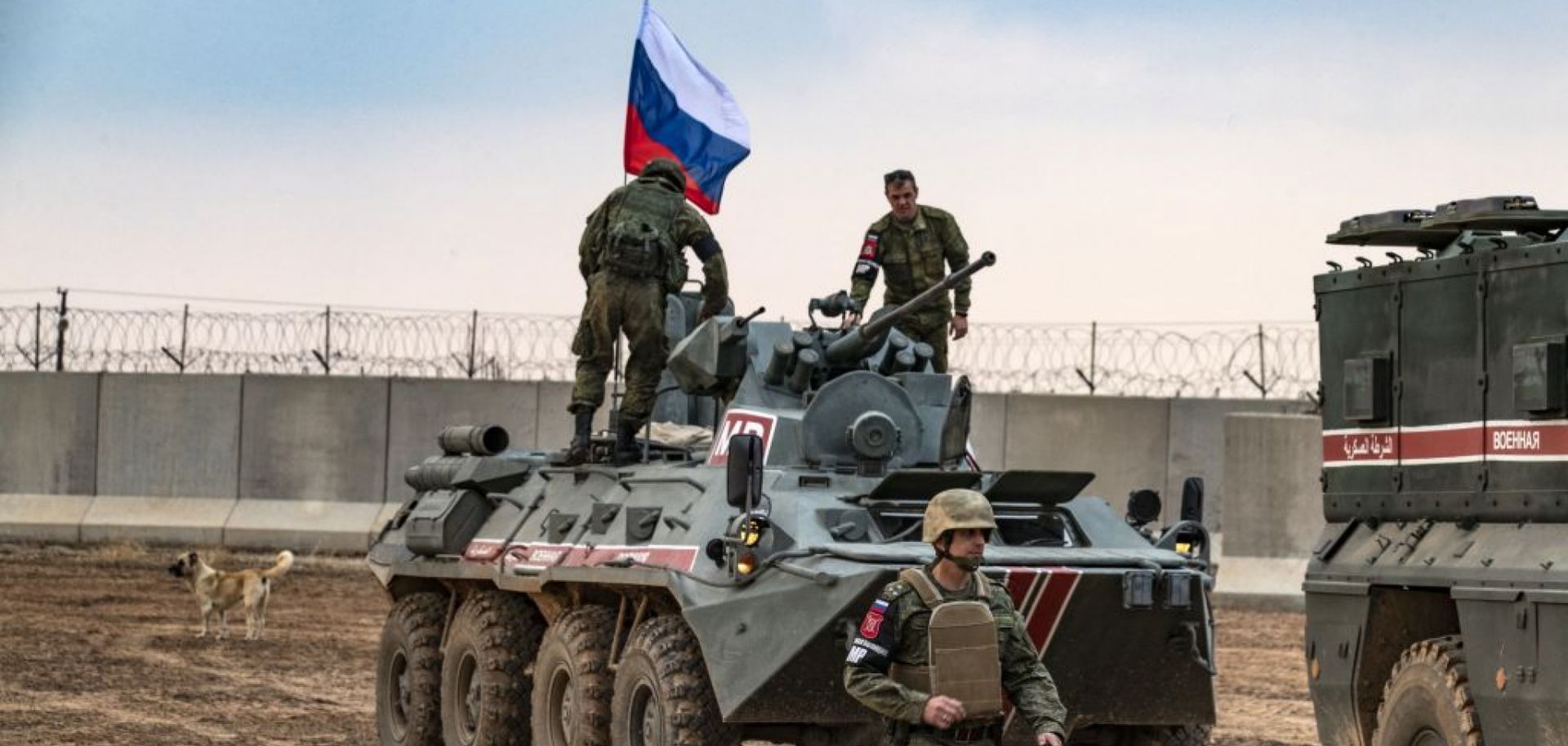
Russia will likely manage the political blow of the Assad regime's collapse by redirecting resources to Ukraine, but in the long run, Moscow will struggle to replace its military facilities in Syria, which could eventually impede Russia's ability to project power in the region. After fleeing Damascus as rebels captured the capital city, longtime Syrian President Bashar al Assad and his family arrived in Moscow on Dec. 8, where he was granted political asylum in what the Kremlin said was a personal decision by Russian President Vladimir Putin. By later that night, the new flag of the Syrian opposition government was already flying over Syria's diplomatic facilities in Russia. Russian state media outlets had also stopped referring to anti-Assad forces as terrorists, instead calling them Syria's “armed opposition.” Russia's apparent shift toward accepting Syria's new authorities is likely part of Moscow's efforts to secure its diplomatic and military facilities in Syria, most importantly its naval base in Tartus and its airbase in Khmeimim, where Russian forces are still present. As of Dec. 10, President Putin had yet to publicly comment on the collapse of Assad's government, of which Russia had likely been the largest foreign backer in terms of total financial and military support since 2015, when Russian troops began deploying to Syria at Assad's request to help defend his regime amid the civil war that broke out in 2011.
- Assad's regime did not fall earlier in the aftermath of the Arab Spring that broke out in late 2010, like the regimes of Hosni Mubarak in Egypt or Moammar Gadhafi in Libya, in large part because of immense military and financial support initially provided by Russia and Iran.
- After launching its military operation in Syria in September 2015, Russia supported Assad's forces militarily through a large presence of aircraft, anti-air systems and Wagner group paramilitaries.
- Various estimates typically place the cumulative cost of Russia's support measures for Assad's government at between $2.5 and $8 million per day since 2015, with the variation due to differences in the estimated value of provided equipment and economic support, and the inclusion of some indirect or humanitarian support measures. This means Russia has likely spent tens of billions of U.S. dollars supporting Assad's government, while hundreds of Russian soldiers have been killed in military operations in support of Assad's forces.
- Russia reportedly reached a deal with Syria's new authorities to at least temporarily secure Russia's two bases in the country: the Khmeimim airbase and the Tartus naval facility. The limited number of flights to and from Khmeimim in recent days suggests the airbase is not being evacuated, which would likely require many more aircraft and other signs of a rapid withdrawal. And while some of the seven Russian naval vessels officially stationed at Tartus appear to be anchored several miles off the coast, presumably for security reasons, it seems most of the ships are still near the facility for now.
Assad's downfall is a setback for Russia, which it will seek to counteract by redirecting military resources from Syria to Ukraine, in order to maintain negotiating leverage over Kyiv and achieve Moscow's demands. After Russia's many years of strongly backing Assad, the collapse of his government is a blow to the Kremlin's influence in the Middle East and its international credibility. Moscow will redirect its military forces in Syria it had been using to prop up Assad's army — primarily air force assets and a small number of advisors and trainers for ground personnel — to improve its military position in Ukraine. Russia's various facilities in Syria nominally housed an estimated 7,000 military personnel, though the vast majority were non-combat support personnel. Moving the remaining Russian personnel and their equipment to Ukraine will have only a marginal impact on improving Russia's tactical position on the battlefield, but the loss it has suffered in Syria with the Assad regime's collapse will nonetheless drive Moscow to refocus on the war in Ukraine to secure a resounding victory there. In this context, Russia will have more reason to demand severe limitations on the presence of NATO forces and infrastructure in Ukraine. This is because the Kremlin fears that giving major concessions to Ukraine and the West would risk undermining its long-term coercive influence over Ukraine, and would fuel a further cascading perception among potential and current partners — as well as competitors — that Russian power is unreliable and in decline, which would make states more hesitant to compromise in Russia's favor. This is particularly the case as Moscow does not perceive the challenges it faces in other areas along its periphery as being as acute as those it faces in Ukraine, and calculates that a victory in Ukraine is the best way to restore Russia's credibility as a potential security partner and will prompt the much weaker states to Russia's south in the Caucasus and Central Asia to reorient toward Moscow — something that has already begun to take place in countries like Georgia, Kazakhstan and Azerbaijan, where governments remain committed to not antagonizing Russia.
- Presumably under direction from the Kremlin, Russia's top domestic propagandists, commentators Dmitry Kiselyov and Vladimir Solovyov, have used their media programs to claim that Russia had already accomplished its goals in Syria by upholding its international obligations and gaining vital experience for its military to use in Ukraine. They have emphasized that Russia's “special military operation” in Ukraine was much more important than the recent events in Syria, and that the Assad regime's collapse represented an opportunity for Russia to reassess its priorities and achieve Moscow's goals in Ukraine. The Russian state — also at the direction of the Kremlin — similarly downplayed the March 2024 terrorist attack against the Crocus City Hall near Moscow, and suggested the incident highlighted the need to secure Russia's core geostrategic interests via a victory in Ukraine.
- Following the Taliban takeover of Afghanistan in 2021, Russia immediately established direct contacts with the country's new leaders and has since pursued pragmatic relations with them, even currently moving to remove the Taliban's designation as a terrorist group in Russia. Moscow will likely take a similar pragmatic approach to Syria's new authorities, believing that recognizing and seeking dialogue with them is in Russia's best interest.

Russia will likely eventually lose access to its military facilities in Syria's coastal Latakia and Tartus regions, which could complicate the logistics and raise the costs of Moscow's regional power projection efforts, as finding alternative bases will be difficult and prove more costly. Rather than immediately initiating a more hasty withdrawal from its naval base in Tartus and airbase in Khmeimim, Russia is likely preparing for an orderly withdrawal from the facilities, likely after failed attempts to negotiate their preservation in the coming months. To maintain access to its military bases, Moscow will likely offer money and other economic incentives, such as discounted refined fuel products, to the new Syrian leaders in Damascus, as well as to local authorities in Latakia. In the short term, interim Syrian authorities may not insist on an immediate Russian withdrawal from the two bases, instead using them as bargaining chips to counterbalance the U.S. military presence on the other side of the country, and to ensure Syria's opposition government is not isolated by the international community. However, Syria's new leaders remain broadly hostile toward Russia due to its years of supporting the Assad regime, which will likely eventually see Russia lose access to its facilities. This would harm Russia's power projection because its Khmeimim and Tartus bases are crucial logistical points for Russia's global naval operations and military operations in Africa and the Middle East, and cannot be easily replaced. The Libyan ports of Tobruk or Benghazi under the control of warlord Khalifa Haftar, who is currently supported by a smaller contingent of Russian Wagner Group personnel, is the most likely alternative. Russian paramilitaries' operations in the Sahel are already logistically supported through Libya, and associated facilities will likely be expanded in the future, mitigating disruptions. But it is unclear whether a more formal Russian basing agreement could emerge, given that Libya also remains mired in civil war. Russia is also finalizing a naval basing agreement with Sudan's government, but the country is geographically less desirable, not being on the Mediterranean Sea and requiring Suez Canal access to use, while Sudan's ongoing civil war could complicate Russian use of the base. Another speculated location for the Russian Navy to redeploy is Algeria, but Moscow is likely incapable of offering the Algerian government sufficient compensation for a formal, decades-long deal like that which Russia had with Assad's regime in Syria. This is likely true for all governments in the Middle East and North Africa, as a long-term basing agreement with Russia could prompt domestic backlash in these countries and/or prompt Western countries to reduce cooperation with them. Any new logistical partners in the region will thus have a stronger negotiating position than Assad's government did, which they would like to use to extract high rents from Russia for using its ports and airports to supply African operations. This means that even if Russia is able to secure an agreement with another country, it would likely be on a temporary basis and offer much more costly terms for access.
- The Wagner Group was only able to begin significantly expanding its footprint in Libya and all of sub-Saharan Africa once Russia started expanding its Syrian facilities in 2017, when Moscow secured what was supposed to be an effectively permanent status for the two bases, each lasting 49 years and granting Russia sovereign jurisdiction over them.
