
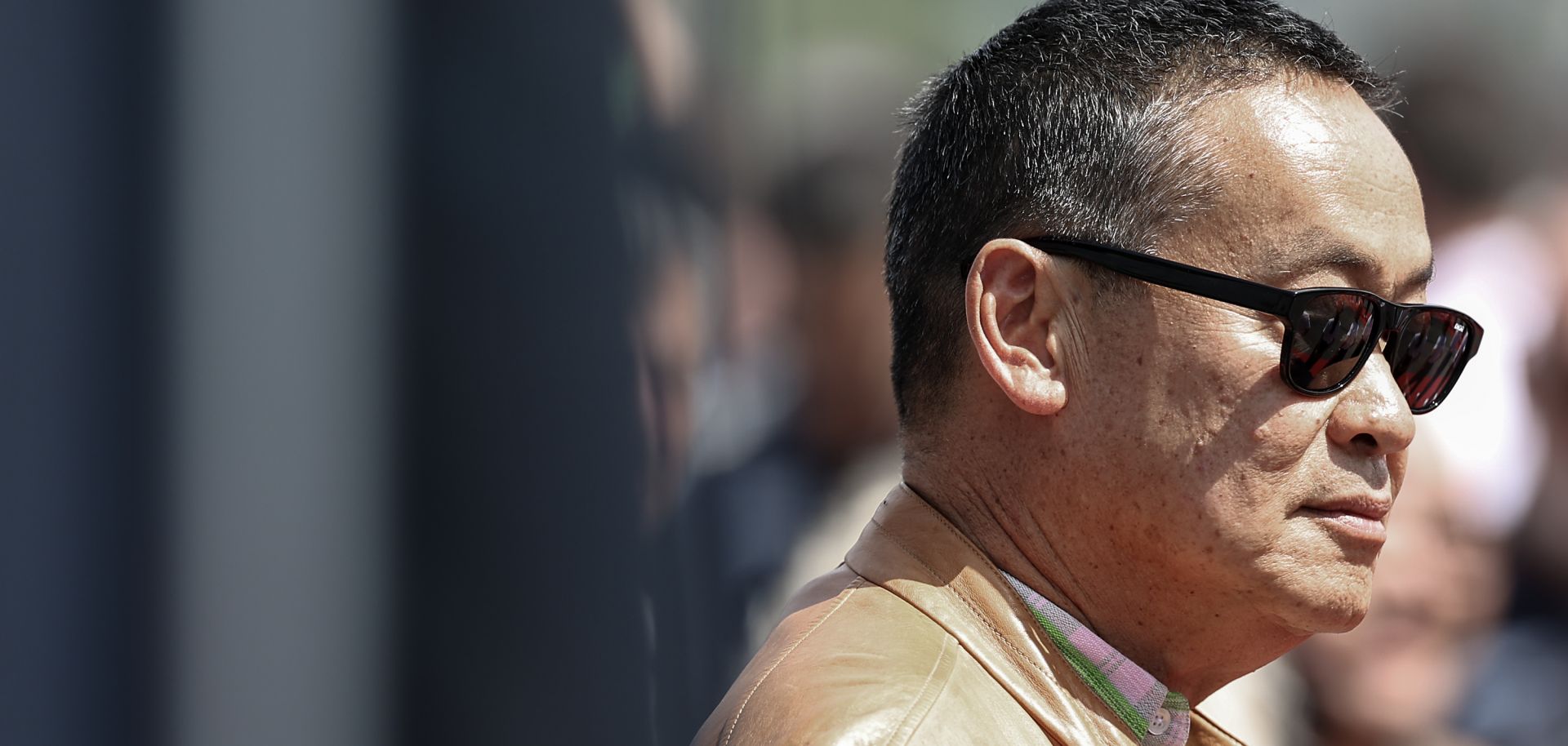
In Thailand, three legal cases against prominent political figures will usher in a new period of political instability, portending renewed protests and policy paralysis that will weigh on the country's fragile economy. On June 18, Thai courts will hear a trio of politically consequential cases. The Constitutional Court will hear a case against the main opposition Move Forward Party (MFP) that could result in its dissolution. The same court will hear a case against Prime Minister Srettha Thavisin that could result in his removal. The Court has not indicated when it will render a verdict in either case, though a similar case against the MFP's predecessor party in 2020 took around a month to conclude. Finally, a criminal court will formally indict former Prime Minister Thaksin Shinawatra, marking the beginning of a criminal prosecution against him, which could send him to prison for up to 15 years.
- The MFP won the most seats in the May 2023 general elections, but the military-appointed Senate refused to confirm its prime ministerial candidate Pita Limjaroenrat, thus thwarting the MFP's attempts to form a government.
- Srettha of the Pheu Thai Party (PTP) became prime minister in August 2023 following months of political deadlock after the 2023 general elections. A former businessman who had never been a politician previously, he is a long-time confidante of the Shinawatra family and is frequently alleged to be a proxy for Thaksin.
- Thaksin, 74, is the PTP founder and de facto party boss. He served as Thailand's prime minister from 2001-2006, and was removed in a military coup. He spent most of the intervening years in self-imposed exile until returning to Thailand in August 2023, when he was arrested on arrival for corruption during his tenure (convicted in absentia in 2008), received an eight-year sentence (later reduced to one year from a royal pardon) and paroled after spending six months in a police hospital and not behind bars. His sister Yingluck Shinawatra served as prime minister from 2011-2014 and was also removed in a military coup. Thaksin's daughter, Paetongtarn Shinawatra, ran as the PTP's prime ministerial candidate in 2023 but stepped aside for Srettha when the party formed a government. She is currently the PTP's formal leader.
All three cases mark a power play by the unelected military establishment to curb the influence of the MFP and the PTP. In each case, the military establishment is reasserting its primacy after losing control of the premiership in 2023 and the Senate on May 10. Per constitutional mandate, Thailand's 250-seat military-appointed Senate dissolved amid a transition to a 200-seat elected body, portending a major institutional loss of control for the military establishment. Senatorial elections are set for June 26, and military-backed candidates are unlikely to perform well. The MFP dissolution case, delayed four times, revolves around a March 12 Election Commission recommendation to dissolve the party on the grounds that its platform calling to ease Article 112 of Thailand's criminal code (better known as the lese majeste law criminalizing criticism of the monarchy), as well as a 2021 attempt to introduce legislation to that effect, are tantamount to seeking to overthrow the monarchy. Meanwhile, the case against Srettha stems from a May 17 complaint issued by 40 military-appointed senators alleging his April appointment of convicted felon Prichit Chuenban to his cabinet violated the constitution. At the same time, Thaksin was charged on May 29 for allegedly violating Article 112 for remarks he made in a 2015 interview (he accused the king's privy council of ordering the armed forces to overthrow his sister's government in 2014) and for violating the Computer Crime Act in which he allegedly uploaded data detrimental to national security. Thailand's military establishment has the de facto power to remove people from office or prevent their ascendance in the first place (as seen by thwarting the MFP). But absent a coup, the military establishment lacks the ability to take power, as its deep unpopularity means it is unlikely to win any elections. The Thai military is thus driven to reassert control following its loss of the Senate and poor performance in the country's 2023 elections, and amid Thaksin's creeping influence, as evidenced by Srettha's election as prime minister and Prichit's ill-fated cabinet appointment (both of whom are personal confidants and likely proxies of Thaksin), as well as Thaksin's daughter's role as ruling party leader.
- The MFP has since removed its lese majeste reform call from its platform on its website, though the party has not formally renounced the position.
- Prichit, a former lawyer for the Shinawatra family, is infamous for the 2008 ''snack bag case'' in which he allegedly attempted to bribe court officials with around $54,000 placed in a snack bag while defending Thaksin in a land-deal case. Prichit was later convicted on contempt of court charges and spent six months in prison. He resigned from his position as office minister on May 21, though this did not placate the military-appointed Senate.
- Thaksin is by far the highest-profile individual to be charged under Thailand's lese majeste law.
The MFP will most likely be dissolved, portending a weakened opposition and street protests, though the decision is unlikely to dent the popularity of its successor party. The MFP plans to defend itself on the grounds that the Constitutional Court lacks the jurisdiction to dissolve the party, which bodes poorly for its chances given the same court has dissolved several parties over the years with no official pushback. The MFP is thus highly likely to be dissolved, which means its leaders will also be barred from politics for 10 years. This would most likely see the party reconstitute under a new name with new leadership (as it did following the dissolution of its predecessor party in 2020), though many of the MFP's 151 members of parliament would migrate to other parties, thus weakening the opposition. Nonetheless, the trajectory of Thai politics suggests the newly formed successor party that replaces the MFP would remain popular and again seek the premiership in the next election, due by June 2027, though likely without formally seeking to amend Thailand's lese majeste law. In the short term, the MFP's dissolution would also spark renewed street protests akin to those triggered by the dissolution of its predecessor party in 2020, though with many activist leaders imprisoned, such protests are unlikely to be as disruptive.
- More than 270 individuals have been charged under the lese majeste law since mass protests erupted across Thailand's major cities in 2020-2021. The protests were initially triggered by the Constitutional Court's dissolution of the MFP's predecessor party, the Future Forward Party, in February 2020 but later came to include calls to reform the country's monarchy.
The prime minister's potential ouster and Thaksin's indictment will curb the PTP's influence over the government, making way for either a new prime minister or one newly culled by military interests, which risks paralyzing the governing coalition in the short term and exacerbating existing protest risk. In the likely case that Srettha is ousted, the current 11-party ruling coalition that includes two military-backed parties will elect a new prime minister. The coalition will most likely select Deputy Prime Minister Anutin Charnvirakul of the moderate Bhoumjaithai party, a relatively popular figure in Thai politics given the accolades he received in effectively managing the COVID-19 pandemic during his prior role as health minister. His Bhoumjaithai party's staunch support for the monarchy also makes Charnvirakul a palatable choice for Thailand's military establishment. Other prominent political figures who could replace Srettha as prime minister include Paetongtarn Shinawatra, Thaksin's daughter and the current leader of Srettha's Pheu Thai Party (who the coalition may select for the post as a means of reconciliation, particularly if the criminal case against Thaksin sufficiently culls his independence streak), or, less likely, Prawit Wongsuwon of the military-backed Palang Pracharath party. In any case, Thaksin's personal influence over the Thai government is set to wane following the indictment and amid the criminal proceedings against him, regardless of whether he is convicted. A ruling against either Srettha or Thaksin would also further inflame anti-establishment sentiment and protest risk in tandem with the MFP's likely dissolution. In an unlikely but highly impactful scenario in which the PTP is insufficiently cooperative with the military establishment, another coup cannot be ruled out.
- Five years after launching its 2014 coup, Thailand's military moved to enshrine its influence over the government by rewriting the country's constitution and stacking institutions such as the Election Commission, Constitutional Court, Senate and police with loyalists. This has, in turn, left the military with substantial institutional power, despite losing control over the premiership in 2023 and being minimally represented in the House of Representatives.
- On June 16, PTP supporters of the so-called red shirt movement vowed to organize and protest outside the courthouse for Thaksin's indictment.
- Since his release from the police hospital in February where he was incarcerated, Thaksin has kept a high profile, making his influence known through frequent television appearances. He has also undertaken some duties seemingly more fit for a prime minister, such as meeting with Myanmar rebel groups in a bid to help negotiate peace in the war-torn country, and meeting with Malaysian Prime Minister Anwar Ibrahim to resolve Thailand's longstanding insurgency in its deep south.
This fresh round of political upheaval will cause policy paralysis, prolonging Thailand's economic malaise while impeding its ability to compete with its neighbors amid an otherwise bright outlook for Southeast Asia. Thailand, which is Southeast Asia's second-largest economy, has consistently achieved sub-2% annual growth since the 2014 coup — placing it far behind the growth rates of most of the other developing economies in the region, such as Indonesia, Malaysia, the Philippines and Vietnam. The policy paralysis brought on by Thailand's latest bout of political turmoil will likely further stifle its economic growth by delaying the approval of the 2025 budget and, more broadly, driving ongoing capital outflow. This will result in a lost opportunity for Thailand as foreign investment continues to flock to Southeast Asia amid the U.S.-China competition and derisking strategies, leaving its neighbors to reap the bulk of the economic benefits and attract higher value-added industries. Thailand's middle power status, established manufacturing sectors (like its car-making industry), and balancing act between China and the United States will still be a draw for foreign investment. However, the country's ongoing political instability risks keeping it a secondary priority for investors in the region, as Thailand's neighbors more effectively capitalize on the geopolitically driven economic opportunities currently abounding in Southeast Asia.
- Thailand is still set to benefit from supply chain realignment, exemplified by Chinese electric vehicle manufacturer BYD's $1.4 billion worth of investments in the country this year and recent announcements from the likes of Microsoft, Amazon and Google to invest billions in AI data centers in the country. But Thailand's more politically stable neighbors have received even larger investment commitments in emerging technologies.
- Political paralysis following Thailand's 2023 election delayed the 2024 budget, which contributed to a low point of 1.5% growth in the first quarter of 2024.
- Global funds have sold a net $990 million worth of Thai bonds this year and have also divested $2.17 billion in local equities, the highest amount in Southeast Asian markets.
- The Thai baht has depreciated 7% against the U.S. dollar so far this year, making it the worst-performing currency in Asia after the Japanese yen.
- Thailand's benchmark stock exchange has fallen 4% thus far in 2024.
