
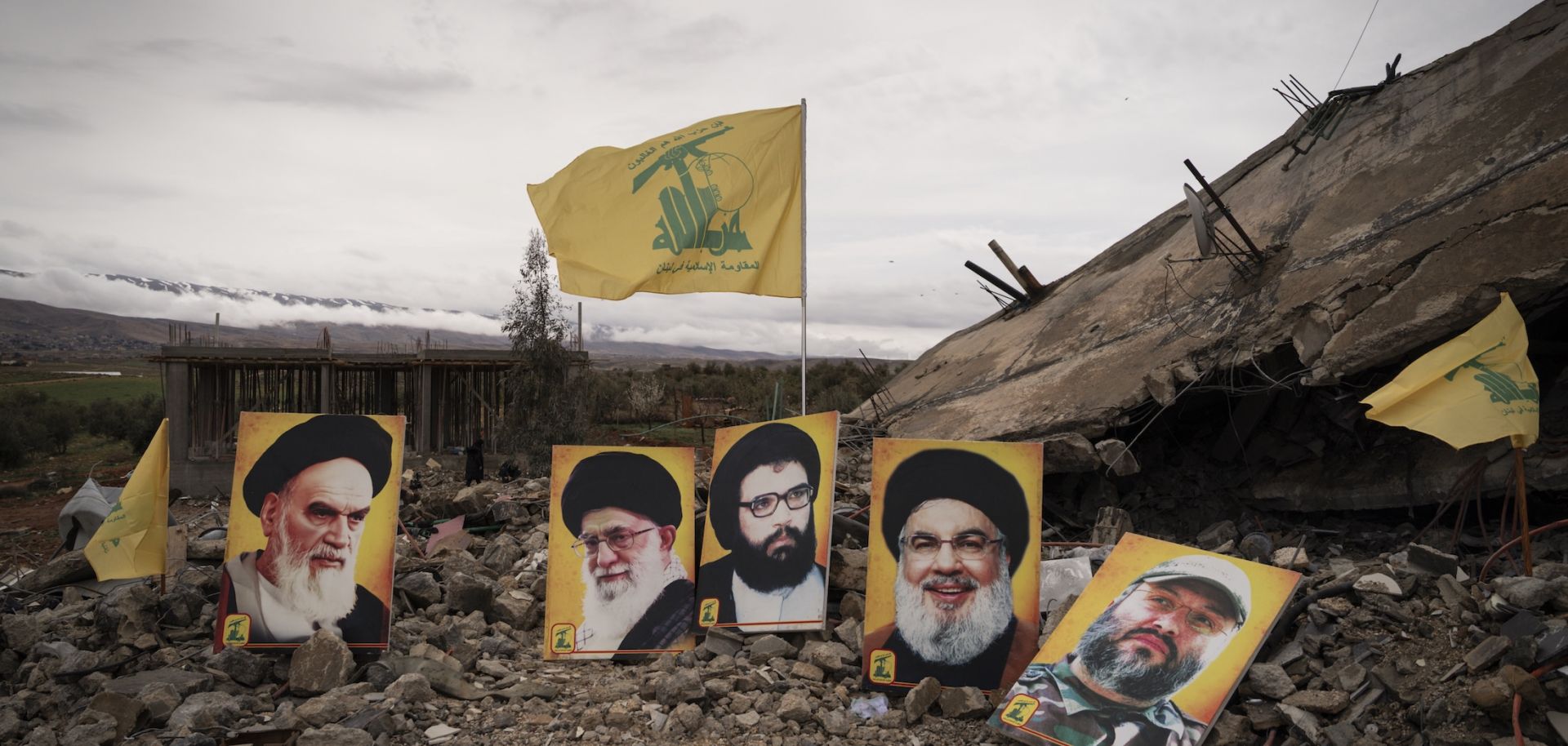
After two and a half years of war, Israel appears to now be moving to attempt to severely, if not completely, eradicate the threat stemming from Iran's most important ally, Hezbollah in Lebanon. The current round of Hezbollah-Israel conflict did not emerge in isolation but as part of the broader regional escalation that followed the outbreak of war between the United States, Israel and Iran on Feb. 28. Hezbollah entered the conflict on March 2 by launching rockets and drones toward Israel in what it framed as support for Iran and retaliation for the killing of Supreme Leader Ali Khamenei. What initially appeared to be a symbolic demonstration of solidarity quickly evolved into sustained cross-border fighting that has drawn Lebanon deeper into the regional war. Despite having been heavily battered in the 2024 conflict with Israel, Hezbollah has surprised Israeli planners by demonstrating that it retains meaningful operational capabilities. Among other things, its elite Radwan Force has engaged Israeli troops in clashes south of the Litani River, areas that were supposed to have been cleared under the terms of a November 2024 ceasefire arrangement, illustrating the Lebanese army's failed efforts to dismantle the group's frontline presence.
From Hezbollah's perspective, the decision to enter the war reflects a combination of strategic and reputational considerations. The group is acting in solidarity with Iran as part of the broader Tehran-backed regional "Axis of Resistance," while also seeking to reestablish deterrence against Israel after the public humiliations and personnel and capability losses it suffered in 2024. By sustaining rocket and drone attacks and engaging Israeli forces on the ground, Hezbollah is attempting to demonstrate that it remains capable of threatening Israel despite those setbacks. At the same time, the group is trying to reassert its standing domestically by portraying itself as the defender of Lebanon against Israeli military pressure, given the frequent Israeli attacks against the country since the 2024 ceasefire, against which the group has not retaliated until now. In this sense, Hezbollah's strategy is as much about restoring credibility and political relevance as it is about supporting Iran's regional confrontation with Israel.
The region is shifting. Regardless of how the Iran war evolves, Tehran's ability to project power has already taken a significant hit, constraining its future support to Hezbollah. As a result, change is also coming to Lebanon. Israel, operating primarily through a security lens, appears intent on exploiting this moment, both to further degrade Hezbollah and potentially expand its control along the northern front. At the same time, it is likely to increase pressure on the Lebanese government to make difficult decisions, including steps to disarm Hezbollah and/or normalize relations with Israel, under the threat of continued military action. What seems increasingly likely is that Lebanon's post-conflict reality will not resemble the pre-war status quo. Hezbollah's role as a "resistance" actor will likely be diminished, while the Lebanese state may face growing internal strain and a change of borders. Caught between external pressure and internal divisions, Lebanon is headed toward a period of uncertainty and heightened domestic instability, with the risk of a new civil war if competing pressures from Israel, Hezbollah and regional dynamics intensify.
Lessons Learned
Hezbollah appears to have adapted its military capabilities and tactics since the 2024 war that took out most of its senior leadership, elite units and missile and drone capabilities. Rather than relying on centralized launches that can be more easily targeted from the air, the group has increasingly shifted toward dispersed launch positions and smaller units operating semi-independently across southern Lebanon and the Bekaa Valley. This decentralized structure allows local cells to continue firing rockets and drones even when communications with higher command have been disrupted. Hezbollah's command-and-control has also become more flexible and the group has reportedly changed its communications procedures to avoid Israeli operations similar to the 2024 pagers attack. This has enabled the group to absorb Israeli airstrikes while maintaining intermittent rocket and drone fire into northern Israel. These adaptations reflect a broader shift toward resilience and survivability rather than sustained high-volume barrages given the constraints on the group's rocket and drone arsenal, allowing Hezbollah to prolong the conflict and impose steady costs on Israel even under intense military pressure.
Against this backdrop, Hezbollah appears to have partially rebuilt its military capabilities after the heavy losses it sustained in 2024. Prior to that war, the group was estimated to possess roughly 150,000 rockets and missiles and a force of around 45,000 fighters, including reservists. The 2024 confrontation significantly degraded these capabilities through leadership losses, destruction of launch infrastructure and targeted strikes against weapons depots. However, current estimates suggest Hezbollah still retains tens of thousands of rockets and missiles, including a smaller but still meaningful inventory of precision-guided systems and attack drones. Its active fighting force is also believed to remain in the tens of thousands, though likely reduced compared to pre-2024 levels and with some elite units such as the Radwan Force suffering a large number of casualties. Importantly, Israel's intelligence advantages that enabled the large-scale targeting successes of 2024 appear less decisive in the current conflict and Israeli intelligence seems to have misjudged how much Hezbollah was weakened in 2024 and how the group has recuperated since then. Meanwhile, many of the vulnerabilities that Israeli intelligence exploited during the 2024 campaign have already been exposed and mitigated, meaning Hezbollah has had time to adapt its operational security and concealment practices. As a result, while Israel retains overwhelming military superiority, Hezbollah's surviving capabilities and adaptive tactics will allow it to sustain a lower-intensity but persistent threat across Israel's northern front.
Hezbollah and the Lebanese Government
Since taking office in February 2025, the Lebanese government led by President Joseph Aoun and Prime Minister Nawaf Salam has attempted to reassert the authority of the Lebanese state following years of Hezbollah operating largely beyond institutional control. Their agenda has focused on restoring basic governance, rebuilding relations with Western and Gulf partners and slowly strengthening the role of the Lebanese Armed Forces (LAF) and state institutions in areas historically dominated by Hezbollah. In practice, this has included efforts to increase army deployments in southern Lebanon, tighten oversight of border crossings and logistics routes used for weapons transfers and push forward the long-stalled commitment that decisions of war and peace should rest with the Lebanese state, not armed non-state actors. These measures have not fundamentally dismantled Hezbollah's military structure but have signaled a gradual attempt to limit the group's operational freedom and reestablish the state's primacy.
The current war has placed the Aoun-Salam government in an extremely difficult position. First, the leadership has sought to distance the Lebanese state from Hezbollah's decision to enter the conflict, emphasizing that the government did not authorize the group's attacks and calling for restraint to avoid a wider war. At the same time, the government has tried to manage the immediate consequences of Israeli strikes and internal displacement while preventing the country from sliding into broader internal instability. Officials have continued to push for expanded LAF deployments in the south and have engaged diplomatically with international partners in an attempt to contain the escalation, but the LAF has not proactively sought to confront Hezbollah on its own. The government's response reflects a delicate balancing act between asserting state authority, avoiding direct confrontation with Hezbollah that could trigger domestic conflict and attempting to shield Lebanon from the full consequences of a regional war largely driven by actors beyond its control.
Meanwhile, Israel has steadily expanded the scope of its operations. What began as airstrikes and artillery exchanges has evolved into ground incursions and deeper military activity inside southern Lebanon, with Defense Minister Israel Katz ordering the expansion of operations on March 16. The decision reflects a continuation of the broader shift in Israel's regional strategy since the Oct. 7, 2023 Hamas attacks and following the escalation with Iran. Israel's leadership increasingly views the conflict with Hezbollah not as an isolated border confrontation but as part of a wider campaign against Iran's regional military architecture. In this framework, Hezbollah represents the most capable and immediate extension of Iranian power along Israel's borders. By expanding ground operations and intensifying strikes across southern Lebanon and beyond, Israel is attempting to further undermine Hezbollah's military capabilities while simultaneously weakening Iran's forward deterrence posture. The result is a conflict that is moving beyond limited cross-border exchanges toward a more expansive campaign in which Israel appears determined to significantly degrade, and potentially dismantle, Hezbollah's ability to operate as a major military force in Lebanon.
The Trajectory of the War
The trajectory of the war will be increasingly defined by a clash of strategic objectives that makes a quick resolution unlikely, instead making it more likely the fight will continue beyond the Israeli and U.S. war with Iran. For Hezbollah, the conflict is framed as part of a broader regional confrontation in which the group is acting in parallel with Iran. Its leadership views the fight as existential, both in terms of its role within the Iran-led Axis of Resistance and its domestic legitimacy inside Lebanon. For Hezbollah, the thinking may have been that a fight was inevitable and that it is better to fight now with the Iranians and other militias, rather than face Israel alone, especially if Iran is weakened to the extent that it cannot help the group replenish its stocks.
Hezbollah's strategy, therefore, centers on sustaining pressure on Israel long enough to force a ceasefire that would coincide with any eventual de-escalation in the confrontation with Iran. In practical terms, this means the group is entering an endurance race similar to the one Iran is attempting on the regional level. By continuing rocket and drone attacks despite Israeli strikes, Hezbollah hopes either to restore some degree of deterrence and/or to claim a strategic victory, such as forcing an Israeli withdrawal from Lebanon and deterring future attacks. Such an outcome would contrast with the status quo that had existed since the November 2024 ceasefire, under which Israel continued to carry out regular strikes against the group, framed as enforcement of the ceasefire. Such a major achievement would allow Hezbollah to argue that it had withstood Israel's military campaign and therefore should retain its ability to operate politically and militarily inside Lebanon. It would shift its attention back to regional priorities, such as the threat it perceives from neighboring Syria, in addition to formulating a national defense strategy on its terms with the Lebanese government. It would also reinforce the group's argument that it — not the LAF — remains the key armed group in Lebanon, capable of challenging both Israel and any domestic efforts to weaken it, thereby strengthening its claim that disarmament remains unrealistic.
Israel's objectives are far more expansive and have evolved significantly since the Oct. 7, 2023 attacks that reshaped its national security doctrine. Israel's leadership increasingly views Hezbollah as an existential threat comparable to and in some ways more immediate than Hamas because of the group's missile arsenal and proximity to Israeli population centers. Within this framework, Israel is pursuing an aggressive forward-defense strategy aimed at separating Hezbollah from Iran's regional military architecture and dismantling the group's capabilities in Lebanon. In the coming weeks, the center of gravity of Israel's campaign is likely to shift more decisively from Iran toward Hezbollah. Unlike previous confrontations in which political and economic constraints limited the scope of Israeli operations, Israeli decision-makers appear prepared to sustain a prolonged campaign, even at significant cost. The absence of major domestic backlash so far has reinforced this posture, increasing the likelihood that Israel will continue expanding its military operations regardless of whether a ceasefire eventually emerges in the Iran theater. This time, Israel is keen on expanding its buffer zone inside Lebanon to push Hezbollah's rocket fire away from Israel's population, especially in the north, while it degrades the group progressively. Israel's ultimate aim is to completely eradicate the group, change the political order in Lebanon such that it pressures the government in Beirut to effectively do its bidding, or, while trying to reshape the political order, create sufficient chaos in the country that Hezbollah and other Lebanese factions are engulfed in a civil war that distracts them from fighting Israel.
Taken together, these competing objectives point toward a war of attrition rather than a rapid and decisive military outcome. Israel is likely to continue air and ground operations aimed at degrading Hezbollah's capabilities and is highly likely to attempt to establish a buffer zone extending at least 10 to 15 kilometers into southern Lebanon. Such a zone would push Hezbollah's short-range rocket fire and small-unit operations farther away from Israeli border communities and northern cities. As part of the fighting, both sides will attempt to impose cumulative costs on the other in a contest of endurance and political will. Hezbollah is effectively baiting Israel into deeper ground operations, where it believes it can replicate elements of its past wars in Lebanon by inflicting steady casualties on Israeli forces and eventually forcing a withdrawal. Israel, however, appears more tolerant of casualties than in previous conflicts due to adjustments in military tactics and the perception that the strategic stakes are higher, especially with strong political and popular backing for this campaign. As a result, the Israeli military is likely to combine expanded ground operations, special forces raids and sustained precision strikes designed to systematically degrade Hezbollah's rocket, drone and missile stockpiles. Hezbollah's logistical position is also more constrained than in previous wars, particularly as its traditional supply routes through Syria have become less reliable since the collapse of the regime of Bashar al Assad in December 2024 and because the Lebanese government has complicated the group's ability to move weapons as freely as it once did. These factors suggest that the conflict could become a prolonged contest in which neither side achieves a clear victory quickly but where the cumulative military and political costs will shape Hezbollah's future role inside Lebanon.
The Variables Likely to Shape the Outcome
Several constraints and political variables could shape the direction of the conflict. One possibility is that the war begins to strain Israel itself. A prolonged campaign, particularly accompanied by rising military casualties, economic costs and political fatigue, could generate pressure to reduce the intensity of operations and abandon maximalist objectives. This dynamic could become more pronounced as the country approaches elections that must be held by October, when domestic political considerations may begin to weigh more heavily on decision-making. In such a scenario, the Israeli leadership could accept a ceasefire after further degrading, but not fully dismantling, Hezbollah's capabilities.
While Hezbollah would be able to portray this outcome as something of a victory for merely again outlasting Israel, Israeli strategic thinking does not necessarily assume that Hezbollah can be completely eliminated. Much like the broader confrontation with Iran, Israeli planners are likely operating under the assumption that these adversaries will ultimately survive the current war. From that perspective, the objective is less about achieving a definitive victory and more about reshaping the balance of power ahead of the next round of conflict. Degrading Hezbollah's military infrastructure, destroying weapons stockpiles and pushing the group away from Israel's northern border would therefore serve to weaken its capabilities and improve Israel's strategic position in any future confrontation, even if Hezbollah continues to exist as a political and military actor inside Lebanon.
Another possibility is that the war leaves Hezbollah severely depleted and internally fragmented. Heavy military losses combined with growing anger within the Shiite community over the costs of the war could weaken the group's cohesion and legitimacy. There is also a possibility that, as part of a broader ceasefire between Iran and the United States, Tehran could agree to stop supporting Hezbollah, or may even not have the capacity to continue backing it, regardless of any agreement. In such a scenario, Hezbollah might not disappear entirely but could splinter into multiple components. Some hardline factions could continue sporadic attacks against Israel through smaller cells or semiautonomous units, while the broader political leadership would attempt to preserve the group by engaging more directly with the Lebanese state and shifting toward a more political role. This would represent a significant transformation for Hezbollah, forcing it to prioritize domestic political survival over its traditional role as the spearhead of Iran's regional deterrence against Israel.
There is historical precedent for this kind of fragmentation under sustained military pressure. In the 1980s, Israeli campaigns against Palestinian militant groups in Lebanon contributed to the fragmentation of the Palestinian movement into multiple factions with varying strategies ranging from continued armed struggle to political engagement. A similar dynamic could emerge if Hezbollah's centralized military structure is severely degraded. Rather than eliminating the group entirely, sustained Israeli pressure could unintentionally produce a more fragmented landscape of armed groups, some less disciplined and harder to control, complicating both Lebanese state authority and long-term regional stability.
A third, more volatile but more unlikely scenario could emerge if regional actors begin to actively pressure Hezbollah from multiple directions. Syrian forces could, together with the LAF, attempt to expand their presence in areas traditionally controlled by Hezbollah while Israel continues its military operations — though reports indicate that they have resisted U.S. pressure to do so. Such a convergence of pressure would significantly weaken the group's territorial and logistical control. However, this pathway carries considerable risks. Any direct confrontation between Hezbollah and the LAF would reopen sectarian divisions inside Lebanon and could push the country toward internal conflict. Rather than eliminating Hezbollah, this could play directly into the group's narrative that it is defending the Shiite community against external and internal enemies, potentially triggering a new cycle of civil violence that spills across the border with Syria.
Things Won't Be the Same
The most plausible outcome lies somewhere between these extremes. Hezbollah is likely to emerge from the war weakened and Israel is likely to become more war-weary, especially if it suffers losses during the war. Under such conditions, a ceasefire that ends Hezbollah's military role, establishes Israeli territorial control over portions of the south and kickstarts negotiations between the Lebanese government and Israel could eventually take shape. The group might be forced to dismantle or relinquish much of its armed infrastructure while retaining a political presence under guarantees that it operates within the framework of the Lebanese state. As part of a broader regional settlement, Lebanon could also move toward a more stable arrangement with Israel, potentially involving security guarantees and a gradual shift toward a formal state of no war, even if full diplomatic normalization remains distant.
What appears almost certain is that the geopolitical landscape surrounding Lebanon will not look the same after this war. The borders and security arrangements that governed southern Lebanon for decades are likely to be reshaped. Israel is highly likely to maintain a permanent security buffer inside Lebanese territory while other actors in the region may seek to exploit Hezbollah's weakened position. Syria, in particular, could view the moment as an opportunity to reassert influence over areas of Lebanon that historically fell within its strategic orbit, specifically the Bekaa Valley and parts of northern Lebanon. Regardless of the exact outcome, Hezbollah knows it is unlikely to emerge from this war as the dominant and unchallenged military power within Lebanon that it once was, even if the group attempts to portray the outcome as another victory.
The deeper consequences will likely unfold inside Lebanon itself, where the war is already amplifying existing sectarian and structural tensions, particularly those that emerged after Hezbollah's first "Front of Support" for Gaza in 2023. Israeli military pressure, Hezbollah's determination to continue the confrontation and attempt to survive headstrong, the growing internal displacement crisis and the uncertain posture of neighboring Syria are all pushing the country toward a more unstable future. As Israeli officials increasingly signal a willingness to target Lebanese infrastructure and expand military operations, the Lebanese state will face mounting pressure to rein in Hezbollah while lacking the political cohesion or military capacity to do so decisively. At the same time, Hezbollah remains unwilling to concede its military role, viewing the confrontation as part of a broader regional struggle linked to Iran.
These dynamics suggest that, absent significant external intervention capable of moderating the positions of the key actors involved, Lebanon is likely to enter a period of heightened political and security instability. Iran will likely emerge from the war weakened militarily and economically, even as its leadership becomes more ideologically hardline, further complicating any internal compromise. In this environment, Hezbollah may attempt to adjust its strategy to preserve its influence domestically while remaining aligned with Tehran, but external pressure, internal displacement, economic collapse and regional rivalries will make the Lebanese political landscape far more volatile. Rather than resolving the long-standing question of Hezbollah's role within the state, the war is more likely to deepen Lebanon's fragmentation and prolong the country's cycle of instability — even possibly leading to civil war.
