
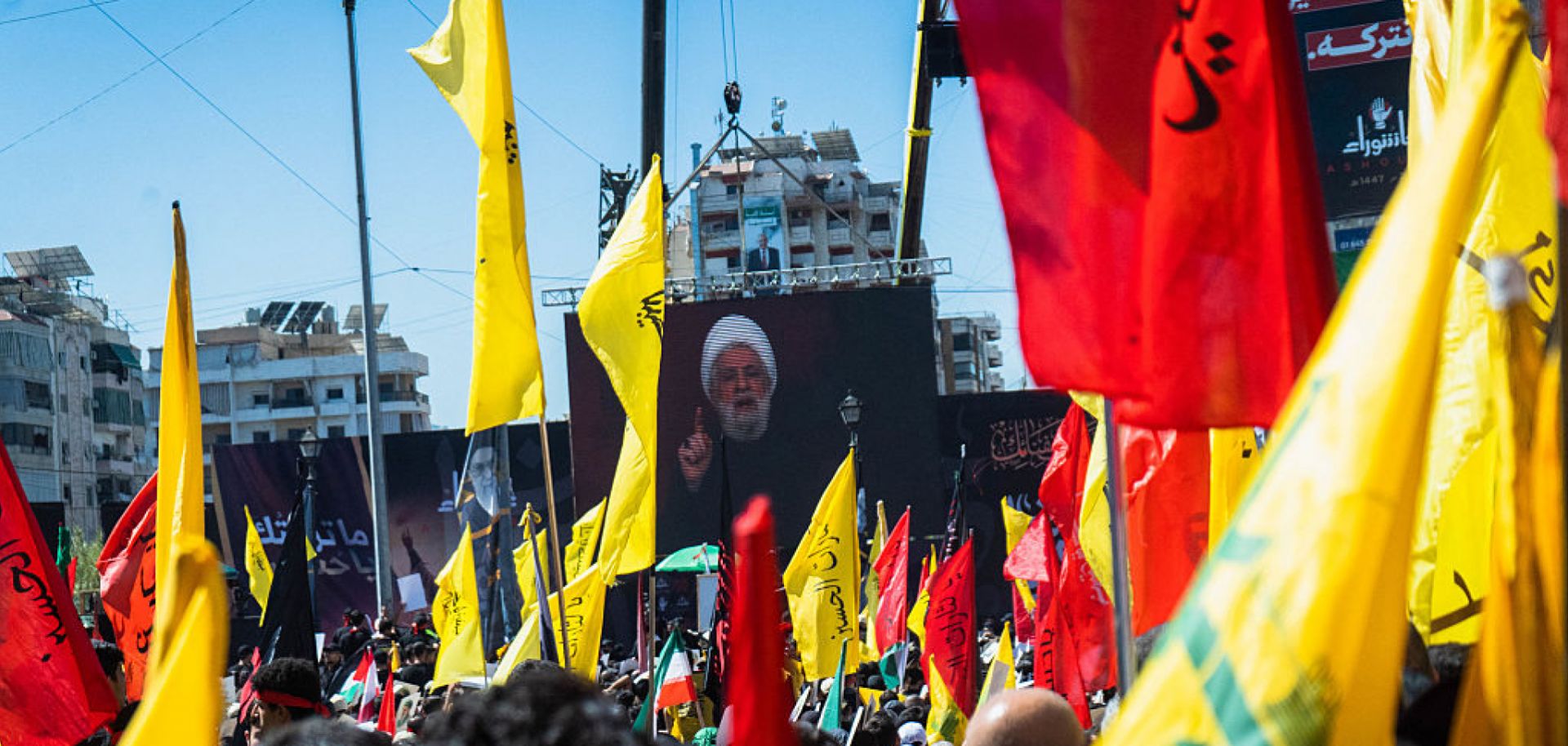
Lebanon's directive to implement Hezbollah's disarmament will face an uphill battle as mounting Israeli military assertiveness, U.S. economic and diplomatic pressure, and Hezbollah's hardening stance will risk destabilizing the government and igniting more violence in the coming months. On Aug. 5, the Lebanese government directed the national army to formulate a plan by year-end to ensure that only state institutions possess weapons in the country, including by disarming militias like Hezbollah. The following day, Hezbollah issued a statement strongly criticizing the move, saying it would deal with the directive ''as if it does not exist'' but would still remain open to dialogue. Hezbollah leader Naim Kassem has also announced that the group will not abide by a timeline for disarmament and rejects disarmament without a national security strategy, noting that talks on disarmament only serve U.S. and Israeli interests. On Aug. 5, Lebanon's information minister said that the Lebanese Armed Forces, or LAF, had until the end of August to present its plan for establishing a state monopoly on arms, with Lebanon's Cabinet planning more sessions to discuss a U.S. proposal on a roadmap for disarmament of Hezbollah in exchange for Israel halting its attacks and withdrawing its troops from southern Lebanon.
- In June, U.S. envoy Thomas Barrack presented a roadmap to Lebanese officials that called for Hezbollah's full disarmament in return for Israel ending its strikes on Lebanon and pulling its forces from five remaining positions in southern Lebanon. The proposal required Lebanon's government to issue a cabinet decision explicitly committing to Hezbollah's disarmament. As progress stalled, Washington grew increasingly impatient, urging ministers to publicly commit to keep negotiations moving forward.
- During the Aug. 5 Cabinet session, two Shiite Muslim ministers — out of four named by Hezbollah and their ally, the Amal Movement — walked out of the meeting before the statement was finalized, signaling their and their backers' disapproval.
Lebanon's historic decision appears designed to appease the United States and forestall more aggressive Israeli attacks on the country, despite pushback from Hezbollah. The Lebanese government's directive is the first of its kind to press for the disarmament of Hezbollah, something that recurring governments since the 1990s have avoided doing. However, the timing of the decision suggests it is aimed at appeasing the United States and indirectly Israel, in a bid to sustain mediation talks with the former and, in turn, avoid military escalation with the latter. For months, Lebanese government leaders have repeatedly committed to disarming Hezbollah but have stopped short of taking decisive action, largely due to fears of triggering communal violence and destabilizing the delicate sectarian balance within the country. Hezbollah, for its part, has consistently indicated openness toward disarmament but insists on specific conditions. Chief among these demands is Israel's withdrawal from five military outposts it still occupies in southern Lebanon, an end to Israeli attacks, and securing international funds for reconstruction following the recent conflict. Despite these diplomatic overtures, negotiations have reached a deadlock, primarily because both Hezbollah and Israel refuse to soften their positions. With strong backing from the United States, Israel insists on Hezbollah's complete disarmament before any reciprocal concessions can be considered. Meanwhile, Israel continues to apply military pressure on Hezbollah, conducting periodic strikes and maintaining an assertive military posture, despite the ceasefire still being in effect, further complicating Lebanon's efforts to reach a framework with Hezbollah on disarmament.
- In June, Lebanon formally launched a plan to disarm Palestinian refugee camps, starting with Bourj el‑Barajneh, Shatila, and Mar Elias in Beirut, followed in July by Beddawi (Tripoli) and Al‑Jalil (Bekaa), under a joint Lebanese‑Palestinian committee and a specific timetable linked to pledges on improving refugees' social and economic rights. The initiative, agreed upon by President Joseph Aoun and Palestinian Authority President Mahmoud Abbas, aimed to eliminate weapons in all 12 camps by early July. However, implementation encountered immediate delays and has since stalled, with Palestinian representatives requesting more time to establish the necessary mechanism.
Despite directing the LAF to implement a plan for disarming Hezbollah by the end of the year, the Lebanese government will also seek to negotiate with the United States for a phased disarmament — a process that is almost certain to take longer, if it happens at all. Such talks would be aimed at buying time to implement a deal that paves the way for Hezbollah's disarmament. In these negotiations with Washington, Beirut would condition efforts to disarm Hezbollah on a U.S.-mediated Israeli withdrawal from strategic positions in southern Lebanon, an end to Israeli airstrikes, and secured commitments for substantial reconstruction aid. Lebanon would present this to the United States and Israel as mutually beneficial, arguing that it offers Israel concrete security assurances, with a decision in place and a plan being formulated to disarm Hezbollah, while simultaneously appealing to Gulf states and other Western states eager to reduce Iranian influence in the country and increase their own. Cognizant of Lebanon's delicate sectarian balance, the government will continue to emphasize state sovereignty and national defense in its pursuit of disarmament, in an effort to minimize the risk of alienating Hezbollah and its Shiite base, and triggering internal strife. This will see the government avoid taking drastic measures that could lead to direct confrontation with Hezbollah, as it mulls over a feasible and acceptable plan for disarmament in the coming months. Beirut will also continue to lobby the United States to secure any confidence-building measures from Israel — such as territorial withdrawals, or acceptance of Hezbollah's military capabilities under state oversight — as strategic incentives for Hezbollah to embrace disarmament.
- Shiite cabinet ministers representing Hezbollah and its ally, the Amal Movement, have already signaled potential pushback if deliberations on disarmament continue to exceed pre-agreed boundaries.
- Despite Hezbollah's rhetorical criticism of the Cabinet's new directive on disarmament, Hezbollah officials continue to signal willingness for a ''national security strategy,'' meaning they are less likely to resort to aggressive tactics like fomenting mass social unrest or committing large-scale violence in the short term. Hezbollah has also called on its supporters to remain patient, which suggests the group does not think the time for drastic measures has arrived but is keeping the door open for such an escalation in a worst-case scenario.
Without significant progress on disarmament, Israel will likely continue striking Hezbollah targets in Lebanon, potentially leading to increased U.S. diplomatic and economic pressure on Lebanon and a more defiant Hezbollah, risking renewed conflict. Despite the Lebanese decision to launch a process for disarming militias in the country, Hezbollah's statement outright rejecting the directive will incentivize Israel to continue its aggressive military actions in the coming months if the LAF and government are unable to formulate, let alone implement, a disarmament plan that appeases all sides. Israel's aggressiveness will be aimed at forcibly neutralizing Hezbollah's capabilities without any significant territorial concessions or withdrawals from strategic positions in southern Lebanon, to signal that it will accept nothing short of a quick Hezbollah disarmament process. Parallel to this, the United States would likely amplify economic pressure by discouraging Western and Arab states from financially supporting Lebanon until concrete progress is achieved on Hezbollah's disarmament, even if Beirut advances notable economic and governance reforms. Such external pressures would almost certainly provoke a more defiant and hard-line stance from Hezbollah, validating the group's narrative that diplomatic overtures toward the West and Israel are ineffective or even counterproductive. Hezbollah would interpret Israeli escalation and persistent U.S. economic coercion as evidence that relinquishing its arms would dangerously undermine its position, reinforcing the group's determination to resist disarmament and potentially pushing Lebanon closer toward sectarian violence and political instability. In this scenario, Hezbollah would likely be compelled to respond forcefully, opening the door to another round of conflict with Israel featuring daily barrages of cross-border aerial strikes.
- Despite the November ceasefire, Israel has been conducting weekly strikes against Hezbollah targets throughout Lebanon, including Beirut. Should it decide to increase pressure on the group to disarm, Israel would likely intensify and increase the frequency of these airstrikes. Israel may even decide to strike Lebanon's civilian infrastructure to pressure the Lebanese government, making the cost of inaction on Hezbollah's disarmament too high.
- In an Aug. 5 speech, Hezbollah leader Naim Kassem threatened that if Israel expanded its attacks on Lebanon to a broader aerial campaign, the group would resume launching missiles at Israeli cities.
Mounting U.S. and Israeli pressure, coupled with Hezbollah's increasingly hardened stance, will risk destabilizing Lebanon's government and could lead to intensified sectarian tensions. In recent weeks, the Lebanese Forces (LF) — a former militia and Christian party aligned with U.S. and Arab interests — have consistently advocated for a concrete disarmament timeline. Other anti-Hezbollah factions — including the Progressive Socialist Party, Sunni lawmakers and even the Free Patriotic Movement, a former Hezbollah ally — have echoed similar demands, albeit without aggressively escalating rhetoric. Together, these pressures will eventually threaten the fragile unity of Lebanon's Cabinet. While the Cabinet's Aug. 5 directive appeases those factions, it still primarily aims to buy time. And the LF, possibly backed by external encouragement, may resort to more drastic steps, including withdrawing from the government in the coming months. Such a withdrawal would critically undermine Cabinet legitimacy and thereby further paralyze policymaking, particularly given the LF's substantial representation as Lebanon's largest Christian bloc. It would also strategically position the party ahead of upcoming elections in mid-2026. Should this occur, Hezbollah would probably harden its position, completely refusing disarmament while ratcheting up rhetoric to protect its support base and maximize electoral gains, even if it means isolating itself within Lebanon's political system. As political divisions sharpen, the risk of localized sectarian incidents would grow, especially along sensitive fault lines in urban centers like Beirut and key areas of the Bekaa. If not carefully contained, these incidents could escalate into broader sectarian conflicts, significantly raising the risk of widespread instability that could potentially result in the collapse of the Lebanese government.
- If the Lebanese Cabinet and the LAF try to enforce a disarmament plan without Hezbollah's direct support or tacit acceptance, it would also raise the risk of government collapse. This action could prompt Hezbollah and the Amal Movement's ministers to resign, thereby eroding the Cabinet's legitimacy and potentially inciting political tensions or violence.
