
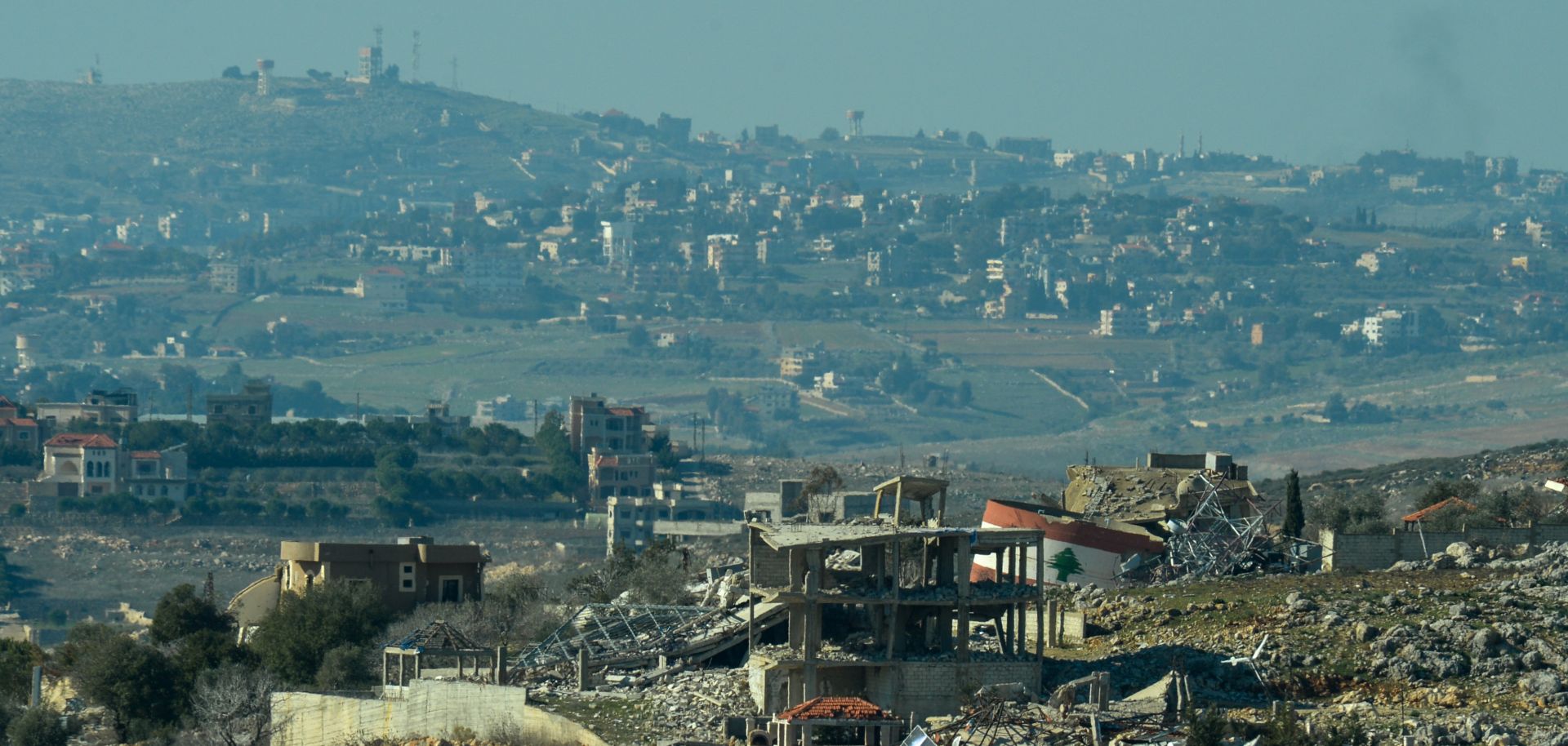
Ahead of Lebanon's 2026 general election, Hezbollah will try to rebrand itself as a more nationalist resistance movement as it seeks to rebalance internally and offset pressure to disarm. But while this will make the group less likely to intervene in future Iran-Israel clashes, the risk of more Israel-Lebanon wars will persist. In the wake of the Israel-Iran war, U.S. and Israeli diplomats have made new attempts to weaken Hezbollah inside Lebanon and improve Israeli-Lebanese relations. The United States has proposed that Lebanon push for Hezbollah's disarmament in exchange for Israeli withdrawals from the south of the country and the end of Israeli strikes on Lebanon, a prospect to which the Lebanese government reportedly responded positively. U.S. special envoy Tom Barrack said on July 7 that he was ''unbelievably'' satisfied with the Lebanese answer, even as he urged for a strategy that would enable Hezbollah to transform into a typical Lebanese political party rather than a member of the Iranian-led Axis of Resistance. However, signs also emerged that Hezbollah would not quickly go along with disarmament, with leader Sheikh Naim Qasim saying on July 6 that the group would not consider such a path until Israel had completed its withdrawal from southern Lebanon as agreed in the November 2024 ceasefire.
- The World Bank estimates that hostilities between Israel and Hezbollah have cost Lebanon approximately $8.5 billion from 2023-24. This is in addition to Lebanon's already high need for aid, which stems from years of economic crisis, political mismanagement and the 2020 Beirut port explosion.
- U.S. and Israeli officials have expressed optimism that Hezbollah's recent losses make an end to recurrent Israel-Lebanon conflicts feasible, particularly amid Israeli military leverage and U.S. economic leverage. Namely, Hezbollah suffered significant military and financial losses during its 2023-24 war with Israel, including the deaths of its longtime leader, Sheikh Hassan Nasrallah, the assassination of some of its elite commanders, and the depletion or destruction of part of its large arsenal of rockets and missiles. The subsequent fall of President Bashar al Assad in Syria in December 2024 severed Hezbollah's direct supply route with its main ally, Iran, making it difficult for Hezbollah to rebound after the war. The joint U.S.-Israeli campaign against Iran's nuclear program in June 2025 exposed Hezbollah's continued weakness, as the group did not join in defending Iran.
Since the end of the war with Israel, Hezbollah has focused on shoring up its position in Lebanon amid domestic and international pressure to disarm. In November 2024, Israel and Hezbollah agreed to a ceasefire that tacitly allowed Israel to strike Hezbollah targets, as Israel believed that the monitoring mechanism composed by the United States, France, Lebanon, Israel and the United Nations Interim Force in Lebanon would not effectively disarm Hezbollah. As a result, Israel has routinely conducted military operations, including strikes in Hezbollah strongholds in Bekaa and Beirut, to degrade Hezbollah and prevent its rearmament. As Israel continued to strike alleged Hezbollah attempts to rearm, in recent months, domestic and international calls for Hezbollah to disarm have intensified. Additionally, after the ceasefire, some Lebanese, including political officials, called for the end of the ban on public debate over normalization with Israel, like reformist lawmaker Paula Yacoubian and pro-Saudi lawmaker Walid Baarini, whose public statements reflect wider public sentiment favoring constructive engagement with Israel. Additionally, calls for Hezbollah to fully disarm and become a political party have grown from inside Lebanon, including from former Christian allies like the Free Patriotic Movement, a change in the perception of the group from its pre-war era, in which few were willing to challenge Hezbollah's status as a state-within-a-state.
Hezbollah's strategy will likely focus on selective opposition to Israeli-Lebanese diplomacy, allowing some limited diplomatic progress on issues like border demarcation ahead of Lebanon's 2026 elections. Diplomatic progress of any stripe between Israel and Lebanon will require unanimity from Lebanon's government (including Hezbollah), given the country's delicate sectarian balance and Hezbollah's ability to threaten the security environment with protests and armed action. As a result, U.S., Israeli and Lebanese diplomats will focus on areas of consensus outside of Hezbollah's objections. Key among these is the phased withdrawal of Israeli troops from a few remaining outposts inside Lebanon, established after Israel's 2024 invasion. While Israel aims to maintain these outposts in the near term as a pressure point against Hezbollah, the Lebanese government is lobbying the United States to pressure Israel to withdraw from these positions. Hezbollah has also indicated openness to tolerate border demarcation talks, which could finally resolve the long-standing dispute over the Lebanese-Israeli border, a conflict dating back to Israel's founding in 1948. Hezbollah is unlikely to generate unrest or political backlash over such indirect talks, as it seeks to both portray itself as pragmatic and rebuild popular support amongst its domestic base.
- Israel still maintains five outposts on strategically significant hilltops inside Lebanon, which allow for observation and potential ground operations should Hezbollah attempt to re-infiltrate or rebuild in southern Lebanon. Israel is unlikely to withdraw readily from these positions, but would do so under direct U.S. pressure or if it believes Hezbollah is on the path to disarmament.
- A particularly complex issue is the Shebbah Farms, a small territory claimed by Israel, Lebanon and Syria in the Golan Heights, which is a remnant of unclear colonial border delineations. While politically significant, it holds little strategic or economic value and could serve as a compromise point for demarcation talks.
- Hezbollah has previously agreed to other pragmatic measures, including the 2022 demarcation of Israel and Lebanon's maritime border, which facilitated energy exploration off both coastlines.
However, Hezbollah will resist disarmament, leaving Israel's open-ended campaign in place and Lebanon's partners unwilling to provide substantial reconstruction aid. Hezbollah's military wing remains central to its political and ideological identity, and the group is unlikely to agree to dismantle it unless it is under intense domestic pressure that would likely include a full-scale collapse of popular support and/or existential military threats to the group and its fighters. But such intense pressure is less likely to emerge within Lebanon, so long as Hezbollah remains relatively pragmatic. Fears of triggering another civil war will also feed into sentiment that slows any movement by the Lebanese government to force Hezbollah to fully disarm militarily. As a result, disarmament talks will likely be drawn out and experience few significant breakthroughs beyond potential pledges for Hezbollah to keep its military wing outside of certain parts of the country, which will lead to recurrent Israeli strikes on the group, and delay U.S. and potentially Saudi reconstruction aid to Lebanon.
- Pragmatic political considerations will also dissuade Hezbollah from fully disarming, in addition to the need to preserve its core identity. This is because dismantling Hezbollah's military wing would open up these networks to potential control by rival sects or factions, which would erode or even eliminate the power bases of many prominent Shiite figures within the group.
Hezbollah will seek to capitalize politically on both the open-ended Israeli military campaign and delayed reconstruction aid for Lebanon to rebuild its support ahead of the 2026 elections, while potentially distancing itself from Iran to rebrand as a Lebanese nationalist resistance movement in the process. As the group tries to adapt ahead of the elections set for 2026, it will seek to stir up domestic anti-Israel sentiment stemming from recurrent Israeli airstrikes on Lebanon and the remaining Israeli troops inside the country. Hezbollah will also try to use its own social and economic support networks to supplant the lack of foreign aid for Lebanon's post-war reconstruction, to rebuild popular backing among its Shiite supporters, as well as its Christian and Sunni allies. Additionally, the group will seek to rebuild smuggling routes through Syria, taking advantage of power vacuums there, to both rebuild black market economic links and support re-arming itself. But most notably, Hezbollah will be tempted to shift its identity away from a pan-Islamic resistance party and toward a more Lebanese nationalist militia in the wake of both Iran's failure to protect the group in its conflict with Israel, and Hezbollah's disrupted access to Iranian supply lines through Syria following the collapse of al Assad's Iran-backed regime. Though this would not signal an end to the confrontation with Israel, it would potentially de-link Hezbollah's behavior from Iran's, making the Lebanese group a more independent actor that engages with Israel on its own imperatives rather than acting as a proxy for Tehran, which is simultaneously trying to support Hezbollah's retrenchment to restore its key ally in the Levant.
- Hezbollah's initial intervention in the Gaza war in late 2023 was linked to a demand for Israel to halt its assault on the Gaza Strip. This intervention was initially popular until Israel's counterattack began in late 2024. Despite this military defeat, the formation of a Palestinian state remains broadly popular across Lebanon, in part because many Lebanese, even those who are not adversarial to Israel, want to see an end to the decades-long Palestinian refugee camps that are a drain on the country's resources and a threat to its political and security stability.
- Though Lebanon's 2026 elections are unlikely to result in substantial sectarian shifts, Shiite voters will be able to signal their support by casting ballots for Hezbollah, another Shiite party or independent members of parliament.
But even as Hezbollah's relations with Iran weaken, Israeli campaigns against Lebanon and the group could trigger conflicts independent of the Iran-Israeli conflict, weakening the Lebanese government and pro-Western factions in it. Should Israeli-Lebanese diplomatic outreaches fail to secure Lebanon and/or bring in Western financial aid, many Lebanese, especially Shiite ones, will rally back to Hezbollah as it acts as a more nationalist group rather than an Iranian proxy. So long as Israeli troops remain in Lebanon and Israel continues to attack the country, the triggers will exist for potential new escalations between Israel and Hezbollah. Such conflicts would be more anchored on Lebanese-Israeli dynamics than Israeli-Iranian ones, with a lower likelihood that Iran would intervene on behalf of Hezbollah due to the group's efforts to distance itself from Tehran. These Israel-Hezbollah confrontations may not necessarily manifest as the large-scale rocket wars of the recent past, and could instead devolve into guerrilla warfare reminiscent of Israel's 1982-2000 occupation of southern Lebanon. As a result, Lebanon's national government will be undermined by the lack of progress in national security and the economy, leaving it weakened against Hezbollah, while pro-Western factions could be increasingly discredited by their inability to deliver substantial results for the country. In this scenario, the worsening of Lebanon's security and economic situation would undermine the Lebanese government and leave it weakened against Hezbollah. At the same time, pro-Western factions within the government could face increasing discredit due to their failure to deliver substantial results for Lebanon.
- In addition to Hezbollah's disarmament, Europe, the United States and Gulf Arab states want to see Lebanon's government reform its finances and anti-corruption measures. But such reform measures would threaten the Lebanese elite across the sectarian spectrum, and have therefore been slow to take place. As a result, even if Hezbollah makes some progress appeasing foreign donors, other factors may slow aid to Lebanon, giving Hezbollah an opportunity to rebuild its social brand as it supplants that aid.
