
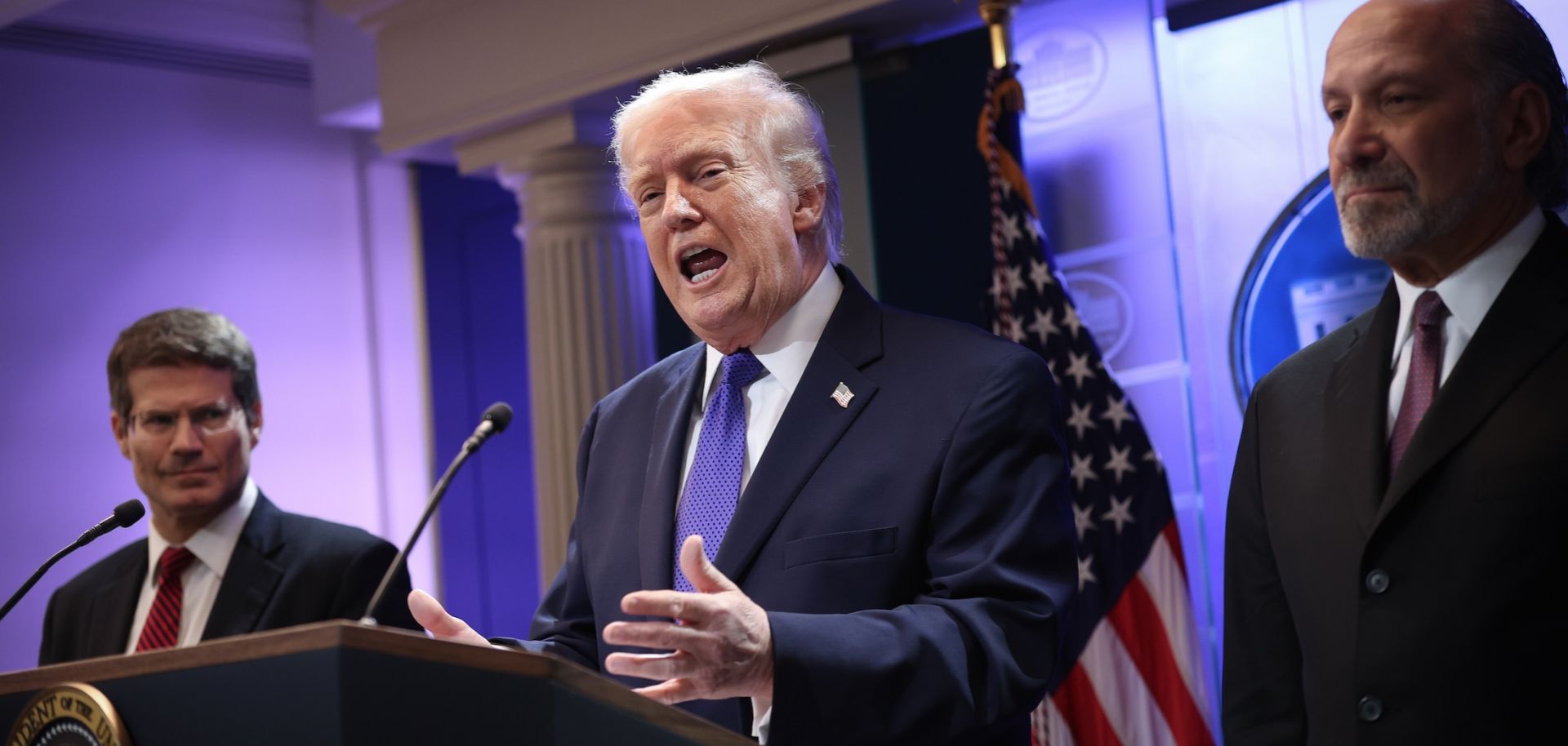
The Trump administration will use other authorities to replace many of the tariffs struck down by the U.S. Supreme Court, which means many countries will still seek to engage with the White House on trade matters, though the ruling could slow plans to implement signed trade deals. The U.S. Supreme Court delivered a major blow to President Donald Trump's trade policy on Feb. 20, striking down the majority of his global tariffs. The decision upheld rulings from two lower courts that found Trump exceeded his authority when using the International Emergency Economic Powers Act (IEEPA) to impose the levies. Upon hearing the news during a meeting with state governors, Trump reportedly called the ruling a "disgrace," but said he had a backup plan for imposing new tariffs. During a press conference after the announcement, Trump announced his intention to sign executive orders later in the day that would invoke Section 122 of the Trade Act of 1974 to implement a 10% global tariff and launch new Section 301 investigations (under the same act) against specific U.S. trading partners, though he did not specify which countries would be targeted.
- The ruling only affects the tariffs Trump has implemented using the IEEPA since his return to office in January 2025. This includes the bulk of tariffs placed on individual countries, including those targeting Canada, Mexico and China over fentanyl flows, and Brazil over the treatment of former President Jair Bolsonaro. It also includes Trump's sweeping Liberation Day tariffs, unveiled in April 2025, that target almost all other countries. Additionally, the ruling takes off the table Trump's threat to impose tariffs on countries that buy Russian oil or do business with Iran. However, the ruling does not affect the tariffs Trump has enacted using other trade authorities — most notably, the national security-related Section 232 sectoral tariffs on steel, aluminum and vehicles, and the Section 301 tariffs underpinning many of Trump's tariffs on China.
The Trump administration is already replacing the struck-down tariffs and will find other ways to replicate them using a combination of other trade authorities, though each has significant drawbacks compared to the IEEPA. The IEEPA became Trump's preferred authority to enact tariffs because its power, he argued, was largely limitless and came with few statutory requirements for implementation. But critics, and ultimately the Supreme Court, argued that this overstepped the legal authorities Congress had given the president to invoke the law. Other tools available to Trump for implementing tariffs either require very lengthy, in-depth investigations — which, if omitted, would risk court intervention — or come with substantial restrictions on how the tariffs are used. Trump's recently announced 10% global tariff, for example, is authorized under Section 122 of the Trade Act of 1974, which enables the president to impose tariffs up to 15% to address a large and serious deficit. While this tool could resurrect the White House's global baseline tariff (effectively set at 15%), it must be applied universally and expires after only 150 days without congressional approval — though this may still buy the White House time to pursue longer-acting tools. In the short term, the Trump administration can also adjust existing tariffs using other authorities, such as expanding the scope of its Section 232 tariffs on steel and aluminum to include additional goods. Still, such tariff modifications would need to be applied worldwide — not on an individual basis for different countries. Additionally, the White House could use Section 338 of the 1930 Tariff Act, but its use has largely been superseded by Section 301 of the 1974 Trade Act, subjecting it to legal challenges. In the coming weeks and months, the White House will launch the new Section 232 investigations, which allow the president to impose tariffs on sectors on national security grounds, and the Section 301 investigations, which allow the president to impose tariffs on an individual country for unfairly burdening U.S. commerce. However, these investigations often last months, so if they are not already underway, it could take up to a year for tariffs to be implemented. Due to the administrative capacity needed for such investigations, the Trump administration will likely prioritize investigations involving jurisdictions that have large trade deficits with the United States, such as the European Union, Mexico and Canada, as well as those that Trump has taken a personal interest in for political reasons, like South Africa. Imposing new tariffs on China under the Section 301 investigation, which Trump used to implement some tariffs on China that currently remain in effect, could also face legal challenges. This is because Section 301 tariffs must be proportionate to the economic damage caused by the investigated issue, which, in this case, was China's intellectual property theft.
- The Trump administration could also seek to use safeguard tariff authorities, which are designed to protect industries from a surge of imports. But these authorities require the U.S. International Trade Commission, a relatively apolitical agency, to be involved in the approval process.
Despite Trump's reduced authority to raise tariffs above 10% to levels imposed under the IEEPA, nearly all of the United States' main trading partners will remain incentivized to continue engaging with the Trump administration on trade matters. The extent to which the Supreme Court's decision will affect certain countries will depend on whether IEEPA tariffs were their primary concern. For Mexico and Canada, the ruling strikes down the 25% and 35% tariffs Trump imposed on them, respectively, using the IEPPA. But the actual economic benefit will be limited because most of their imports were already exempt from these tariffs under a carve-out for goods traded under the U.S.-Mexico-Canada Agreement (USMCA). Comparatively, Trump's Section 232 tariffs on steel, aluminum and autos remain a much larger threat for Mexico and Canada, given the political and economic importance of these industries to both countries. The Supreme Court ruling also heightens the risk that the Trump administration may withdraw from the USMCA review in July, having lost leverage from the undercut tariffs. China similarly retains a strong incentive to continue working with the Trump administration on trade issues. This is because many of the IEPPA tariffs it faced could quickly be replaced with Section 301 tariffs, either under the original intellectual property authority or multiple other ongoing Section 301 investigations, like the one that began in October concerning China's fulfillment of its commitments in the Phase One trade agreement. The European Union, meanwhile, will continue to cooperate with the United States to ensure the implementation of their new trade deal, which includes lower U.S. tariffs on automotive and pharmaceutical goods. The Supreme Court ruling will also not mitigate the threat of the White House retaliating against new EU trade policies with non-trade actions (e.g., regarding NATO or Greenland). Furthermore, the Trump administration has resumed some work on a Section 301 investigation into digital services taxes in France, Austria, Italy and Spain, which could be expedited. U.S. concerns with EU digital rules could provide the basis for a broader Section 301 case against the bloc as well. Likewise, South Korea and Japan remain incentivized to cooperate with the White House to implement their new U.S. trade deals, as they also secured key concessions on auto tariffs. However, the strike down of Trump's IEEPA tariffs will increase both countries' leverage in investment commitment negotiations, as each has consistently disagreed with the United States on the terms of commitments in their respective trade deals. Finally, Vietnam will find itself in a more precarious position following the Supreme Court ruling. This is because its large trade deficit with the United States — which ballooned from $70 billion in 2020 to $178 billion in 2025 — and prior Section 301 investigations into its currency policies make it an easy first target for non-IEPPA tariffs. Such tariffs would likely also face less domestic opposition in the United States than those targeting Western countries.
