
The U.S.-Vietnam trade deal lowers headline tariffs, but the lack of key details leaves major uncertainty around specifics and enforcement aspects that could reshape investment and squeeze exporters across China-linked and Southeast Asian supply chains. On July 2, U.S. President Donald Trump announced a trade deal with Vietnam in which the United States will impose a 20% tariff on Vietnamese imports and a 40% tariff on goods transshipped through Vietnam — a measure clearly targeting Chinese goods shipped through Vietnam. The agreement was announced just days ahead of a self-imposed July 9 deadline that could have seen the United States place a 46% tariff on Vietnamese goods. As a part of the deal, Trump said that Vietnam would eliminate all tariffs on imports of U.S. goods. However, the Vietnamese government has not yet released details or legal text on such plans, and Vietnamese officials have stated that negotiations around finer details with Washington are ongoing. Several key aspects regarding the deal's implementation also remain unclear, including how transshipment will be defined and enforced, what Vietnamese goods fall under the 20% rate vs. the 40% rate, and whether current U.S. Most Favored Nation tariffs will be applied on top of the new tariffs.
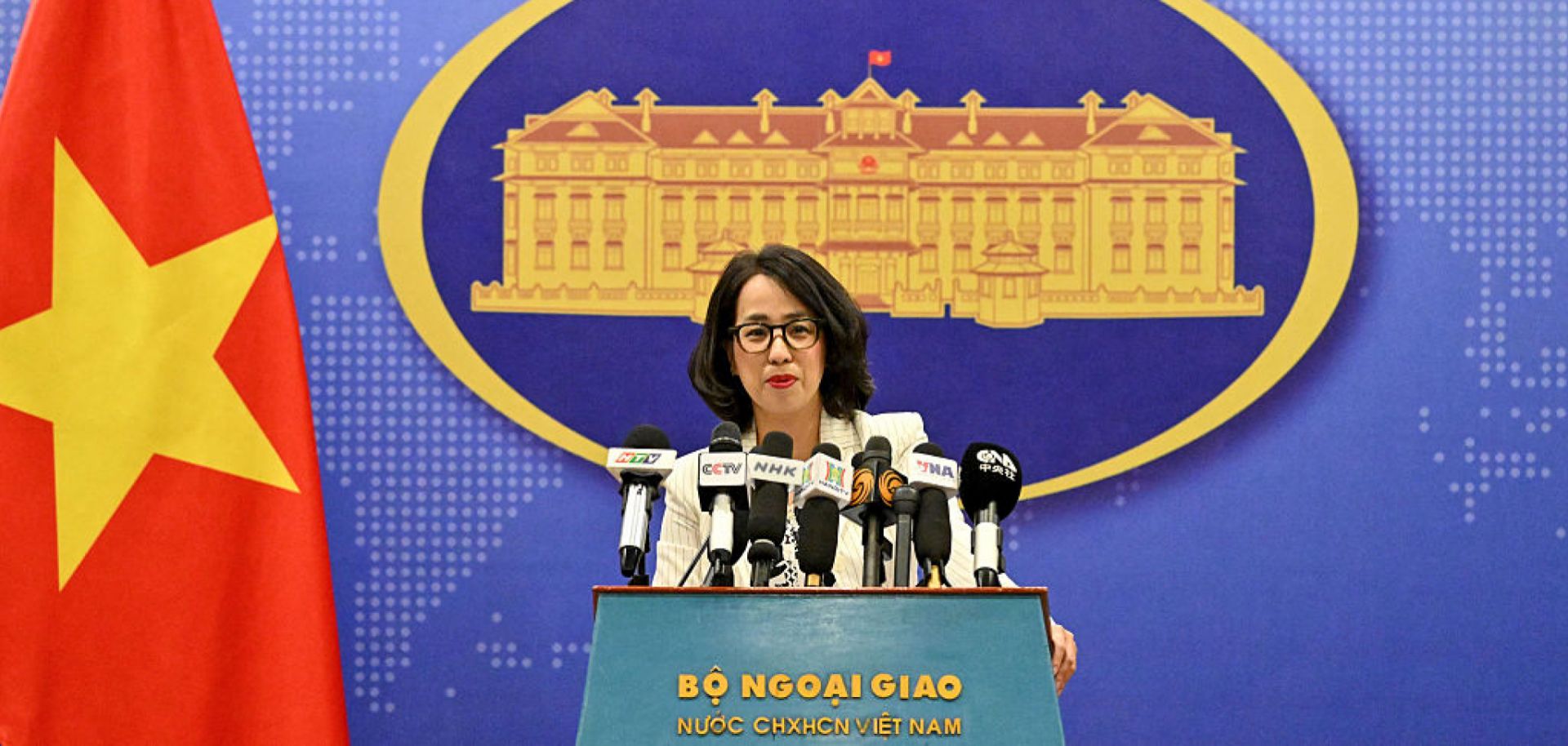
- Vietnam's foreign ministry hailed the deal as a success, particularly given the lower U.S. tariff rate relative to the threatened 46%. However, businesses and investors in both countries have expressed unease due to the lack of published rules of origin criteria, implementation timelines and enforcement mechanisms. Against this backdrop, the Vietnamese investment group Yuanta Securities Vietnam stressed that the practical implications of the agreement are "still not clear," especially for sectors that rely on high volumes of Chinese inputs but add meaningful value within Vietnam.
- Under existing U.S. law, transshipped goods are already subject to tariffs based on their country of origin rather than the country they pass through. While Washington has accused Chinese firms of routing products through Vietnam to evade China-specific duties, the new 40% transshipment tariff in the U.S.-Vietnam trade deal faces the same core enforcement challenge of determining when such circumvention is actually occurring, particularly in cases involving falsified origin documents.
- The United States' existing Most Favored Nation tariff rates on many Vietnamese goods typically range from 0% to 10%, though some sectors — including textiles, apparel and footwear — face 12%-30% rates. Thus, if the new tariff rates are applied on top of these duties, it would significantly raise total costs.
- The trade deal with Vietnam is the second the United States has reached since Trump announced his sweeping "Liberation Day" tariffs in April (following the June 16 signing of the U.S.-U.K. deal), and the first with a trade partner with which the United States has a trade deficit.
The deal follows months of accelerated trade talks after Trump announced his sweeping tariff plan in April that proposed particularly steep duties for Vietnam due to its large trade surplus with the United States. The Trump administration justified the tariffs as being "reciprocal," targeting countries with which the United States maintains significant trade deficits and which, according to the administration, engage in unfair trade practices, such as tariff asymmetries, transshipment practices and non-tariff barriers. Vietnam posed a particular dilemma for U.S. policymakers as, on one hand, it is considered a critical partner in Asia for countering China's influence, and its export-driven economy is deeply integrated into global value chains that benefit U.S. companies and consumers. But on the other hand, Vietnam's trade surplus with the United States reached $123.5 billion in 2024 (the third largest after China and Mexico) and has continued to rise throughout 2025. This raised alarm in Washington and drew attention to the transshipment of Chinese goods through Vietnam and the Southeast Asian country's overall use of the Chinese supply chain, as well as alleged minimal local value add. With the 90-day pause on Trump's sweeping tariffs set to expire on July 9, both Washington and Hanoi were under pressure to reach at least a headline agreement, even if the fine print remains under negotiation. At the same time, Vietnam's top leadership, which prioritizes economic growth and is keen to avoid investment flight, launched a diplomatic and regulatory charm offensive to delay and soften the proposed tariffs.
- Vietnam ranks seventh in terms of countries from which the United States imports goods, making up approximately 4.5% of total U.S. imports.
- According to U.S. trade data, from January to May, the U.S. trade deficit with Vietnam reached approximately $64.8 billion, already on pace to surpass 2024's full-year figure of $123.5 billion.
- Vietnam made several key concessions, including: pledging to crack down on transshipment and trade fraud, tightening rules of origin, agreeing to eliminate tariffs on U.S. goods, committing to reduce non-tariff barriers and improve intellectual property enforcement, coordinating multi-agency enforcement efforts, signaling alignment with U.S. trade goals, approving a $1.5 billion Trump Organization golf course and resort project, granting regulatory approval for SpaceX's Starlink satellite‑internet pilot program, and pledging to increase imports of U.S. liquefied natural gas and agricultural products. Vietnam had also formally requested that the United States officially recognize it as a market economy and expand access to restricted U.S. high‑tech exports, though Washington is unlikely to fulfill these requests.
- Per details released thus far, the trade deal does not remove nearly as many non-trade barriers as the scrapped Trans-Pacific Partnership agreement or its successor, the Comprehensive Agreement for Trans-Pacific Partnership.
Despite the apparent breakthrough, substantial ambiguity remains in place as the deal introduces significant compliance uncertainty and new investment risks that could ripple across Chinese supply chains. For investors, the deal is a mixed bag as it averts the worst-case tariff spike on Vietnamese goods but introduces uncertainty around enforcement, legal implementation and future trade policy direction. First, even with the new 0% tariff rate on Vietnamese imports of U.S. goods, the two countries' economic synergy is not optimal for surging U.S. goods into Vietnam. This is because, among other reasons, U.S. goods are generally more expensive relative to the competition, limiting their potential growth in the Vietnamese market. For Vietnamese exporters, the new 20% tariff on goods shipped to the United States, though far better than the initially proposed 46%, still constitutes a significant new constraint. Low-margin industries such as seafood, wood products, garments and footwear will face pressure from competitors in Latin America and South Asia that face less intense U.S. tariff risks. At least until details become clearer and enforcement patterns are revealed, firms that use Chinese inputs or depend on foreign intermediate goods will also struggle to determine whether they will fall under the "transshipment" category and face the steeper 40% tariff rate. Without clear enforcement criteria or means, this uncertainty will remain until specifics are released, which could deter new investments and make forward planning more risky and difficult in the intermediary period. Eventual rules-of-origin guidance — particularly the required domestic value-add threshold — will be central to determining the practical impact of the deal, but no such thresholds have been codified. For China, while many Chinese-owned factories in Vietnam welcomed the 20% cap as manageable and have opted to stay, the 40% transshipment provision risks being applied against China-linked supply chains, both selectively and broadly. The deal also signals to Beijing that Washington is willing to extend its tariff war against China through third countries, increasing risks for Chinese firms operating abroad.
- China's Ministry of Commerce stated that it is reviewing the U.S.-Vietnam agreement and could retaliate if Chinese interests are harmed, potentially triggering another round of U.S.-China trade friction.
- The most likely outcome of the transshipment issue — in light of enforcement deficiencies and legal ambiguity — is a de facto retention of the status quo in which all Vietnamese exports are hit by the flat tariff rate, while the 40% transshipment rate is used sparingly for only obvious violations. Alternatively, the United States could opt to implement a value-added threshold system (such as by imposing the 40% rate on goods below a certain Vietnamese-origin value-added floor) or by splitting tariffs proportionally between Vietnamese and foreign (mostly Chinese) content. The latter would significantly complicate compliance and pose a far greater risk to Vietnam's export-dependent model, especially in sectors reliant on Chinese inputs.
Finally, the deal will also reverberate across other countries in the Association of Southeast Asian Nations (ASEAN), which will now come under additional pressure to offer concessions to the United States in the hopes of receiving similarly lowered tariff rates. With the new agreement, Vietnam's tariff rate will now be closer to those of other ASEAN nations than it would have been otherwise, which will mitigate the impact of U.S. tariffs on Vietnam's regional competitiveness. The deal also demonstrates that Washington's "reciprocal tariff" strategy is now a credible policy tool but creates new uncertainty. Against this backdrop, other major ASEAN economies like Indonesia, Malaysia, Thailand and Cambodia now face increased pressure to strike preemptive deals with the White House before the July 9 deadline, in order to avoid high U.S. tariffs entering force, potentially above Vietnam's new 20% rate. Finally, if transshipment enforcement becomes aggressive or unpredictable, regional logistics and sourcing decisions will face new scrutiny across ASEAN countries, and investment could shift toward jurisdictions perceived to have more robust and transparent compliance mechanisms.
- Vietnam's willingness to remove all tariffs on U.S. imports and accept a 20% U.S. tariff on its exports could set a precedent for bilateral concessions rather than ASEAN-wide coordination. This could weaken intra-bloc cohesion and create uneven competitive conditions across the region.
- Indonesia, Malaysia, Thailand and Cambodia — which face proposed U.S. tariff rates of 32%, 24%, 36% and 49%, respectively — remain in negotiations with the United States.
- Indonesia has already tried to reach a preemptive accommodation with U.S. demands. On July 7, the country announced plans to sign a $34 billion deal with American companies to increase U.S. imports and investment.
- The Thai Chamber of Commerce believes that Thailand will reach a deal with the United States before July 9 and predicts more favorable terms because Thailand's trade surplus with the United States (approximately $45.6 billion in 2024) is much lower than Vietnam's, but that remains to be seen.
