
Israel is highly likely to launch another military offensive against the Houthis in the coming months, which will prompt the group to resume attacks on Israel and Red Sea shipping, and could also reignite Yemen's civil war and subsequent Houthi attacks on the Gulf, while creating security vacuums for al Qaeda to exploit. In a recent letter to the Palestinian militant group Hamas, Houthi military chief Maj. Gen. Yusuf Hassan al-Madani signalled that the group had paused its attacks on Israel and shipping in the Red Sea, but threatened to resume operations if Israel renewed its Gaza offensive. This comes as Israel and Yemen's Iran-backed Houthi movement have exchanged a series of tit-for-tat threats of military confrontation in recent weeks, hinting at the potential for renewed confrontation. Most notably, Israeli Prime Minister Benjamin Netanyahu warned on Nov. 2 that his country was preparing to take further military action against the Houthis, claiming Israel still saw them as a significant threat. Two days later, Houthi leader Abdulmalik al-Houthi then declared that the group expects another military confrontation as part of the ongoing "struggle against Israel," a sentiment other Houthi military figures have also echoed. Concurrently, anti-Houthi forces in Yemen announced that they had recently intercepted several Iranian arms shipments intended for the Houthis, underscoring Iran's continued efforts to resupply its key ally on the Arabian Peninsula.
- The Houthis have paused their Red Sea and Israel-directed attacks following the Oct. 8 Israel-Hamas ceasefire, just as they did following the January 2025 ceasefire in Gaza. But the group has not formally confirmed a suspension of its campaign.
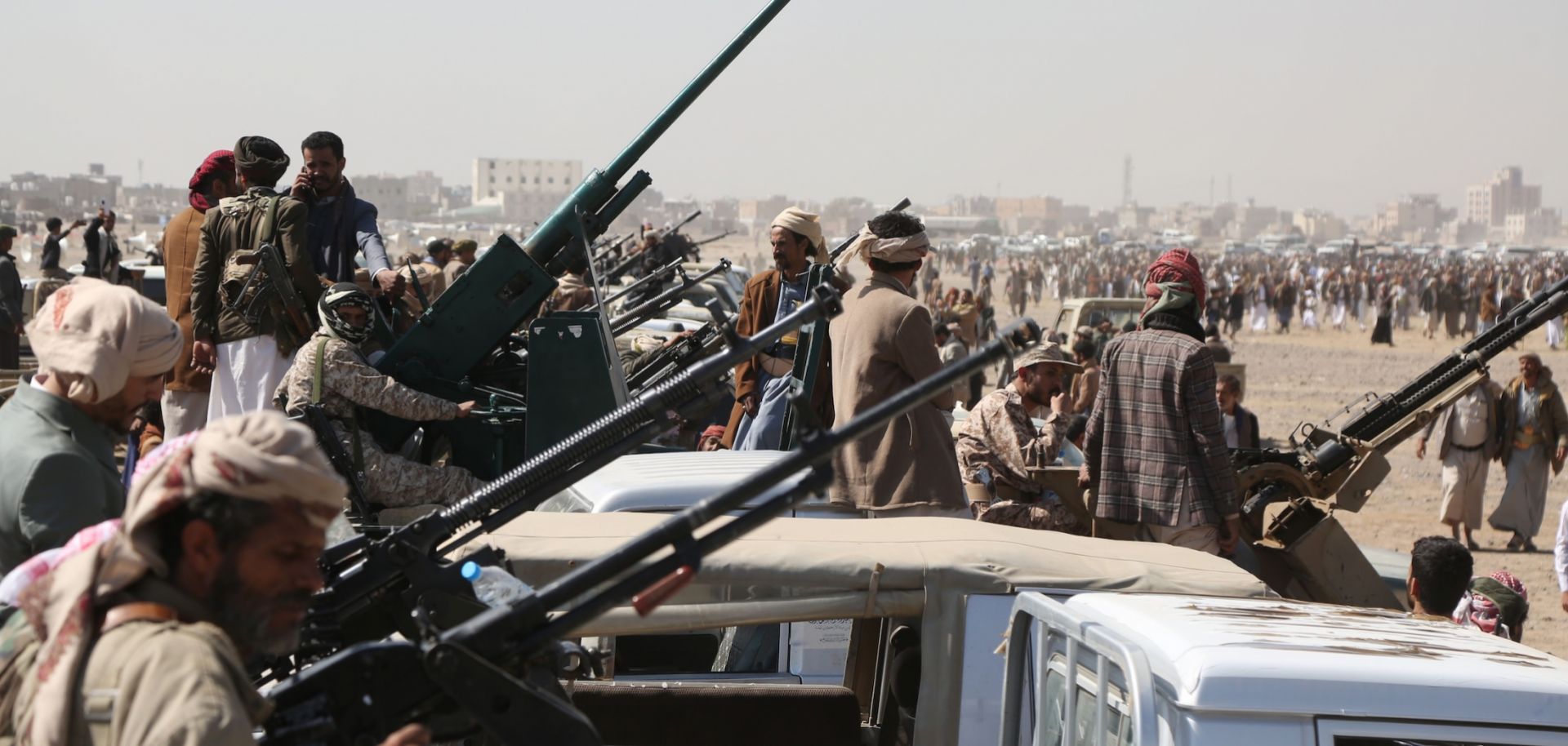
- Local Yemeni intelligence analysts and sources have noted that there has been a surge of pro-Houthi tribal mobilizations across northern Yemen in the past few weeks, as well as the excavation of tunnels in the mountains that could serve as hideouts and weapons depots.
- On Oct. 23, forces from the Presidential Leadership Council (PLC) — Yemen's main anti-Houthi governing coalition, which is backed by Saudi Arabia and the United Arab Emirates — led a joint operation that intercepted an Iranian vessel transporting weapons and drone components destined for Houthi-held areas.
Despite repeated military confrontations with Israel and the United States, the Houthis remain Iran's most active ally; Yemen's civil war, meanwhile, has largely stabilized, even amid mobilizations by the Houthis and their opponents. Following Hamas' Oct. 7, 2023, attacks and Israel's subsequent invasion of Gaza, the Houthi movement — which controls much of northern Yemen — began targeting Red Sea shipping lanes and launching missiles and drones at Israel. The Iran-backed rebel group maintained these operations throughout the two-year war in Gaza (albeit at varying intensity) to increase pressure for a ceasefire and support Iran's "axis of resistance." In response, Israel carried out multiple waves of airstrikes on Houthi military positions, leaders and critical infrastructure like the port of Hodeidah, prompting a wider escalation that eventually drew in the United States in November 2023. Amid the ongoing Houthi attacks, the United States launched a broader operation against the group in early 2025, which included airstrikes on Houthi targets in Yemen. Washington ended this campaign in May after reaching a ceasefire with the group, though the truce did not include a commitment from the Houthis to halt their attacks on Israel, which have sporadically continued since then. Beyond disrupting nearby shipping lanes, the Houthi-Israel confrontation has exacerbated Yemen's fractured domestic landscape, threatening to renew its civil war. Notably, peace talks between the Houthis and the Internationally Recognized Government in Aden (IRG) have stalled, which risks collapsing the 2022 U.N.-backed ceasefire that paused the war and worsening the already dire humanitarian crisis in Yemen. The past two years have also seen massive Houthi mobilizations and clashes along the lines of contact with UAE-backed factions in the Marib governorate. In response, the United Arab Emirates has recently stepped up its arming of anti-Houthi factions in Yemen, including the Giants Brigades — a component of the anti-Houthi National Resistance Forces (NRF), which controls the frontline provinces of Shabwah and Marib. But despite these tensions and escalations, no party has launched a major offensive, leaving the 2022 ceasefire intact but fragile.
- The anti-Houthi camp in Yemen comprises a loose coalition of factions under the PLC, including Saudi-backed Yemeni Army units and tribal militias, UAE-backed southern forces such as the Southern Transitional Council, Giants Brigades, Shabwa and Hadrami Defense Forces, and the National Resistance Forces, all united nominally against the Houthis but divided by competing interests within Yemen.
- Throughout the two years of military confrontation with Israel, the Houthis continuously threatened to attack Saudi Arabia and the United Arab Emirates if they intervened in support of Israel or exploited the conflict to launch an anti-Houthi offensive in Yemen. But these attacks never materialized, largely because Saudi Arabia worked to improve ties with Iran and distance itself from the Houthi-Israel confrontation, aiming to prevent another conflict that would invite attacks on its territory.
- The Houthis' last major attack on the Gulf was in January 2022, when the group launched a drone and missile strike on Abu Dhabi that hit fuel storage facilities near the international airport and killed three people. The attack killed three people and was the Houthis' first successful strike on Emirati territory.
- The United Arab Emirates has been more aggressive than Saudi Arabia in supporting and arming anti-Houthi factions in Yemen, despite the ceasefire. Conversely, Saudi Arabia has pushed for continuing talks under the 2022 ceasefire framework to avoid a new conflict that could spill over into its territory.
- The Wall Street Journal reported in April 2025 that anti-Houthi factions — backed by the United Arab Emirates and Saudi Arabia, and with U.S. and Israeli support — were preparing a coordinated offensive to regain territory in northern Yemen, though the Saudis and Emiratis dismissed the report.
Israel is highly likely to launch a renewed military offensive against the Houthis in the coming months, if not sooner, prompting retaliation against Israel and vessels in and around the Red Sea. Given Israel's proactive security doctrine and recent threats, an Israeli offensive against the Houthis is highly likely in the coming months, possibly before the end of the year. This offensive will probably follow a period of intensified intelligence gathering in Houthi-held Yemen to support future targeted assassinations of senior Houthi political and military figures, mirroring recent Israeli attacks that killed the Houthis' prime minister and military chief of staff. In addition to strikes on the group's senior leadership and weapons depots, Israel will also likely launch lethal and kinetic attacks aimed at neutralizing Houthi capabilities for attacks against Israel or Red Sea shipping. However, Israeli intelligence capabilities in Yemen remain limited compared with long-standing operations in places like Lebanon and Syria. Moreover, Yemen's greater geographical distance from Israel will likely prevent a sustained, months-long campaign — especially given Israel's need to address threats from other Iranian-aligned groups (namely, Iraqi militias and Hezbollah) and Iran itself. In retaliation, the Houthis will probably conduct occasional missile and drone attacks against Israeli cities, as they have done during the past conflict with Israel. While Israel's advanced multi-layered air defense systems would likely limit the damage of these attacks, the Houthis will also probably reinstitute a Red Sea blockade by attacking Israeli-bound or related commercial vessels, aiming to pressure not only Israel but also the United States and Gulf states to compel a stop to the Israeli campaign against the Houthis. Such a renewed blockade would again disrupt vital supply routes to and from Europe, the United States and the Gulf. It would also significantly elevate safety risks for ship crews, drive up insurance premiums, and slow maritime traffic by forcing carriers to divert around Southern Africa.
- In recent weeks, there has been a surge in Houthi raids on U.N. and humanitarian organization offices in Yemen's capital of Sanaa, resulting in the arrest of dozens of employees accused of spying for Israel. The raids coincided with the Oct. 16 announcement that Houthi Chief of Staff Maj. Gen. Muhammad Abdul Karim al-Ghamari had been killed in an Israeli airstrike. Israeli strikes conducted on Aug. 28 also killed Houthi Prime Minister Ahmed al-Rahawi.
- The Suez Canal Authority has said that 229 vessels began transiting through the canal again in October, the highest monthly figure since the Houthis launched their campaign against Red Sea shipping. However, the recovery remains fragile. On Nov. 12, the world's three largest shipping lines — CMA CGM, MSC, and Maersk — all reaffirmed that they will continue to avoid the Red Sea for the foreseeable future due to ongoing security concerns. Against this backdrop, renewed Houthi attacks on commercial vessels in the region would likely prompt carriers to continue diverting around the Cape of Good Hope, re-disrupting global trade flows and inflating transit costs.
In the unlikely event that Israel's attacks significantly weaken the Houthis, UAE- and Saudi-backed groups in Yemen may launch their own offensive against the group, which would reignite the civil war and expose Gulf energy infrastructure to retaliatory Houthi strikes. Despite the 2022 ceasefire largely holding while talks continue to stall, the United Arab Emirates has recently stepped up its military support to anti-Houthi forces in Yemen. In particular, the Emiratis have accelerated the pace of arms deliveries to the Presidential Leadership Council (PLC), which includes the National Resistance Forces (NRF), and have also begun supplying more sophisticated weapons. This armament is likely primarily defensive, intended to solidify anti-Houthi territorial control and preempt Houthi offensives along existing lines of contact. However, if Israeli attacks further weaken the Houthis by significantly damaging their capabilities, increasing tribal defections and worsening living conditions in Houthi-held areas of Yemen, the United Arab Emirates would be more likely to support an offensive against the group — a development that would risk reigniting the civil war. This is currently an unlikely scenario, given the Houthis' diverse capabilities and the concealment of their most potent assets and leadership in mountain caves. But were it to occur, the Houthis would likely conduct at least sporadic retaliatory attacks on the United Arab Emirates's oil and gas infrastructure to disrupt global production, as well as strikes on UAE airports to disrupt international travel and heighten safety concerns for passengers. Saudi Arabia, by contrast, will likely continue its less hawkish stance in Yemen, advocating for dialogue and a roadmap rather than escalating against the Houthis. Initially, the Saudi-backed factions within Yemen's Internationally Recognized Government (IRG) in Aden might refrain from rejoining a civil war to avoid Houthi reprisals against Saudi Arabia. However, significant Houthi capabilities and leadership losses, alongside territorial retreat, would also eventually incentivize those factions to intervene. This would, in turn, raise the risk of Houthi attacks on Saudi energy infrastructure, ports like Jeddah and even King Fahd International Airport.
- Satellite images analyzed by the Associated Press in October 2025 revealed that an airstrip is currently under construction on Zuqar Island in the Red Sea, an island strategically located approximately 55 miles south of the Houthi-controlled port of Hodeidah. Although no party has officially claimed the project, the AP reports it is "likely" being constructed by the United Arab Emirates in coordination with anti-Houthi forces. The island can be used as a launchpad for operations to intercept smuggling vessels bound for the Houthis, as well as expand surveillance of Houthi activity along the Yemeni coast and Red Sea.
- If Saudi-backed factions in the IRG remain on the sidelines of a renewed civil war, the Houthis may interpret Saudi Arabia's restraint as a sign of weakness, prompting them to attack the kingdom to pressure Riyadh into pushing for an end to the war on terms favorable to the Houthis. But this remains very unlikely, given that the Houthis and the Saudis have been indirectly communicating to maintain the Yemeni ceasefire.
Should the Yemeni civil war re-erupt, the resulting security vacuums could enable al Qaeda to regenerate its forces and intensify its attacks within Yemen, with a clear intent to broaden its regional reach once more. After facing years of counterterrorism pressure and internal divisions, al Qaeda in the Arabian Peninsula (AQAP)'s new leaders have, in recent months, leveraged the group's potent media channels to propagate AQAP's resolve to rally jihadists and sympathizers for regional and global attacks. The calls for attacks have been specifically aimed at the United States and Israel, directly in response to their roles in the Gaza war over the past two years. Furthermore, AQAP has in recent years escalated its sporadic yet lethal attacks throughout Yemen — particularly in Shabwah and Hadramawt provinces, desert regions that are held by the UAE-backed Southern Transitional Council, and serve as established operational bases for al Qaeda cells. In the case of renewed civil war in Yemen, the ensuing security vacuums and the deepening humanitarian crises would provide fertile ground for AQAP to significantly increase its recruitment of fighters, facilitate their movement in and out of Yemen, and plan attacks extending beyond Yemen's borders, specifically to neighboring countries like Oman and the United Arab Emirates. However, due to Gulf countries' strong security and intelligence measures and capabilities, AQAP's external attacks would likely be limited to lone-actor attacks by inspired or possibly directed individuals, as opposed to large, coordinated operations. Despite this, a larger, mass-casualty attack by the group would remain a small but impactful risk, which would increase safety concerns for travelers and Western businesses in the region, since AQAP would likely prioritize targeting those assets.
- Despite being weakened by territorial losses and several leadership changes, AQAP remains resilient and continues to operate within Yemen, exploiting security vacuums left by weak governance. In recent years, the group's roughly 3,000-4,000 fighters have been operating in a decentralized network of local cells, mostly in Yemen's eastern governorates of Marib, Shabwah and Hadramawt.
