
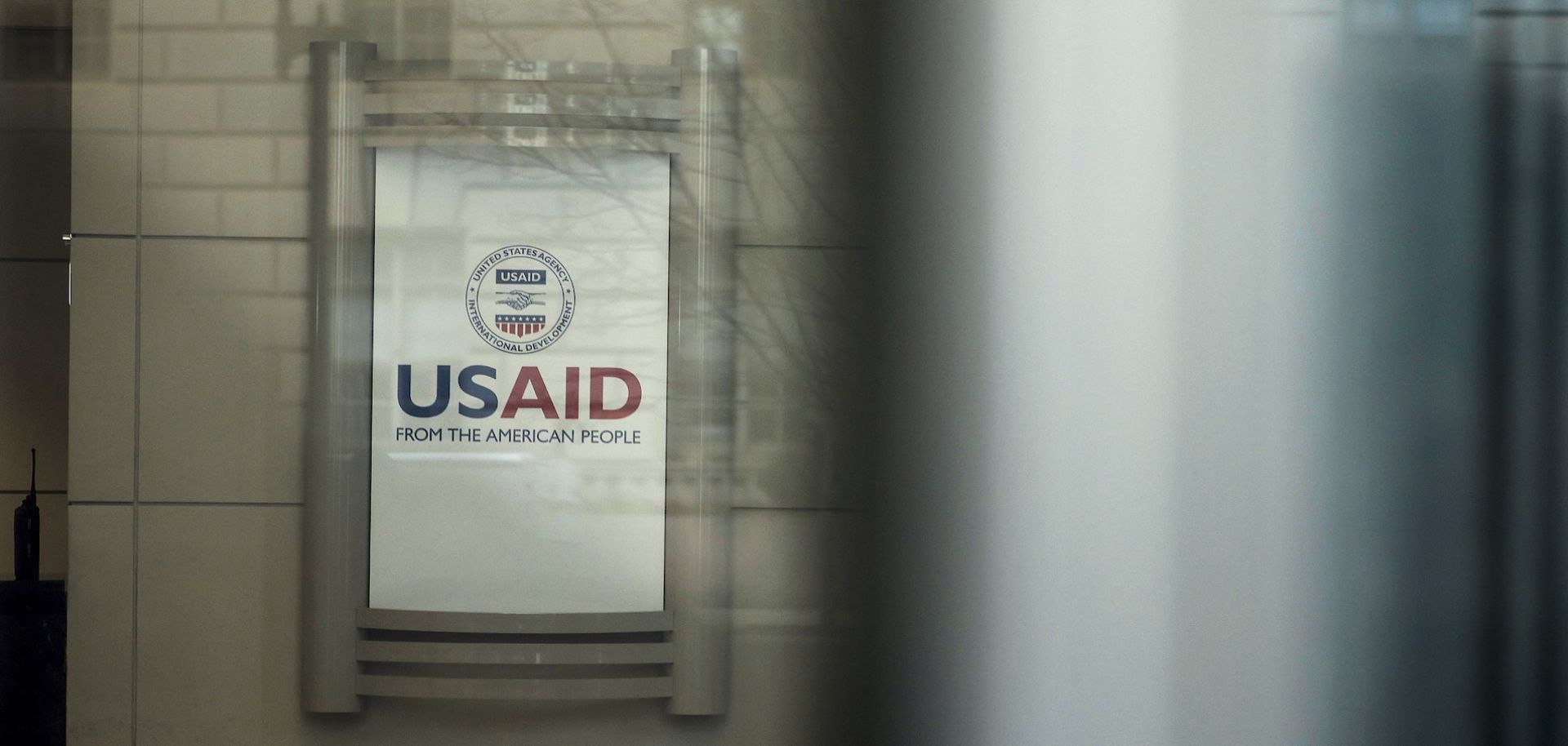
The restructuring of USAID and reductions in U.S. foreign aid will disrupt humanitarian and development programs across the world, which could worsen global health outcomes, destabilize security environments, accelerate democratic backsliding and create opportunities for rival powers to expand their influence. Efforts by the administration of U.S. President Donald Trump to restructure the United States Agency for International Development (USAID), the U.S. government's humanitarian aid agency, accelerated on Feb. 3 after more than a thousand USAID contractors, many from the Bureau of Humanitarian Assistance, lost access overnight to the agency's systems. Later the same day, after signage was removed from USAID's headquarters in Washington D.C. and its official government website was taken down, U.S. Secretary of State Marco Rubio said he was stepping in as acting administrator for USAID and notified Congress of the agency's ''potential reorganization.'' U.S. officials reported that USAID would be incorporated under the U.S. State Department, with further cuts to funding and programming anticipated. These latest moves come just weeks after Trump signed an executive order on Jan. 21 issuing a 90-day freeze on almost all foreign aid, with exceptions for life-saving humanitarian assistance and military funding to Egypt and Israel crucial to upholding the Gaza ceasefire. So far, thousands of USAID employees and contractors have been furloughed or laid off. Several of the agency's programs have also halted operations and will likely be cut.
- USAID was created by Congress in 1961. The agency annually provides billions of dollars worth of humanitarian aid support for a myriad of global initiatives, including poverty relief, disease prevention and management, and civil society- and democracy-building. The agency has missions in over 100 countries, with the vast majority of its funding allocated to programs in sub-Saharan Africa, Ukraine, Southeast Asia and the Levant (i.e. Israel, Jordan, Lebanon, the Palestinian territories and Syria). In the countries where it operates, USAID frequently works with local partners to improve programs' sustainability. The agency's budget has steadily increased over the years, growing from $6.95 billion in 2000 to $42.45 billion in 2023, the last fully reported year. Despite this increase, USAID funding still comprises less than 1% of the U.S. federal budget, though it accounts for nearly two-thirds of the U.S. government's foreign aid spending.
Foreign aid and international development have become a key target of the Trump administration's push to slash government spending. The foreign assistance cuts come as the White House is increasingly seeking to withdraw from international cooperation initiatives amid claims the United States is paying more money on these programs than other countries but is not adequately reaping the benefits. For example, one of the ''Day One'' executive orders Trump signed on Jan. 20 resumed the process for the United States to withdraw from the World Health Organization (WHO) — a process that Trump began during his first term but was then halted by former President Joe Biden. In justifying the withdrawal, Trump cited the WHO's alleged mishandling of the COVID-19 pandemic and Washington's large payments to fund the U.N. agency, with the United States serving as the biggest contributor to the WHO's budget. The Trump administration has also been taking steps to downsize government spending more broadly. So far, this push has primarily focused on cutting back the federal workforce by offering buyouts to U.S. government employees and establishing the Elon Musk-led Department of Government Efficiency, or DOGE. Against this backdrop, USAID has become a natural target of the Trump administration's efforts to shrink the budget by cutting spending on activities that do not align with its priorities.
- In a Feb. 3 statement on the USAID freeze, the Trump administration claimed instances of ''waste'' and ''abuse'' of U.S. taxpayers' money, including $6 million to boost Egypt's tourism industry, $1.5 million to ''advance diversity equity and inclusion in Serbia's workplaces and business communities,'' $70,000 for the ''production of a 'DEI musical' in Ireland,'' and $2 million for ''sex changes and 'LGBT activism' in Guatemala.''
- In discussing his State Department's review of foreign assistance, Rubio on Jan. 26 appeared to indicate he and the Trump administration believed all U.S. foreign aid should directly benefit the United States, stating ''Every dollar we spend, every program we fund, and every policy we pursue must be justified with the answer to three simple questions: Does it make America safer? Does it make America stronger? Does it make America more prosperous?'' In a Jan. 28 memo, Rubio clarified that ''life-saving humanitarian assistance'' such as food, medicine and shelter provisions could proceed under waivers issued by the State Department, but that such waivers would not extend to programs involving abortions, gender-affirming surgeries, family planning conferences, diversity efforts and non-life saving aid.
- Under the Obama administration, Congress cut U.S. foreign assistance spending by more than $500 million between fiscal year 2010 and fiscal year 2011. The majority of those cuts targeted USAID's Economic Support Fund and, to a lesser extent, the Foreign Food Assistance program. Though these funding cuts hampered Obama's foreign policy goals, the fact that they mostly impacted economic support reduced the humanitarian impact.
USAID's integration into the State Department will likely decrease the effectiveness of U.S. foreign assistance programs due to staff, program and funding cuts, which will also force in-country partner organizations to either downsize or shutter their operations. Trump does not have the executive authority to close a government agency that Congress created. This means USAID is very unlikely to be fully dismantled, as such a move would likely prompt bipartisan backlash in Congress over humanitarian concerns, despite Republicans' slim majority in the legislature. To reduce spending on foreign aid, the Trump administration will likely instead continue its efforts to integrate USAID into the State Department, which will still require congressional approval but will more likely be approved amid pledges that a restructured USAID would still provide humanitarian aid. This restructuring, however, will likely still decrease the effectiveness of U.S. humanitarian aid in the long term. The 90-day funding freeze has already resulted in thousands of furloughs and layoffs, which will reduce international development expertise within the U.S. government for likely years to come. In addition, the Trump administration's ongoing review of USAID's foreign assistance activities will likely result in widespread program and funding cuts, given the White House's stated goal to shrink the foreign assistance budget by slashing initiatives that do not align with Trump's priorities. Furthermore, the stalled implementation of USAID-funded programs for nearly three months will likely force in-country partners and non-government organizations to downsize their operations, if not shutter completely. This will risk shrinking the civil society groups that have historically helped implement USAID programs abroad since many of these organizations will be unable to resume operations at the previous scale — if they are able to resume them at all — following the State Department's funding review.
- On Jan. 27, the Trump administration put nearly 60 senior career USAID officials on leave. While some of these officials may retain their positions following the State Department's review, others will likely permanently lose their jobs, resulting in a loss of knowledge and experience from top USAID leadership.
For countries in sub-Saharan Africa, Latin America and Southeast Asia, USAID cuts will likely worsen health outcomes, intensify food insecurity, and exacerbate the effects of famines and natural disasters. The United States is unlikely to fully cut all health and humanitarian aid (e.g. for war-torn areas like Yemen) because these causes generally have some bipartisan support in Congress. However, the Trump administration's efforts to severely downsize foreign assistance programs still risk worsening health outcomes and exacerbating inequalities in sub-Saharan Africa, Latin America and Southeast Asia since aid allocations will likely become more targeted and programs will be able to serve fewer people. Rubio's waiver for ''life-saving humanitarian assistance'' from the 90-day funding freeze does not include many global health programs, which has already disrupted services during the review period, including those focused on preventing and treating diseases like malaria. The sudden halt to such operations could lead to significant disease outbreaks in sub-Saharan African countries (like Tanzania and the Democratic Republic of Congo) and countries in tropical and sub-tropical climates (like Brazil, India and Indonesia) before the State Department decides whether to resume funding to these programs. Health outcomes could thus worsen for many preventable and treatable diseases due to the funding freeze. In addition, ambiguity in State Department memos will likely continue to create confusion and concerns over violating ''stop-work'' orders, and lead to unequal care provisions across the countries USAID works in. Moreover, USAID programs that support countries facing food insecurity may also be cut, such as the Feed the Future Initiative, which addresses hunger through agricultural development and increased food production in countries like Ethiopia and Bangladesh. This would risk exacerbating food shortages in the affected countries and, in turn, raising food prices, thereby increasing malnutrition while worsening the impacts of potential future droughts or famines. More broadly, cuts to USAID's sustainability and resilience programs, including those climate change-related, will likely decrease impacted countries' preparedness for natural disasters and worsen the impact of extreme weather events.
- The Trump administration has already removed information about HIV prevention, gender-based violence and contraception from the U.S. Centers for Disease Control and Prevention website. This indicates that USAID activities with similar priorities will likely face funding cuts in the State Department's review. Such programs include the President's Emergency Plan for AIDS Relief, or PEPFAR, which operates in over 50 countries, mostly in sub-Saharan Africa and Southeast Asia. The State Department estimates the program has saved more than 26 million lives, and has prevented millions of new HIV infections since its creation in 2003. A Feb. 1 memo issued by Rubio's State Department memo clarified that programs focused on HIV treatment and preventing maternal-fetal HIV transmission were exempt from the funding freeze, though the initial uncertainty around the freeze still halted some of the distribution of HIV medication (which mitigates the effects of the disease and prevents further transmission) to 20.6 million people around the world. If PEPFAR were to end, around 600,000 people would likely die of HIV/AIDS-related causes in South Africa alone, the country with the largest number of PEPFAR beneficiaries, over the next decade. Even if there were cuts to the program, the number of individuals receiving care would likely decrease and risk increased mortality and transmission rates.
- In Cambodia, a country close to eradicating malaria, the freeze on U.S. foreign aid has raised concerns that progress made thus far will be reversed due to the country's inability to provide continued funding to prevention programs.
Cuts to conflict prevention and humanitarian aid will likely worsen economic conditions and drive crime and radicalization in Latin America, sub-Saharan Africa and the Middle East, while reduced security assistance will also weaken Latin American and Caribbean governments' ability to address internal threats. U.S.-funded conflict prevention programs, which largely operate in Latin America and sub-Saharan Africa, seek to address the root causes of conflict by promoting social cohesion, economic development, local capacity-building and regional cooperation. These programs will likely face cuts since reducing violence is often a secondary effect of their operations, thereby reducing their importance to the Trump administration. Furthermore, countries that are not U.S. foreign policy priorities are more likely to face cuts, such as many sub-Saharan African countries. Cuts to conflict prevention programs will be particularly destabilizing in countries with weak economies, a large presence of armed groups, and/or histories of ethnic/inter-communal conflict, increasing the likelihood of internal conflicts and radicalization in countries like the Central African Republic and Colombia. Amid this destabilization, economic drivers to engage in illicit activities like drug trafficking will likely increase and fuel additional violence and internal conflict, which will likely increase outflows of irregular migrants. Furthermore, cuts to humanitarian assistance in countries supporting large numbers of internally displaced people or refugees, such as Iraq, Jordan and Afghanistan, will likely inflame domestic tensions and exacerbate economic grievances, fueling radicalization and the recruitment efforts of non-state actors. Additionally, USAID cuts will still likely impact security assistance programs, though Rubio has provided some waivers for Syrian camps holding Islamic State fighters and Haitian security support. Although cuts to these programs will likely be less acute than those to others since the United States will prioritize directly supporting security abroad, even minor cuts would likely weaken foreign governments' abilities to curb internal threats, such as gang violence, and conduct investigations. As a result, cuts to funding for security assistance programs will risk increasing violence and corruption within recipient countries.
- In Haiti, USAID has propped up the fragile government by offering humanitarian assistance, disaster relief and security support. Potential cuts to USAID support risk reducing resources for security services and undermining the government's ability to pay law enforcement officers' salaries, even though a new waiver has provided some financial support to Haitian police for now. This would risk further destabilizing the country and enabling gang violence to proliferate while Haitian gangs expand territorial control and indicate increasing governing aspirations. In a worst-case scenario, cuts to Haitian funding could enable gangs, which control an estimated 90% of Port-au-Prince, according to U.N. and Haitian government officials, to overtake the remainder of the capital and eventually lead to a gang takeover of the country. Such a takeover could occur within 12 months and would likely result in Haitian refugees fleeing the country.
- In Colombia, relief organizations providing economic support to Colombians fleeing internal conflict and to farmers transitioning away from cultivating coca plants (the main ingredient in the production of cocaine) have stopped operations due to the funding freeze. Therefore, farmers will be more likely to cultivate lucrative coca plants, which will supply the Colombian drug trade and increase cartel-related violence.
Reduced support for governance and capacity-building programs risks degrading civil society, increasing authoritarianism, and slowing rule of law and anti-corruption reforms in Latin America and the Western Balkans. USAID programmatic cuts will force foreign civil society groups to suspend democracy-building activities and weaken their efforts to preserve human rights and freedoms, especially in Latin American and Western Balkan countries. As a result, governments in these regions will face less pushback against increasingly authoritarian and anti-democratic laws and actions. Furthermore, reduced U.S. foreign funding will shrink incentives for foreign governments to implement reforms that strengthen their rule of law, boost transparency and reduce corruption. As a result, there will be an increasing risk of democratic backsliding and authoritarianism, especially in Latin America and the Western Balkans.
- In Cuba, Venezuela and Nicaragua, a portion of USAID funding goes to ''democracy programs'' to combat entrenched authoritarianism and promote democratic messaging, despite criticism and uncertainty of the program's effectiveness in promoting political change. Cuts to this funding would likely mark a deprioritization of democracy promotion abroad compared with previous U.S. administrations.
- As part of EU conditions for accession, many Western Balkan countries must implement reforms to their rule of law and anti-corruption programs. In the absence of USAID funding, additional reforms will likely be delayed, thereby slowing the EU accession efforts of countries like Albania, North Macedonia, Serbia, Kosovo and Bosnia and Herzegovina.
The restructuring of U.S. foreign assistance will provide opportunities for countries such as China and Russia to expand their influence in regions where USAID has been active, though no single country is likely to fill the gaps left by the United States completely. While the Trump administration may resume some foreign aid after the 90-day freeze ends, overall cuts to U.S. foreign assistance will decrease Washington's economic leverage over other countries, lowering U.S. influence abroad. However, the Trump administration may use some resumed aid as leverage over other countries to extract concessions due to their reliance on USAID support. Additionally, the precedent caused by this freeze will likely incentivize countries to diversify their funding sources away from the United States to avoid the shock of sudden aid halts. This will provide an opportunity for other countries to step into the gap and expand their influence. For instance, China will likely provide foreign assistance in sub-Saharan Africa, Southeast Asia and South Asia, although not at USAID's previous annual scale. In addition, Moscow will likely take small, largely symbolic actions in lower-income countries, including those in sub-Saharan Africa, that do not significantly deplete Russia's limited financial resources. Meanwhile, the European Union may increase foreign assistance to priority countries in sub-Saharan Africa, North Africa and the Middle East to address drivers of violent conflict and economic inequalities that fuel irregular migration to Europe. However, a January 2025 EU proposal could merge humanitarian aid and development funds with funds to support European countries' EU accession efforts and, if passed, this change could redirect more funds to support Western Balkan accession efforts at the expense of African and Middle Eastern countries. Regardless of increased foreign aid support from China, Russia, the European Union and others, gaps in humanitarian assistance from U.S. funding cuts will likely remain.
- Ukraine is the largest recipient of USAID funds, having received $37 billion since the 2022 Russian invasion. In a Jan. 29 address, Ukrainian President Volodymyr Zelensky said the government would finance some of the canceled U.S. support from its own budget. Elsewhere, Ukrainian nongovernmental organizations and media outlets are increasingly relying on crowdfunding to support their continued operations.
- China has already indicated an interest in expanding its influence and deepening cooperation with sub-Saharan African nations. In September 2024, during the ninth Forum on China-Africa Cooperation, Chinese President Xi Jinping pledged to provide $50.7 billion over three years in new funding to Africa to support infrastructure projects, boost trade and investment, and support industry and agriculture cooperation. In addition, China promised to train more than 1,000 African law enforcement officers to improve their security capabilities within the countries and, by extension, protect Chinese investments. However, Chinese financing focuses primarily on infrastructure and economic development and offers limited support for humanitarian and health programming.
