
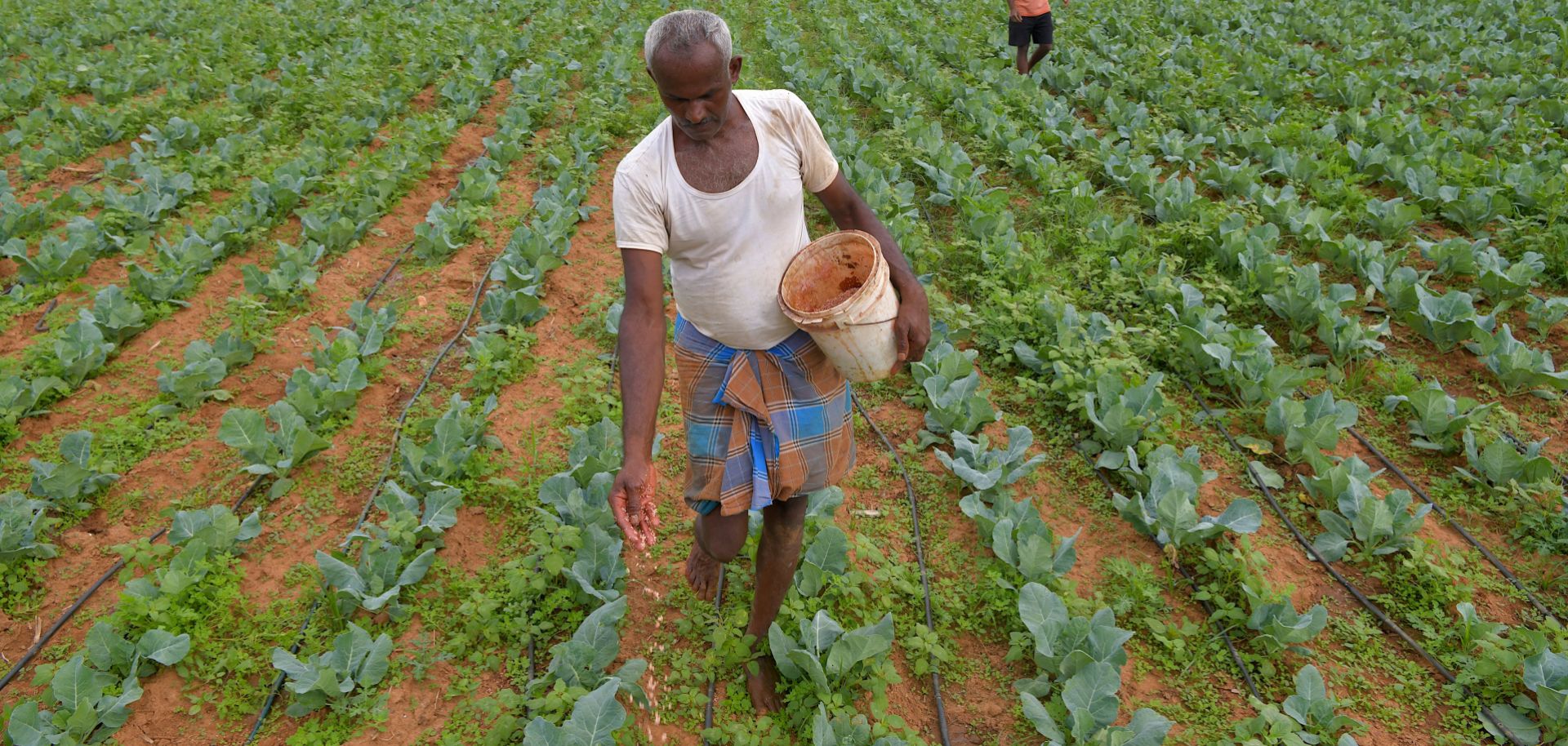
Shipping disruptions in the Strait of Hormuz are reducing global supplies and increasing costs of nitrogen- and phosphorus-based fertilizers, which could lead to lower crop yields, higher food prices and fiscal stress for agricultural producers if the Iran conflict persists for several more weeks. The ongoing disruption to shipping and energy flows through the Strait of Hormuz amid the Iran war is rattling global fertilizer markets by constraining supply, driving up logistics costs and increasing energy prices. The Gulf region is a critical hub for global fertilizer trade, making any interference highly consequential. Roughly one-third of all internationally traded fertilizers and nearly half of traded urea volumes are either produced in the region or rely on its transit routes. Specifically, the Gulf accounts for around 45% of global urea exports, roughly 30% of ammonia exports and around 25% of phosphate fertilizers. Shipping through the Strait of Hormuz normally carries around 25-30% of global nitrogen fertilizer exports. But Iran's attacks on commercial shipping have since heavily disrupted this traffic. Since the start of the war in late February, urea benchmark prices have risen by 30-40% in key export markets, while freight rates on some Middle Eastern routes have multiplied several times due to war-risk insurance premiums and rerouting. In spot markets, prices have surged from roughly $400-450 per tonne to $600 or more in certain transactions, reflecting panic buying and tight availability. These movements suggest the emergence of a global agricultural input shock that could translate into food price pressures later in 2026, especially in the event of a protracted war.
- Prior to the war, around 20-21 million barrels of oil and petroleum products transited the Strait of Hormuz each day, alongside a large share of regional bulk commodity exports like fertilizer feedstocks (notably sulfur, used to produce phosphate fertilizers).
The global fertilizer shock is being driven by the convergence of physical supply disruptions, rising input costs and logistical uncertainty. Gulf countries such as Qatar, Saudi Arabia and the United Arab Emirates are major exporters of nitrogen fertilizers and crucial suppliers of ammonia and sulphur, key inputs for downstream production worldwide. With tanker movements through the Strait of Hormuz virtually halted and some facilities facing operational disruptions, global markets are now losing access to several million tonnes of supply per month. At the same time, nitrogen fertilizer production is heavily dependent on natural gas, so the global increase in oil and liquefied natural gas (LNG) prices, also triggered by Hormuz disruptions, is raising production costs from Europe to Asia. Shipping bottlenecks are compounding the problem by forcing cargoes to take longer routes or be delayed at regional ports, tying up vessel capacity and increasing delivery times by weeks. Because fertilizer demand is highly seasonal and linked to planting cycles, even short delays can trigger price spikes and hoarding behavior by importers.
- Qatar exports roughly 5.5-6 million tonnes of urea and ammonia each year, making it one of the largest global exporters. Saudi Arabia also annually exports about 4-5 million tonnes of urea and ammonia.
- The Gulf region also handles 44% of the world's seaborne sulfur trade. A byproduct of oil and gas, sulfur is essential to producing phosphoric acid, serving as a reagent for "digesting" phosphate rock into finished fertilizer. The disruptions to sulfur shipments through the Strait of Hormuz thus create a vertical supply-chain break for phosphorus, starving major processing hubs in Morocco and China, regardless of their own raw mineral reserves.
- Since natural gas is a primary input into nitrogen fertilizer, the global surge in gas prices (particularly in Europe, where prices have spiked by 70%) has made production elsewhere more expensive. Moreover, the physical loss of Gulf ammonia — the primary feedstock for nitrogen production — creates a deficit in the Eastern Hemisphere that high-cost marginal producers in the West will struggle to mitigate.
- The ongoing global shock is compounded by China's recent decision to halt all urea and phosphate exports through August 2026. This move removes roughly 5-7 million tonnes of urea from the global "buffer" just as the Gulf supply is vanishing. Consequently, China could play a significant role in global food stability, as a minor easing of its export quotas would help lower prices, while a continued ban could worsen the ongoing shortage.
The most acute negative effects are likely to be felt in fertilizer-import-dependent agricultural economies with large rural populations, limited fiscal buffers and politically sensitive food markets, where governments will face difficult spending decisions and unrest risks will rise. Fertilizer shortages or price spikes could have significant economic and social consequences for South Asian countries like India, Pakistan and Bangladesh, where tens of millions of smallholder farmers rely on subsidized nitrogen inputs to maintain crop yields. Governments in these countries already spend billions annually on fertilizer support, so sustained price increases would strain public finances, potentially forcing difficult trade-offs between subsidy expansion, currency stability and development spending. If subsidies cannot fully offset rising costs, reduced fertilizer use could lower rice and wheat yields, driving food inflation that disproportionately affects urban poor households and risks triggering protests or political backlash. In major agricultural exporters such as Brazil, which imports roughly 80-85% of its fertilizer supplies, higher input costs could compress farm profit margins and reduce planting incentives for crops like soybeans and corn, with downstream impacts on export revenues, rural employment and global commodity prices. In many African economies (including Kenya, Ethiopia, Tanzania and Sudan), the implications may be even more severe, as fertilizer price shocks can quickly translate into reduced application rates, lower maize production and rising food import bills. Such pressures can exacerbate existing vulnerabilities, including currency depreciation, inflation spikes and heightened risks of political instability in contexts where food affordability is closely tied to public trust in government. Even in parts of Europe, such as Germany and Italy, indirect effects via higher natural gas prices could force fertilizer plants to shut down and increase operating costs for farmers, reinforcing rural discontent and complicating policy debates over agricultural subsidies, energy transition goals and trade competitiveness.
- A recent U.N. report warned that the ongoing shipping disruptions through the Strait of Hormuz could increase global food prices. Agricultural stability is particularly at risk in Sudan, Tanzania, Somalia, Mozambique, Kenya, Pakistan and Sri Lanka, which heavily rely on this route for crucial fertilizer imports. Compounding these fertilizer-related challenges is a volatile energy landscape, characterized by surging oil and natural gas prices. For regions such as South Asia and Africa, this creates a precarious fiscal pincer effect: the simultaneous inflation of both agricultural inputs and energy costs leaves governments with increasingly little budgetary latitude, effectively priming the landscape for social unrest.
- Fertilizer plants in India, Bangladesh and Pakistan have reportedly ceased production due to the loss of natural gas supplies typically sourced from Qatar.
- The Kenya Tea Development Agency (KTDA) warned that fertilizer costs for its more than 700,000 smallholder farmers could rise by over 25% if the Hormuz blockade persists through April. Separately, the Ethiopian Agricultural Business Corporation (EABC) has suggested that delayed shipments of phosphate and nitrogen fertilizers could result in a lower-than-expected harvest.
- Prolonged disruptions to global fertilizer supplies would have the most immediate impact on countries in the Southern Hemisphere. In the Northern Hemisphere (i.e., the United States, Europe and China), most base fertilizer is already in the ground by March, so a supply disruption merely raises costs or slightly lowers the final yield of the 2026 harvest. However, in the Southern Hemisphere (specifically Brazil and Argentina), March and April are the critical windows for the second corn crop and winter wheat planting. Because these regions are roughly heavily dependent on imports and lack the massive strategic reserves of those in the Northern Hemisphere, a 20-day shipping delay around the Cape of Good Hope misses the biological planting window entirely.
Conversely, fertilizer-exporting countries located outside the Hormuz chokepoint could benefit from higher prices and increased demand for alternative supply, especially if the Iran war and its impacts linger for many more weeks. Major exporters like Morocco (which controls a large share of global phosphate reserves) could benefit from sustained higher prices and increased demand from importers seeking to diversify supply chains. However, Moroccan producers rely heavily on elemental sulfur imported from the United Arab Emirates and Qatar to produce their fertilizer, imposing an upper limit on their capacity to increase output. While Morocco has diversified a portion of its sulfur sourcing to Kazakhstan, a prolonged blockade of the Strait of Hormuz would likely exhaust its strategic reserves and force a rationing of fertilizer exports. Meanwhile, the supply chain for potash — another primary fertilizer — remains relatively insulated from the Iran war, as its primary production hubs in the Northern Hemisphere are geographically decoupled from the Gulf's energy and reagent dependencies. Potash-rich countries like Canada will still face higher fertilizer prices due to panic buying and surging global ocean freight premiums, but the increase will likely be more modest because their underlying fertilizer supply is not reliant on Gulf feedstocks. However, because nitrogen is the primary driver of vegetative growth, a sustained urea shortage could nevertheless lead farmers worldwide to reduce their potash application rates. Nitrogen exporters like Russia and the United States may see improved terms of trade, boosting profits for their fertilizer companies. For fertilizer-exporting countries located outside the Hormuz chokepoint, these developments could also support rural employment and fiscal revenues, while allowing governments to deepen long-term commercial relationships with food-importing countries anxious to secure a reliable supply. Still, whether these trends materialize will depend on the duration of the Iran conflict. If Hormuz shipping normalizes within weeks, gains for alternative suppliers will be limited to short-term windfall profits and modest market share shifts. By contrast, a disruption lasting several months or longer could accelerate structural changes in fertilizer trade, incentivize large-scale capacity expansion and embed new geopolitical alignments in global agriculture, potentially giving non-Gulf exporters a more durable influence over pricing, supply security and food system stability.
- Even if the United States, Israel and Iran agree to cease hostilities, shipping disruptions in the Strait of Hormuz would likely linger for several more weeks due to the residual friction of prohibitive insurance premiums, profound vessel backlogs and lingering concerns about the corridor's security. This means that supply disruptions for fertilizers may linger even after a de-escalation around Hormuz.
