
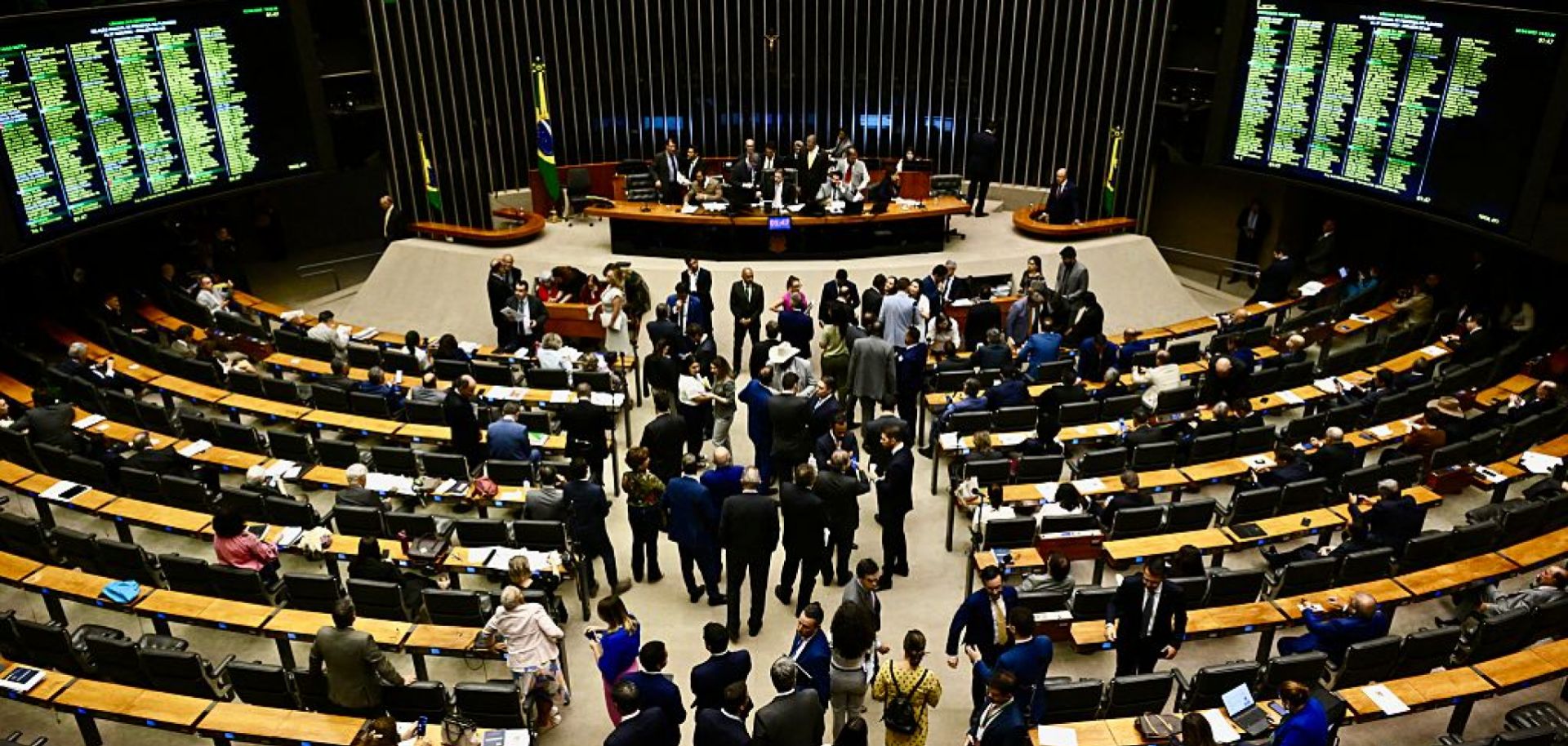
Despite its new legal framework, Brazil is unlikely to impose significant retaliatory tariffs on the United States, and some Brazilian exporters may even benefit from U.S. protectionism, although Brasilia must remain alert to potential floods of cheaper foreign goods. Brazil's National Congress approved on April 2 a bill that provides a legal framework for the government to retaliate against foreign unilateral trade or environmental measures targeting its goods and services. Newly allowed countermeasures include tariffs and the suspension of existing intellectual property right protections. Brazil's Congress approved the bill unanimously — an unusual occurrence — with support both from President Luiz Inacio Lula da Silva's leftist administration and right-wing legislators, including from the agribusiness caucus. The legislation was initially envisioned to facilitate retaliation against a proposed EU environmental law that Brazilian authorities considered a protectionist tool. The bill had lost momentum after the European Union postponed the adoption of its new environmental requirements from January 2025 to January 2026, but it regained traction in recent weeks on the back of the United States' rising protectionism. The vote in Congress came hours after U.S. President Donald Trump signed an executive order enacting tariffs on virtually all U.S. imports, including those from Brazil.
- Brazilian exports to the United States are subject to a baseline 10% tariff, and the country also faces 25% duties that Washington previously imposed on all U.S. imports of aluminum and steel. Brazil is also exposed to any other sectoral tariffs the United States puts into place, such as on copper and the auto sector.
- The United States had a $7.4 billion trade surplus in goods with Brazil in 2024, according to the U.S. Census Bureau. According to Brazilian data, Brazil had a $28.6 billion trade deficit in goods and services with the United States in 2024, which represented the third-largest U.S. trade surplus globally that year; in contrast, Brazil had a $31.3 billion trade surplus with China over the same period.
- The Office of the U.S. Trade Representative's 2025 National Trade Estimate Report on Foreign Trade Barriers listed eight factors that impair trade with Brazil: the slow adoption of trade agreements, high import tariffs, nontariff barriers, technical or sanitary requirements, preference for local companies in government procurement, intellectual property violations, national content quotas or caps on foreign ownership on services, and a proposed tax on digital platforms.
Brazil is seeking to strengthen its institutional tools to cope with the emerging global trade war. Previous Brazilian legislation only allowed the country to raise trade disputes in international forums, such as the World Trade Organization. However, the WTO has been paralyzed since 2019 due to U.S. opposition to the appointment of new judges, meaning any dispute is highly likely to remain unresolved indefinitely. As a result, Brazilian authorities assessed that the country needed new avenues to resolve trade disagreements, particularly as the United States (Brazil's second-largest trade partner) announces broad tariffs and other trade restrictions that are sparking a global trade war. Although the United States remains Brazil's primary source of foreign direct investment, bilateral relations have cooled amid ideological divergences between Brazil's da Silva and Trump, who had closer ties with former far-right Brazilian President Jair Bolsonaro (2019-22). Da Silva is a strong supporter of multilateralism and has publicly criticized Trump's protectionist measures.
- On March 27, da Silva said Brazil would lodge a complaint over U.S. trade restrictions at the WTO and impose retaliatory duties on the United States if the appeal is unsuccessful.
Brazil will likely refrain from broad retaliation against U.S. tariffs, opting instead for negotiations, but Brasilia could use its new legal framework to impose targeted trade restrictions should the United States announce higher tariffs. Despite the April 2 vote in Congress, Brasilia will avoid placing broad retaliatory tariffs on U.S. goods in the short to medium term since doing so would increase industrial and agricultural input prices, fuel inflation and undermine domestic economic activity. This is particularly likely after Trump's decision on April 9 to issue a 90-day pause on some of his highest tariffs, effectively bringing most countries' tariff rates to 10% (in line with Brazil's) due to many countries calling for talks and not retaliating; this move will incentivize Brasilia to avoid aggressive measures, especially since Trump's escalating tit-for-tat tariffs with China illustrate his risk appetite to respond to what he sees as foreign countries' aggressive moves. Instead, the Brazilian government will seek to engage in negotiations with the White House to reduce or fully unwind tariffs during the 90-day period, hoping that the Trump administration will be receptive since U.S. industries use many Brazilian exports (such as raw materials) to produce higher-value goods that are reexported to Brazil, meaning that trade disruptions would hurt the U.S. economy as well. However, talks with the White House are unlikely to make significant progress given that, before Trump's reversal, Brazil already faced the minimum global 10% tariff (suggesting Brazil has less room to negotiate tariff rates down compared with other countries that were initially hit with higher rates) and since Brazil already has a trade deficit with the United States. Moreover, other issues like Brazil's likely stricter regulations or court rulings aiming to hold U.S. big tech companies accountable for content moderation will further deter any U.S. preferential treatment for Brazil. Therefore, should the United States impose additional duties or other measures targeting the Brazilian economy or local authorities, Brasilia would likely resort to its new legislation and impose targeted tariffs on specific U.S. goods or adopt ad hoc taxes on U.S. services, such as on tech businesses. In a low likelihood but high impact scenario, Brazil could revoke patents on the pharmaceutical or industrial sectors, seeking to hurt U.S. interests. However, given that such a measure would almost certainly erode business confidence in Brazil and result in strong retaliation from the United States, this scenario is unlikely.
- Brazil's manufacturing sector relies on U.S. imports for machinery, equipment, chemicals and plastics, while agribusinesses import fertilizers, meaning tit-for-tat tariffs would increase costs and hurt Brazil's local economy.
- In 2025, Brazil is leading the BRICS+ trade bloc and will host the U.N. Climate Change Conference, COP30. Da Silva will use these platforms to publicly defend alternatives to the U.S. dollar's dominance, advocate for a more prominent role of the Global South in opposition to U.S. hegemony, and call for developed economies to fund environmental preservation and energy transition initiatives. All of these issues will antagonize Trump's foreign policy views and will likely spark public disagreements that may have economic implications, such as the U.S. suspension of tariff-free quotas for Brazilian beef, increased tariffs or visa restrictions targeting Brazilian authorities.
- The Trump administration could adopt additional measures targeting Brazil's economy or authorities on the back of political and ideological differences; former President Bolsonaro's son Eduardo took a leave of absence from this federal deputy role in March to spend time in Washington lobbying for U.S. pressure on the Brazilian government and judiciary amid a series of controversial rulings against Bolsonaro and social media platforms to fight disinformation, which have sparked debate around censorship involving U.S. tech companies.
Despite broader economic disruption, Trump's policies will likely create limited opportunities for Brazilian commodities exporters and some manufacturers, although structural limitations and downside risks remain. Even though Trump's decision on April 9 to institute a 90-day tariff pause and take most countries' tariff rates to 10% will reduce strains on the global economy, the 10% tariff on most countries (and much higher rate of 125% for China) will still disrupt supply chains, reduce global trade and increase the likelihood of recessions in some of the world's largest economies — all of which will likely reduce foreign investment in Brazil. Moreover, even if risks to the global economy are lower following Trump's reversal, he appears unwilling to abandon his aggressive trade policy, and uncertainty over whether Trump will revive higher tariff rates after the 90-day pause will still weigh on the global economy, especially amid the deepening trade war between Washington and Beijing. However, Brazil could mitigate such risks and even seize opportunities amid this global turmoil. For instance, Brazil is a relatively closed economy, and higher U.S. tariffs on China and, if revived after the 90-day period, other Asian countries will likely make some Brazilian goods (especially garments and leather items such as shoes) more competitive in the U.S. market, enabling Brazilian manufacturers to regain ground lost to Asian competition in recent decades. However, structural bottlenecks from the high cost of doing business, crippling bureaucracy, deficient infrastructure and lack of skilled labor will prevent Brazil from becoming a strong reshoring destination as supply chains realign to better accommodate the impacts of Trump's tariffs. Meanwhile, China's retaliatory tariffs on U.S. goods will help Brazilian commodity exporters gain market share in China, as happened during the U.S.-China trade spat during Trump's first term in office (2017-21), and Brazilian exporters of metals, grains and protein will be among the main beneficiaries. However, such a trend would likely increase Brazil's reliance on the Chinese economy and expose it to a downturn should the trade war trigger a recession in Asia's largest market.
- Brazilian exports accounted for only 18% of the country's GDP in 2024, underscoring that Brazil is relatively closed to foreign trade, especially compared with similarly large economies. Brazil's closed economy is primarily due to several protectionist measures adopted over the last few decades, including import duties, nontariff barriers, local content requirements, subsidized credit, public procurement preferences and antidumping measures.
- Brazilian exports to the United States accounted for just 12% of total sales abroad in 2024, meaning the country is less exposed to Washington's trade war than most peers, which also tend to be much more integrated into global supply chains; in contrast, 28% of Brazil's exports went to China in the same period.
- Think tank Fundacao Getulio Vargas estimates that current tariff levels will increase the volume of Brazilian garments exported to the United States by 14%, leather by 11% and electronics by 5%, with the other items benefiting the most being wood, iron and steel, nonmetallic minerals, machinery, textiles, and agricultural and industrial goods.
Finally, despite the 90-day reprieve, Trump's tariffs are still likely to reshape global trade, and in the long term, higher tariffs on cheaper goods from Europe or Asia could flood the Brazilian market. The United States initially hit countries like Cambodia, Vietnam, Bangladesh and Thailand with large tariffs (49%, 46%, 37% and 36%, respectively), while China is still set to face a 125% duty from the White House after a new round of retaliatory tariffs on April 9. As a result, China and potentially other Asian countries, as well as those in Europe, will likely redirect flows of U.S.-bound goods to other markets, including Brazil's. This redirection may lead to a flood of garments, low-tech gadgets and electronics, steel, wind turbines, solar panels, electric vehicles and other goods, hurting domestic producers in the long term. This risk would grow if Asian competitors to Brazil fail to secure tariff reprieves after negotiations with the White House, leading to a resumption of higher rates after the 90-day pause ends in July. Although Brazil has taxes to deter dumping and protect local manufacturers, the government would likely resort to additional import duties if new trade inflows significantly undermine local businesses.
- In August 2024, Brazil suspended a tax exemption on low-cost imports and imposed a 20% import tax on foreign purchases valued at $50 or less, in addition to the existing 17% Tax on Circulation of Goods and Services, targeting mostly Chinese online retailers.
- China is the top supplier of electric vehicles to Brazil, with Chinese automakers accounting for 82% of EVs sold in the country in 2024, according to a study by the United Kingdom's Rho Motion.
