
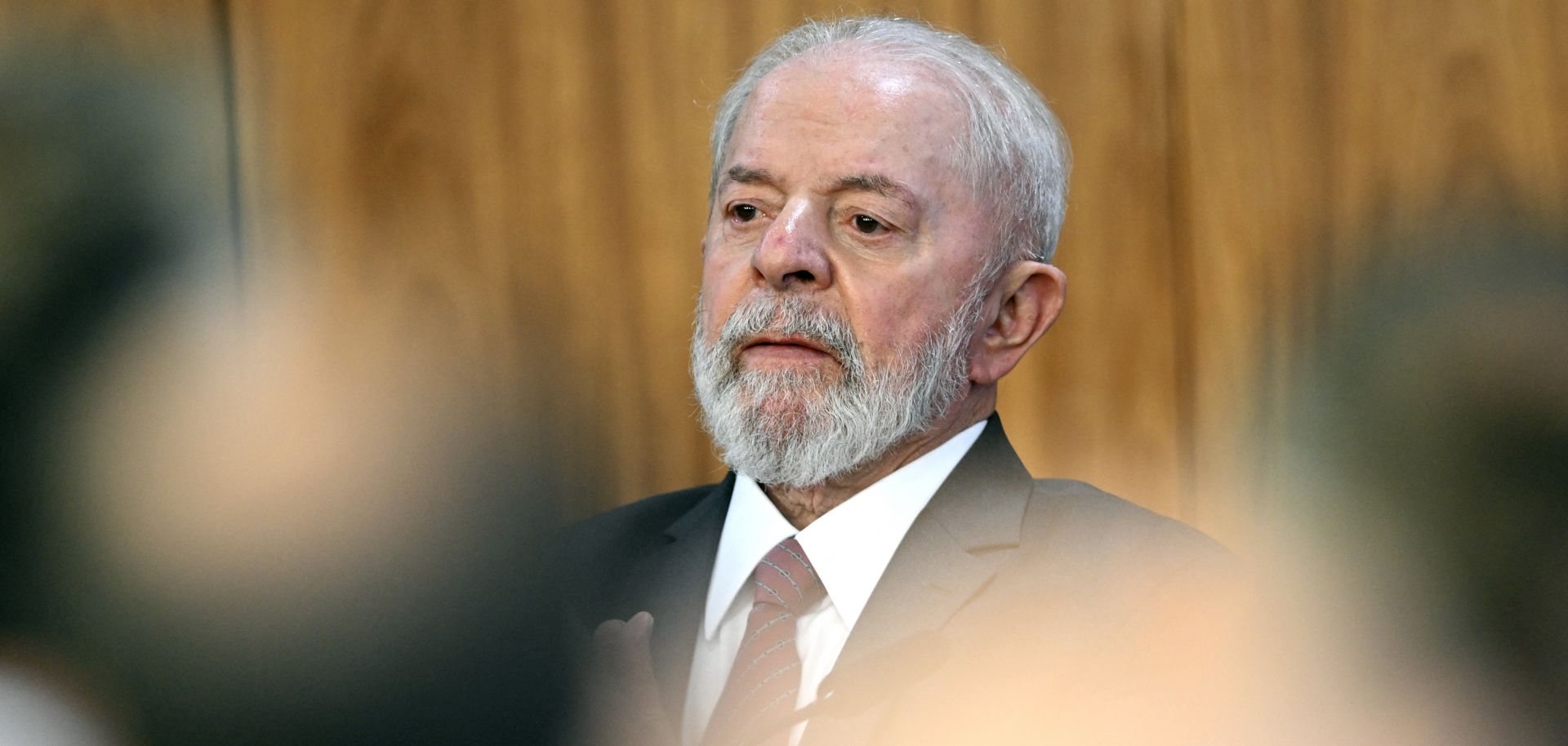
In Brazil, Congress's rebuke of President Luiz Inacio Lula da Silva's latest attempt to increase revenue collection highlights lawmakers' growing fatigue with Lula's fiscal agenda, which will likely slow policymaking and fuel regulatory and legal uncertainty. On June 11, Brazil's Congress refused to analyze a provisional measure that limited companies' ability to use tax credits and extinguished cash reimbursements of presumed credits. The legislature's decision voided the policy, which had been effective immediately upon its publication on June 4 and was aimed at helping reduce Brazil's fiscal deficit by generating $5.4 billion in revenue. The provisional measure triggered strong pushback from Brazil's political establishment, industry associations and businesspeople, indicating fatigue with President Lula's fiscal agenda, which prioritizes cutting tax incentives or closing loopholes in order to fund increased social spending.
- Since taking office in January 2023, Lula's finance minister, Fernando Haddad, has sought to expand revenue collection by increasing taxes on the wealthy and closing fiscal loopholes to shore up public coffers amid the center-left government's eagerness to increase social spending. In addition to a broad reform aimed at simplifying the country's overly complex system, Lula's fiscal agenda has included ad hoc export taxes on oil and gas and mining goods for four months in 2023, as well as the introduction of taxes on dividends, offshore funds, and investment funds of single high net worth individuals. The Lula administration is also discussing similar measures under the second phase of the ongoing tax reform.
- President Lula only controls a minority left-wing coalition in Brazil's right-leaning Congress, which is highly fragmented, with 20 different political parties represented in the Chamber of Deputies (the lower house). To pass policies, the Lula administration thus has to hold ad hoc negotiations with mostly ideologically loose but mostly pro-business lawmakers. Such negotiations helped the administration advance the first part of its tax reform in 2023, but it has struggled to advance further policies that are either aimed at boosting collection or seen by lawmakers as detrimental to the private sector.
This episode underscores the Lula administration's growing struggle to pass economic proposals or even reach deals with lawmakers amid Congress's increased influence over budget allocation and the executive branch's consequent shrinking bargaining capability. In its first year in office, the Lula administration's economic agenda was focused largely on passing a constitutional amendment to simplify the country's complex tax system. The reform broadly coincided with the interests of lawmakers in Brazil's Congress, which helped streamline the legislative process and ultimately led to the amendment's approval. However, the majority of Lula's remaining policy agenda mostly relies on his left-leaning approach to the economy, which will face growing opposition in the conservative-leaning legislature, thereby slowing the policymaking process. Additionally, divergent priorities between hard-liners in Lula's left-wing Workers' Party and the centrist allies in his coalition — combined with the lack of coordination between the executive branch, its supporting base in Congress, and federal deputies and senators open to negotiate with the Lula administration — will continue to further undermine the government's agenda-setting prerogative and capacity to pass bills. Brazil's public accounts have also become increasingly rigid; and since 2013, Congress has passed bills that reduce the president's discretion to determine how legislators receive funds for projects, such as construction works in their constituencies. As of 2024, just 10.3% of Brazil's budget was left for discretionary spending, of which Congress controls 20%. As a result, President Lula has had limited perks to offer in exchange for political support, as lawmakers no longer need allies in Cabinet positions or the president's approval to secure funds for their constituencies.
- In 2023, Congress approved only 24% of the bills and 16% of the provisional measures put forth by the Lula administration. Congress also overrode 26% of Lula's presidential vetoes to legislation. According to a study published by O Estado de S. Paulo and O Globo, all three of these metrics mark the worst performances for the first year of a presidential mandate since 2003, which was the first year of Lula's first term as president.
- Additionally, in recent months, Congress has pushed forward topics that go against leftist policies, such as the restriction of Indigenous and abortion rights, the criminalization of drug consumption and stricter rules for prisoners.
Policymaking will remain volatile as the Lula administration and lawmakers in Congress increasingly butt heads, stalling pro-market reforms and Lula's fiscal agenda. Occasional lawsuits to settle these disputes will also fuel regulatory uncertainty, further deteriorating Brazil's business and investment environment. The lack of cooperation between the president and Congress means that episodes like the one involving tax credits are likely to occur again in the future, resulting in new rules being introduced but lasting for a couple of days or weeks before being rejected or altered. The persistent lack of consensus will also force political parties, industry associations and even the Lula administration to resort to the Supreme Court to settle disputes — and high courts have tended to favor the government, especially on tax matters in recent years. Legal and regulatory uncertainty is thus likely to further impede policymaking, prevent the progress of pro-business and market-friendly legislation, and undermine efforts by Lula's economic team to balance the country's public accounts — ultimately souring the mood of private sector players in the months ahead. Finance Minister Haddad will likely run out of options to boost revenue collection, which — combined with the Workers' Party's reluctance to cut social spending — means the government is probably to miss its self-imposed target of zeroing the fiscal deficit by the end of this year. Alternatively, the Lula administration may propose changes to the existing fiscal framework to bring down the 2024 fiscal target, though this would fuel financial volatility, weakening Brazil's currency, and pressuring the country's central bank to adopt a hawkish approach to monetary policy.
- As legislators and other stakeholders will increasingly focus on the 2026 presidential race once the municipal elections in October 2024 are over, it will become harder for Lula to reach consensus with Congress as rifts among supporting parties and even Cabinet members are likely to emerge, further undermining his administration's ability to pass policies.
- Compared with other large economies around the world, Brazil has had one of the worst-performing stock markets and currencies in the first six months of 2024. The country's main stock index Ibovespa fell by 7.05% in the 30 days before June 17, while the U.S. dollar rose 6.27% against the Brazilian real to $5.42 reals during the same period.
