
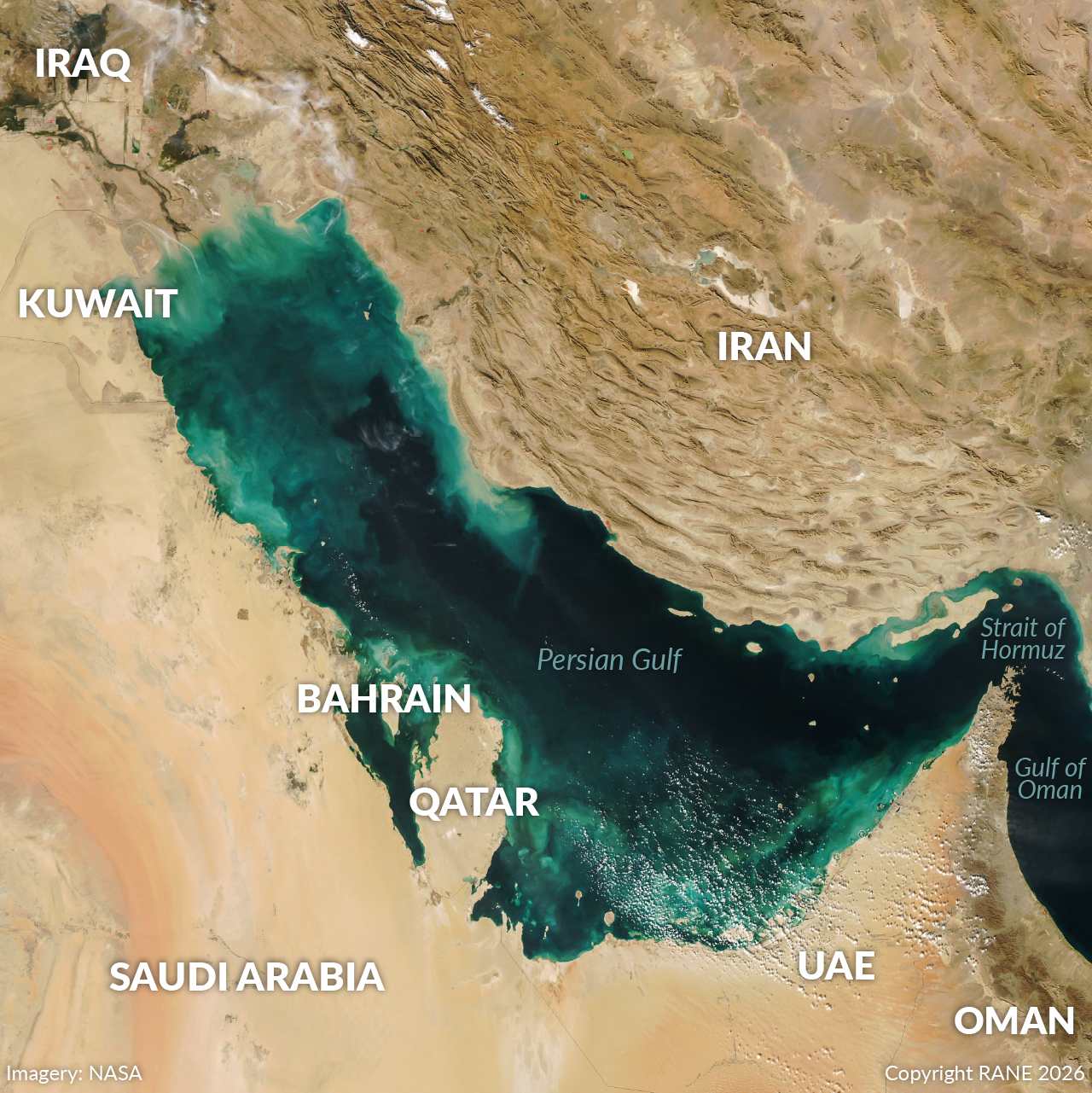
Although the outbreak of war between the United States, Israel and Iran has so far largely spared crucial oil and gas assets, a prolonged conflict increases the likelihood of material supply disruptions — particularly for liquefied natural gas (LNG) markets, which have already seen a significant price spike in some areas. The conflict has so far spared the Middle East's most important energy assets, despite the deployment of hundreds of drones and missiles across the wider region. Still, a few facilities have been directly impacted. On March 2, QatarEnergy announced it was halting production at all its liquefied natural gas (LNG) facilities following an Iranian attack on the company's Ras Laffen LNG complex, located at the north end of the Qatar peninsula, close to Iran. Saudi Arabia has also shut down its largest refinery, Ras Tanura, as a precaution after interceptor shrapnel and a drone fell on the facility. QatarEnergy's LNG operations produce about 77 million tonnes per annum and account for about 20% of the world's LNG supply, while Saudi Arabia's Ras Tanura facility has a production capacity of 550,000 barrels per day. The shutdown of two major energy facilities thus underscores escalating tensions in the region. At least four tankers have also been damaged in waters surrounding Iran. But despite these incidents, the most crucial onshore oil and gas processing facilities in the Middle East — including Saudi Arabia's critical Abqaiq oil processing facility, which processes 7 million barrels per day — have not been hit, and there are no reports of them being systematically targeted.
- At its March 1 meeting, OPEC+ agreed to increase oil production by 206,000 barrels per day in April, higher than the 137,000 barrels per day increase the cartel was reportedly discussing before the U.S.- and Israel-Iran war broke out on Feb. 28.
- After initially spiking to $82 per barrel during over-the-counter trading on March 1, the Brent crude oil benchmark has fallen to around $78 per barrel, though this still represents a roughly 8% increase from Brent's closing price on Feb. 27, before the initial U.S.-Israeli attack on Iran. European natural gas prices have seen a much more dramatic increase, rising by as much as 45% since the outbreak of the conflict.
- Israeli officials ordered Chevron to shut down Israel's Leviathan gas field in the eastern Mediterranean, likely as a precautionary measure. Similarly, deliveries of Kurdish oil through the Iraq-Turkey pipeline, which exports about 200,000 barrels per day, were shut down, with no damage reported. Similarly, deliveries of Kurdish oil via the Iraq-Turkey pipeline, which exports about 200,000 barrels per day, have been suspended, despite no damage to the pipeline being reported.
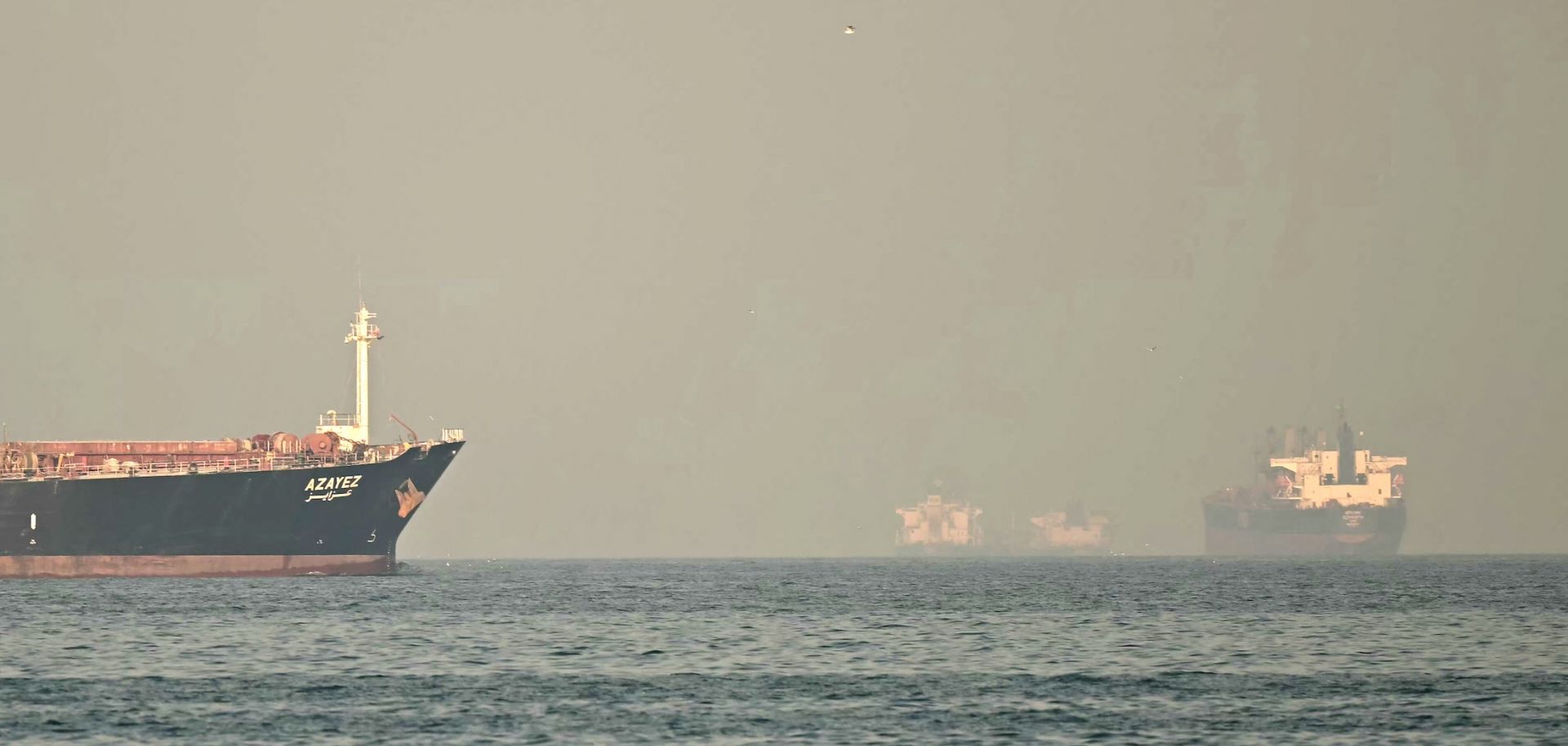
- Most tankers have stopped transiting the narrow Strait of Hormuz due to heightened security threats and the resulting increase in insurance premiums and tanker rates. Some 150 tankers and LNG carriers are reportedly anchored outside the strait while the conflict persists.
For now, the conflict's participants appear to be taking care to limit the fallout to regional oil and gas production, but if the war drags on, the likelihood of more direct attacks on energy infrastructure will increase. Iran has so far conducted only a few isolated attacks on oil and gas targets in the region. Instead, the Islamic Revolutionary Guard Corps (IRGC) appears to be concentrating its strikes on military targets and high-profile residential or commercial targets in the Gulf, in an effort to drive Gulf Cooperation Council nations to pressure the United States for an immediate ceasefire. This is also likely due to supply constraints, with Israel estimating that Iran had only 2,500 ballistic missiles before the conflict. Additionally, attacks on energy infrastructure, which would have a longer-lasting economic impact on Gulf countries if the damage is severe, would risk prompting those nations to join the United States in attacks against Iran aimed at degrading its launch capabilities. Given their isolated nature, the few attacks Iran has conducted on oil and gas targets suggest that at least some were either accidental or the result of chain-of-command problems following Israeli strikes that have decimated IRGC leadership, with launch authorities being delegated to lower-level commanders with different targeting criteria. However, as the war continues, Iran's risk tolerance will likely increase, incentivizing it to conduct more aggressive strikes on oil and gas targets as its regime faces an escalating existential crisis. Iran does not have enough ballistic missiles to sustain a high-tempo conflict for more than a couple of weeks (and the United States and Gulf countries will also face similar constraints on the number of interceptors). A sustained conflict would thus force Iran to increasingly rely on other platforms and tactics — including subsonic cruise missiles, UAVs, seaborne attacks via IRGC speed boats and cyber operations — to maintain some level of pressure on the United States and its Gulf allies.
- A Saudi official told AFP on March 2 that a "concerted" Iranian attack on the kingdom's oil facilities could trigger a Saudi military response against Iran.
- An Iranian reliance on naval forces would focus on disrupting tanker traffic for an extended period.
- Iran's UAVs and cruise missiles are extremely slow and noisy, making them easier to intercept over long distances. This also makes them more effective against oil and gas tankers and infrastructure than against military targets.
- To maximize the damage from its drone attacks, Iran would need to strike closer to its shores or at sea, again making oil and gas targets more attractive.
Natural gas markets are far more exposed to a disruption than oil markets, putting pressure on Europe and Asia, though a sustained conflict that persists into the spring would limit some of the fallout as demand for heating naturally declines. Global natural gas markets simply do not have enough storage facilities and slack in their supply chains to absorb long-lasting supply disruptions without a significant impact on prices. QatarEnergy produces about one-fifth of global LNG supply and has no alternative route to export natural gas to world markets other than through the Strait of Hormuz. The company's only natural gas export pipeline, the Dolphin pipeline, delivers gas to the United Arab Emirates, which also cannot export it outside of the strait. Additionally, a full shutdown of production would require a starting process spanning weeks or even months, because liquefaction trains are not designed to be turned on and off quickly. Major northern hemisphere economies are also coming out of winter, when they typically burn through natural gas inventories to meet seasonally high heating demand. European gas storage has been particularly low throughout the winter amid efforts to reduce reliance on Russian natural gas and LNG, with European LNG storage falling below 30% capacity on Feb. 28. This lack of slack in the European gas market is a reason why even a short disruption could have a significant impact on spot prices. While more LNG capacity is coming online later this year, global LNG export spare capacity is very limited, as most facilities are already maxing out LNG throughput. In the event of a long-term disruption that persists for more than a few weeks, the United States' and perhaps even European militaries would almost certainly need to consider organizing convoys through the Strait of Hormuz to make the region's LNG supplies available. However, shipping volumes through the strait would still be lower than usual, and potential Iranian interference with the convoys could escalate the conflict. But even with these risks, the price impacts would be tempered by a natural decline in the northern hemisphere's demand for heat as winter abates in the coming weeks.
Crude oil markets are in a far more resilient position than natural gas markets to absorb persistent supply disruptions, but a successful attack on Abqaiq or several facilities would have a more significant impact. Since the energy shocks of the 1970s, there has been a concerted global effort to establish strategic oil reserves to mitigate future supply disruptions. The United States' Strategic Petroleum Reserve (SPR) alone holds 415 million barrels of crude oil and gas, which can be tapped at a rate of about 4.4 million barrels per day. Other countries' strategic oil reserves are not nearly as large as those of the United States, but members of the International Energy Agency (IEA) are required to have at least 90 days of oil supplies in their strategic reserves. While other countries' strategic oil reserves are much smaller, all members of the International Energy Agency (IEA) are required to have at least 90 days of oil supplies in their strategic reserves. Several non-IEA members, such as China, also maintain their own stockpiles. This — combined with existing spare production capacity in places like Russia, and the fact that the global oil market was already projected to have a surplus of 3-4 million barrels per day in 2026 — will help insulate oil markets from short- or medium-term disruptions caused by the war. However, around 20% of the world's oil supply (or about 20 million barrels per day of crude oil) transits through the Strait of Hormuz on average, and much of that could be knocked offline by the ongoing conflict. That said, as with LNG carriers, the West would likely eventually organize military convoys to alleviate some of the disruption. Even short of that, Chinese tankers may have assurances from Iran that they will not be attacked (and some have braved the strait since the conflict began), allowing some oil to still trickle through. Saudi Arabia and the United Arab Emirates also have limited capacity to export crude oil through alternative port infrastructure. Given these factors, oil markets recognize that a temporary outage can be easily absorbed, which is why prices have not yet spiked above $80 per barrel. However, if a sustained conflict begins to threaten critical infrastructure — such as Saudi Arabia's Abqaiq facility or a series of smaller but still important sites across the Gulf — the risk of a more dramatic price surge will increase. Such a scenario could cause significant global economic disruption, as a $10-per-barrel price spike typically results in a 0.1% hit to GDP growth in major oil-importing economies, such as Europe and China.
- China imports about half of its seaborne oil from the Persian Gulf region, or about 4-5 million barrels per day, equivalent to two to three VLCC tankers passing through the strait each day.
- Saudi Arabia's East-West pipeline that exports oil on the Red Sea has a capacity of around 5 million barrels per day, though some of that was already in use prior to the latest conflict with Iran. Attacks by Yemen's Iran-backed Houthis on ships in the Red Sea could also limit Saudi Arabia's ability to export oil through that pipeline.
- The United Arab Emirates has a pipeline capable of transporting 1.5 million barrels per day from its oil fields in the strait to Fujairah on the Gulf of Oman. However, this export route is not entirely secure either, as Fujairah is vulnerable to Iranian attacks that could disrupt some export operations.
