
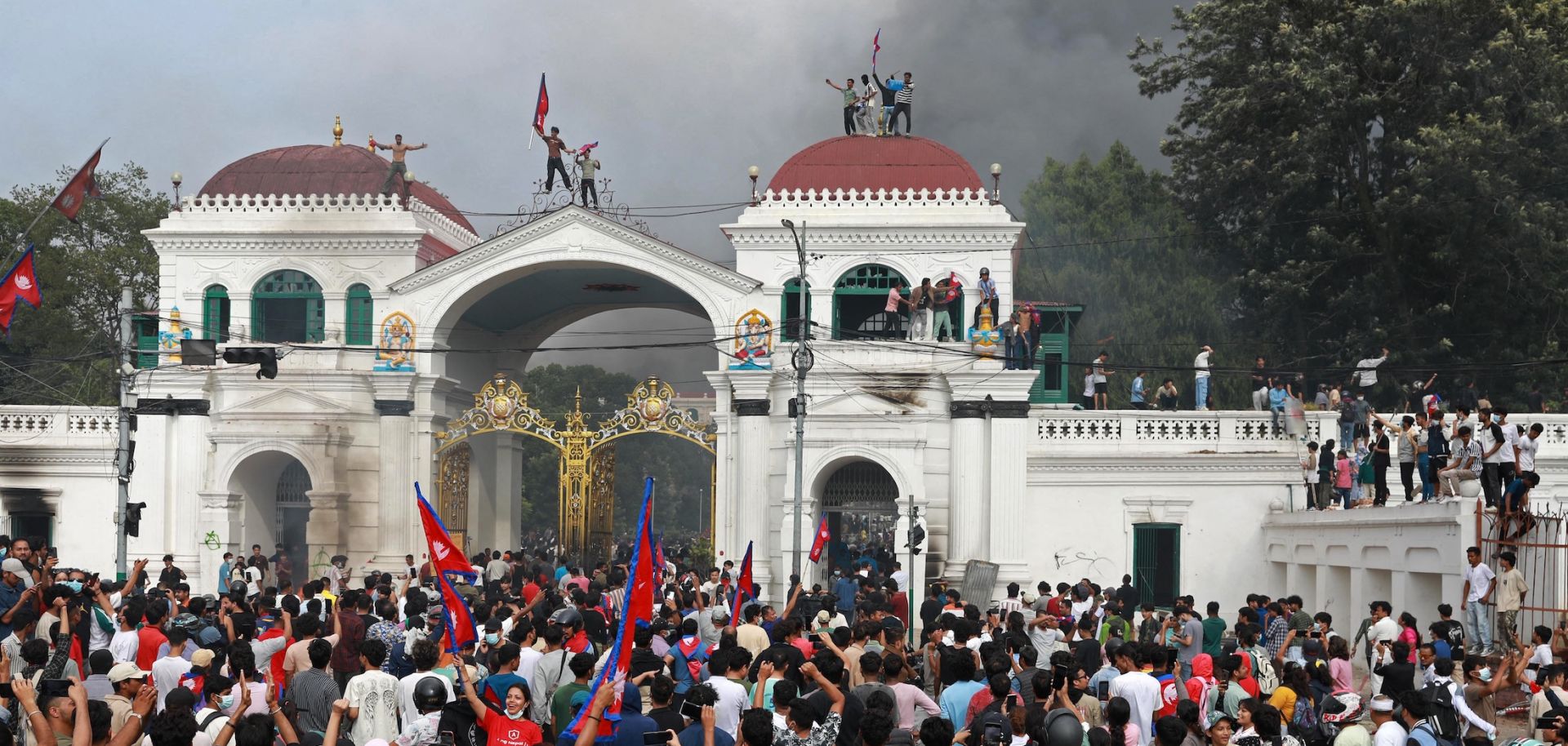
In September, days of deadly protests in Nepal — sparked by a ban on social media but more broadly driven by anger at corruption, economic hardship and inequality — forced Prime Minister K.P. Sharma Oli to resign, clearing the way for an interim leader to take charge and call fresh elections for March 2026. This upheaval mirrors broader regional trends. South Asia has witnessed waves of political movements over the past five years that have reshaped power structures and governance. In August 2024, mass protests in Bangladesh — most immediately over government job favoritism but more broadly over corruption, suppression of dissent and the high cost of living — prompted the resignation of long-serving Prime Minister Sheikh Hasina. An interim administration is now preparing for elections in February 2026. In Sri Lanka, widespread protests in 2022 over the country's economic collapse, fuel shortages and soaring inflation forced President Gotabaya Rajapaksa to resign and flee the country.
The region's giants, India and Pakistan, have been spared such popular revolutions, but the most recent elections in both revealed unprecedented trends. In Pakistan's February 2024 elections, electoral and legal maneuvers aiming to hobble the opposition Pakistan Tehreek-e-Insaf (PTI) party failed to prevent the party from gaining 31% of the vote, 5% more than the ruling Pakistan Muslim League-Nawaz, fueled by widespread youth support and discontent with the political establishment. Two months later, India's ruling Bharatiya Janata Party (BJP) fell short of a simple majority in a general election for the first time in a decade, largely due to voter fatigue with one-party dominance, rising unemployment and opposition alliances gaining traction in key states.
The growing momentum of youth-led and anti-elite movements across South Asia signals that political transitions in the region are far from settled. As traditional power structures weaken, new political actors are emerging. Governments will likely face increasing pressure to demonstrate democratic accountability and deliver economic gains despite fiscal constraints, heightening the risk of policy volatility and unevenly distributed benefits. Over the longer term, these shifts could reshape the region's political order, encouraging greater popular participation and institutional reform while straining governments' capacity to maintain cohesion and deliver consistent policy outcomes.
The Factors Behind the Unrest
The first aspect linking protests in South Asia is frustration with the ruling elite and establishment politics. In Pakistan and Nepal, no prime minister has ever completed a full term, reflecting systemic fragility and entrenched political rivalries. This cycle of leadership turnover has fostered chronic instability and prevented policy continuity. In turn, the public becomes frustrated with frequent changes in government disrupting governance, creating uncertainty for businesses and signaling that leaders prioritize political survival over solving persistent social and economic problems. While Pakistan has seen protests ease somewhat due to modest economic improvements and a strict crackdown on dissent, risks remain high as a result of the imprisonment of populist former prime minister and PTI leader Imran Khan, whose rise was fueled by frustration with decades of military-backed governance and perceived political elitism. In other cases, instability stemmed not from frequent leadership changes but from prolonged rule by the same political forces. In Sri Lanka, the Rajapaksa family dominated politics for nearly two decades, enriching themselves and their allies while hollowing out state institutions. In Bangladesh, Hasina had been in power since 2009, centralizing authority and curtailing opposition voices, which caused the frustration that eventually forced the downfall of her government. In Pakistan, control of government has alternated among dynastic families like the Sharifs and Bhuttos, while real authority rests with the army.
Second, dissatisfaction is tied to economic conditions. Shaky economies plagued by corruption, unemployment and poor management have become key causes of popular unrest in South Asia. Bangladesh, Sri Lanka, and Pakistan are all under IMF bailout programs, which required unpopular austerity measures that further inflamed public anger, underscoring a wider regional crisis of governance driven by fragile economies and the inability of governments to shield citizens from hardship. High inflation, high youth unemployment, entrenched poverty and widespread corruption are problems across South Asia. In Sri Lanka, the economic crisis drained foreign reserves, leaving the state unable to pay for essential imports. Food prices soared and fuel became scarce while many workers lost their jobs or saw their wages remain stagnant. At the time of the 2024 protests, Bangladesh was grappling with 9% inflation, persistent unemployment and mounting corruption scandals. Pakistan has long grappled with inflation, currency devaluation, fiscal deficits and energy shortages, creating persistent discontent. Nepal's recent uprising underscored its heavy reliance on remittances, which contribute more than a quarter of GDP. This dependence masks weak domestic job creation and leaves the country highly vulnerable to external shocks, while recurring political instability and natural disasters have deepened unemployment and poverty. Finally, though India has sustained steady overall growth, localized distress persists. Rural unemployment, inflation and growing disparities between urban and rural regions have fueled unrest and strengthened opposition alliances.
Third, social media has allowed young people to bypass controls on traditional media and coordinate mass protests across South Asia. In Nepal, where over 60% of the population is under 30 and youth unemployment exceeds 20%, Instagram videos and hashtags turned online outrage into street-level mobilization, even as the government imposed social media bans to stifle dissent. In Bangladesh, students used digital platforms to document repression, expose corruption and organize nationwide strikes, despite the government's draconian digital security laws targeting activists and journalists. In Sri Lanka, young activists set up a protest camp with libraries, art displays and community kitchens, continuing their movement even when the government tried to limit social media and online communication. In India, younger generations have been active in raising awareness about issues like unemployment, corruption and climate change, often organizing online campaigns and local protests, though unrest has largely stayed peaceful and confined to politics. By contrast, in Pakistan, youth movements, particularly supporters of PTI, have tried to challenge elite control, but the military's entrenched power has so far prevented these efforts from turning into large-scale public uprisings.
Dissatisfaction at politics and weak economies became the sparks that social media ignited into mass mobilization and drove political change. These grievances now serve as the main catalysts for reform, fueling efforts to curb corruption and rebuild independent institutions. Bangladesh has led this wave, with its interim government working to restore institutional integrity and remove Hasina allies from power. It is also pursuing constitutional amendments to curb the authority of the prime minister and prevent another period of one-person rule. Nepal is still in the early stages of a similar transition, as interim leaders respond to public demands for more democratic institutions. In Sri Lanka, President Anura Kumara Dissanayake — elected in September 2024 on an anti-corruption platform — has already begun implementing reforms, including abolishing state-funded perks for former presidents and their spouses, such as housing, pensions, transport and staff support.
The Future of Political Mobilization in South Asia
Instability is likely to remain a persistent feature of South Asian politics. While entrenched elites and dynastic leaders will face growing pressure to govern with greater accountability, the removal or weakening of these elites does not eliminate risk. In fact, the reshaping of political alliances and the rise of new actors, such as student groups in Bangladesh and Nepal, opens the door to new forms of political polarization, policymaking uncertainty and broader societal frictions as new power centers emerge and compete for influence with those they replace and each other. Persistent fiscal deficits and economic constraints will likely limit governments' ability to deliver on their promises and in turn fall short of public expectations. At the same time, these movements are likely to accelerate efforts to democratize institutions, reform political structures and decentralize power, ensuring that future leaders cannot rely solely on patronage or entrenched networks. This process is already visible in Bangladesh, and it has inspired similar calls in Nepal, where citizens are demanding new leadership and the removal of corrupt officials. While in the abstract, they put positive change on the table, they also will inevitably lead to new disputes over who holds power and how they wield it.
Collectively, these trends indicate that South Asia's political landscape is entering a period of contested authority and more active citizen participation, with long-term implications for governance, policy and social cohesion. While the outcome of these processes remains uncertain, what is not is that the region will continue to face intense challenges, including competing political interests, shifting power structures and economic pressures — meaning recent revolutions should not be seen as the end of a process but rather merely the latest chapters in what will be contested and potentially volatile futures.
