
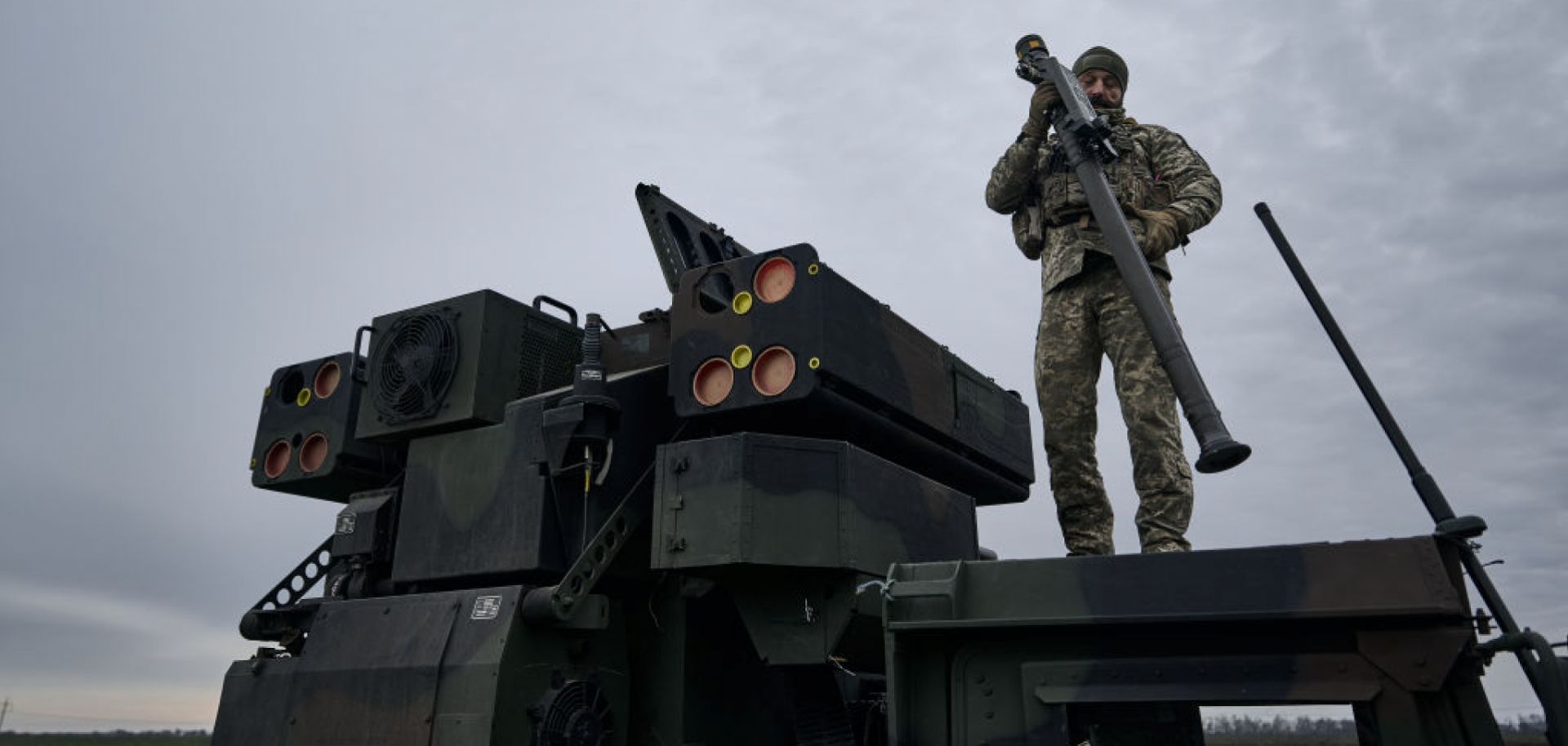
The U.S. decision to pause key arms deliveries to Ukraine will degrade Ukraine's ability to repel intensifying Russian attacks, raising the risk that Kyiv could eventually be pressured into accepting unfavorable terms in future peace negotiations if Washington does not reverse its decision or if Ukraine fails to secure alternative support. On July 1, the United States announced it was pausing the delivery of key military aid to Ukraine. According to U.S. officials cited in multiple media reports, the weapons affected by this decision include interceptors for the Patriot air defense system, precision-guided artillery shells and air-launched missiles compatible with Ukraine's F-16 fighter jets. While the list of delayed weapons has not been made public, if the media reports are accurate, the freeze will impact deliveries of weapons that are critical to Ukraine's defensive and offensive capabilities. On July 2, Ukraine's Defense Ministry said it had not received any official communications from the United States. However, Ukraine's foreign affairs ministry released a statement saying that ''any delay or hesitation in supporting Ukraine's defence capabilities only encourages the aggressor to continue the war and acts of terror, rather than seek peace."
- The United States has provided approximately $66 billion in military assistance to Ukraine since Russia launched its full-scale invasion in February 2022. If broader financial and humanitarian aid is included, that U.S. support jumps to around $120 billion. For comparison, Europe has provided Ukraine with around $52 billion in military aid and around $54 billion in financial support.
The U.S. move underscores Washington's ongoing reassessment of defense priorities and the sustainability of high-volume arms transfers to Ukraine. The pause reflects a growing concern within the U.S. Department of Defense about the strain Ukraine aid has placed on U.S. weapon stockpiles — especially amid the United States' continued military operations in the Middle East and strategic pivot toward countering China. According to the U.S. government, the decision to suspend arms deliveries to Ukraine followed an internal Department of Defense review into U.S. military aid commitments worldwide. White House spokesperson Anna Kelly emphasized on July 1 that the measure aims to "put America's interests first," while U.S. Undersecretary of Defense for Policy Elbridge Colby (who reportedly drove the decision) stated that military assistance to Ukraine would continue, albeit with adjustments to maintain readiness for other defense priorities. The pause in weapons deliveries was reportedly decided in June but only began being implemented at the start of July. There may also be political motivations behind the decision, as the administration of U.S. President Donald Trump has repeatedly said it could reduce military support for Ukraine to pressure Kyiv into accepting a quick peace deal with Moscow.
- Since Trump returned to the White House in January, the United States has not authorized any new military aid packages for Ukraine. Furthermore, U.S. Defense Secretary Pete Hegseth has signaled a desire to reduce the scope of future defense assistance to Ukraine, with The Wall Street Journal reporting in June that the United States was already redirecting anti-drone technology originally earmarked for Ukraine to U.S. troops based in the Middle East.
- While Russian and Ukrainian officials have held two face-to-face meetings in recent months, there has been no progress towards a peace deal. Kyiv and Moscow have opposing views on the sequencing of a deal, with Kyiv proposing a temporary ceasefire to buy time to negotiate a permanent peace agreement and Moscow claiming that it prefers a comprehensive peace deal that addresses the so-called "root causes" of the war. Moscow has repeatedly said that it will not give up the Ukrainian territories it has occupied since 2014 and rejects any Western security guarantees for Ukraine.
The U.S. decision will encourage Russia to intensify its aerial attacks against Ukraine, which could eventually force Kyiv to accept a peace deal on Russian terms if it cannot find alternative arms suppliers or convince Washington to resume weapons deliveries. The delay in U.S. weapons deliveries presents significant short-term risks for Ukraine. The country is currently facing some of the most intense Russian drone and missile attacks since the start of the war. For the Ukrainian military, U.S. Patriot interceptors and precision-guided munitions are central to defending large urban centers and critical infrastructure and executing limited counteroffensives. Without timely resupply, Ukraine's ability to intercept Russian strikes and launch its own precision attacks will be significantly degraded. While Ukraine's increasing domestic weapons production and additional supplies from other Western allies can partially offset the loss of U.S. artillery shells, the production and availability of advanced air defense munitions — especially Patriot interceptors — are overwhelmingly dominated by the United States. This creates a vulnerability that Russia will likely exploit through intensified aerial attacks and ground offensives along multiple parts of the frontline. Strategically, the U.S. decision also reinforces Russia's belief that Western support for Ukraine will erode over time. Though unlikely to force Ukraine into immediate concessions, a prolonged suspension of U.S. military aid, and especially a permanent shift in U.S. policy, could eventually pressure Kyiv into accepting less favorable terms in future peace negotiations with Russia.
- Russia significantly intensified its aerial campaign in June, deploying a record 5,337 Shahed-type attack drones against Ukrainian targets — the highest monthly total since the full-scale invasion commenced in February 2022.
- In response to the pause in U.S. weapon deliveries, a Ukrainian official quoted by the Financial Times on July 2 said "we counted on many of those systems as they were promised" and added that the decision "significantly affects our planning."
- On July 2, Kremlin spokesman Dmitry Peskov said that "the fewer the number of weapons that are delivered to Ukraine, the closer the end of [Russia's] special military operation" in the country.
- On June 25, Trump said he would consider sending more Patriot air-defense batteries to Ukraine following "a good" meeting with Ukrainian President Volodymyr Zelensky. This suggests that the United States could eventually reverse the July 1 decision, especially if the White House believes that this would make a peace deal more likely. Moreover, Ukraine has recently suggested that, instead of receiving American weapons as grants, Kyiv could increase its purchases of them, which could convince Washington to resume deliveries. There are precedents for such changes of strategy. In March, the United States briefly stopped all military aid to Ukraine after a tense meeting between Trump and Zelensky. The White House then reversed that decision a week later, following an improvement in the bilateral relationship.
- When the United States decided to halt military aid to Ukraine in March, military analysts predicted Ukraine could sustain combat operations for another four to six months. This projection assumed a complete cessation of U.S. support, not the partial pause announced on July 1. But while Ukraine's domestic production of weapons is improving and its European allies remain committed to providing assistance, without U.S. support, Ukraine's ability to keep fighting and defending itself (at least at the current intensity) would likely diminish within months.
