
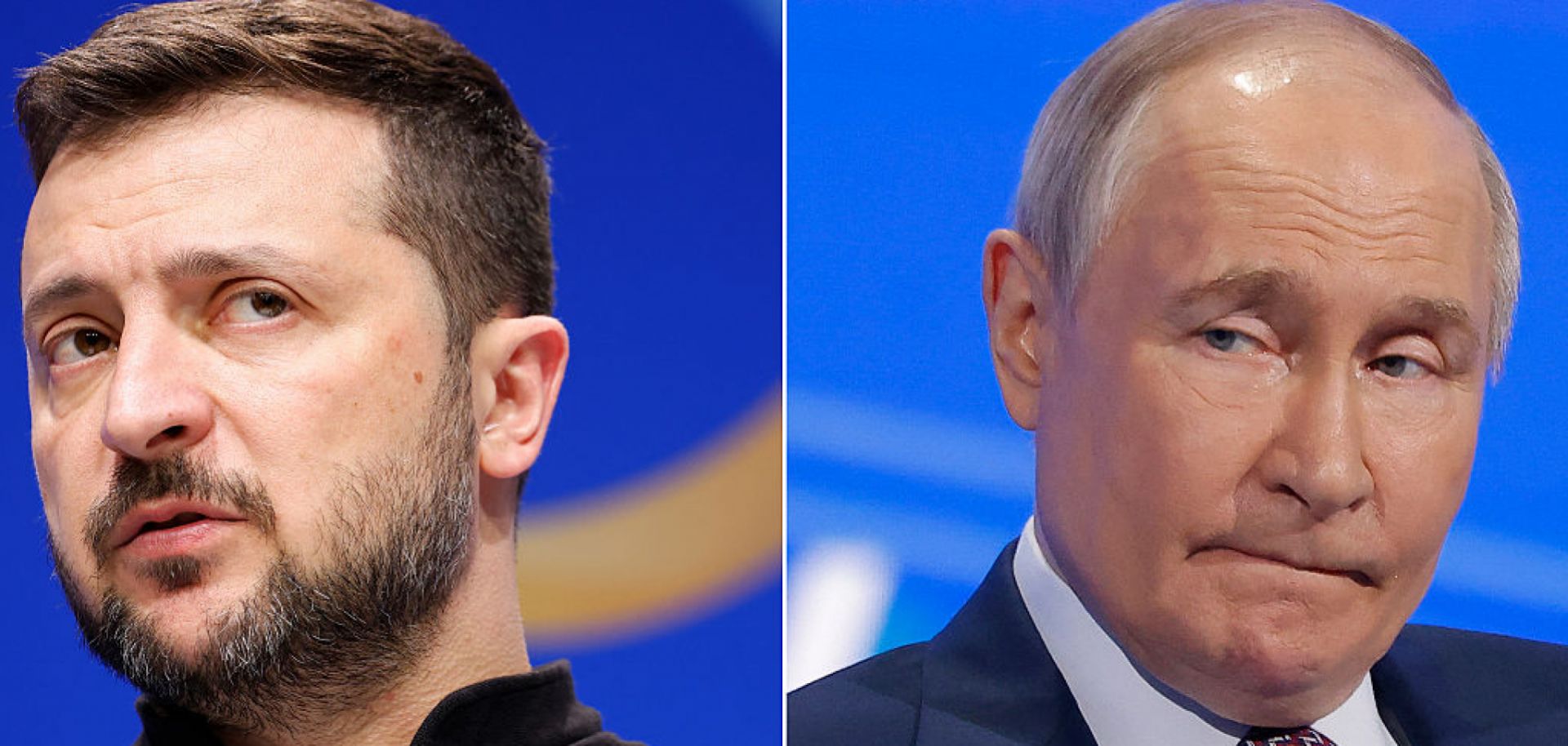
Russia's proposal for direct talks with Ukraine is a response to growing U.S. pressure, but divisions over ceasefire terms, territorial control and security guarantees will likely limit progress to modest de-escalation steps in the short term. On May 10, Russian President Vladimir Putin rejected a call for a 30-day ceasefire that Kyiv and its European partners had made earlier that day, and instead proposed holding direct Russia-Ukraine talks in Turkey on May 15. In response, Ukrainian President Volodymyr Zelensky said that he would be in Istanbul on May 15 and was ready to meet with Putin there. During a May 11 phone call with Putin 1, Turkish President Tayyip Erdogan said his country was prepared to host the peace talks. While Russia has not confirmed whether Putin himself will travel to Istanbul, Russian and Ukrainian delegations are expected to hold some kind of bilateral meeting on May 15. A trilateral summit involving the United States is also possible, as U.S. Secretary of State Marco Rubio will be in Antalya, Turkey, for a meeting among NATO foreign ministers from May 14-16. On May 12, U.S. President Donald Trump said he was "thinking" of joining a potential Putin-Zelensky meeting.
- On May 10, the leaders of France, Germany, the United Kingdom and Poland met with Zelensky in Kyiv, where they called for a 30-day ceasefire starting on May 12 and threatened to impose new sanctions on Russia if Moscow did not comply. During their meeting, the leaders held a phone conversation with Trump and said that the White House backed the idea of additional sanctions if Russia rejected the ceasefire proposal. However, in a post published on Truth Social after Putin's May 10 statement, Trump did not mention any sanctions and urged Zelensky to agree to Putin's proposal to meet in Turkey.
- In the early hours of May 12, Ukraine's air force reported multiple Russian drone attacks, which suggests that Moscow has rejected the call for a ceasefire.
Russia's call for bilateral talks with Ukraine comes amid growing U.S. frustration with the stalled peace process, which has seen the White House threaten to exit mediation efforts and increase sanctions on Moscow. Between mid-February and mid-April, U.S. and Russian officials held several meetings to discuss the war in Ukraine and other bilateral issues. By mid-April, the White House, as well as Kyiv and its European allies, were producing peace proposals that addressed issues ranging from the future of the Ukrainian territories currently under Russian control to the prospects of offering security guarantees to Ukraine. While the U.S. and the Ukraine-European proposals had significant differences, they showed a clear effort by the West to find an end to the conflict. However, Russia dismissed these peace proposals and instead offered short (and largely violated) ceasefires around Easter and Victory Day. Against this backdrop, Trump and other senior U.S. officials became more vocal in their frustration with Russia and threatened to impose additional sanctions on Moscow if it continued to stall the peace process. Moreover, in late April, the United States and Ukraine signed a long-delayed economic cooperation agreement, and the Trump administration also approved its first sale of weapons to Ukraine. These developments explain Russia's proposal to hold direct talks with Ukraine, as the Kremlin is likely worried about the United States following through with its threats of new sanctions against Russia and the prospect of additional U.S. military support for Kyiv. Russia may also be concerned that the White House could withdraw the peace framework it proposed in April (which includes territorial recognitions and sanctions relief) if Moscow continues stalling the process, and that successive offers may not be as generous.
- According to an April 17 leak published by Reuters, the U.S. plan for peace in Ukraine included the United States providing de jure recognition of Russia's control of Crimea and de facto recognition of Russia's control of Luhansk and the Russian-controlled parts of Zaporizhzhia, Donetsk and Kherson. The proposal also established that Ukraine would not join NATO, but was free to join the European Union. Additionally, it allowed for Ukraine to receive security guarantees from an ad hoc group of European states plus willing non-European states. Finally, the U.S. plan called for the removal of all Western sanctions imposed on Russia since 2014.
- The Ukrainian-European version of the peace proposal called for a full ceasefire in the sky, land and sea, monitored by the United States and other countries. It also called for "robust" security guarantees for Ukraine from the United States, but admitted that there was no consensus about Ukraine's NATO membership. The proposal established that territorial disputes should be discussed and resolved after the ceasefire. Finally, the proposal said that sanctions against Russia should be gradually eased after a sustainable peace was achieved.
- On April 26, Trump wrote on Truth Social that Putin's continued bombing of Ukraine "makes me think that maybe he doesn't want to stop the war, he's just tapping me along, and has to be dealt with differently, through 'Banking' or 'Secondary Sanctions.'" Then on May 8, Trump wrote that if Russia continues to oppose a ceasefire, "the U.S. and its partners will impose further sanctions." On May 7, U.S. Vice President JD Vance said that Russia was "asking for too much" in order to stop the war and suggested that the White House could relinquish its role as mediator.
While direct Russia-Ukraine talks would represent a qualitative change in the peace process, there are still significant differences between Moscow and Kyiv that will impede progress toward a deal. Even if Putin and Zelensky do not meet in person in Istanbul on May 15, direct negotiations between Moscow and Kyiv would represent a significant change in the dynamic of the peace process, as so far the two sides have refused to engage directly, instead using the United States and others as mediators. Still, there are numerous obstacles to a deal, with the first being disputes over the steps to reach peace. Ukraine wants an unconditional ceasefire first, which would be followed by peace talks to address the multiple bilateral disputes. But Russia, which currently has the more comfortable battlefield position, has said it will only agree to a ceasefire once the "root causes" of the war have been addressed (which range from Ukraine's foreign and military policy to the security architecture in Europe). The United States has been ambiguous on this topic, sometimes supporting the idea of a ceasefire and other times backing an immediate, full peace plan. Then there's the issue of Ukraine's security guarantees. While Kyiv has come to terms with the fact that it will not join NATO for the foreseeable future, it wants U.S. troops in Ukraine to protect it against any future Russian aggression. Russia, on the contrary, opposes an American or European military presence in Ukraine and has called for limitations to the country's future military power, something Kyiv says is a nonstarter. The United States lies somewhere in between these positions: while the White House has said it will not provide direct military support to Ukraine post-war, it supports the idea of deploying a European "coalition of the willing" to the country as a tripwire force. Finally, there is the issue of Ukraine's territorial integrity. Although Ukraine and its European allies officially reject providing any territorial concessions to Russia (including Crimea, which Russia annexed in 2014), the United States has said it is willing to recognize Crimea as Russian territory and tolerate Russia's control of the four Ukrainian regions it currently totally or partially occupies.
Russia will not make any meaningful concessions to Ukraine unless there is a marked increase in Western pressure against the Kremlin. Russia's willingness to engage in direct negotiations with Ukraine is the result of increased threats, particularly from the United States, to increase sanctions and expand military aid to Ukraine. However, Moscow will have little incentive to make any significant concessions in those talks unless the West shows it is willing to make good on its threats. To increase economic pressure on the Kremlin, the United States could, for example, more frequently and directly threaten to impose secondary sanctions on entities that purchase Russian oil and natural gas (something the White House may be more willing to do amid currently low oil prices, which would reduce the impact of such threats on the global oil market). But sanction threats alone may not be enough to convince the Kremlin to make concessions in the short term, as the Russian economy is already under a vast network of sanctions that the government has so far been able to withstand much better than most Western governments initially anticipated at the start of the war. For the United States, a more effective tactic would be to increase military support for Ukraine, as this would give Kyiv additional resources to continue fighting and would send the message that the war will be longer than what Moscow calculated when Trump took office in January, forcing the Kremlin to reassess its strategy. However, there are no signs Washington is considering significantly ramping up military aid to Ukraine. For Europe, given its limited capacity to support Ukraine militarily, a more effective tool would be to seize the billions of euros in Russian assets that it froze after the start of the war in 2022. But the European Union remains internally divided on the issue, which means that Ukraine's European allies may also not be in a position to make a credible threat in this regard anytime soon. Still, additional packages of European financial and military aid for Ukraine are possible in the coming months.
A comprehensive peace deal will thus remain elusive in the coming weeks, but incremental de-escalation steps (such as a limited ceasefire) may occur to prevent the collapse of the peace process. In the next few weeks, Russia will keep the negotiation process alive, hoping to preserve its territorial gains and avoid a drastic increase in U.S. support for Ukraine without making meaningful concessions to Kyiv. Temporary deals, such as ceasefires or additional prisoner exchanges, are possible, but progress on the core issues behind the war will be slow. Against this backdrop, U.S. pressure on Russia will ebb and flow. Even if the United States introduces additional economic sanctions against Russia to accelerate the negotiation process, this may not be enough to push the Kremlin to make meaningful concessions on issues like Ukraine's territorial integrity or security guarantees. At the same time, the White House will likely also renew its threats to reduce military and diplomatic support for Ukraine if it feels the Zelensky administration is not being flexible enough in negotiations, which means that Kyiv could come under significant U.S. pressure to compromise as well. Meanwhile, on the battlefield, Russia may even use the summer months to seize more Ukrainian territory or at least maintain military pressure on Ukraine while blaming Kyiv for not engaging seriously with the "root causes" of the conflict. Finally, Europe will remain diplomatically active but constrained in what it can actually do to influence the peace process, with internal divisions hampering bold moves like Russian asset seizures.
