
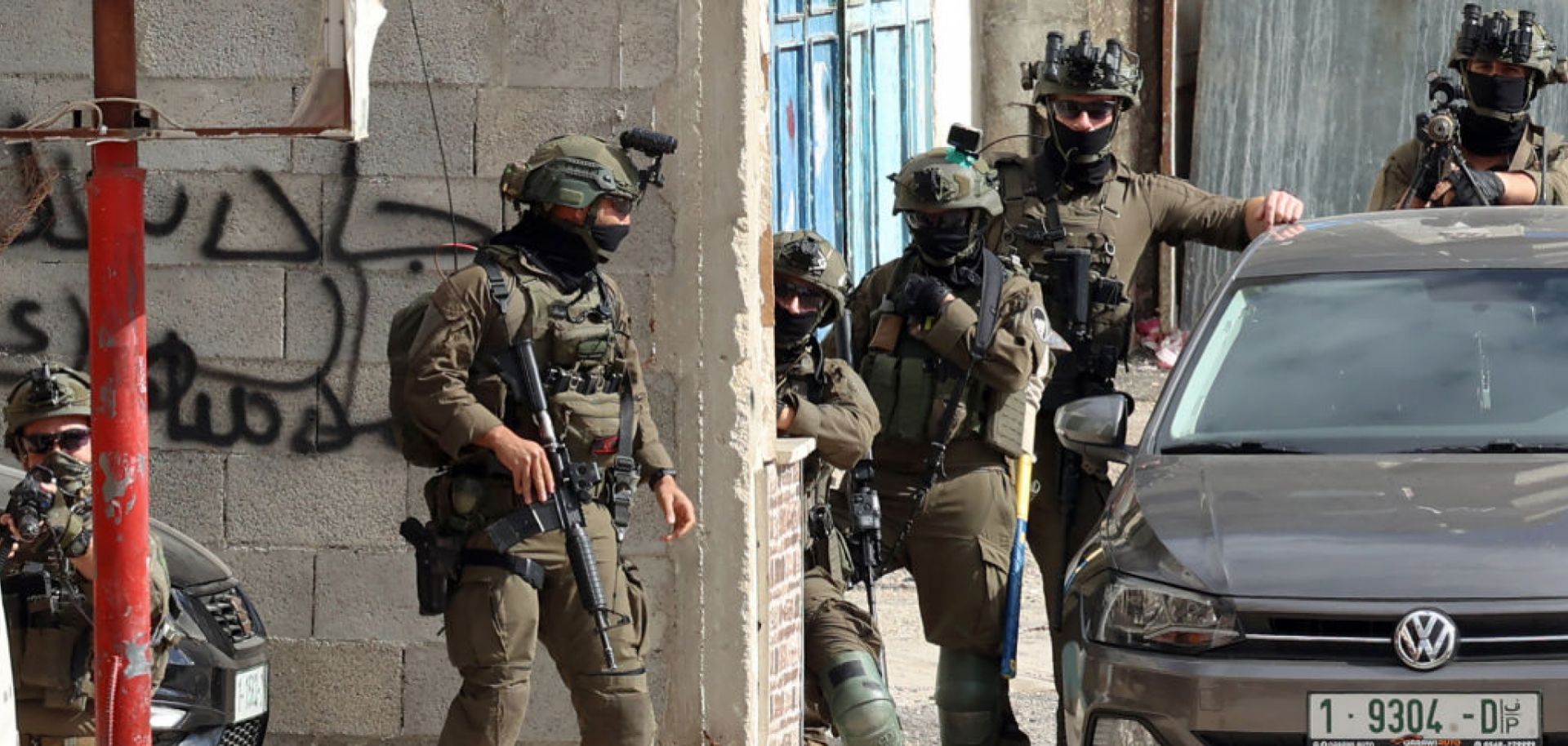
Israel's new goal of reoccupying Gaza will worsen the humanitarian crisis in the Strip and invite further Houthi attacks on Israeli territory. To justify its open-ended military campaign, the Israeli government will also have to erode Gaza's existence as a Palestinian geopolitical entity, which could undermine its re-election prospects in 2026. On May 4, Israel's security cabinet approved a plan to expand its military offensive against Hamas, including by calling up thousands of reservists, pursuing the full-scale conquest of the Gaza Strip (including previously untouched camps in northern Gaza), and evacuating the Gazan population back into the south. The plan was unveiled ahead of U.S. President Donald Trump's planned visit to the Middle East from May 13-16, with the Israeli government warning that if Hamas did not release the remaining hostages before Trump's trip, Israel would launch the new offensive. Israeli Finance Minister Bezalel Smotrich also suggested that this offensive, dubbed Operation Gideon's Chariots, would expand Israel's permanent control of parts of Gaza and support the resettlement of the millions of Palestinians still living there. Additionally, Israel's security cabinet approved the resumption of limited humanitarian aid to the Strip, which would be overseen by Israeli-controlled NGOs rather than the United Nations or other foreign organizations.
- Since the collapse of the Israel-Hamas ceasefire in mid-March, the Israeli military has focused on limited operations in Gaza, mostly around the southern city of Rafah, to cut off supplies to Hamas and pressure the group into surrendering hostages and exiting the Strip. But Hamas insists it will only release hostages in exchange for talks that would lead to the Israeli withdrawal from Gaza.
- Israel is also trying to find countries for Gazans to relocate to, as far-right members of the government push for the resettlement and permanent occupation of the territory. Only Indonesia and Jordan have signaled they would take in limited and impermanent numbers of vulnerable Palestinian refugees — and even then, implementation has been limited, with Jordan so far reportedly taking in 44 of the 2,000 sick and wounded Gazan children it pledged to accept.
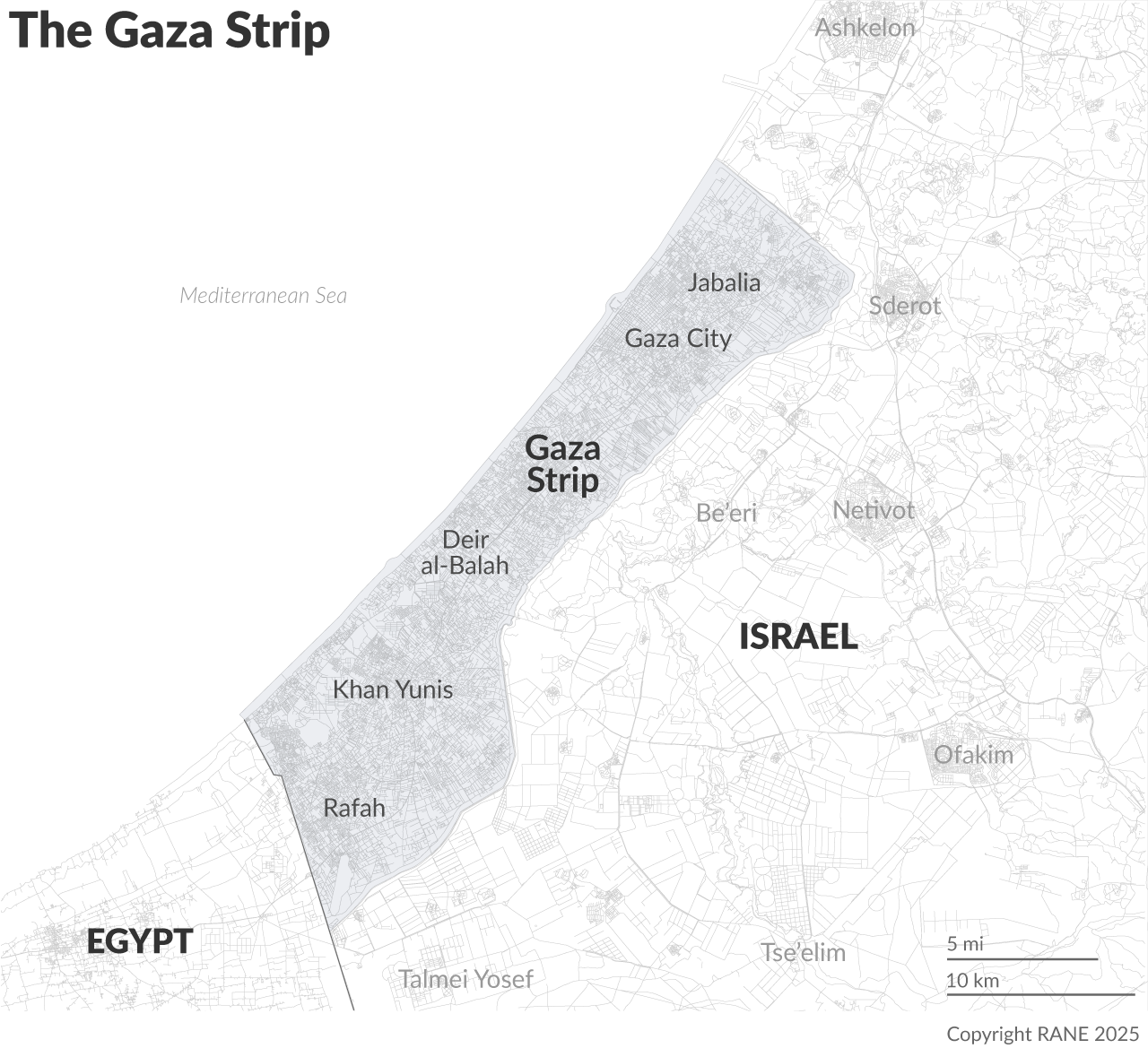
The focus of Israel's Gaza strategy has evolved from releasing hostages and preventing Hamas' return to governance to establishing an indefinite Israeli occupation of the Strip. In the aftermath of Hamas' Oct. 7, 2023, attack, the Israeli government initially pledged to defeat and destroy the Palestinian militant group but did not articulate specific policies to achieve this, leaving the final status of the Hamas-governed Gaza Strip in limbo. Some Israeli officials suggested that the final outcome would involve establishing some buffer zones inside Gaza and collaborating with Palestinian authorities to prevent Hamas' return to power, but they did not name which Palestinians would govern Gaza instead, nor define exactly what areas of the Strip would remain under Israeli control. This lack of clarity was a result of the different goals of the competing factions within Prime Minister Benjamin Netanyahu's government: the right-wing nationalists in Netanyahu's Likud party did not want to reoccupy Gaza after the party led its evacuation in 2005, while the more far-right politicians, led by National Security Minister Itamar Ben Gvir and Finance Minister Bezalel Smotrich, openly advocated for the resumption of occupation and the resettlement of Gaza alongside the displacement of many, if not all, Gazan Palestinians. These goals also competed with the highly popular objective of returning hostages safely to Israel, which has forced Israel to remain open to pauses in fighting with Hamas. However, the election of Trump (who is more staunchly pro-Israel than his predecessor, former U.S. President Joe Biden) has since given the more far-right elements of the Israeli government the upper hand in policy arguments, as there is now less concern about U.S. pushback and more impetus for a new approach to Gaza given that Israel's current war strategy of less intensive manuevering has failed to free hostages or defeat Hamas.
- The January-March ceasefire was widely seen as a disaster by Israeli nationalists, in part because it granted Hamas space to rearm and reorganize, and in part because Hamas used the ceasefire as a propaganda victory.
- For months after the Oct. 7 attack, Israeli opposition politicians and observers noted that the Netanyahu government failed to articulate a comprehensive post-war plan for Gaza beyond the release of hostages and the removal of Hamas from power.
- Before Hamas' Oct. 7 attack, Israel's far-right parties had continuously criticized the 2005 disengagement from Gaza and had pushed for the reoccupation of the Strip in the face of recurrent rocket wars between Israel and Hamas throughout the 2010s.
- During Netanyahu's trip to the United States in February 2025, Trump proposed potentially removing Palestinians from Gaza in order to rebuild and rehabilitate the war-torn territory — marking the first time a U.S. president had suggested population transfers as a possible viable policy to end the cycle of Israeli-Palestinian violence in Gaza.
Hamas is unlikely to release the remaining hostages by Israel's May 18 deadline, making it probable that the new Israeli offensive will begin in the coming weeks, which will sustain the political drivers for the Iran-led solidarity campaign against Israel that will largely comprise Houthi attacks. Hamas is unlikely to release hostages before Trump's visit next week, as the militants have little reason to believe this would prevent Israel from moving to occupy the whole of Gaza, given the now formal shift in the country's war goals. Once that deadline passes, Israel will likely take months to conduct several phased campaigns to conquer the Strip, starting with operations in the territory's densely populated north, followed by further campaigns to push the Gazan population out of built-up areas, and to give the Israeli military time to clear civilian infrastructure and destroy Hamas tunnels. These campaigns will likely kill more Palestinian civilians and further strain their access to crucial humanitarian aid. The impact on Palestinians in Gaza will reinforce the political drivers of Iran's solidarity campaign, which will likely be expressed via further attacks on Israel by Iran-backed Houthis in Yemen, akin to the one recently launched at Tel Aviv's Ben Gurion Airport on May 4. Elsewhere in the world, the expanded Israeli offensive in Gaza will also fuel the drivers behind protests in the West calling for Israel's political and economic isolation.
- In April 2025, the Israel Defense Forces (IDF) estimated that only 25% of Hamas' underground tunnel system in Gaza had been destroyed. This suggests the Israeli military believes it has a long and extensive campaign ahead of it to remove the remaining tunnels, which are seen as the heart of Hamas' ability to maintain its position in Gaza.
- On May 5, the Houthis struck the Ben Gurion Airport successfully for the first time, as the militants threatened an "air embargo" in solidarity with Hamas as the Israeli campaign continued.
- Israel has not allowed humanitarian aid into Gaza since the ceasefire with Hamas collapsed in March, which has depleted food and medicine supplies and threatened famine in the Strip. Israel's new war strategy would remove aid from the United Nations or international NGOs' control and put it in the hands of Israeli-appointed organizations after Israel accused Hamas of weaponizing aid to maintain power in Gaza. Hamas also recently executed aid looters in Gaza, as the militants continue to claim a monopoly on aid distribution there.
With elections set for late 2026, Israel's government will likely intensify efforts to neutralize Gaza as a security threat in order to retain public support and avoid losing power to the opposition, but if it cannot defeat Hamas by then, the government may delay the vote using its wartime powers. Current Israeli polls suggest that the Netanyahu government would lose the next election if it were held now due to Israelis' war weariness, dissatisfaction with the government's handling of the hostage situation, and the fallout from the failure to prevent the Oct. 7 attack. However, these polling numbers may shift if the Israeli government can find a comprehensive solution to the Gaza conflict, which is only likely to occur after the defeat or exile of Hamas as a militant group. Hamas' defeat, however, appears increasingly unlikely to be achieved without a substantial demographic shift in Gaza's population structure. This will, in turn, incentivize the Israeli government to launch campaigns aimed at undermining the Strip's Palestinian identity and political status, likely by destroying civilian infrastructure and transferring Gazans to the West Bank, as well as by launching regional campaign to assassinate Hamas leaders and fighters in places like Lebanon, Syria and Iraq. But it is not clear if Israel can depopulate Gaza before next year's elections, especially as the IDF and Israeli public will not back an open extermination campaign against Gazan civilians and prefer to relocate them instead. Should it fail to defeat Hamas by the 2026 elections, Netanyahu's government will lose a critical bloc of public support to the opposition, potentially threatening its hold on power. This could, in turn, compel the government to delay the ballot using wartime powers, thereby enabling it to continue its military strategy to defeat Hamas in the hopes of eventually shifting the narrative back in its favor.
- Most Israeli polls suggest that if an election were held today, the opposition would gain a ready majority of up to 65 seats in the 120-seat Knesset, a sign of lackluster public support for the Netanyahu-led government. The opposition, led by Yair Lapid, has suggested that an Arab-led force, spearheaded by Egypt, should take control of Gaza rather than the IDF.
