
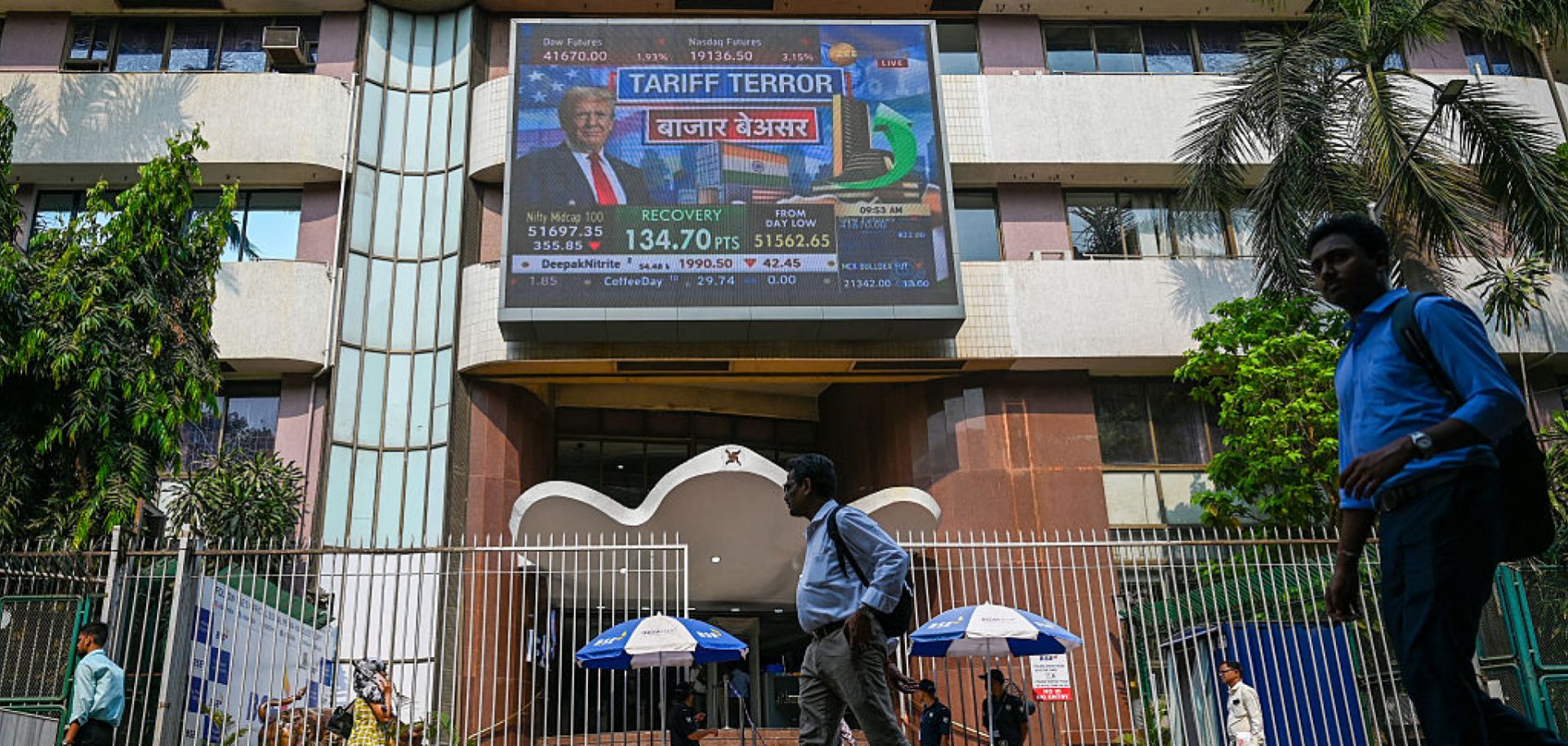
If implemented, U.S. President Donald Trump's 27% tariff on India would severely hurt certain Indian sectors reliant on the U.S. market, such as pharmaceuticals; however, other sectors, such as textiles, could benefit if India's main Asian competitors end up facing even higher U.S. tariffs. On April 2, Trump announced plans to impose sweeping ''reciprocal'' tariffs on nearly all U.S. trading partners, including a 27% tariff on India. In justifying the move, the Trump administration cited India's unfair trade practices, pointing to longstanding barriers faced by U.S. exporters, as well as the South Asian country's $46 billion trade surplus with the United States. The announcement came despite India's recent efforts to address such grievances, which began in February after Indian Prime Minister Narendra Modi met with Trump in Washington and agreed to initiate trade negotiations. Since then, India has pledged to increase its purchases of U.S. energy exports to $25 billion, up from the current $15 billion, and signaled an openness to future defense acquisitions, including potential interest in American F-35 fighter jets. New Delhi has also offered to scrap its 6% digital advertising tax, and lower tariffs on U.S. exports of bourbon whiskey, luxury cars and solar cells. On April 9, Trump issued a 90-day pause on some of the highest reciprocal tariffs, effectively bringing most countries' tariff rates (including India's) to 10%. But while this will temporarily ease concerns for Indian exporters, the still-looming implementation of the 27% tariff still risks delivering a painful blow to several of India's key sectors, with pharmaceuticals, gems and jewelry facing the most immediate impact.
- Elon Musk's Starlink project is reportedly nearing final regulatory approval in India, signaling New Delhi's openness to U.S. tech investment as well.
- Trump's global reciprocal tariffs (including the 27% tariff on India) briefly went into effect on April 9, but were then suspended later that day after Trump announced a 90-day pause on all reciprocal tariffs (with the exception of China, which will face even higher tariffs, effective immediately). Still, India remains subject to a 10% tariff on all U.S. imports.
If implemented, the 27% U.S. tariffs will hit several of India's key export sectors hard, including pharmaceuticals, gems and jewelry, slowing economic growth. The United States is India's largest single export destination, accounting for roughly 17.9% of India's merchandise exports in 2023-24. However, these exports represent about 2.2% of India's total GDP, which suggests a relatively moderate level of exposure to tariffs in the broader economy. Still, the trade shocks will still significantly harm particular Indian sectors that are more reliant on the U.S. export market, including pharmaceuticals, gems and jewelry. Indian pharmaceutical exports to the United States, for example, accounted for 31% of India's total drug exports in 2023-24, amounting to $8.73 billion. Higher U.S. tariffs on pharmaceutical imports could thus significantly affect Indian drug manufacturers by diminishing their price competitiveness in the U.S. market. They will also strain Indian producers of polished diamonds and gold jewelry (which together exported $11.9 billion worth of goods to the United States in 2024, accounting 40% of their total exports), as the tariffs will increase costs, reduce price competitiveness, and potentially trigger a decline in demand from the United States. Other Indian exports with greater exposure to the U.S. market, such as engineering goods, electronics, seafood, basmati rice, shrimp, and buffalo meat — would also come under stress if the 27% U.S. tariffs are eventually implemented, with exporters likely to face immediate financial pressure as buyers reassess costs in light of the new tariffs. The impact on these various export sectors could slow down India's economy. Indeed, the threat of U.S. tariffs has already forced India's central bank to cut its interest rate and downgrade its economic growth projections for this year. However, government officials remain hopeful that growth will likely stay within the projected range if global oil prices remain below $70 per barrel, as India is a net importer of oil (U.S. crude oil closed below $60 per barrel on April 8, the lowest level in four years). Indeed, continued low oil prices would reduce inflationary pressure, ease the strain on India's trade deficit, and help stabilize the rupee — factors that are crucial for sustaining economic growth, especially with the added strain of new U.S. tariffs.
- The pharmaceutical sector contributes around 1.72% to India's GDP, while the gold and diamond sector contributes around 7%. Gems and jewelry acounted for 12.8% of all Indian exports to the United States in the fiscal year 2024, totaling $9.9 billion in the fiscal year 2024.
- At an event hosted by the National Republican Congressional Committee on April 8, Trump announced that the United States would soon impose a ''major'' tariff on pharmaceutical imports.
- On April 9, the Reserve Bank of India (RBI) cut its key repo rate by 25 basis points to 6.00%, aiming to stimulate the economy amid the expected impact of new U.S. tariffs on Indian exports. Additionally, the central bank chief revised the growth outlook, with the RBI now projecting GDP growth at 6.5% for the fiscal year 2025-26, down from 6.7%. Given rising global uncertainty, the RBI's downward revision of GDP growth, along with the shift in policy stance from ''neutral'' to ''accommodative,'' suggests an increased likelihood of additional rate cuts in upcoming policy reviews.
In response to Trump's trade salvos, India will likely prioritize negotiation over retaliation, which may prevent further tariff hikes but is unlikely to secure a full rollback of current duties. For now, India will likely continue to pursue talks with the Trump administration, while avoiding retaliatory trade measures that could invite further U.S. tariffs. To ease U.S. tariff pressure, New Delhi will likely offer more concessions in those talks, which could include increasing purchases of various U.S. goods, expanding U.S. companies' market access in Indian sectors like retail and telecommunications, strengthening intellectual property rights protections, and reducing tariffs on U.S. imports. But while this may help stave off further tariff increases, the White House is unlikely to roll back the existing 27% duties since its primary goal appears to be narrowing the United States' trade deficit with India. There is a chance India will eventually resort to retaliation if Washington pushes ahead with additional tariff increases despite New Delhi's efforts to engage in negotiations and offer concessions. This could see India delay or scale back planned defense and energy purchases from the United States, raise tariffs on select U.S. goods, and/or increase regulatory hurdles for U.S. firms operating in India.
- An unnamed Indian official cited in an April 10 Reuters report expressed New Delhi's desire to secure a quick trade deal with Washington, noting that India was ''one of the first nations to start talks over a deal with the United States and to have jointly agreed to a deadline to conclude it.''
While it will seek to appease the United States, India will likely push back against U.S. demands for lower agricultural tariffs to avoid backlash from Indian farmers, instead focusing on non-sensitive sectors and modest export support to balance domestic pressures and fiscal constraints. While India will seek to avoid antagonizing the United States, there remains a risk of public backlash if the government appears overly accommodating to the Trump administration, particularly through pledges to reduce tariffs on U.S. goods, purchase more U.S. imports, and accept the return of more undocumented Indians deported from the United States. To mitigate this risk, the government may simultaneously seek to increase support for Indian exporters affected by Trump's tariffs through an export promotion scheme (such as subsidies to offset the financial impact of tariffs). However, India's ongoing fiscal consolidation efforts could limit the scale of such measures. New Delhi will likely also resist offering significant concessions in response to U.S. demands for reduced Indian tariffs on American agricultural goods, given the need to protect its politically sensitive farming sector. India's powerful farmers' unions have already expressed strong opposition to increasing purchases of U.S. agricultural imports, arguing that an influx of cheap American products could hurt domestic producers and destabilize the sector. With farmers across India already protesting over other issues, like legally guaranteed minimum support prices for all crops, any move perceived as compromising to U.S. agricultural demands could provoke further unrest and political repercussions for Modi's government. As a result, India is likely to offer limited agricultural concessions, focusing on non-sensitive products while resisting broader U.S. demands for access to staple crops.
- During his visit to trip on Jan. 21, India's Minister of External Affairs, S. Jaishankar, met with U.S. Secretary of State Marco Rubio to discuss various issues, including efforts to address illegal immigration to the United States. After the meeting, Jaishankar announced that New Delhi would accept the return of approximately 18,000 undocumented Indian migrants identified for deportation by the Trump administration. On Feb. 5, a U.S. military plane carrying over a hundred deported Indian nationals landed in Punjab, sparking political controversy in India. The Indian National Congress party condemned the Modi government for its silence on what it termed the ''humiliation'' of Indian citizens.
- India's main exports to the United States include rice, shrimp, honey, vegetable extracts, castor oil, and black pepper. However, as the two countries engage in trade talks, reports suggest that the United States is focusing on expanding exports of key agricultural products, such as wheat, cotton and corn, in an effort to reduce its trade deficit with India.
If India faces lower U.S. tariffs than other top manufacturing countries in Asia when the 90-day suspension ends, it could make Indian garment and electronics exporters more competitive, though broader trade dynamics suggest that other suppliers may be better positioned to capture the U.S. market share. The United States has increased its tariffs on China to 125%, and is also threatening to impose high tariffs on some of India's other top economic competitors, including Vietnam (46% tariff), Sri Lanka (44% tariff), Bangladesh (37% tariff) and Thailand (36% tariff), unless they reach deals with the White House before the 90-day deadline. This means that India could find itself in a potentially favorable position if it manages to keep U.S. tariffs at 10% and, to a lesser extent, if the United States imposes the 27% tariff on India at the end of the 90-day period but also imposes even higher tariffs on its competitors, which would open space for Indian textile and garment manufacturers to expand their footprint in the U.S. market. However, this advantage is tempered by the presence of other competitors, such as Mexico and Turkey, who also export significant volumes of textiles and garments and face lower U.S. tariffs compared with India — especially if Trump eventually implements the 27% reciprocal tariffs on India. Indian electronics manufacturers, particularly those involved in the assembly of electronics, similarly stand to benefit from higher U.S. tariffs being placed on other Asian competitors. This opportunity is further supported by the fact that major companies like Apple and Samsung already assemble smartphones in India, making it easier to scale up production quickly. However, countries like Malaysia, which also have strong electronics assembly capabilities and face lower U.S. tariffs than India, continue to hold a relative edge in the current trade environment and may remain more attractive destinations for near-term sourcing shifts. Additionally, India will likely face constraints related to expertise, ease of doing business and infrastructure challenges. As seen in India's production-linked incentive scheme — which provides financial incentives to manufacturers in key sectors to boost domestic production, attract investment, and enhance India's global competitiveness — bureaucratic delays have hindered the disbursement of funds and discouraged further investments.
- According to India's Apparel Export Promotion Council, the United States accounts for about 35% of India's total apparel exports. In 2024, Indian apparel exports to the United States reached $5.2 billion, marking an 11.2% increase compared with 2023. Although India currently accounts for just 6-7% of U.S. garment imports, a survey by the United States Fashion Industry Association found that the top 30 U.S. apparel brands are increasingly favoring India over Bangladesh, citing recent political instability in Dhaka as a key factor.
