
The resurgence of an Islamic State-affiliated group in Mozambique's Cabo Delgado province, fueled by local grievances and the jihadists' shift toward asymmetric warfare, portends more destabilizing attacks that could deter investment in the resource-rich region. For seven years, Mozambique's northernmost Cabo Delgado province has been battling an insurgency led by Islamic State Mozambique (ISM) militants. In late 2021, Mozambican troops — with the help of Rwandan and Southern African Development Community (SADC) forces — successfully pushed ISM out of several areas in the region, significantly weakening the jihadist group. But despite the ongoing presence of Mozambican, Rwandan and (to a lesser extent) Tanzanian troops, ISM has resurged over the past year, with its fighters conducting more frequent but low-scale attacks, mainly in southern areas of the province. While northern areas like Palma and those near critical liquefied natural gas (LNG) projects remain under tight security, the ISM threat has nonetheless forced multinational energy companies to stall key projects in the region, like TotalEnergies' $20 billion Mozambique LNG Project and ExxonMobil's Rovuma LNG Project.
- TotalEnergies' Mozambique LNG project was initially expected to restart construction in 2024. However, according to a Sept. 3 Africa Intelligence report, the French company will maintain the force majeure on Africa's largest LNG infrastructure until at least 2025, pending Mozambique's general election on Oct. 9.
ISM's resurgence in Cabo Delgado is driven by the group's strategic adaptability, as well as persistent local grievances and socioeconomic marginalization that enables recruitment. The recent uptick in ISM activity in northern Mozambique can be partially attributed to the group's strategic use of asymmetric tactics like hit-and-runs, kidnappings, lynchings and plantings of Improvised Explosive Devices (IEDs), which have enabled ISM to carry out smaller, more frequent attacks in remote southern districts of Cabo Delgado. But ISM fighters have shown they can conduct more conventional-style attacks as well, as evidenced by the May 10 attack in Macomia, in which militants stormed the town before ultimately being pushed out by Rwandan and Mozambican forces, though such an attack has taken place since. ISM has also been able to capitalize on the local grievances to recruit new fighters in Cabo Decado, where limited economic opportunities and the continued marginalization of the region's predominantly Muslim communities have left residents prone to extremism. While Rwanda's large military presence in the region has so far contained large-scale ISM attacks, these underlying drivers of extremism have enabled ISM to persist by driving recruitment among local ethnic groups like the Mwani and the Makua.
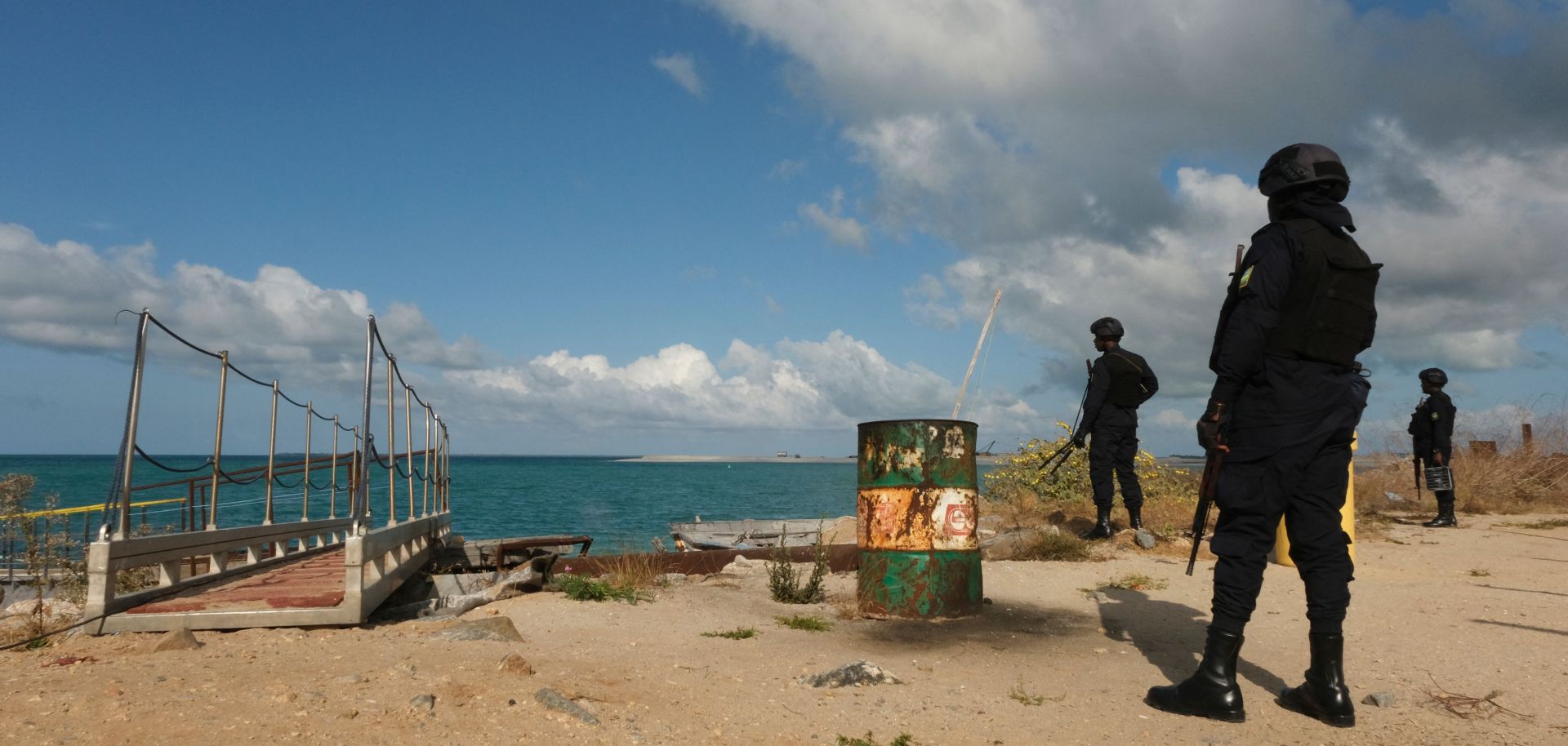
Rwanda will likely remain heavily involved in counterterrorism efforts in Cabo Delgado, which is driven by a combination of security, political, and economic incentives. Rwanda remains at the forefront of aiding Mozambique's counterterrorism efforts in Cabo Delgado, especially after SADC forces withdrew from the region in July following the expiration of their mandate. By May, Rwanda had reinforced its troop numbers, increasing the contingent from 2,500 to approximately 4,500–5,000 soldiers, in an effort to possibly prevent the emergence of a security vacuum amid the SADC withdrawal. From a strategic standpoint, Rwanda is hoping that its involvement in combating ISM fighters in Mozambique will enhance Kigali's role as a key player in regional counterterrorism efforts, thereby strengthening its international image and reputation as a reliable security partner. By supporting countries facing instability, Rwanda is also hoping to build goodwill among its neighbors, thereby increasing its political influence in regional organizations such as the African Union. Similarly, a more active role in peacekeeping and counterinsurgency operations in other African countries could help Rwanda shape regional strategies and policies on security issues, particularly in Southern and East Africa. From an economic standpoint, Rwanda's proactive security role in Cabo Delgado can also attract international aid, investment and strategic partnerships, as global powers and organizations look for stable and capable African allies to collaborate with on security and development projects. Rwanda stands to economically benefit from its increased cooperation with Mozambique as well, by positioning Kigali to be among the first in line to capitalize on future economic opportunities and partnerships arising from the stabilization of Cabo Delgado, such as infrastructure and defense contracts. Given these potential benefits, Rwanda will probably stay engaged in counterterrorism efforts in Cabo Delgado, and will also likely continue to hand over liberated areas to Mozambican forces. But while Rwanda can provide further training and support offensives in the region, this may eventually require an even bigger presence of Rwandan troops on the ground.
- According to a July 17 report published by the Financial Times, TotalEnergies hired security guards from a company with ties to Rwanda's ruling Rwandan Patriotic Front party (RPF) to protect the site of TotalEnergies' LNG project in Cabo Delgado. The same report revealed that the French company had also hired another RPF-linked firm to build a solar plant for the project.
To help combat the growing ISM insurgency, Mozambique will also continue to lean on neighboring Tanzania, as well as the European Union and China. Tanzania, for its part, will probably also maintain a military presence in Mozambique (albeit smaller than Rwanda's) to help fight ISM, which has previously carried out incursions and recruitment efforts in southern Tanzania. Tanzania has deployed about 300 troops to Cabo Delgado's northern Nangade district, but greater efforts by both Tanzania and Mozambique to further secure their shared border could also be crucial to disrupting insurgents' cross-border networks and limiting ISM recruitment efforts. Indeed, bolstering border control measures may help prevent the movement of fighters and resources between Tanzania and Mozambique, reducing the insurgents' ability to regroup and expand their influence across the region. Additionally, Mozambique will likely rely on the European Union's training mission, as well as cooperation with countries like China, which has previously conducted joint drills with Mozambican and Tanzanian forces.
- In May, Mozambican President Filipe Nyusi also announced that Tanzanian troops deployed under the SADC mission would remain in Mozambique to help curb ISM.
- In May, the European Council extended its military training mission in Mozambique until June 30, 2026. In June, the European Union also considered doubling its funding to Rwanda's military mission in Cabo Delgado from 20 million euros to 40 million euros, but certain member states have continued to block the disbursement, citing Rwanda's involvement in the ongoing conflict in eastern Democratic Republic of the Congo, where pro-government forces are battling Rwandan-backed M23 rebels.
- From July to mid-August, China conducted joint drills with Mozambican and Tanzanian forces in Tanzania, which focused on enhancing counterterrorism capabilities through land and sea operations.
Mozambique's dependence on external military support, combined with ISM's asymmetric warfare and the need for comprehensive local strategies to combat the insurgency, will test the country's ability to stabilize Cabo Delgado and effectively counter militant threats. As the ISM insurgency continues to evolve, the Mozambican military's ability to lead stabilization efforts without a long-term foreign presence will serve as a critical test for the country's security capabilities. Given the increased presence of Rwandan troops, ISM will likely intensify its focus on asymmetric warfare by conducting more hit-and-run, ambushes and sophisticated IED attacks. This will, in turn, force Mozambican and Rwandan troops to adapt their own counterterrorism strategies, which have so far been focused on combatting more conventional attacks like coordinated assaults on towns. In the longer term, however, successfully curbing ISM activity will require a more holistic, as opposed to purely militaristic, approach that both incorporates local communities and addresses the underlying drivers pushing people in Cabo Delgado to join the insurgency. Such a strategy would ideally integrate community policing, create mechanisms to gather intelligence from local populations, and establish trust-building initiatives to improve the government's ties with Cabo Delgado residents — particularly the marginalized Mwani and Makua people, who are more vulnerable to ISM recruitment. But Mozambican security forces, who have a history of committing human rights violations against Cabo Delgado residents, remain unlikely to adopt such a community-focused approach, at least in the medium term.
The mismanagement of Cabo Delgado's natural gas reserves risks further fueling jihadist recruitment by deepening wealth disparities in the region, raising the likelihood of ongoing ISM attacks that could worsen economic challenges in the region by disrupting development projects and discouraging investment. Once completed, TotalEnergies' Mozambique LNG Project and ExxonMobil's Rovuma LNG Project are expected to generate substantial revenue for the Mozambican government through taxes, royalties and profit-sharing agreements, positioning the country to earn billions of dollars annually and significantly boost its economy. But ensuring these profits are equitably distributed among local communities in Cabo Delgado will prove challenging, as corrupt officials often misallocate resources or favor certain companies, which has left wealth concentrated among a small elite, with the rest of the population reaping little economic benefit from their home's vast natural resources. This history of political graft and mismanagement dims the prospects that Mozambique will shift toward a more transparent and inclusive development strategy in Cabo Delgado, which will in turn further alienate local communities and continue to drive jihadist recruitment. An increase in recruits would strengthen ISM, likely leading to more frequent and sophisticated attacks that could further destabilize localities within Cabo Delgado. This scenario would also raise the risk of more ISM incursions into southern Tanzania. Continued disruptions to development projects in Cabo Delgado could discourage investment as well, deepening the region's economic challenges.
