
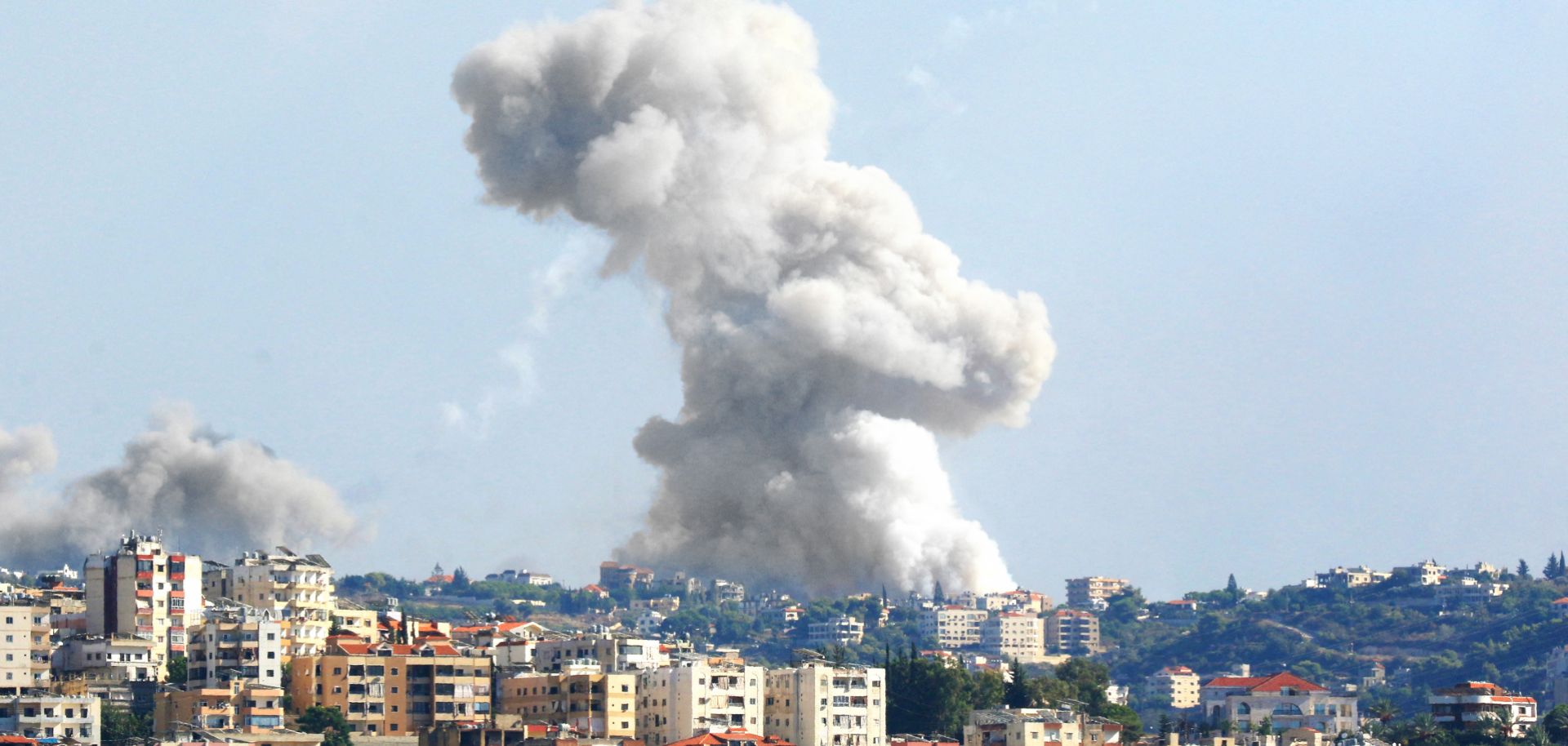
The growing intensity and geographic scope of cross-border strikes between Israel and Hezbollah are increasing the likelihood of full-scale war and an Israeli invasion of Lebanon. On the morning of Sept. 23, Israel launched a widespread wave of airstrikes against Hezbollah targets across Lebanon including in the Bekaa Valley, a Hezbollah stronghold northeast of the Litani River in Lebanon. According to an initial count by the Lebanese Ministry of Health, the Israeli strikes killed at least 365 people, including women and children, and injured over 1,000 — marking the deadliest exchange between Israel and Hezbollah since their 2006 war. Earlier the same day, the Israel Defense Forces (IDF) issued evacuation warnings to over 80,000 Lebanese civilians, telling them to evacuate if their homes stored Hezbollah weapons, according to the Lebanese Telecommunications Company Ogero. These actions follow the barrage of over 100 rockets that Hezbollah launched into Israel on Sept. 21, which saw the group target the suburbs of Haifa for the first time since 2006, as well as the Ramat David Airbase, resulting in dozens of injuries and material damage.
- In its Sept. 21 attack against Israel, Hezbollah also used heavier rockets for the first time, labeled as Fadi-1 and Fadi-2. The group revealed these were surface-to-surface rockets that are more destructive than the Katyusha rockets Hezbollah typically fires, and were used to overwhelm Israeli air defenses.
The escalation comes as both Hezbollah and Israel are trying to coerce the other and signal an ability to become more aggressive amid the United States' inability and/or unwillingness to force Israel to de-escalate. This round of Israeli escalation is aimed at influencing negotiations and an eventual diplomatic settlement, seeking to coerce and compel Hezbollah to retreat north of the Litani and accept Israel's conditions for any potential cease-fire, including separating the Lebanese front from the Gaza front. Israel intends to degrade Hezbollah's capabilities by launching wide-scale attacks, while forcing civilians to flee southern Lebanon by targeting residential areas where Hezbollah allegedly stores munitions and rockets, rendering those unlivable. This tactic is similar to Hezbollah's pressure on northern Israel, which has forced thousands of Israeli civilians to evacuate from their communities, in a bid to coerce the Israelis to reach a cease-fire to end their war with Hamas in Gaza. Israel can expand its airstrikes and targeting of Hezbollah officials, demonstrating that it can weaken the group without resorting to a full-scale war. But Israel is also showing it is prepared to launch such a war if needed to push the group out of southern Lebanon and enforce a buffer zone. Reports suggest that the United States, while worried about a full-blown war between Lebanon and Israel, understands the logic behind Israel's ''escalate to de-escalate'' strategy, hinting that the White House is unwilling and/or unable to force Israel to stand down.
- In a Sept. 19 speech, Hezbollah's chief Hassan Nasrallah emphasized that no amount of Israeli pressure would make Hezbollah abandon its front against Israel in support of the Palestinians amid the ongoing Gaza war, showcasing the group's willingness to extend the conflict.
The intensifying conflict will lead both sides to increase the scope and scale of their strikes against one another, with Israeli cities like Haifa and Tiberias and Lebanese cities like Beirut, Tyre and Sidon becoming routine targets. With the erosion of the post-2006 rules of engagement, both sides will likely fight an open-ended conflict without red lines until an eventual settlement, or an Israeli ground operation. The Israelis will aim to continuously intensify strikes in areas of southern Lebanon and the Bekaa Valley, including towns and cities farther from the borders, to degrade Hezbollah's capabilities and weapon storage sites all over Lebanon. In addition, the IDF will likely continue its campaign of assassinations against senior Hezbollah military officials, including with strikes in Beirut, to further disrupt the militants' command and control. In retaliation, Hezbollah will attack areas of Israel that have not been hit before, including those in central Israel, and major Israeli cities like Haifa and Tel Aviv more frequently, as well as major Israeli military sites across the country. Hezbollah will also utilize its rocket arsenal to try to deplete Israel's air defense supplies and, in turn, further signal increased risks to Israel's physical security.
- After their 2006 war, Hezbollah and Israel tacitly agreed to rules of engagement that established if any side attacked the other, the response would be proportionate. For 18 years, these unwritten rules of engagement, alongside UNSC resolution 1701, kept Hezbollah and Israel from significantly escalating against each other, despite several minor border clashes that occurred during this period. But both sides' adherence to these rules has steadily eroded since the outbreak of the Gaza war in October, with the latest escalation confirming that Hezbollah and Israel are no longer trying to keep their exchanges proportionate.
The geographic expansion of the tit-for-tat strikes will likely displace both Israeli and Lebanese civilians and, despite some avenues for de-escalation, a mass casualty attack by Hezbollah would likely embolden Israel to launch a ground invasion in Lebanon. In the near term, both sides will likely intensify efforts to destabilize the security landscape by conducting longer-range strikes against one another, while avoiding ground maneuvers. These efforts will be aimed at breaking their rival's political will to continue this phase of escalation by creating unbearable conditions in their respective territories, portending mass civilian displacement from both northern Israel and southern Lebanon. Sustained military pressure could result in an eventual diplomatic breakthrough as both Hezbollah and Israel be. come increasingly war-weary, or if there are developments in Gaza, like a permanent cease-fire. But should a Hezbollah attack result in mass civilian or military casualties during this round of open-ended, tit-for-tat widespread strikes, the IDF and Israeli government will feel compelled to accelerate their plans for a ground incursion, sensing that this would be the only way to attempt to stop Hezbollah attacks on Israel and establish a buffer zone. Given that the United States did not clearly oppose Israel's round of escalation following Hezbollah's Sept. 21 attacks near Haifa and the Ramat David Airbase, U.S. support for an Israeli ground invasion could intensify in the wake of such a deadly Hezbollah assault, especially if major Israeli cities like Haifa and Tel Aviv are targeted. This means that the Israelis would feel emboldened to launch such an incursion, knowing that the United States would keep its supply line of weapons and ammunition intact during the resulting conflict.
