
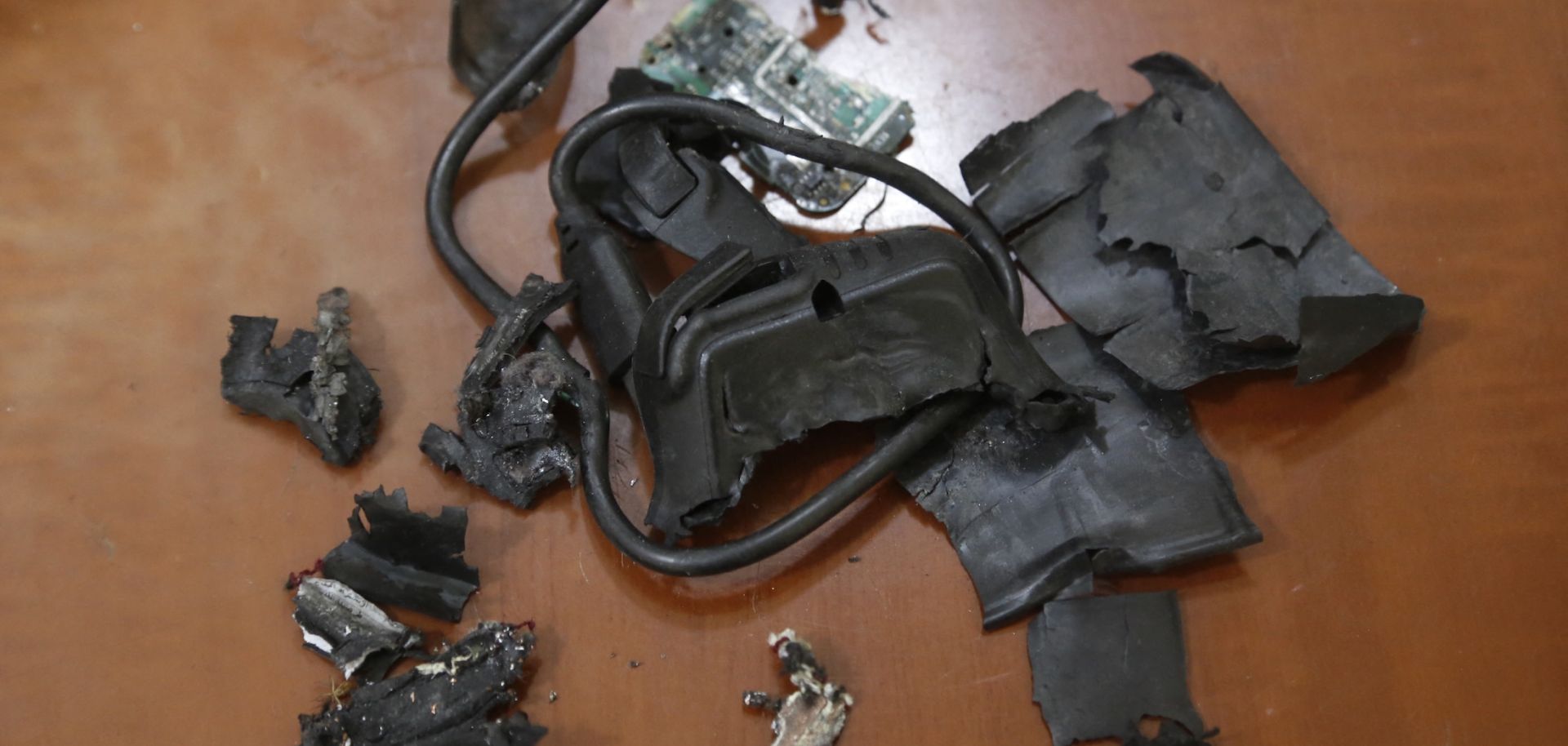
Israel's attacks on Hezbollah's communications likely signal a steady shift toward a more intense Lebanon campaign, one that will include both escalated covert action and air power as the Israelis prepare the groundwork for limited ground incursions and a larger invasion that will become more likely after the Nov. 5 U.S. election. On Sept. 17-18, thousands of pagers and two-way radios used by Hezbollah members exploded across Lebanon and Syria, injuring more than 3,000 and killing at least 37 people. Israeli intelligence reportedly planted explosives in the devices before they were delivered to Hezbollah about five months ago. On Sept. 19, Israel Defense Forces announced it would begin strikes on southern Lebanon to destroy Hezbollah's ability to strike Israel as IDF Chief Herzi Halevi approved updated war plans against the Shiite militant group. Hezbollah chief Hassan Nasrallah meanwhile vowed Sept. 19 to continue to fight Israel despite the attacks.
- The attacks represent the largest covert action against Hezbollah since the Gaza War started last year when Hezbollah began a solidarity campaign against Israel alongside Hamas. But they took place in a broader context of increased Israeli covert escalation, which has included the assassinations of key Hamas, Hezbollah and Iranian officials and Israeli airstrikes in areas that, pre-Oct. 7, would have been considered likely to trigger a regional war, including with Iran itself.
- Initially, Israel planned to deploy the devices at the beginning of a long-awaited ground invasion to disrupt communications and demoralize Hezbollah, but Israel reportedly sped up the timeline after fearing that Hezbollah had uncovered the plan, forcing Israel either to use the devices or lose them.
- Senior Hezbollah officials were reportedly unharmed in the attacks, which wounded thousands, including civilians, and killed at least two children. Iran's diplomat to Lebanon was also lightly wounded.
- The attacks' timing came as the Israeli government on Sept. 17 officially added the war goal of returning displaced Israeli residents to the northern border. Israel has long informally said it wants a buffer zone not only to reduce Hezbollah's range into Israel but to prevent Oct. 7-style infiltrations in the north. On Sept. 18, Defense Minister Yoav Gallant said that the center of the war's gravity was shifting to the north as Israel moved its 98th Brigade, an airborne unit, to the north from Gaza. The move contributes to the build-up of armored forces already stationed there, like the Golani Brigade.
The attacks have temporarily disrupted Hezbollah's communications and ability to command and control its forces effectively, but the militant group will adapt and find new means of continuing the fight with Israel while carrying out a purge to prevent further covert attacks. Nasrallah had ordered militants to abandon their cellphones earlier in the year due to concerns the Israelis could infiltrate them for targeting and tracking. Without pagers or cellphones, Hezbollah has relied on older means of communication, including open-air radio using coded messages, couriers and landlines. The group is likely to further insulate itself from technologies susceptible to Israeli sabotage and digital monitoring by reverting more fully to these older methods of communication. While less effective, these methods will be more difficult for Israel to spy on or sabotage. This shift toward older communication technologies may reduce Hezbollah's ability to respond rapidly to Israeli infiltration and covert action, but is unlikely to significantly degrade Hezbollah's ability to coordinate wide-scale retaliation against Israel or counterattacks against an Israeli invasion. Meanwhile, Hezbollah is likely to conduct an internal probe into how the covert attack was conducted, rounding up Lebanese civilians and its own fighters in an attempt to root out collaborators.
- Hezbollah military chief Fuad Shukr, who was assassinated in Beirut in late July, was reportedly killed after his cellphone received a call from Israeli intelligence luring him into a building that was then destroyed.
- Even without more advanced communication systems, like other militants, Hezbollah has other means to ensure command and control. In Gaza, where Israel controls the ground, Hamas has adapted to military pressure by reportedly abandoning most electronic communication to avoid being tracked, relying instead on handwritten messages and an elaborate system of personal communication to prevent the IDF from tracking down Hamas leader Yahya Sinwar, who despite being in hiding is compelled to communicate with Hamas mediators abroad as part of hostage talks with Israel.
Israel will likely increase its pace of operations to wear down Hezbollah's defensive capabilities, including covert operations, air and artillery strikes and probing actions by troops on the ground, to try to force a Hezbollah withdrawal, but will also prepare the region for a full invasion if those efforts fail. As Israel aims to weaken Hezbollah's resolve to continue its solidarity campaign with Hamas, it will take advantage of the declining tempo of operations in Gaza to deploy more air and artillery power into southern Lebanon to weaken Hezbollah's expansive network of bunkers, demoralize its fighters, destroy launchers and erode Hezbollah's ability to damage a possible Israeli ground invasion. This increase in operations is likely to take weeks as Israel also builds up ground forces on the border necessary to credibly threaten an invasion. Airstrikes are likely not only in Lebanon but also in Syria, where a recent ground raid by Israeli commandos aimed to destroy part of Hezbollah's ability to build precision-guided missiles near Lebanon. Isolated Israeli commando raids into Lebanon might also occur, but would be riskier due to Hezbollah's greater border security. In carrying out these and other operations, Israel will continue to remain open to a diplomatic settlement with Hezbollah that would see the group withdraw from the Israeli border and end fighting, as Israel would prefer a political solution compared to opening up another front after nearly a year of conflict in Gaza and stepped up operations in the West Bank.
- IDF doctrine prioritizes force protection, meaning it is unlikely to rapidly launch a ground operation into southern Lebanon before conducting expansive air and artillery strikes that significantly weaken Hezbollah's position there. Although Israel has been conducting airstrikes at scale since Hezbollah entered the Gaza War, the Israeli Air Force has refrained from a bombing campaign in Lebanon reminiscent of its operations in Gaza prior to Israeli ground invasions in late October 2023, focusing instead on retaliation and targeted attacks against Hamas fighters and leaders.
- Israel has three armored brigades, which would likely all be used for a major ground invasion of Lebanon. Two are already on the northern front, but as recently as Sept. 13, the third — the 401st as part of the 162nd Division — remained in Gaza battling Hamas in Rafah. Its forces would need to be resupplied and retrained before a major attack on Lebanon.
- Israel's air power needs in Gaza have significantly diminished as Hamas has been driven underground, with the IDF recently declaring that Hamas as a fighting force had ceased to exist and that the remaining fighters did not pose a conventional military threat to Israel. While Israeli airstrikes continue in the strip, they are substantially less common than earlier in the war, freeing up the IAF for escalation in Lebanon.
Rather than being deterred, Hezbollah will likely respond with its own increased pace of attacks on Israel, worsening security conditions in Israel. Hezbollah has strong political incentives to respond to Israel's Sept. 17-18 attacks and other brazen operations like Shukr's killing, as it does not want to be seen as not responding to Israeli actions that cross established rules of engagement. Despite Israel's conventional military power, Hezbollah's political-military structure is capable of absorbing casualties and it has a land corridor to Iran for weapons resupply, meaning its fighters and leaders are likely to hold out against this escalated Israeli military campaign. Hezbollah will in fact likely expand its strikes in the course of this campaign to major IDF bases and Israeli cities more regularly, often in response to Israeli attacks as Israel continues its campaign to degrade Hezbollah's capabilities in the south. Hezbollah might also attack from Syria in an attempt to expand the frontline to the Golan Heights and complicate Israeli plans for invasion.
- Hezbollah retains an arsenal of drones, and of rockets and missiles that some put at anywhere from 120,000 to 200,000; it can also produce more in Iran, Lebanon and Syria. As a result, its arsenal is likely still well-stocked for escalation despite nearly a year of clashes with Israel.
Major Israeli ground operations will likely not commence before a clear signal of U.S. support, something that the White House will not provide until at least after the Nov. 5 elections. Both the IDF and the Israeli government want to ensure the U.S. support they rely on will not be held up by White House disapproval of ground operations in Lebanon and that Washington will continue to shield Israel from censure at the U.N. Security Council. This means that Israel is unlikely to carry out a ground invasion of southern Lebanon until after the U.S. presidential election to avoid congressional and presidential anger that might jeopardize its timely resupply. Moreover, Washington is unlikely to provide such backing without sufficient Hezbollah provocation against Israel that would justify a ground invasion, like a Hezbollah attack that causes significant Israeli casualties or a Hezbollah ground incursion into Israel. Once the November election is settled, however, Israel would be freer to use up its remaining political capital with the outgoing Biden administration. It could lobby for approval of ground operations. Or it could launch such operations without explicit backing and await a new administration, especially one led by former President Donald Trump — who has a much stronger relationship with Israeli Prime Minister Benjamin Netanyahu.
- Israel conducted a three-week operation in Gaza in 2008-09 during the lame-duck George W. Bush administration in December and January. This operation was in part timed to take advantage of this changeover, with Bush seen as friendlier to such an operation and incoming President Barack Obama less receptive. Though Biden has made it clear he opposes escalation in Lebanon, Israel may perceive it can reset relations with the United States even if Biden is handing over power to a Harris administration, especially if Israel believes it can achieve many of its key war goals before the next president takes office Jan. 20, 2025.
