
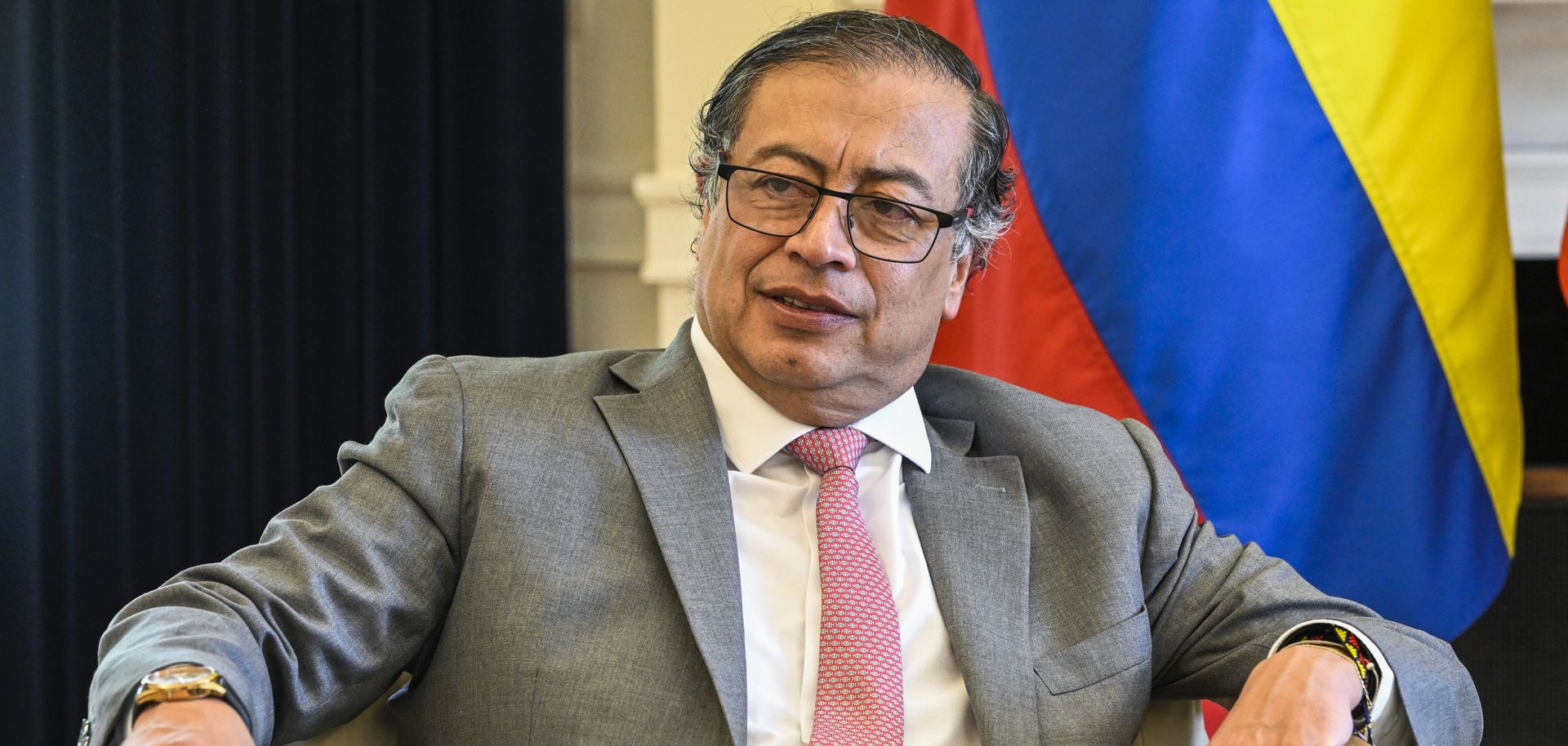
The Colombian government's struggle to pass legislation highlights President Gustavo Petro's challenges to reach a consensus with lawmakers and civil society, which will likely lead him to resort to decrees or referendums before the end of his term in August 2026, exposing businesses to regulatory uncertainty and risks of unrest over the next two years. On June 19, the president of Colombia's Senate, Ivan Name, announced that the government-promoted education reform would not be put to a final vote, after demonstrations organized by the Colombian Federation of Educators (or Fecode, in Spanish) led the government to backtrack from a deal reached with the opposition, ultimately impeding a new agreement before the end of the legislative session on June 20. With a minority coalition in Congress and an opposition that often deployed tactics to delay or block government proposals, Petro's supporting base had to make concessions so significant to secure support from right-wing politicians that even some allied legislators and social movements opposed the final terms of the education bill.
- Petro's reform agenda has so far had mixed results: the Senate rejected a healthcare reform on April 3 and the education reform on June 19, but approved a pension reform on June 14, while a Chamber of Deputies' commission on June 18 passed a watered-down labor reform in the first of four required votes for it to become law — showing how hard it has been for the Petro administration to secure consistent support in the legislative for its reform agenda.
- Petro's disapproval rating reached 60% in April up from 57% a year before, while his popular approval was down to 34% from 35% over the same period, according to pollster Invame's most recent data. The same survey showed that 58% of those polled disagree with the president's social reforms while 34% approve of them, strongly correlating with popular assessment of the president himself.
The government's mixed results in passing reforms came as Petro approaches the end of the first half of his term, during which he faced political and popular opposition to his reform agenda amid corruption scandals, street demonstrations, and obstacles to his peace talks with the country's main guerrilla and criminal groups. Petro took office for a single, four-year term in August 2022 (Colombian presidents have been barred from running for reelection since 2015). But his ''honeymoon period'' as president was short-lived, with his disapproval rating quickly rising from 20% to 40% in just his first two months in office on the back of popular discontent with the economy, rifts between the president and more moderate members of his cabinet, and a broader perception that his ambitious reforms were radical. Since then, Petro's policy agenda has continued to come up against significant opposition in Congress, forcing him to face the prospect of his term ending in August 2026 without making the structural changes he promised on the campaign trail. Amid ideological differences with his allies, Petro dissolved the ruling coalition in April 2023. In March 2024, he controversially proposed changing Colombia's constitution to (among other things) bypass the legislative's opposition to his reforms, which sparked backlash. Since taking office, Petro has reshuffled his cabinet 12 times to purge ministers who he claimed declared support for his reform agenda but did not act to implement it; on June 14, he announced the intention of another cabinet shakeup as not all of his reforms were progressing in Congress as he expected. Throughout his term, Petro has also faced scandals (including a corruption one involving his son and an ongoing allegation of wiretapping the Supreme Court), occasional anti-government demonstrations (such as mass protests against his healthcare reform in April 2024), and continued setbacks to his flagship ''Total Peace'' strategy amid slow-moving cease-fire negotiations with guerrilla groups, which have only further undermined Petro's political capital.
- Petro's proposal for a new constitution revolves around eight main topics: complying with the historic 2016 peace agreement with armed groups in Colombia, in which both parties agreed on a definite cease-fire and measures around rural reform and political representation, among others; improving living conditions and healthcare access; improving access to water and basic income, especially for older Colombians; recovering the objectives of the country's 1991 Constitution, which prioritized public education and agrarian reform; fighting against the climate crisis and supporting decarbonization efforts; guaranteeing monetary policy while maintaining the independence of the central bank and prioritizing employment and economic output; a territorial reorganization to include historically excluded regions; and separating politics from private financing and reforming the judicial system.
- Colombia's political establishment (including five former presidents) broadly opposes Petro's proposed constitutional rewrite, which critics fear he will use to reintroduce the possibility of presidential reelections so he can seek to stay in power after this term ends in August 2026. The proposal for a constitutional assembly will almost certainly fail as it would require the approval of Congress, the Supreme Court and the Colombian electorate — an unlikely prospect given Petro's growing unpopularity.
Petro will likely seek to implement policy changes via decrees as Congress will become less willing to negotiate in the next legislative session, ultimately fueling regulatory uncertainty throughout the remainder of his term. As he enters the second half of his term, Petro's policy priorities will include pursuing a new healthcare reform, as well as legal changes to judicial and mining rules, while ensuring the final approval of his diluted labor reform. Further cabinet reshuffles will likely occur before Petro's term ends in August 2026, but such internal shakeups are unlikely to ease the president's struggles in approving these reforms, as the legislative gridlock Petro ran up against in his first two years in office is poised to only worsen in his final two years. Petro will continue to seek transactional deals with lawmakers in Congress in which he offers them political concessions in exchange for their support on diluted versions of his proposals. But his leverage in these negotiations will increasingly wane as lawmakers begin turning their attention to the 2026 presidential race and preparing for Petro's succession. This will be exacerbated by the fact that the incoming president of the Senate, Efrain Cepeda, has been one the most vocal critics of the Petro administration, which further indicates that the next legislature will be even less open to compromise once it convenes on July 20. Against this backdrop, Petro remains unlikely to secure political support for his reforms, as well as the required Supreme Court authorization to pursue his proposed constitutional rewrite. Over the next two years, Petro will thus probably instead resort to presidential decrees or populist strategies, such as plebiscites and referendums, to implement at least parts of the policies he has failed to push through Congress, in an attempt to leave his mark before he leaves office in 2026. That approach, however, will fuel regulatory volatility and legal uncertainty amid erratic policymaking and a likely judicialization of policy matters, as Petro's political opponents will likely challenge the constitutionality of his presidential decrees before Colombia's high courts. Given the polarized political environment, even the bills that Petro has already gotten through Congress could face legal hurdles, including his pension reform, which critics claim was passed in a rushed legislative process that did not allow for an adequate debate. The president's political capital, meanwhile, will likely further erode as corruption investigations involving Petro and his inner circle, as well as legal developments stemming from the political scandals that have emerged during his presidency, will receive widespread media coverage.
- Petro's upcoming policy priorities include passing a new healthcare reform; expanding and reducing costs of public services (including, electricity, gas and water); changing the judicial system to make it more effective and closer to the population while fighting impunity; establishing a new mining code to prohibit new coal exploitation titles, recognize the difference between artisanal and subsistence mining, and prioritize the state's role in strategic minerals' exploration; and ensuring the final approval of his diluted labor reform, which includes the formalization of rural workers, expanded social security for delivery workers, improved job stability, reduced working hours, and boosted overtime and night hours pay.
