
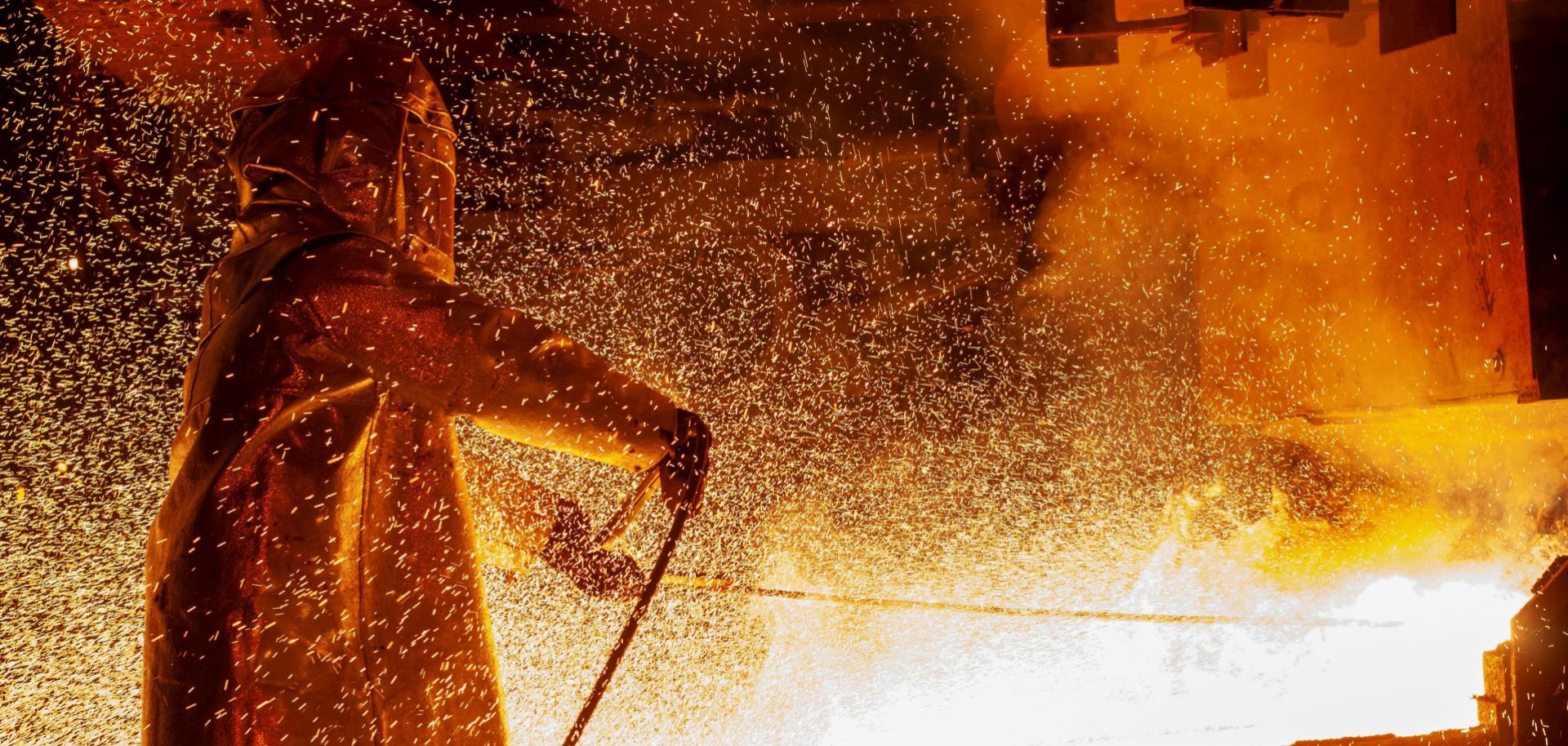
A worker uses a furnace during the nickel smelting process at Indonesian mining company PT Vale Indonesia's smelting plant in Soroako, South Sulawesi province, on March 30, 2019.
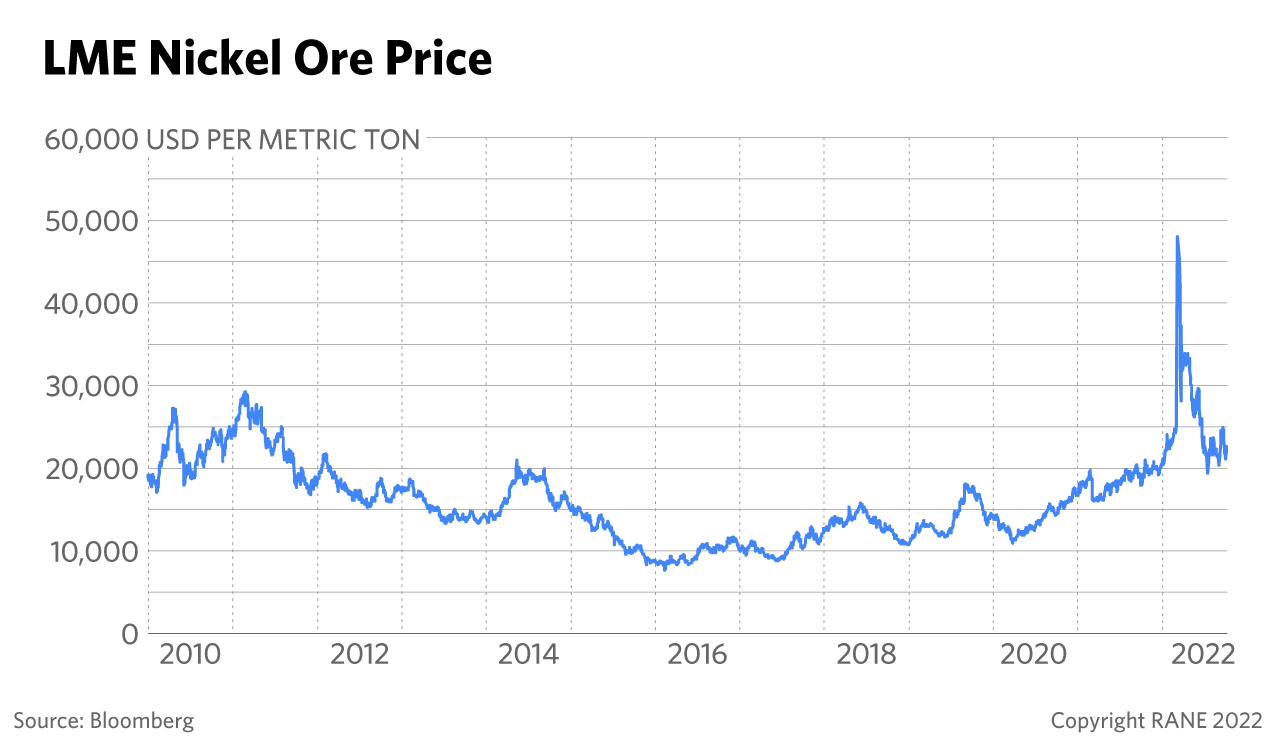
Indonesia is attempting to capitalize on the growing global demand for high-quality refined nickel to attract investment and secure a foothold in the key metal used in developing electric vehicles. If Indonesia overcomes the sizable technological and economic limitations in ramping up its nickel production, it could shift how the world obtains high-quality refined nickel products. As the world increasingly looks to electric vehicles (EVs) to help reduce carbon emissions and combat climate change, Indonesia is looking to take advantage of its large reserves of nickel — a key component used in EV batteries — to attract foreign direct investment (FDI) and boost economic growth. Demand for refined nickel is expected to skyrocket in the coming years in tandem with global demand for EV batteries. In a statement issued on Sept. 7, Brazilian mining company Vale said it expected global annual demand for the metal to increase by roughly 44% to nearly 6.2 million tons per year by 2030. To keep up with this projected boom, the Indonesian government is working to attract foreign investors to its mining sector by reducing access to its nickel products via export bans, while simultaneously making it easier and cheaper for foreign firms to operate in the country via reduced taxes and regulations. And there are signs this strategy is working, given the wave of the new mining deals Jakarta has inked:
- In August, the U.S.-based EV manufacturer Tesla signed an estimated $5 billion worth of contracts with Chinese-owned suppliers in Indonesia to obtain refined nickel products for EV batteries. Tesla is also currently in talks with the Indonesian government to construct a nickel refining and production facility in the Southeast Asian country.
- In March, German carmaker Volkswagen and U.S. carmaker Ford also signed agreements with Indonesian nickel firms worth an estimated $2.5 billion.
- In May, China's CNGR Advanced Material announced that it will invest in three projects in Indonesia, worth roughly $420 million each, to produce 40,000 tons per project of nickel matte used in making nickel for batteries. In 2021, the Chinese company also announced plans to invest in two nickel operations on Sulawesi with an estimated capacity of 60,000 tons.
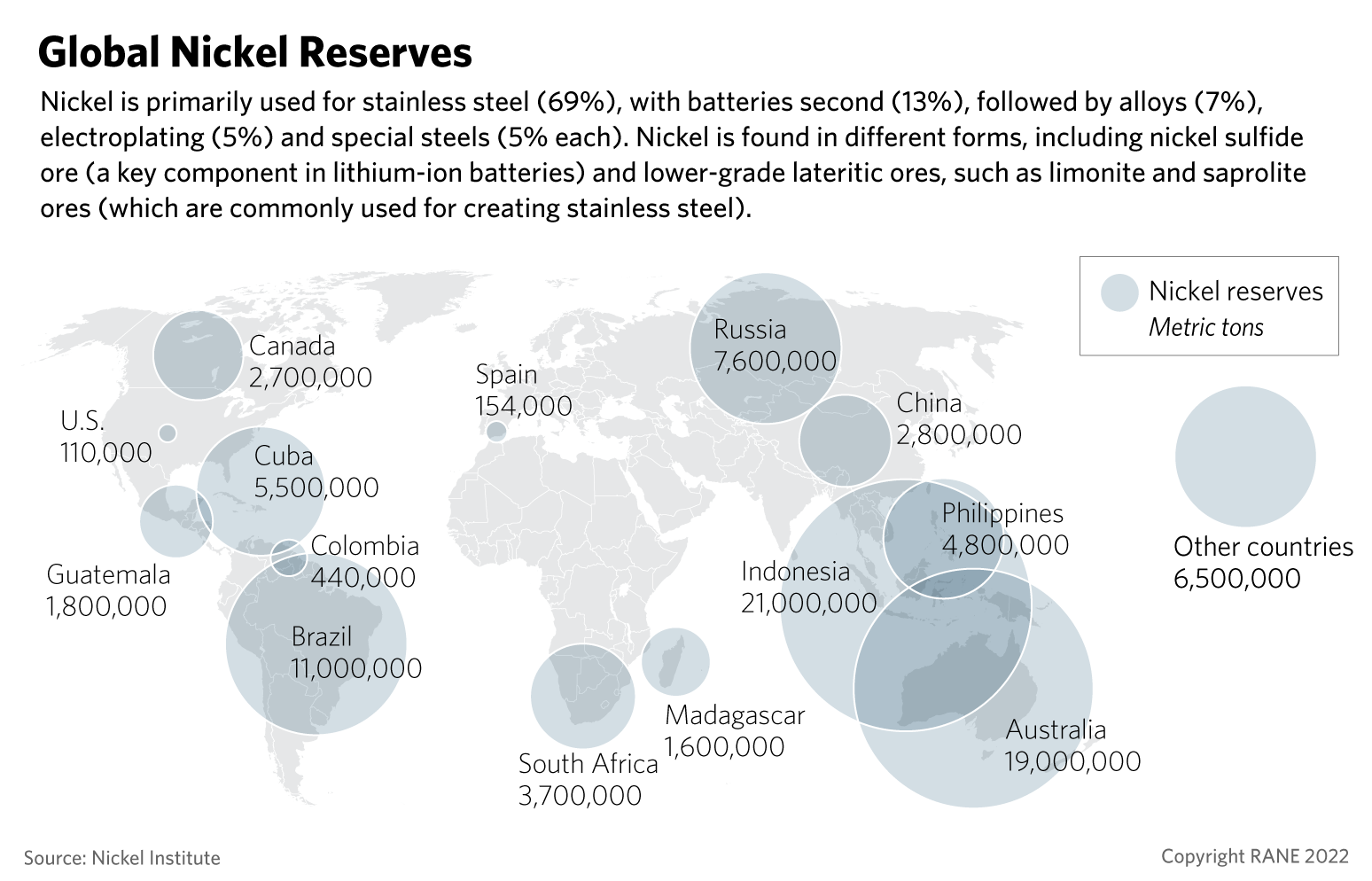
By banning raw ore exports and offering incentives like tax breaks, the Indonesian government has sought to attract more foreign investment to develop its mining and refining industry and move up the value chain. For decades, Indonesia has exported raw, unrefined ores, or refined metal bars, but has not used those ores to also export higher value, finished products. The country is the world's largest producer of nickel, but most of that nickel is used for stainless steel since it is of lower quality and purity than the nickel used for higher-end applications like EV batteries. This has risked impeding the country's economic development and ability to advance up the value chain by keeping it trapped as a producer of only low-value mineral exports. In an effort to avoid falling into this trap, Indonesian President Joko ''Jokowi'' Widodo's government banned raw ore exports in 2014 and also enacted a measure requiring raw nickel ore refinement to take place within the country. The effort is aimed at attracting more foreign investment interest in developing Indonesia's mining and refining industry, as well as creating more jobs and ultimately increasing the sector's capacity to export more refined and higher-value products, like higher-quality refined nickel matte used to make batteries. The government has also hoped to use the expected influx of foreign cash to improve infrastructure in the often remote and under-developed areas where the country's nickel deposits are located (like Sulawesi and Mulaku).
- In June, South Korea's LG Solutions announced plans to invest $6 billion in constructing a smelter and factory to produce more nickel cathodes for batteries on Java. The company also plans to invest $300 million to open a new nickel mine on Halmahera — part of Maluku Island, an island just west of New Guinea.
- Domestic Indonesian demand for nickel ore rose 30% to 100 million tons in 2022 amid an expected increase in domestic refining with a wave of new smelters coming online.
- President Jokowi has also announced plans to impose bans on copper, tin, bauxite and gold exports by 2023 or 2024 as part of his government's greater push to position Indonesia for long-term economic growth by developing the country's domestic mining sector.
The global need for nickel as part of the EV transition is offering Indonesia an opportunity to use FDI to invest in underdeveloped parts of the country and become a more important player in the global EV trade. Indonesia is currently responsible for 30% of the global mined nickel output, followed by the Philippines at 12.8% and Russia at 11.2%. The Philippines has not banned raw nickel ore exports or made similar moves to force investment in developing refining capabilities, and sanctions related to the Russia-Ukraine war have made it toxic for Western nations to work with Russian suppliers for key goods. This lack of competition has given the Indonesian government the opportunity to pair the export ban with its 2021 ''friendly to everyone'' policy that offers incentives for foreign companies seeking to invest in the country's mining sector. Under this policy, the government introduced tax breaks, reduced red tape and increased access to minerals to further entice companies to invest in key industries like nickel development.
- In 2021, Indonesia liberalized almost all sectors of the economy for foreign investment. Indonesia's Omnibus Law on Job Creation, which was introduced in 2020, is also expected to streamline business competitiveness by lowering taxes and reducing legal and regulatory barriers when the law comes into force in 2023.
- In 2022, the Philippines opened 12 new nickel mines and subsequently became the number-one exporter of raw nickel ore to China.
But despite the government's pro-investment approach, the need for massive infrastructural improvements could still prevent Indonesia from fully seizing the coming surge in nickel demand. Indonesia's major refineries are concentrated in Java, Indonesia's economic hub and most populous island. The majority of Indonesia's nickel deposits, however, are located on less developed islands like Maluku and Sulawesi. This means boosting the country's nickel output to keep up with rising demand will require either increasing the size and capacity of those existing refineries on Java, or building new ones near the mines on the islands of Sulawesi and Maluku. The latter of those options will be no easy feat, given that compared with Java, Maluku and Sulawesi have much sparser and poorer infrastructure that can make it difficult to build connected industries. Business operations on these islands are also often exposed to disruptions caused by natural disasters like earthquakes or typhoons. This means that the operators of the new refineries and mining operations that are slated to be built on Maluku and Sulawesi may struggle to export their products in the short-to-medium term, due to the lack of roads and railways connecting both islands' ports to their nickel deposits.
- In 2018, an earthquake on Sulawesi created a tsunami that killed over 4,000 people and damaged roughly $1.2 billion in infrastructure, including bridges, homes, shops and roads.
- The existing rail network on the island of Sulawesi is being expanded, but the first phase of that expansion will not be completed until 2030.
Other technological, economic and political constraints could derail the development of Indonesia's domestic mining sector as well. Much of Indonesia's naturally-found nickel is comprised of lower-grade lateritic ores, which are great for stainless steel but require refining through operations like the new High-Pressure Acid Leaching (HPAL) process to become viable for higher-end products like the lithium-ion batteries used in EVs. HPALs' economic viability is still unclear due to potential construction delays and cost overruns, which means the push to export higher-quality refined Indonesian ore is not guaranteed to economically succeed. There is also the issue of President Jokowi being the main driver behind the government's raw ore ban and greater push to develop Indonesia's domestic mining sector. If Jokowi's strategy does not yield enough foreign investment or economic growth before the 2024 general election, Indonesians may elect a new leader who could return the country's focus to low-level exports and refining.
However, if Indonesia does gain foreign investment and scale refining processes like HPAL, it will change the global market's access to refined nickel. Such success would enable Indonesia to process lower-quality lateritic nickel ore to make it viable for higher-quality goods, which would free up more high-quality sulfide ore that is needed to supply the EV push. This would increase the amount of viable refined nickel supplies, which would, in theory, decrease the input cost for EV batteries and thus make EVs more widely available and affordable as battery production scales up. This would also open up new suppliers for Western companies unable to work with Russian nickel producers.
- On Sept. 22, PT Vale Indonesia signed an agreement with Zhejiang Huayou Cobalt to build a second HPAL facility to extract nickel from the lateritic ore mined in Indonesia.
