
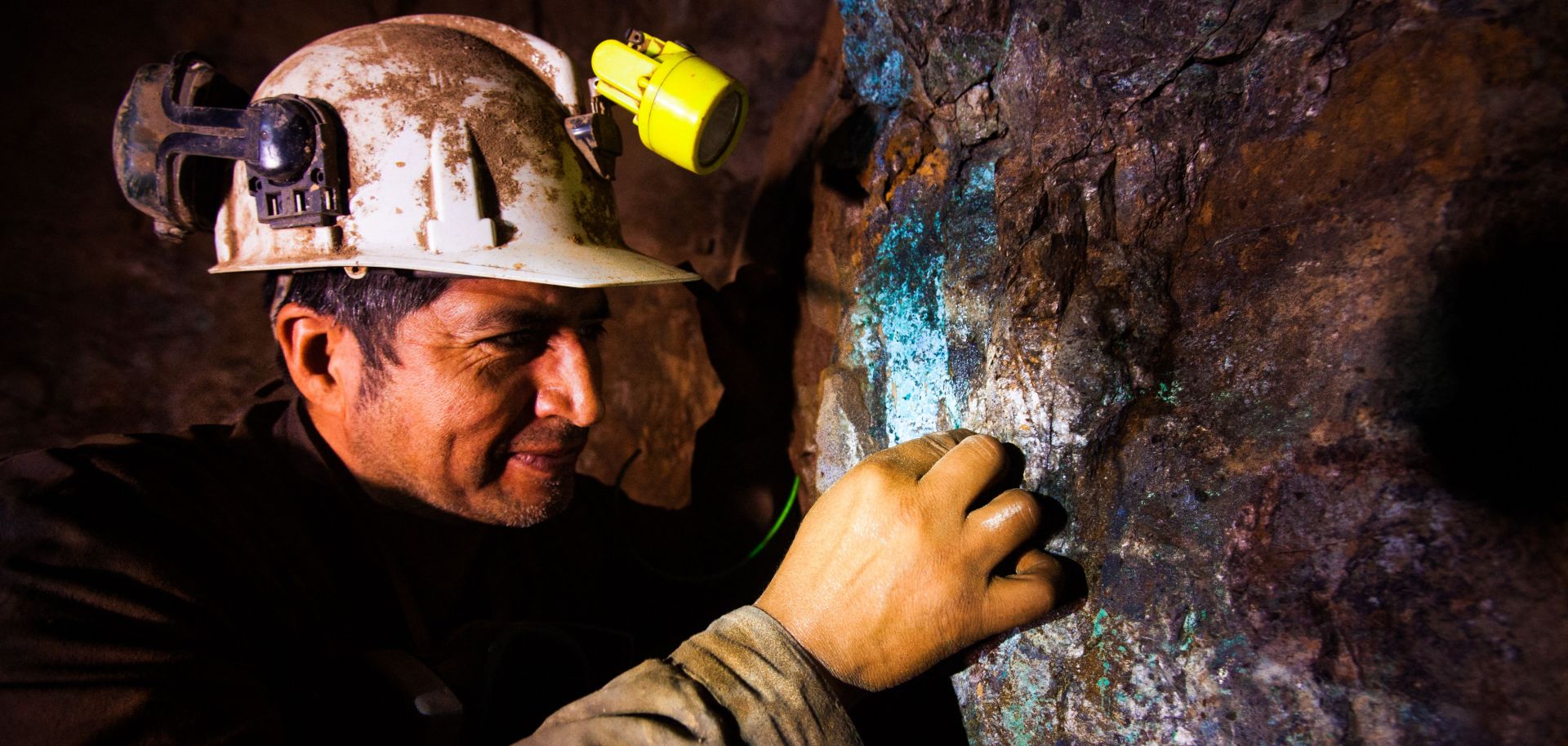
A miner works at the Kiara copper mine in Chile on June 22, 2021.
Chinese stimulus measures will likely ensure sustained demand for copper and iron ore despite the global economic downturn, enabling South American exporters such as Chile, Peru and Brazil to maintain high social spending and stabilize their governments. The Chinese government is estimated to spend over 3 trillion $450 billion in stimulus spending in the second half of 2022, including $75 billion in infrastructure funding, $160 billion in pledged State Council lending, and roughly $220 billion in possible advanced issuances of 2023 special purpose bonds quotas to local governments. The stimulus measures will mainly be directed towards infrastructure, including projects in the clean energy, transportation and information technology sectors.
China’s stimulus initiatives will likely maintain demand for copper and iron ore even as large economies, including China itself, enter into a period of slower economic growth. Western countries are currently experiencing high energy and food prices, which will lead to a reduction in domestic consumption and low economic growth. Even a mild recession in developed countries would likely result in a contraction of tourism, remittances and other forms of capital investment into South American economies, threatening their economies. However, China’s stimulus measures are likely to maintain government and private sector spending on initiatives that require significant amounts of metals and minerals, which many South American countries produce. This demand will probably remain steady even if the Chinese economy slows down, as the government will be incentivized to release more stimulus in an effort to bolster growth, which will benefit South American countries' exports of raw materials and somewhat mitigate the impact of the Western economic slowdown.
- Disruptions and sanctions related to the ongoing Russia-Ukraine war are driving inflation to above 8% in heavily industrialized countries, such as Europe and North America, with the energy and agricultural sectors being among the most impacted.
- China accounted for 54% of the world's copper consumption and imported 70% of global iron ore exports in 2020. As copper is the preferred metal for electrical wiring, it is in high demand in China, where companies use it for wiring in real estate, clean electricity projects and the industrial sector. Similarly, iron ore is converted into steel and used to build infrastructure and housing.
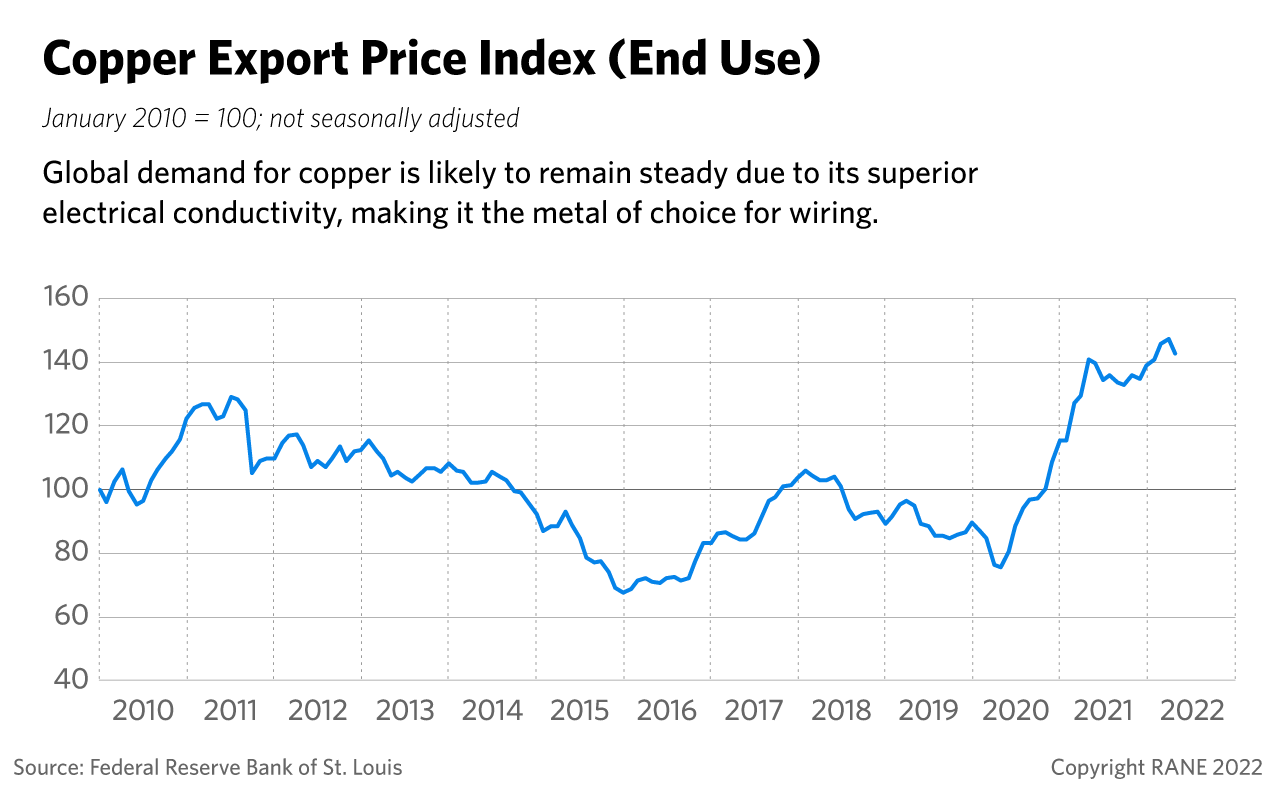
- The price of copper and iron ore has risen substantially over the previous 18 months due to high demand in the construction and electrical industries following the COVID-19 slowdown, which initially depressed demand.
While Chinese stimulus is likely to maintain a baseline demand for copper and iron ore, the government’s efforts to curb the spread of COVID-19 could lead to fluctuations in demand. China has been undertaking an aggressive strategy to curb the spread of COVID-19, which led to months-long lockdowns in Shanghai and Jilin, along with dozens of other industrial and commercial hubs across the country. In recent weeks, China’s “zero-COVID” policy has led to decreased demand for South American metals and minerals as the commencement of the latest round of infrastructure activity was delayed. Though most lockdowns in Shanghai and elsewhere have been lifted, China’s continued zero-COVID policy and the emergence of a more contagious variant of Omicron, BA.5, increases the likelihood of new lockdowns and subsequent dips in demand for copper and iron ore, creating continued risk for South American exporters.
- China’s copper imports decreased 17.2% in 2021 compared with record imports in 2020. While the first quarter of 2022 saw an increase of 2.6% when compared with the previous quarter, copper imports were down 8.8% in March when lockdowns were implemented. 55% of China’s copper imports come from Chile and Peru.
- For iron ore, Chinese imports reduced 3.9% year-on-year in 2021 and 8.5% in the first quarter of 2022 compared with the first quarter of 2021. Brazil is China’s second-largest source of iron ore imports, after Australia.
In Chile, continued Chinese demand for copper could finance President Gabriel Boric’s campaign promise of increased social spending, and potentially the implementation of a new constitution. Copper exports are the backbone of Chile’s economy, accounting for roughly 10% of the country’s GDP and a majority of its export revenue. The government of President Gabriel Boric was elected on a platform that promised sweeping structural changes and now faces growing popular demand for increased state financing, including curbing high global food and fuel prices as well as debt forgiveness programs. The administration will likely rely heavily on export revenues from the copper sector to fund increased social welfare spending, even amid a potential global economic downturn. Additionally, Chile will vote on a new constitution on Sept. 4 that would demand increased public spending to guarantee people’s access to water and healthcare. Efforts to increase taxation of copper companies amid strong Chinese demand for the metal could serve as a crucial funding source for increased social welfare spending. However, any potential fluctuations in Chinese demand due to renewed COVID-19 lockdowns could limit the availability of that cash flow. This could force the Boric administration to issue abnormally large amounts of public debt to pay for the increased social services that Chileans are demanding, which would, in turn, constrict future spending.
- Chilean Finance Minister Mario Marcel proposed a tax reform on July 1 seeking to increase royalties on companies producing over 50,000 tonnes of copper per year in an effort to fund expanded social programs. The increased royalties include a 1% to 2% tax for companies that produce between 50,000 and 200,000 tonnes of copper each year, and up to 4% tax on companies that annually produce upwards of 200,000 tonnes.
- If approved in a Sept. 4 referendum, Chile’s constitution will increase environmental regulations on mining companies. The proposed draft also strengthens land rights for Indigenous groups, which could add another factor that would negatively impact mining operations near Indigenous communities.
In Peru, Chinese demand for copper could help the government avoid amassing large amounts of public debt while implementing food and fuel subsidies, potentially helping to stabilize the government. Peru is the world’s second-largest exporter of copper, which accounts for 4% of the country’s GDP. President Pedro Castillo’s government has faced widespread anti-inflation demonstrations in recent months and is under mounting pressure to decrease the price of food and fuels. These demands will likely only rise should Western nations enter into a recessionary period and result in decreased tourism to Peru from the world’s wealthiest countries, which would likely heavily impact the South American country’s economy. Sustained Chinese demand for Peruvian copper coupled with the metal’s high price is likely to help Peru’s government address demand for increased spending without the need to take on large amounts of foreign debt. Fiscal responsibility will likely help maintain investor confidence in the country, further insulating the Peruvian economy from the potential effects of a Western-driven recession. The export revenue from copper may also enable Castillo to ensure his political survival amid congressional attempts to oust him, using the funding to lower the cost of essential goods.
- The rising cost of living in Peru spurred a strike and protest movement in early April, followed by a transit worker strike in late June. Protesters installed roadblocks that disrupted traffic nationwide during both strikes. The inflation-induced unrest in recent months has also seen looting in rural areas and the deaths of at least two civilians.
- Peru's constitution allows the legislature to impeach a sitting president with a majority vote for various reasons, including a vague clause that allows the legislature to declare the presidency vacant if the current occupant suffers from permanent ''physical or moral incapacity.'' Since taking office in July 2021, Castillo has already faced two congressional impeachment votes.
In Brazil, the government will use sustained Chinese demand for iron ore to increase cash transfers and social spending, potentially decreasing the reliance on foreign debt. Brazil is China’s second-largest source of the mineral behind Australia, and is reliant on continued Chinese demand — exports of the mineral comprise just under 3% of Brazil’s GDP in 2021. In recent years, Brazil has struggled to fund its high fiscal spending due to the spread of COVID-19 and demand for a state-sponsored cash transfer program, amassing a large public debt. Both leading candidates running in Brazil’s October presidential election have pledged to increase social spending via a cash-transfer program and poverty alleviation initiatives. This means Brazil will almost certainly see increased public spending regardless of who wins. Sustained Chinese demand for the mineral could help provide some funding for expanded social services, especially if Brazil’s Congress lifts the country’s constitutionally-mandated spending cap as legislators appear keen to do. Additionally, export revenue from iron ore could potentially give the state additional revenue that would reduce the need to borrow in debt markets. But sporadic decreases in demand for iron ore due to China’s COVID-19 lockdowns make this less likely.
- Brazilian President Jair Bolsonaro and former Brazilian President Luiz Inacio Lula da Silva are the two frontrunners for the country’s October presidential elections. Bolsonaro has championed a cash-transfer program called Auxilio Brasil that both candidates have promised to maintain, despite a constitutionally-mandated spending cap.
