
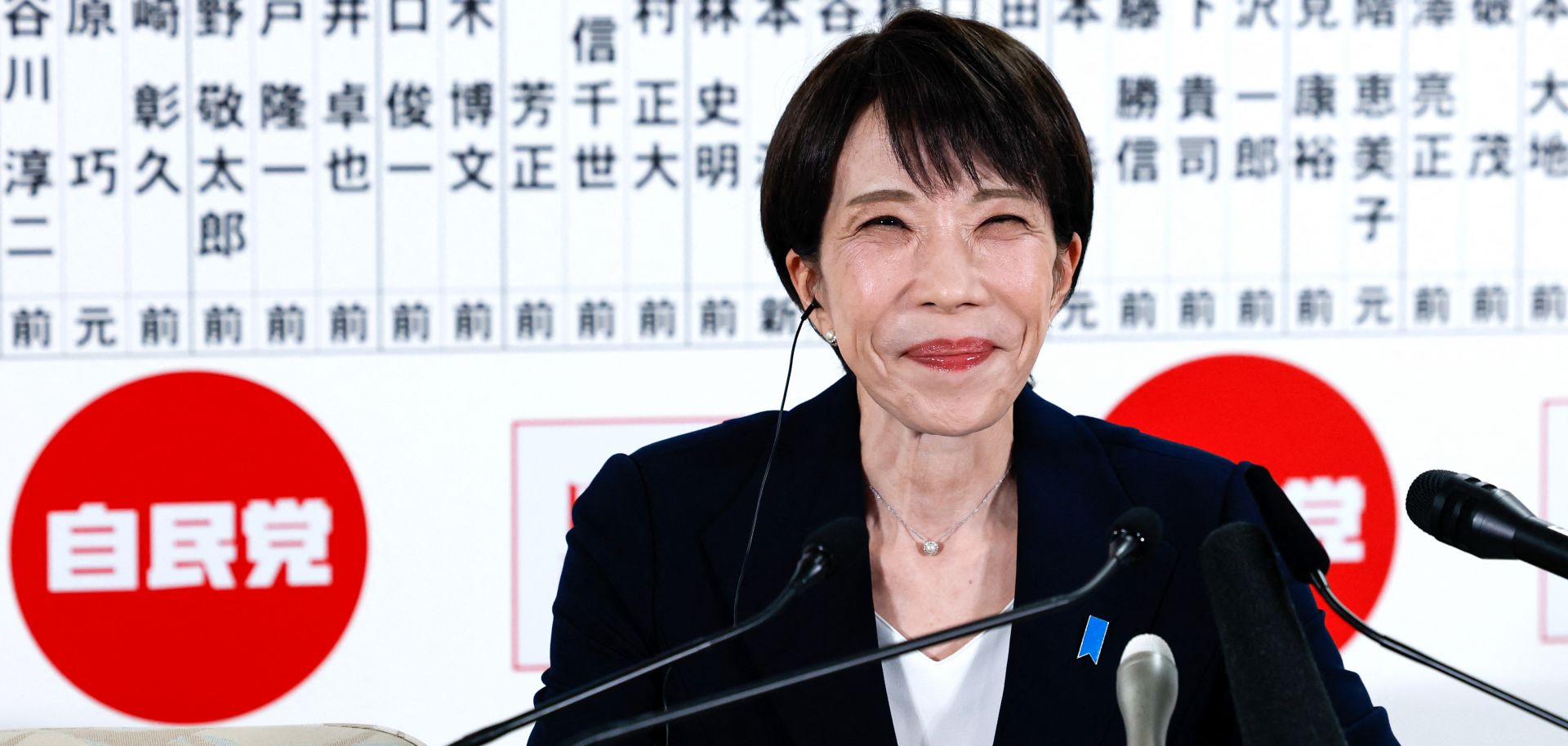
A major electoral victory by Japan's ruling party will enable conservative Prime Minister Sanae Takaichi to expand social and defense spending, ease lingering concerns about political instability and bolster ties with the United States, though at the expense of those with China and potentially South Korea. Takaichi's ruling Liberal Democratic Party (LDP) won 316 out of 465 seats in the Feb. 8 snap elections for the lower house of the Diet, giving it a rare supermajority and the largest seat share in its party history. When combined with its coalition partner, the Japan Innovation Party, the LDP-led government now has 352 seats. Opposition parties, on the other hand, heavily underperformed. The main opposition Centrist Reform Alliance (CRA) — formed in recent weeks by a merger of the center-left Constitutional Democratic Party and former LDP coalition partner, the center-left Komeito — saw its seat count drop from 167 to just 49. Other opposition parties across the political spectrum also generally underperformed, with the exception of the right-wing nativist party Sanseito, which rose from two to 15 seats. The Diet will convene a special session on Feb. 18 to vote on the next prime minister, which Takaichi is guaranteed to win. The session will also hand control of the powerful lower house standing committees to the LDP and belatedly commence work on the 2026 budget, which is due by March 31.
- The LDP's large victory marked a significant reversal of political fortunes. The October 2024 snap lower house elections saw the LDP hemorrhage seats following a political finance scandal, rising cost of living concerns and complaints from conservative voters that the party had moved too far to the center. As a result, the LDP was forced to rule as a minority government. Following more seat losses in the July 2025 upper house election, Premier Shigeru Ishiba resigned, paving the way for Takaichi to assume power with a commitment to shift the party further to the right.
- The next lower house election is not due for four years, and the LDP held its triennial party leadership election in October 2025, when Takaichi became LDP president, so the next party election is not due until October 2028. This, in theory, gives Takaichi just under a three-year leadership window, absent an unforeseen crisis, such as a corruption scandal that removes her from office or triggers early elections.
- The LDP's sweeping victory can be attributed to Takaichi's success in leveraging her high personal approval rating to secure votes for the party and win back voters who supported conservative opposition parties in the previous October 2024 elections, as well as the CRA's failure to maintain CDP supporters after their platform merger.
At home, the resounding win will enable Takaichi's government to expand social spending and maintain corporate lobbying links, supporting the LDP's revival as a party and easing concerns about Japan's political and leadership instability. Takaichi will be freer to pursue her aim of raising social spending to alleviate cost-of-living concerns and stimulate economic growth, such as implementing the food consumption tax cut she announced weeks before the ballot. However, she will face financial hurdles. The Bank of Japan is committed to slowly raising interest rates, and the country's historically conservative financial ministry will be hesitant to fund new spending solely through debt. Markets will also react negatively if her policies are perceived as undermining fiscal stability, as demonstrated by the market turmoil preceding the Feb. 8 election amid worries over how she would finance her proposed tax cuts. But if Takaichi can successfully navigate these constraints, she will encounter few political obstacles. Though the LDP still has only a minority in the upper house, its lower house supermajority will allow it to override upper house vetoes on legislative matters. Even on the budget, the upper house would only be able to delay an LDP proposal for one to two months, not to obstruct it entirely. Relatedly, the LDP is keeping its coalition with the JIP, but the latter's ability to extract policy concessions from the LDP is now significantly weakened, reducing the likelihood or at least the expedience of preferred policies, like a 10% reduction in Diet seats and a bill to make Osaka, the power base of the JIP, a secondary political capital. Meanwhile, though political finance reform has been a weight around the LDP's neck since the November 2023 slush fund scandal, and especially since the LDP's October 2024 snap election loss, Takaichi's win means the LDP will be largely able to ignore opposition calls to ban corporate donations, maintaining a lobbying avenue for domestic and foreign business interests to the ascendant LDP. This will also help revive the LDP's fortunes as Japan's most well-funded political party. Additionally, the LDP's electoral victory will ease business concerns about near-term instability in the ruling government and in the office of the prime minister, helping attract foreign investment.
Under Takaichi, Japan will seek to expand the role of and funding for its military, which will worsen relations with China and potentially South Korea, but her government will bolster U.S. defense ties and reduce the risk of new U.S. tariffs. On foreign policy, Takaichi's victory will embolden her to expand defense spending and relax legal restrictions on the role of Japan's traditionally national defense-focused military, the Self-Defense Forces — moves her government could undertake to some extent without changing the constitution, a more arduous process. Similarly, she will seek to ease Japanese restrictions on arms exports, both to revive Japan's defense industrial base, weakened since World War II, and to help arm regional neighbors in pushing back against Chinese territorial pressures in the South China Sea and around Taiwan. Relatedly, in a television interview following her election victory on Feb. 8, Takaichi hinted at visiting Yasukuni Shrine, a memorial for Japan's war dead where some World War II-era war criminals are interred. And on Feb. 9, in her first LDP press conference after the election, she committed to pursuing constitutional revision to expand the military's role. Both developments suggest Japan-China relations, long hindered by historical grievances and contemporary policy divergences, will steadily deteriorate under Takaichi, with Beijing imposing more frequent and/or larger trade barriers against Japan, including export bans on industrial inputs like rare earths. Additionally, these developments risk weakening long-standing economic and nascent military cooperation with South Korea, which also has longstanding historical grievances with Japan, despite some overlap in economic policies and shared concerns about Chinese and North Korean military brinkmanship. These same developments, however, portend improved U.S.-Japan relations, particularly given U.S. President Donald Trump's demands that allies and close partners expand defense spending and jointly contain Chinese security threats. If Takaichi can successfully navigate her March visit to Washington to meet with Trump, who has strongly praised Takaichi's leadership, it will also help reduce the likelihood of new U.S. tariffs on Japan, as the LDP's lower house supermajority will allow Takaichi to quickly approve in the Diet key U.S. trade demands.
- Constitutional reform will remain an uphill battle, as it requires a two-thirds majority in both houses of the Diet and a national referendum to pass. Despite public support for national defense, the composition of constitutional revisions will be hotly contested, particularly regarding overseas military interventions and the role of nuclear weapons. Nonetheless, the political conditions for Takaichi attempting reform are better than at any point in decades.
