
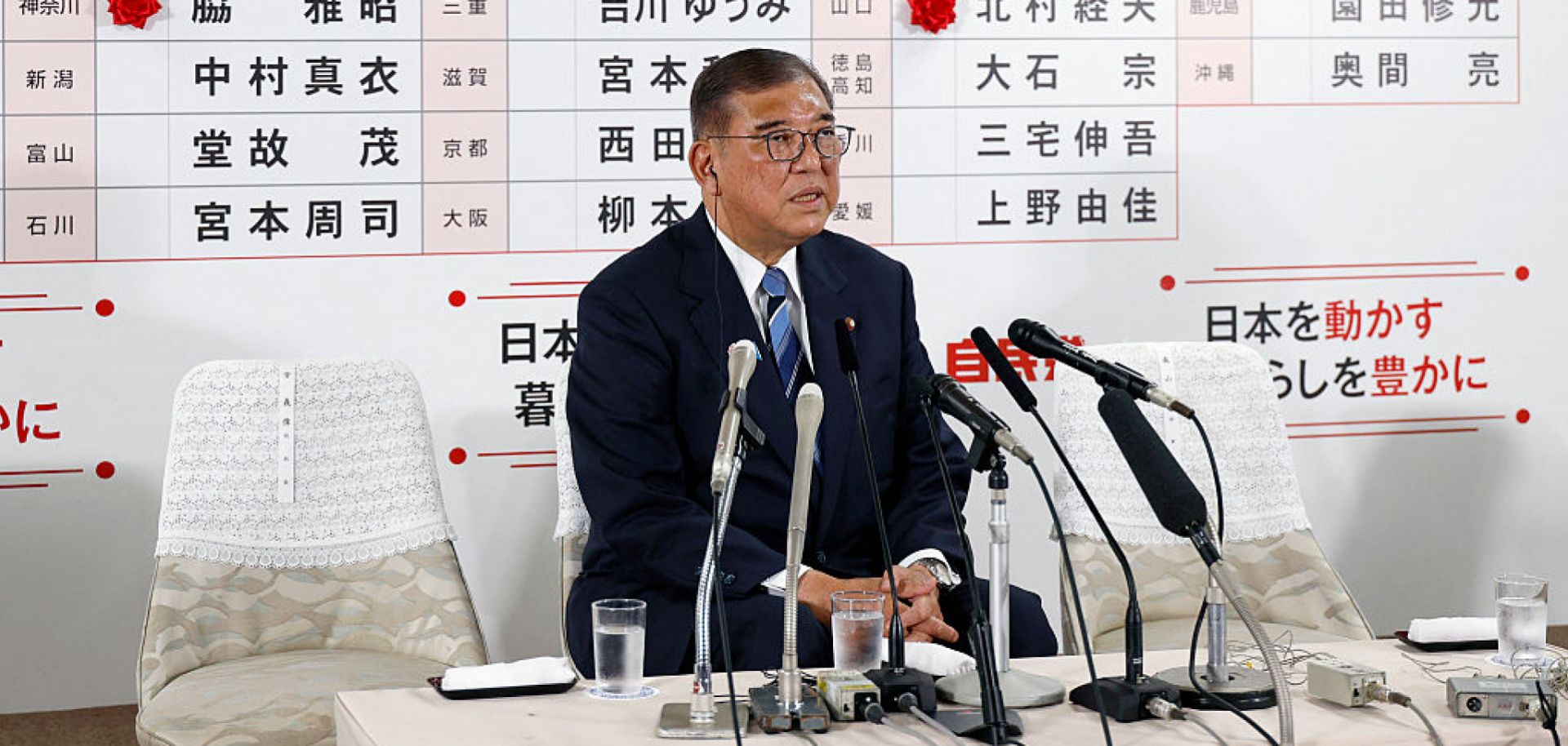
In Japan, the ruling party's defeat in recent upper house elections raises the likelihood that Prime Minister Shigeru Ishiba will eventually be removed from office, even if not immediately. It will also worsen domestic policy gridlock and could weaken Tokyo's position in trade talks with Washington. On July 20, Japanese citizens voted to fill 125 out of 248 seats up for election in the House of Councillors, the upper house of Japan's parliament, the Diet. The ruling Liberal Democratic Party (LDP), a conservative umbrella party, won just 39 seats (a loss of 13), while its minor coalition partner Komeito won just 8 seats (a loss of 6). Combined with upper house seats not up for election, this puts the ruling coalition at just 122 seats, leaving it three seats shy of a majority. Among Japan's several opposition parties, right-wing groups took the lion's share of seats lost by the LDP-Komeito coalition, while left-wing opposition parties lost ground, albeit more modestly. Late on July 20, Prime Minister Shigeru Ishiba stated he had no plans to resign, adding that the LDP was still the largest party in parliament and ''must fulfill our responsibility to the nation'' to solve challenges like rising consumer prices and ongoing trade tensions with the United States. LDP Secretary General Hiroshi Moriyama (second-ranked only behind Ishiba) added that a political vacuum should be avoided, echoing pre-election language that implies Ishiba should stay in office. However, Taro Aso — LDP party elder and leader of the party's conservative wing, which stands in opposition to Ishiba and other moderates — said he ''couldn't accept'' Ishiba staying on as prime minister and met with his advisors on the evening of July 20 to discuss the possibility of Ishiba's resignation. Meanwhile, Yoshihiko Noda, the leader of Japan's largest opposition party, the Constitutional Democratic Party of Japan (CDP), said on July 20 that a no-confidence vote against Ishiba would ''certainly come into view'' if the prime minister chooses not to resign in the wake of the LDP's electoral defeat.
- The CDP did not lose ground, but it also did not increase its presence in parliament, with its seat count remaining unchanged at 22. Other left-wing parties also struggled to make gains. The progressive populist Reiwa Shinsengumi won three seats (bringing its total to six), and the Social Democratic Party saw no change, holding onto its two seats. The Japan Communist Party, meanwhile, won just three seats, a loss of four that brings its total to seven.
- The center-right, social-media-savvy Democratic Party for the People (DPFP), which campaigned on tax cuts for households, won 17 seats, bringing its total to 22 seats. The nationalist right-wing Sanseito, which leaned on anti-foreigner narratives during the campaign, won 12 seats, bringing its total to 14. Nippon Ishin, another right-wing party focused locally in the Kansai region (including Kyoto and Osaka), performed more modestly, winning seven seats, bringing its total to 19. The smaller, ultra-nationalist Conservative Party of Japan, which rejects Japan's World War II-era war crimes while opposing immigration and LGBTQ+ rights, also won two seats, up from none prior.
- Voter turnout for this election was 58.5%, a notable increase from the 52% of Japanese voters who participated in the previous upper house election in 2022. The proportional representation (party-list) vote showed the LDP receiving under 13 million votes, five million fewer than in the 2022 upper house election, while Komeito's party vote dropped from six million to five million, showing the diversification of party support away from the ruling coalition.
Ishiba's position is unstable, but disputes within the LDP and the opposition likely will help prevent his ouster for a few months. Despite calls by Aso and other LDP conservatives for Ishiba to resign to take responsibility for the electoral loss, the LDP's conservative faction remains politically weak after it lost more seats than any party faction in the October 2024 lower house elections. Aso could rally other faction heads and party elders around him to pressure Ishiba to step down, but this would likely require them settling on a compromise candidate to replace Ishiba in the LDP leadership election that would follow, and there are currently no signs of such a compromise. Moreover, ousting Ishiba before Japan can sign a trade deal with the United States would be bad for the party's reputation of being a stable, responsible steward of Japan, an image on which LDP leaders across the spectrum (including Aso) campaigned. As for the opposition, the CDP — the largest opposition party, whose support is necessary to pass a no-confidence vote — is unlikely to table such a vote until the next autumn Diet session begins (usually around late September, which is the most common time for these votes to be tabled). Additionally, the CDP performed poorly in the recent ballot relative to populist, right-wing opposition parties, and is thus likely in no hurry to trigger a lower house election, which Ishiba could threaten if he suspected a no-confidence vote was impending. For example, Ishiba threatened a lower house snap election in the months leading up to the July 20 upper house elections, and this is believed to have convinced the head of the CDP to back down from his earlier threats of a no-confidence vote. Thus, with conservatives weak and the opposition disunited on the merits of a no-confidence vote, Ishiba's position as prime minister is likely safe for at least the next few months.
- The upper house is traditionally the weaker of Japan's two-house Diet, with the lower house able to pass budgets and select prime ministers despite upper house objections. However, with the LDP-Komeito coalition running a minority government in the lower house, the upper house is stronger than usual, as it is harder for the lower house to gather the two-thirds majority necessary to override an upper house rejection of non-budget bills.
- Although unprecedented, there is a small chance that the opposition (which holds a majority in the lower house steering committee) could try to table a no-confidence vote during the mandatory post-election extraordinary Diet session on Aug. 1-5, which is primarily intended to fill new leadership roles in the upper house. However, this is unlikely due to the session's short duration (two days of which are on a weekend and thus likely empty), limited time for political scheming between then and now, and the requirement of all five opposition parties on the committee to vote unanimously.
The weakened LDP will try to broker policy compromises on a case-by-case basis, but more demanding right-wing parties will slow policymaking. With their strengthened upper house seat counts, the DPFP and Sanseito are now able to unilaterally propose bills to the Diet. This, combined with renewed confidence following their victories in both recent lower and upper house elections, will make the two right-wing parties more demanding in Diet negotiations with the LDP-Komeito governing coalition, as the latter's minority government status requires it to partner with at least one opposition party on every bill. Since the October 2024 lower house elections, the LDP has been successful at negotiating on a case-by-case basis to pass some policies and prevent outright paralysis, but emboldened right-wing opposition parties will test the LDP's patience and willingness to concede. Most difficult to accept will be the DPFP's preference for Japan to spend its way out of cost-of-living concerns (against the LDP's fiscal responsibility wishes) and Sanseito's anti-immigration bent, which counteracts the LDP's efforts to attract more foreign labor and tourism to alleviate the economic pains of an aging society. These policy tensions will worsen if the LDP tries to include the DPFP or Sanseito in its governing coalition in a bid to move out of minority government status in the lower house and preempt policy gridlock in the upper house.
Ishiba's uncertain future could also embolden the United States in trade talks, potentially forcing Japan to accept concessions on export restrictions or tariff relief. For the time being, Japan's ongoing trade tensions with the United States may prevent an LDP mutiny against Ishiba. However, the LDP's weakened influence in both chambers of the Diet and the ongoing threat of an opposition no-confidence vote may embolden the White House to be more demanding in trade talks, for example by getting Japan to accept voluntary export restrictions or only reduced (not removed) U.S. tariffs on automobiles, a key sector for Japan's economy. If Ishiba agrees to such concessions, it would stir controversy in Japan, where both houses of the Diet will need to approve any trade agreement reached with the United States. But while this could further reduce his long-term staying power as prime minister, Ishiba may spin the deal as merely the first stage in a multi-stage trade negotiation. Most parties in Japan (including the LDP) will also be eager to provide economic relief to households and businesses and thus are unlikely to block an inferior trade deal with Washington, even if opposition parties use it as a political cudgel against Ishiba and the LDP later on.
