
One key difference between conflicts and wars is time. Wars have definitive start and end dates; a conflict is open-ended. A conflict does not cleanly wrap up with a truce or treaty because the drivers of future wars remain in place. Wars are the expressions of such drivers; conflicts are the description of the circumstances in which these drivers exist. Conflicts are also harder to end, but one of the few things that can end a conflict is the passage of time. Eventually, one side or the other is worn out, its political will broken, its fighting abilities exhausted or circumstances changed so much as to make the conflict irrelevant. In Gaza, as war turns back into conflict, both sides now seek to weaponize time — and neither side has a clear path to leveraging it to victory.
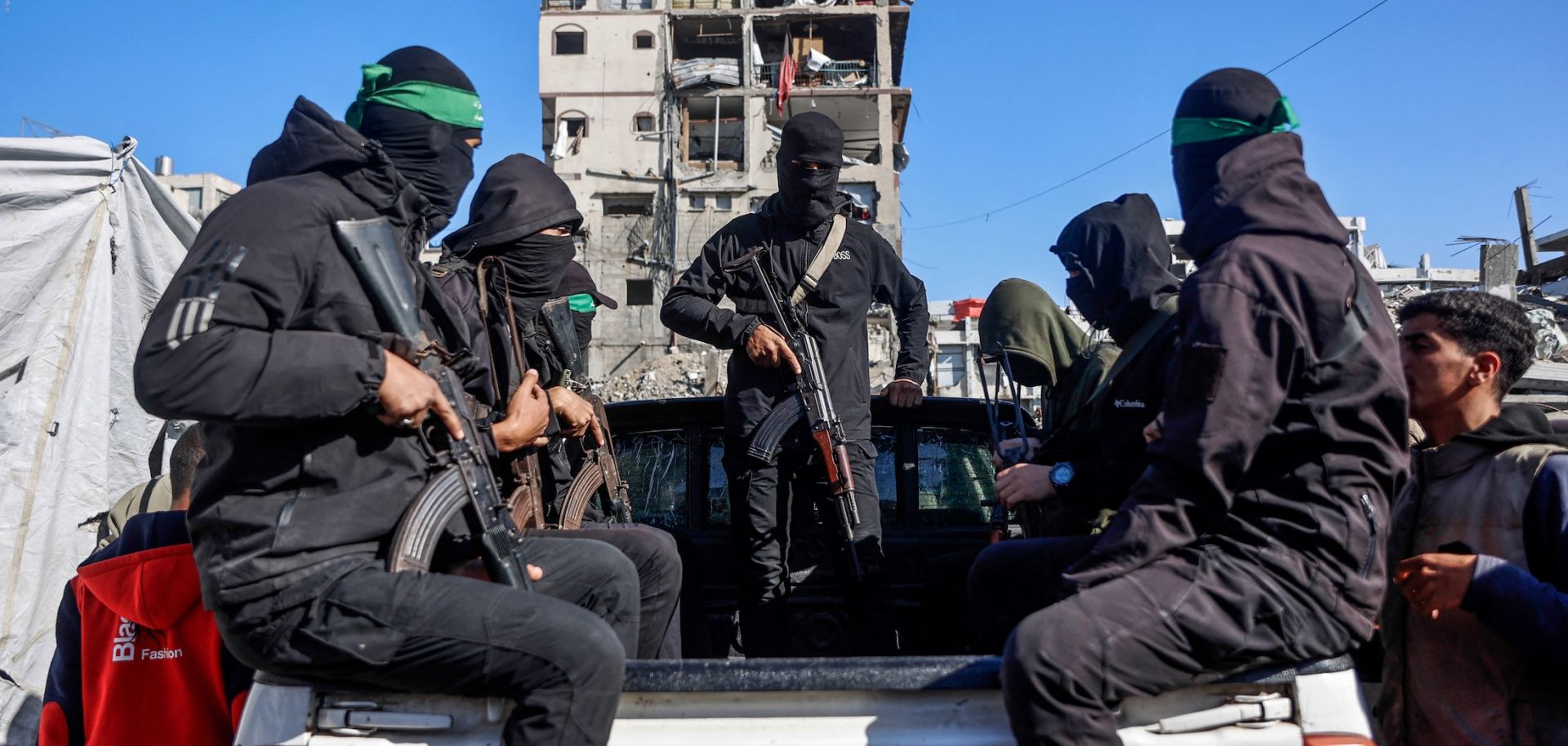
The war in Gaza is paused; the conflict between Israel and the Palestinians is not. Israel's armies now sit on the so-called "Yellow Line," occupying roughly half of the Strip. Hamas seeks to gather its battered fighters to attempt to govern the other half. Violations occur and few are optimistic about the future phases of the ceasefire, but few still call it a war either. The drivers of conflict have not ended with the truce. Israel wants Hamas out of Gaza permanently and to block the creation of a Palestinian state. Hamas wants to leverage its damaged but still entrenched position in Gaza into becoming the leader of the Palestinian national movement and eventually the leader of a future Palestinian state. This keeps them locked in conflict — and on an eventual path to war — but the victor will be the one who can win the battle for time.
What Drove the Old Wars — and What Might Drive the Next One
For Israel, Gaza has always been a frontier and an expendable piece of geography. Gaza has no religious significance to Israel, nor significant resources, nor even necessarily a suitable geographic buffer against Egypt (the Sinai is a much better one). During the 1948 war, it was not a prime objective for the nascent Israel Defense Forces. The two times Israel conquered Gaza before 2023 — in 1956 and 1967 — it eventually withdrew due to its marginal importance. By contrast, due to its religious importance and its geographic position as a barrier against Jordan, the West Bank has always been a greater imperative for Israel and has therefore long been the core of its expansionist strategy. Gaza, in comparison, is an issue to be managed. As the Strip's population increased, particularly in the 21st century, this management shifted to a hands-off one that kept Gaza isolated through border controls and deterred it with recurrent, short wars that typically took place via aerial strikes and limited ground raids.
For Palestinians, by contrast, Gaza has been an enclave to weather Israel's expansionism, to build up guerrilla forces to harass Israel's southern border and to raise the salience of the Palestinian cause for the international community to convince it to pressure Israel into abandoning its pursuit of the West Bank. Gaza is not the core of the Palestinian strategy either, but it was, before 2023, the most autonomous geography that allowed Palestinians to try to achieve nationhood.
Before 2023, Israel's focus on the West Bank and Palestinians' comparative weaknesses gave rise to the dynamic of rocket wars. After Hamas took power in Gaza in 2007, it shaped the Strip into a gigantic, if crude, arsenal, using its limited resources to construct a vast network of tunnels and thousands of rockets. Over short wars, Hamas and Israel traded blows, but Israel did not want to try to deliver a knockout blow, due to Gaza's relative unimportance and Hamas could not. The conflict simmered, erupted into war, saw international mediation and intervention and subsided back into conflict. This dynamic has not changed — and as a result, it appears probable that another formal war will eventually reassert itself.
A Diminished Hamas and a Hawkish, if Exhausted, Israel
But Hamas's vast missile and rocket arsenal is exhausted. Its battalions have been decimated and are full of new leaders with uncertain military qualities. Much of its political and military leadership has been killed. Hamas has grown increasingly isolated. Even once-friendly states like Qatar are skeptical of supporting it to return to rule in Gaza. Iran, its prime champion, has been humbled by the loss of its key allies in Syria, the decimation of Hezbollah in Lebanon and the bruising it endured from Israel and the United States in June. Hamas faces the imperative of adaptation, shorn of its rockets and foreign partners, for the conflict that is now unfolding.
Israel, too, has fundamentally changed since October 2023. Its population is more hawkish and aggressive toward Israel's enemies, seeing the lessons of the wars against Hamas, Hezbollah, Iran and the Houthis as proof that Israel must strike hard and fast against its enemies with less concern about diplomatic pushback. But even as hawkish as Israelis have become, they are also exhausted. Tens of thousands of combat veterans suffer from PTSD. The Israeli economy has struggled to support the war effort. Internationally, it is no longer so assured that Israel enjoys sympathy in its conflicts with Hamas. In Europe and most notably in the United States, skepticism toward Israel is growing. Israel still retains the military, political and diplomatic might necessary to resume the war in Gaza, but that might is not endless and signs of its geopolitical limits have appeared.
But one thing has not changed. Gaza and Israel are stuck with one another as geographic neighbors. Israel cannot ignore the future of Gaza any more than Gaza can go its own way from Israel. Hamas, seeking to use Gaza as its base to control the Palestinian cause, must either confront or conciliate Israel if it is to do so. Its ideological inclination suggests that it will stay in confrontation mode. But that confrontation may shift more toward endurance and hope that Israel's political will weakens yet again to force it to withdraw from Gaza and allow Hamas to reestablish itself. Hamas has reason to believe this may work. Israel has a long history of occupying territory and finding it unsustainable to remain there in perpetuity. Perhaps Hamas sees itself like Hezbollah in the 1980s and 1990s, fighting a long guerrilla war to eject Israel from southern Lebanon. Or perhaps Hamas is taking lessons from Syria's transitional President Ahmad al-Sharaa, whose rebranding from jihadist to comparative Sunni moderate allowed him to take control of Syria when former President Bashar al-Assad's government wobbled.
Meanwhile, Israel seeks an ultimate victory of forcing Hamas into exile and placing a new Arab authority in Gaza to pacify the territory permanently. This can only be achieved by breaking Hamas's political will, a goal that is all the more difficult given Hamas is an undemocratic and relatively unpopular entity that can survive as a minority within the Gazan population. But it is not an impossible goal either. Guerrilla movements can be defeated with enough time and military pressure. Turkey is now on the cusp of victory over the Kurdistan Workers' Party after almost 50 years of conflict. Other movements, like the Tamil Tigers of Sri Lanka, were broken through a combination of overwhelming force and attrition. Israel itself once broke the Palestine Liberation Organization (PLO) in Lebanon and forced it into exile in the 1980s and degraded Hezbollah in the 2024 war. And there are plenty within the Israeli government who are aware that decades of sustained conflict with the PLO eventually turned it into the Palestinian Authority, a critical security partner in the West Bank that, despite an uptick in violence from all sides, has prevented the territory from becoming another full-scale military front for the Israelis and has enabled the widespread settlement of Jewish settlers there. For Israelis, it might seem that a combination of military pressure, some level of physical reconstruction and time might either break Hamas's political will to stay in Gaza, reform it into a non-threatening entity or even see it dissolve under popular pressure as Gazans blame it for their misery.
The Strategies of Temporal Attrition
The key weapon that both sides are now using against one another is time. Hamas looks to the impatience of Washington with Israel's Gaza strategy as well as to Israel's own electoral calendar, with elections due by the end of 2026. The Trump administration, so eager to claim a victory in the Middle East, may eventually conclude with enough ceasefire violations that it is Israel's presence in the Gaza Strip that is driving the violence and the accompanying bad headlines rather than Hamas. But the Trump administration will require a high burden of proof before it comes to that conclusion, suggesting to Hamas that it must endure recurrent air raids, ground infiltrations and continued assassinations before the White House decides that the violence is the product of Israeli policies. That might last all the way to 2028 until a new administration takes power with a potential mandate to change the U.S. approach to Gaza.
Meanwhile, Israel is betting that the Trump administration's stalwart backing gives it the three-year runway that it needs to break Hamas's will. The Trump administration is staffed with pro-Israel ideologues. Although there are stirrings on the political right of questioning ties to Israel (something the political left has already significantly embraced), it will take not just the 2026 midterms but likely more elections into the 2030s before a sizable skeptical faction exists in Congress. The Israelis also calculate that if the conflict with Hamas can stay out of the headlines and remain just subtle enough that its primary impact is felt only in Gaza rather than globally, then they have a blank check to manage the Strip the way they have southern Lebanon since the ceasefire last year. Israel might also decide to allow just enough aid into the Gaza Strip to keep famine and humanitarian misery out of international media while sapping the already devastated morale of the civilian population seeking a return to their pre-war lives.
It is uncertain as to who will be able to weaponize time better against the other in this conflict phase. Israel pushing too hard on its strategy, striking too many targets or cutting off too much aid, even under the auspices of trying to break Hamas and create the conditions on the ground needed for the U.N.-backed stabilization force agreed to on Nov. 17, might engender international backlash. If, on the other hand, Hamas forces Gazans to endure this Israeli strategy for too long, it might finally see critical breaks internally from hardliners demanding escalation and doves demanding patience. It might also give Israel the time it needs to stand up Gazan rivals — either behind the Yellow Line or eventually beyond it — that could clash with Hamas for power. For Israel, the imperative is to find a way to apply its strategy just tightly enough to further weaken Hamas over the coming months and years but not to rouse the international community's ire. For Hamas, it is to first rebuild and then to find a way to provoke Israel into action that further widens the rift between Israel and its international partners. But it cannot provoke Israel so far that Israel regains international legitimacy and can return to war. This is a balance that will be tough to find.
The farther future is harder to forecast. Of the two rivals, it looks like Hamas is comparatively more on the back foot; shorn of partners, driven into smaller territory, unable to resupply at scale, time does not seem to be on its side, at least under the Trump administration. Still, Hamas has shown resilience. Even now, hundreds of underground fighters remain trapped in Israeli-controlled Rafah, who one might have expected to surrender by now. It cannot be counted on that Hamas will not make it across those all-important lines of political change in Israel and the United States, when the political will for an extended conflict might finally wane in one or both places. If Hamas is to be defeated, it will be because quiet debates inside its tunnels give way to great divisions that make its position untenable; if it is to survive in Gaza, it will be because its leaders managed a consensus, however imperfect, to hold on against superior enemies. As for the Israelis, the opinion polls in its democracy will suggest whether or not the next government can keep this conflict going or if Israeli citizens want to wash their hands of Gaza again and leave it to some imperfect partner that will struggle to hold off Hamas. The coming year will be key to understanding that dynamic.
