
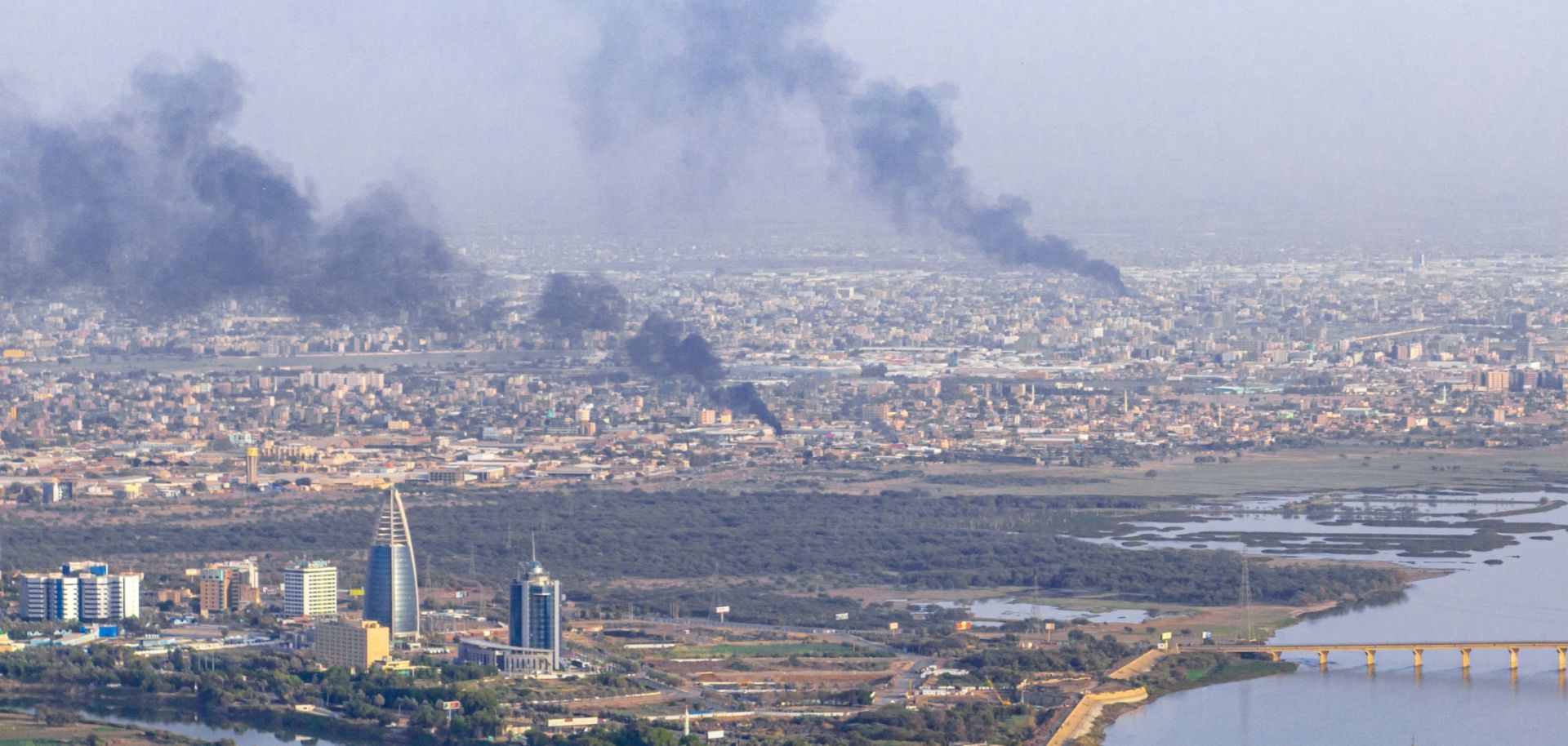
Following the Sudanese Armed Forces' capture of Khartoum, fighting will likely escalate around the city of El Fasher as the rival Rapid Support Forces seeks to consolidate control over Darfur, which will heighten the risk of a violent spillover into neighboring Chad. On March 26, Commander in Chief of the SAF Abdel Fattah al-Burhan announced that the army had recaptured the capital city of Khartoum from the paramilitary RSF. This came amid sustained gains by the SAF in and around the city in recent weeks, which prompted the RSF to withdraw its forces to the west of the Nile River in late March. Still, RSF leader Mohamed Hamdan ''Hemedti'' Dagalo insisted on March 30 that the group had tactically repositioned outside Khartoum and vowed to continue fighting the SAF. Since the RSF's withdrawal from Khartoum, clashes between the two sides have continued in the capital's twin city of Omdurman, located on the opposite bank of the Nile. Moreover, RSF Deputy Commander Abdel Rahim Hamdan Daglo, Hemedti's brother, has threatened to attack Sudan's Northern and River Nile states, with unconfirmed reports from local media outlets indicating the SAF is targeting RSF gatherings to the west of the locality of Al Dabbah in Northern state.
- Sudan's civil war broke out in April 2023 amid disagreements between the SAF and RSF over the timeline by which the latter would integrate into the army. Former Sudanese President Omar al Bashir established the RSF, which mainly comprises Janjaweed militias — predominantly Arab fighters who were instrumental in al Bashir's campaigns against Darfuri rebels during the 2000s.
- Since the start of the civil war, an estimated 150,000 people have been killed, while over 12.6 million others have been displaced. More than 3.8 million people have fled the country, including over 1.5 million to Egypt, 1.1 million to South Sudan and 770,000 to Chad.
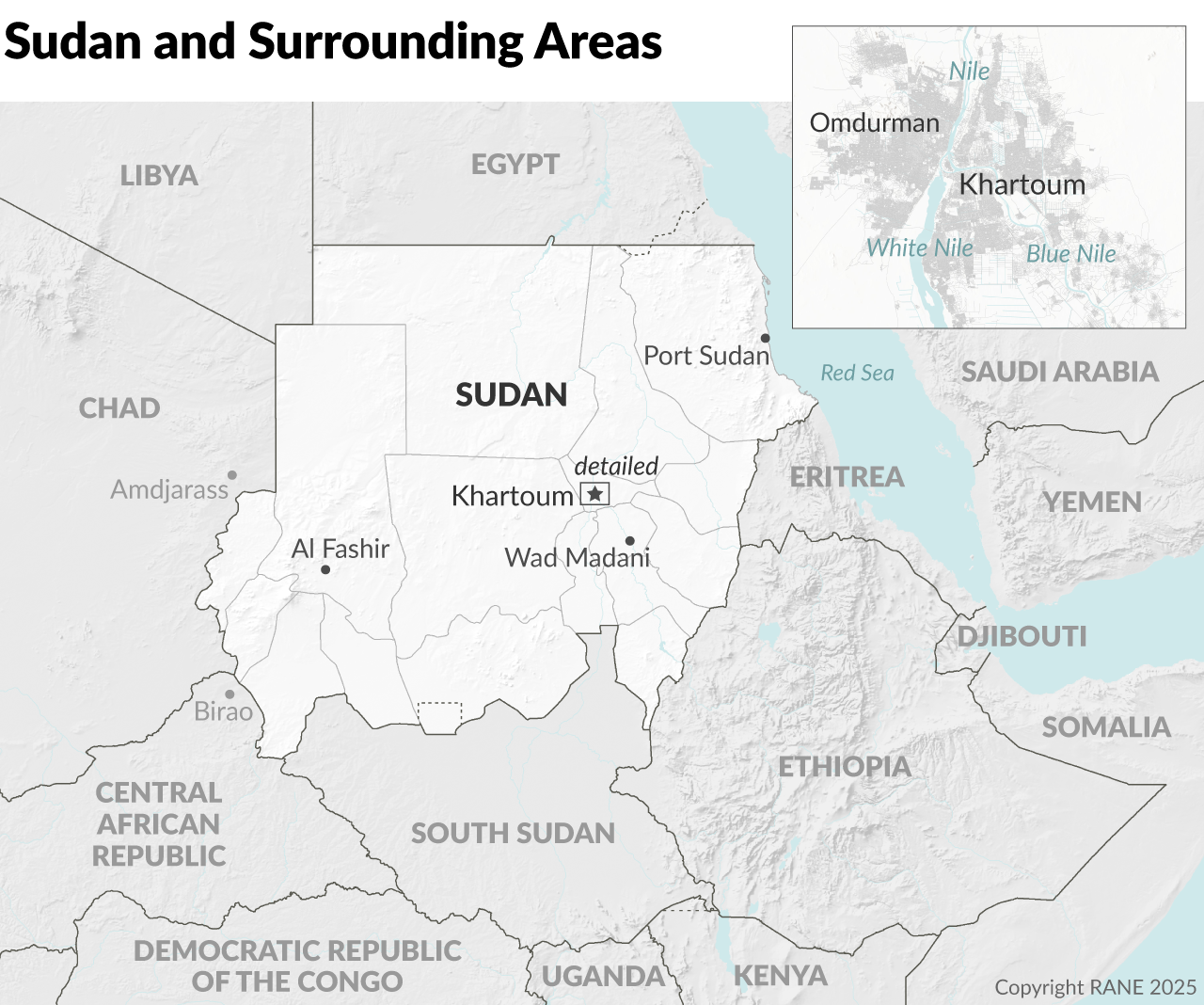
The SAF's capture of Khartoum marks a turning point in Sudan's nearly two-year civil war that will enable the army to shore up its domestic and international support, but a resolution of the conflict remains unlikely in the short term as the RSF likely redoubles its efforts to seize El Fasher in Darfur and could extend northward. The SAF's capture of Khartoum comes amid a string of RSF military defeats in southeastern Sudan and broadly limits the paramilitary group's activity to the west of the Nile. Fresh gains against the RSF will enable the SAF to maintain steady support from its foreign patrons, namely Russia and Iran. Moreover, its consolidation of control over the capital is a symbolic victory that will help it position itself as Sudan's sole legitimate government. To that end, the SAF will likely announce the formation of a technocratic government in the next few weeks or months. This would also help it better administer the capital and eventually revive the use of its heavily damaged airport to enable shipments of military supplies, which could facilitate the flow of humanitarian aid into central Sudan. Despite the RSF's severe setback, Hemedti's defiance suggests that the group is unlikely to sue for peace in the next few months. Instead, the RSF will likely double down on efforts to seize El Fasher, the last major city held by the SAF in Darfur, as part of efforts to consolidate its control over western Sudan. Securing control of El Fasher will now be all the more important for the paramilitary group, as a failure to make fresh territorial gains would raise the likelihood of the United Arab Emirates halting its support for the group and striking an agreement with the SAF that could curb UAE weapons supplies to the RSF in exchange for al Burhan cracking down on Islamist factions within the SAF coalition. Reports of the RSF gatherings west of the locality of Al Dabbah suggest that clashes are now more likely to erupt in Sudan's north, which has so far been spared from significant violence. However, launching a large-scale offensive in the region would prove challenging for the RSF and risk overextending its supply lines. Instead, a northward push by the RSF is more likely to be limited and aimed at distracting the SAF away from El Fasher.
- The SAF and the United Arab Emirates expressed their openness to Turkey-mediated talks in late December 2024 and January. However, no public reports indicate that talks between the two sides have begun, and the SAF-backed government filed accusations of ''complicity of genocide'' against the United Arab Emirates before the International Court of Justice on March 6, suggesting that little progress has been made on de-escalating tensions between the two sides.
The SAF will likely shift its focus toward lifting the siege of El Fasher, drawing the civil war's epicenter westward and thereby increasing the likelihood of a violent spillover into neighboring Chad, which could prompt N'Djamena to strengthen security cooperation with the RSF. Following its capture of Khartoum and consolidation of control over the capital region, the SAF will likely shift its focus westward in the coming months, with the goal of lifting the RSF's siege on El Fasher and preventing the paramilitary group from consolidating its position in western Sudan. While RSF operations in northern Sudan risks disrupting and/or delaying the SAF's westward push, the battle for El Fasher will likely play a pivotal role in Sudan's future, as the RSF's capture of the city would raise the prospect of a de facto partition of the country. Conversely, the SAF's ability to lift the siege on the city — a credible prospect given the SAF's renewed momentum — would deal a crushing blow to the RSF and could result in a fragmentation of the paramilitary group. The SAF's race to lift the siege on El Fasher will highlight Chad's pivotal role as a key conduit for the United Arab Emirates' military support to the RSF, and SAF Deputy Commander in Chief Lt. Gen. Yasser al-Atta has already warned that Chad's N'Djamena and Amdjarass airports were legitimate military targets. As it advances westward, the SAF will thus become more likely to strike military sites in Chad as part of efforts to disrupt RSF operations and/or pressure N'Djamena to curb weapons transfers to the paramilitary group. Moreover, many opponents to Chadian President Mahamat Deby Itno have joined the ranks of the SAF and its allies, and SAF commanders could encourage these fighters to launch attacks into Chad to disrupt RSF supply lines. This means the SAF's push into western Sudan will increase the likelihood of a violent spillover into Chad, making it increasingly challenging for Deby to maintain his policy of positive neutrality vis-a-vis the RSF. Given these risks, Chad may prove willing to curb weapons transfers to the RSF, especially amid growing indications that the United Arab Emirates is looking to expand its weapons supply routes through the Central African Republic and potentially South Sudan. However, hostile SAF activity within Chadian territory would also increase the likelihood of N'Djamena expanding security cooperation with the RSF to secure its eastern border.
- The Zaghawa community lives across the Sudan-Chad border and holds significant influence in Chad, especially in the military. However, up to 3,000 Chadian Zaghawa fighters have joined the SAF and its affiliates over concerns that the RSF would attack the Zaghawa community, as the Janjaweed did in the 2000s.
- A prominent Chadian Zaghawa figure fighting alongside the SAF in Sudan is Ousmane Dillo Djerou, the brother of Deby's opponent Yaya Dillo, whom Chadian security services killed in February 2024. Djerou has refused to rule out removing Deby by force.
- On March 6, the United Arab Emirates and the Central African Republic signed a Comprehensive Economic Partnership Agreement. Sources speaking to Jeune Afrique said Emirati officials are looking to use the country's airports of Bangui and Birao to provide military support to the RSF.
