
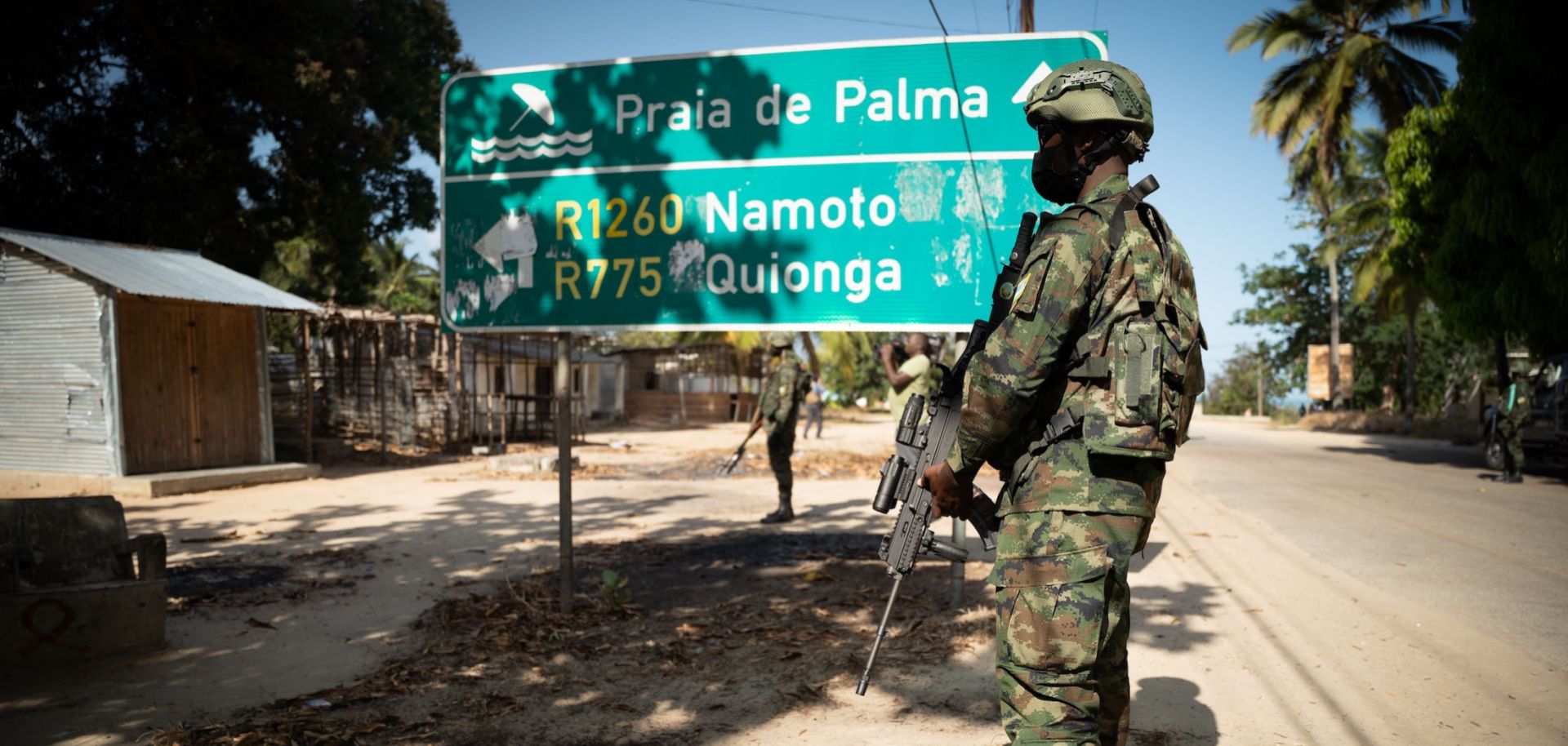
Rwanda’s growing role as a security provider via military deployments in sub-Saharan Africa seeks to enhance its regional political and economic influence, but entails risks that could undermine its operations and reputation. Over the past two decades, Rwanda has expanded its military deployments at multilateral, bilateral and unilateral levels, consolidating its reputation for deploying battle-hardened troops across several countries in Africa, including Chad, Liberia, Cote d’Ivoire, Central Africa Republic, Mali, Mozambique, South Sudan and Sudan. Most recently, on Nov. 18, the European Council approved an additional 20 million euros (approximately $20.8 million) to support the Rwanda Defence Force mission in Mozambique's northern Cabo Delgado province aimed at combating an Islamic State-linked insurgency. This funding, combined with 20 million euros provided in 2022, is earmarked for a variety of support, including equipment and airlift costs. The approval underscored Rwanda's prominent role as a pivotal security provider in Africa, championing the principle of "African solutions for African problems,” an approach often backed by Western nations as a favored alternative to large-scale Western peacekeeping efforts. However, while the aforementioned deployments have been at the invitation of the respective host governments and funded by them, Rwanda has also been accused of illegally having troops in the Democratic Republic of Congo, where they are allegedly collaborating with the March 23 Movement (M23) rebel group in the eastern part of the country. Despite these allegations, which Rwanda has consistently denied, the country continues to position itself as a key player in regional security efforts.
- In December 2022, Rwanda’s then-defense minister told a parliamentary committee that Rwanda had approximately 73,700 troops deployed across Africa, though this number is now likely closer to 90,000.
- According to U.N. experts, Rwanda has between 3,000 to 4,000 troops in eastern Congo operating alongside the M23, a primarily Tutsi-led rebel group.
- As part of its current strategy, Rwanda began deploying troops abroad in 2004 under the now-defunct African Union Mission in Sudan (AMIS), which was established by the African Union to address the crisis in Sudan’s western Darfur region.
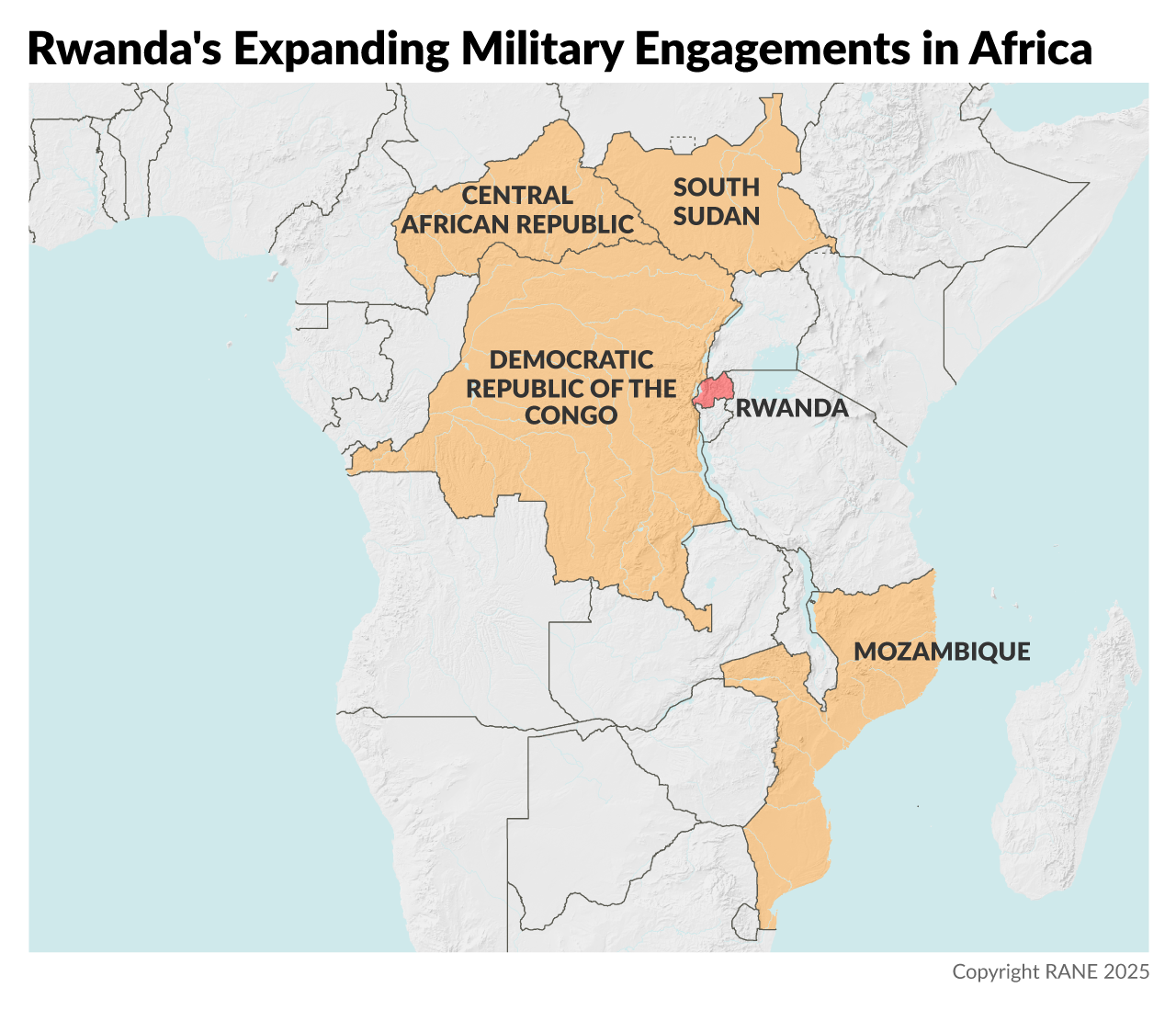
Rwanda's alleged intervention in Congo is designed to prevent internal instability and address regional security threats while also furthering Kigali’s economic strategy, but this has raised tensions with Congo and Uganda. On a domestic level, Rwanda’s immediate priority is to stabilize the nation and prevent any form of future instability. The country’s emphasis on domestic stability first materializes through its approach to eastern Congo, where radical Hutu armed groups linked to the 1994 Rwandan Genocide against the Tutsi, such as the Democratic Forces for the Liberation of Rwanda (FDLR), established a foothold following their exit from Rwanda. This row — rooted in historical grievances, security threats and regional power struggles — drives Rwanda's military posture and strategic decision-making. Rwanda’s unilateral military intervention in the Congo and its ongoing support for the M23 rebel group are partly aimed at countering these security threats and preventing instability from spilling across its borders. Rwanda’s actions also align with Kigali’s broader economic strategy, seeking to maintain access to the valuable minerals and other resources present in the Congo. However, this has brought Kigali into conflict with Kinshasha, which has exacerbated mistrust between the two neighboring nations, with Congo leveraging regional and international platforms to condemn Rwanda's actions. Rwanda’s relations with Uganda have also been fraught with political and military tensions, with both nations intermittently accusing each other of supporting insurgent groups. In particular, Rwanda’s approach to eastern Congo has at times put it at odds with Uganda, as Kampala prioritizes efforts against the Islamic State-linked Allied Democratic Forces (ADF), which has previously carried out attacks in the country, including the capital. This dynamic complicates Kampala and Kigali’s military strategies, as both countries share security threats in the Congo, such as armed groups targeting their borders. However, their competing political and economic interests create friction, leading to overlapping operations driven by their own strategic goals rather than a collaborative approach.
- According to the Financial Times, Congo has claimed it loses nearly $1 billion annually in minerals — gold, tin, tantalum and tungsten — that are illegally smuggled into Rwanda. Congo has reiterated its demand for international sanctions to be imposed on the Rwandan government in response.
- Rwanda has previously accused Uganda of harboring anti-Rwandan groups like the Rwanda National Congress (RNC) and FDLR by aiding their recruitment and attacks, detaining and torturing Rwandan nationals on espionage charges, collaborating with dissidents to destabilize Rwanda, and supporting opposition figures hostile to its government. Rwanda also accuses Uganda of undermining its regional influence and economic interests, particularly in Congo. Conversely, Uganda has accused Rwanda of infiltrating its intelligence systems, targeting Rwandan exiles in Uganda, conducting unauthorized cross-border operations, spreading propaganda to discredit Uganda, and backing opposition groups to destabilize President Yoweri Museveni’s government.
Rwanda will likely continue deploying troops abroad to strengthen its role as a security provider, enhance regional stability and protect economic and other strategic interests. Rwandan forces’ reputation for discipline, effectiveness in stabilizing volatile regions and extensive experience in post-conflict reconstruction make them seem highly reliable for complex security missions. Given this, Rwanda will likely continue deploying troops abroad, primarily through bilateral and multilateral engagements. This strategy aims to further enhance Rwanda’s status as a security provider, bolster regional stability and promote business activity. While its current deployments are largely focused on nearby countries, such as the Central African Republic, Rwanda’s willingness to deploy to more distant areas with strategic importance signals broader ambitions. For instance, Rwanda and Benin have held talks over the possible deployment of Rwandan troops in northern Benin where jihadists affiliated with al Qaeda and Islamic State frequently conduct attacks. Rwanda’s choice of bilateral deployment locations is also likely to continue aligning with economic opportunities. For instance, in the Central African Republic, Rwandan troops are the largest contributors to the U.N. peacekeeping mission in the country. In 2021, Rwanda also deployed troops bilaterally to repel a coalition of rebels attempting to seize the country’s capital of Bangui. In recognition of these significant contributions, the Central African Republic government has granted large mining concessions and other commercial projects to Rwanda, managed by Crystal Ventures, a holding company owned by the ruling Rwandan Patriotic Front party. With these investments, Rwanda will likely also leverage its soft power to engage with governments in host countries, helping to strengthen institutions and potentially broker peace deals to safeguard stability, promote long-term development and protect its own interests. This is being done in the Central African Republic, where since 2021 Rwanda has been involved in attempts to revive the country’s peace process, in partnership with Angola. Additionally, Rwanda has been helping strengthen the Central African Republic’s state institutions since 2019, providing technical advice alongside military support, while also aiding in reforms like civil service and public finance. Overall, Rwanda’s enhanced profile from these engagements may help it mitigate criticism of some of its more controversial troop deployments in Africa, chiefly its alleged intervention in eastern Congo. Rwanda’s active role in peacekeeping missions will likely continue to enable it to position itself as a critical security provider, balancing regional security interests with a broader reputation for stability across Africa.
- According to Crisis Group, a think tank that conducts research and analysis on conflicts, there are currently more than 100 Rwandan companies registered in the Central African Republic, a significant increase from the roughly 20 registered in 2019. These businesses operate across various sectors, ranging from the production of consumer goods like mineral water and yogurt to investments in transport, logistics, hospitality, real estate and public infrastructure projects.
- In Mozambique, French oil major TotalEnergies also contracted Crystal Ventures to provide security for its liquefied natural gas project. Additionally, the Financial Times revealed that TotalEnergies hired another firm linked to Rwanda’s ruling party to construct a solar plant for the same project.
Nonetheless, Rwanda’s expanding military and economic presence abroad faces growing risks, including local resentment, skirmishes with other armed groups and misinformation campaigns, which could hamper its operations, reputation and regional influence. While Rwanda's past and current multilateral and bilateral deployments abroad have generally been successful — attributed to factors such as rapid deployment capabilities, alignment with host country goals and a proven track record in the host nations — emerging risks threaten to complicate its operations, reputation and strategic goals. To begin with, the growing economic influx of Rwandan businesses in host countries such as the Central African Republic may trigger resentment and fuel anti-Rwandan sentiments among local populations. If this trend continues, it risks creating a hostile operating environment for both Rwandan troops and commercial ventures in places such as Mozambique, where a similar trend could emerge. Consequently, cooperation with local residents may diminish, making Rwandan military deployments more challenging and increasing the likelihood of targeted attacks on Rwandan forces or business interests. Moreover, such resentment could be further exploited by external actors, particularly Russian paramilitaries, whose primary motivation in the Central African Republic is securing lucrative mining concessions and extending Russian influence. Russian paramilitaries are already suspected of running misinformation campaigns aimed at discrediting Rwanda’s role and destabilizing its partnerships in the Central African Republic, suggesting how such efforts to undermine Rwanda’s military presence could increase in the future elsewhere. Similarly, in Mozambique, anti-Rwandan sentiment could facilitate recruitment by Islamic State-linked militants, who are adept at capitalizing on local grievances and anti-foreigner narratives to bolster their ranks. In addition, Rwanda’s expanding presence in conflict zones increases the risk of skirmishes in countries where both Rwanda and other armed groups are operating. For example, there have already been reports of Russian paramilitaries blocking Rwandan convoys transporting Rwandan miners in the Central African Republic. On another front, deployments to increasingly risky areas, such as northern Benin, amplify the possibility of further Rwandan troop casualties. Should this occur, domestic discontent in Rwanda may rise, particularly if the Rwandan public begins to perceive the costs of these operations as outweighing their benefits. Finally, collaborations with local forces accused of extortion or human rights abuses, as observed in Mozambique, could further undermine Rwanda's reputation and credibility, as these associations risk drawing condemnation and damaging Rwanda's image as a responsible security provider.
- According to ACLED, some business owners in the Central African Republic claim they are disadvantaged compared with Rwandan businesses, which they argue benefit from privileges due to Rwanda’s close ties with their country’s presidency.
