
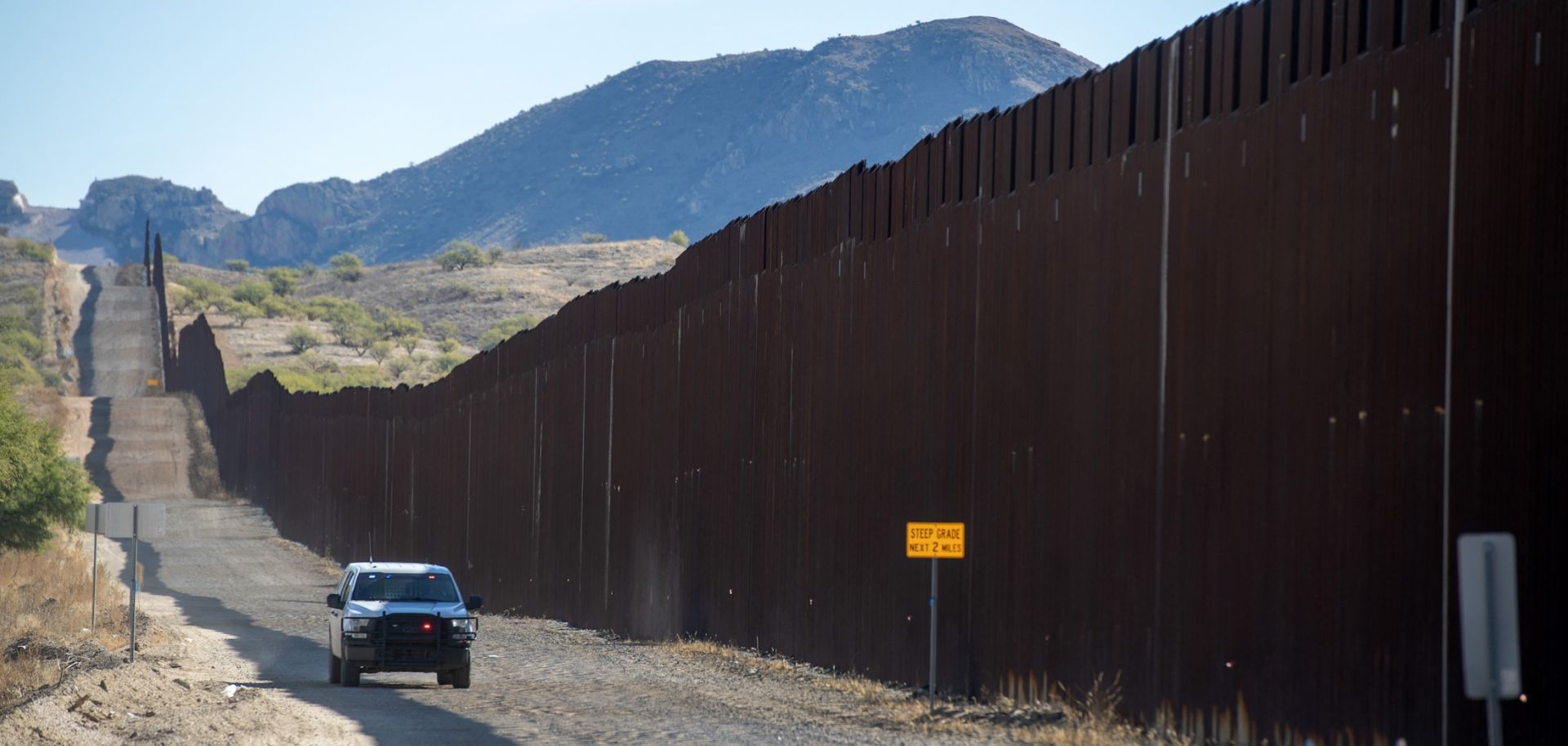
U.S. President-elect Donald Trump's promises of mass deportations and trade barriers will likely fuel unemployment and inflation in some Latin American countries, deteriorating socio-economic and security conditions; and while the Trump administration may provide political support to like-minded governments in the region, this is unlikely to substantially impact U.S. investment decisions. Trump's victory in the Nov. 5 U.S. presidential election has triggered questions across Latin America about what his policies for the region will look like. During his first term in office, Trump's Latin America policies focused primarily on three areas: immigration, trade and ideology. On immigration, Trump sought to further secure the U.S.-Mexico border (including by proposing to build a wall), and also engaged with countries in the region to reduce migrant flows. On trade, the Trump administration renegotiated NAFTA into the U.S.-Mexico-Canada Agreement and imposed tariffs on steel and aluminum imports from countries like Brazil and Argentina. And in terms of ideology, Trump was very critical of leftist governments in the region, particularly in Venezuela and Cuba. His 2024 presidential campaign suggests he will focus on the same issues in his second term. For one, Trump has repeatedly promised mass deportations and reduced illegal border crossings. On Nov. 4, he also said his first call in office would be to his Mexican counterpart Claudia Sheinbaum to inform her that if Mexico does not stop the ''onslaught of criminals and drugs'' coming across the southern U.S. border, he will impose a 25% tariff on all Mexican exports to the United States. And at the Republican National Convention in July, Trump criticized El Salvador's President Nayib Bukele, claiming that the decline in the Central American country's homicide rate was a result of El Salvador ''sending their murderers to the United States.''
- The population of undocumented immigrants in the United States ranges between 10.9 million to 16.8 million, according to different third-party estimates.
- According to a YouGov poll, immigration was among the top concerns for 70% of Republican voters in the 2024 election, second only to the economy, with border enforcement being the main policy associated with the topic.
On immigration, the incoming Trump administration will likely adopt a transactional approach that pressures Latin American countries to curb migrant flows into the United States or face economic consequences. In his second term, Trump will almost certainly threaten to impose tariffs or cut aid to the countries that undocumented migrants are either fleeing from or transiting through, including Colombia, Venezuela, Central American nations and Mexico. Pragmatic presidents in the region, such as Mexico's Sheinbaum and Panama's Jose Raul Mulino, as well as those with a heavy-handed approach to security and social issues, like El Salvador's Bukele, will likely cooperate with a potential U.S.-led framework or adopt domestic measures to avoid confrontation with the White House. However, budget constraints, limited institutional and operational capacity and weak coordination among these countries will likely undermine anti-migration efforts in the region, meaning that while illegal crossings at the U.S.-Mexico border may decline, undocumented migrants will remain a chronic issue in the coming years. On the other hand, left-leaning governments, such as that of Gustavo Petro in Colombia, or leftist autocratic regimes, including those in Cuba, Nicaragua and Venezuela, are highly unlikely to acquiesce to Trump's demands and will almost certainly resort to a rhetorical confrontation to rally up their domestic bases, claiming the U.S. president's threats violate their sovereignty.
- U.S. Customs and Border Patrol encounters with migrants crossing the Mexican border reached an all-time monthly high in December 2023, at 301,981 encounters. As Mexico adopted measures to curb migration, the numbers fell to 176,195 in January; after U.S. President Joe Biden signed an executive order restricting asylum requests at the border in June, encounters further declined to 101,790 in September, the lowest level since February 2021.
- The Biden administration requested nearly $2.5 billion in foreign assistance for Latin America and the Caribbean in the fiscal year 2024, a 20.9% increase compared with the fiscal year 2023.
Trump's pledge to send millions of illegal immigrants back home could undermine economic, social and security conditions in countries of origin, namely Mexico and some Central American and Caribbean nations. Trump will almost certainly not be able to fulfill his mass deportation promise given the financial and logistical aspects it entails. However, if he succeeds in expatriating a large number of illegal immigrants, it could significantly impact countries across the region, especially those with large numbers of undocumented citizens currently living in the United States, whose remittances provide a critical source of revenue. As people are forced to return home, these countries of origin could see a rise in unemployment and a contraction in purchasing power stemming from reintegration challenges and the loss of worker remittances. The consequent worsening of living conditions could, in turn, indirectly lead to an increase in common and property crime in the medium-to-long term, while in the longer term, a higher number of non-working adults could facilitate organized criminal groups' recruitment efforts, which would likely result in an increase in violent crime, drugs and arms trafficking, and turf wars in specific regions.
- According to the Pew Research Center, Mexicans are by far the largest group of unauthorized migrants living in the United States, totaling around 4 million in 2022, followed by Salvadorans (750,000), Guatemalans (675,000) and Hondurans (525,000).
- Remittances from workers abroad accounted for 4% of Mexico's GDP in 2023 (or $63.3 billion). According to a study by the University of California Los Angeles, Mexico could suffer a 16.3% drop in GDP by 2028 if Trump fulfills his promise of expatriating all illegal migrants from the United States. Even if just a small share of Trump's planned deportations materializes, any decline in remittances could impact rural communities in Mexico's Guerrero, Michoacan, Oaxaca and Chiapas states, where many people rely on money sent by their family members working in the United States.
- Trump's migration policies could also take a significant toll on the economies of El Salvador, Guatemala, Haiti, Honduras, Jamaica and Nicaragua, which, compared with Mexico, are even more reliant on remittances from the United States, with such remittances accounting for 19-26% of these countries' GDPs.
U.S. interest rate hikes and a stronger dollar could drive up prices in Latin America, forcing countries to implement strict monetary policies to control inflation, while South American exporters may start sending more of their commodities to other markets like China and Europe. On the campaign trail, Trump threatened to impose a blanket 10-20% tariff on all U.S. imports. If Trump follows through on this threat, the increased cost of foreign goods — combined with Trump's promised tax cuts — will likely increase inflation in the United States, which in turn will result in higher U.S. interest rates and a stronger U.S. dollar globally. This will likely heighten prices across Latin America (as elsewhere) and diminish people's purchasing power, especially where a stronger dollar makes imported inputs more expensive. In response, countries with independent central banks, such as Brazil, Chile and Costa Rica, would likely adopt strict monetary policies to maintain the interest rate differential with the United States and fight inflation, creating a restrictive environment for economic growth. Trump's threatened tariffs could undermine Latin American exports of grains, beef and minerals into the United States, which would likely prompt the region's large commodity exporters — like Argentina, Brazil and Chile — to reorient their trade flows. This reorientation would be further facilitated by other countries' efforts to impose retaliatory tariffs on the United States or otherwise reduce their exposure to U.S. trade, given Trump's tendency to resort to economic coercion to obtain geopolitical goals. To offset the loss of U.S. exports, China, the European Union and countries across Asia and the Middle East could seek to boost their purchases of Latin American primary goods. But while sales to these trade partners may increase in volume, a stronger dollar would translate to lower prices, resulting in a net negative environment in the medium-to-long term.
- In 2018, China introduced a 25% tariff on imports of U.S. soybeans, beef, pork, wheat, corn and sorghum, retaliating against duties imposed by then-President Trump on $300 billion worth of Chinese goods. Since then, Beijing has increased grain imports from Brazil, Argentina, Ukraine and Australia.
- In 2018, China's grain imports from the United States totaled $27 billion, while those from Brazil stood at $24 billion; in 2023, China's purchases of U.S. grain reached $32 billion, while its purchases of Brazilian grain jumped to $59 billion. In regards to soybeans, only 18% of China's imports came from the United States between January and September 2024 (compared with 40% in 2016), while 76% of Chinese soybean imports came from Brazil (compared with 46% in 2016). Brazil also overtook the United States as China's main corn supplier in 2023.
Finally, Trump's return to the White House will likely boost Latin American right-wing politicians, but ideological affinity is unlikely to interfere with U.S. investment or business decisions. Trump's personalistic style means he will probably have good relations with like-minded leaders, such as Argentina's libertarian president Javier Milei. Conversely, the current left-wing presidents of Brazil, Chile and Colombia are unlikely to develop a close relationship with Trump, though their far-right and right-wing challengers will seek to leverage Trump's presidency to energize their base ahead of upcoming presidential elections in all three countries. Although the Trump administration is unlikely to focus on human rights violations, it may resort to additional economic sanctions or support for dissidents to weaken leftist autocratic regimes in Cuba, Nicaragua and Venezuela given their close ties with U.S. geopolitical adversaries like China, Iran and Russia. Regarding Venezuela, Trump would strongly oppose any attempts by President Nicolas Maduro to invade Guyana, especially given U.S. companies' interests in the oil-rich country, but he may be open to negotiating with Caracas some sanctions relief in exchange for Venezuelan oil supplies to diversify U.S. sources. Still, while Trump's relations with Latin American leaders may impact ad hoc government decisions and policies, such as aid or military cooperation, this is unlikely to result in a broad realignment of how U.S. investors and companies operate across Latin America, as private sector players will likely remain focused on the opportunities stemming from the region's large consumer market, abundant natural resources, competitive labor costs and relatively stable political environment (when compared with other areas around the world).
- After Trump was declared the winner of the U.S. presidential race, Argentina's dollar bonds rose 2.5% in the first hours of trading on Nov. 6, while the country's risk index dropped to its lowest level in five years. Argentine President Milei has backed Trump for years and will meet with Trump during the Conservative Political Action Conference (CPAC) at his Mar-a-Lago resort in Florida from Nov. 14-16. The Milei administration, as well as investors, expect Trump will use Washington's influence over the International Monetary Fund in Argentina's favor, potentially unlocking more funds for Buenos Aires, although other countries with voting rights in the IMF would also need to approve the terms of any new credit lines.
- U.S. Senator Marco Rubio, who Trump will reportedly appoint as Secretary of State, is a son of Cuban immigrants and has consistently condemned dictatorships in Latin America (namely Venezuela, Cuba and Nicaragua). Rubio has also criticized leftist leaders in the region, such as Brazil's President Luiz Inacio Lula da Silva and Colombia's President Gustavo Petro. A hawk on China, Rubio will likely seek to deter growing Chinese influence in Latin America if he is appointed Washington's top diplomat.
