
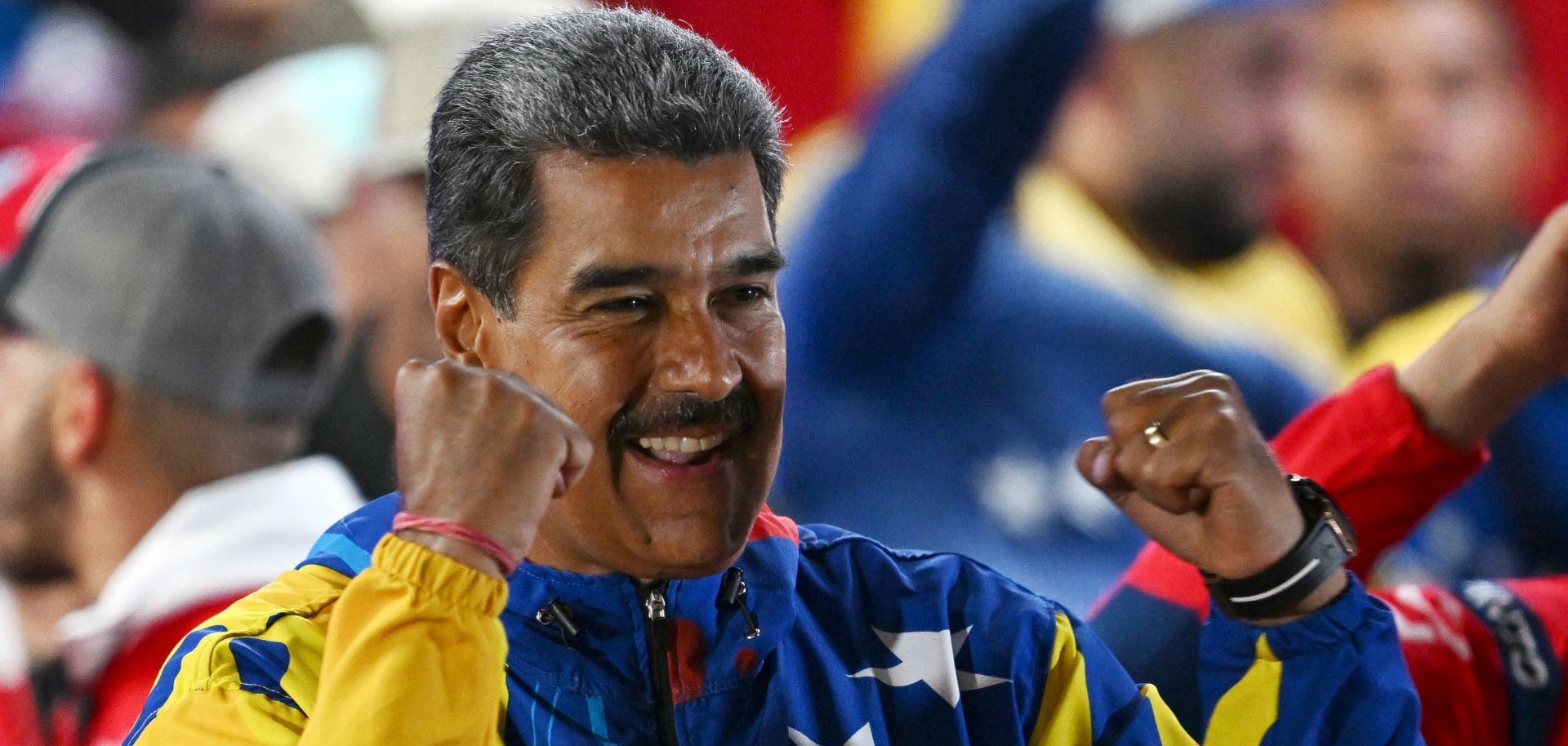
Electoral authorities declared President Nicolas Maduro won the Venezuelan presidential election amid vast indications of fraud and pushback from the opposition and the international community, which will fuel political volatility, U.S. sanctions and risks of unrest in the coming months. Maduro won his third term with 51.2% of the vote while main opposition candidate Edmundo Gonzalez Urrutia received 44.2%, according to Venezuela's National Electoral Council (CNE, in Spanish), which Maduro's government controls. Opposition leaders denounced that their representatives had not been allowed to monitor the vote count in multiple sites, and declared Gonzalez the winner. The election took place amid multiple indicators of widespread fraud, with armed paramilitary groups (known as ''colectivos'') harassing opposition supporters, voting centers remaining open for longer than they were supposed to, and multiple blackouts, which interfered with electronic ballots, while the CNE's website remained offline for several hours. Prominent opposition leader Maria Corina Machado stated the opposition would take the necessary measures to ensure Gonzalez is declared the winner and called for their supporters to peacefully take the streets with their families. Although social mobilization from both sides did not escalate to widespread unrest on July 28, local media reported that pro-government paramilitary groups killed one man in the state of Tachira.
- Opposition leaders claim they had access to only some 40% of the voting records, which indicated Gonzalez received approximately 70% of the vote while Maduro got around 30%.
- The governments of China, Cuba, Iran and Russia congratulated Maduro while representatives from the United States, the European Union and some South American countries called for a detailed and audited count. Left-wing presidents, including those from Brazil, Colombia and Mexico, remained silent in the hours following CNE's announcement.
In the months leading up to the election, the Venezuelan government worked intensively to prevent an opposition victory. The July 28 vote was the first time the Venezuelan opposition had united around a single candidate and mobilized large crowds nationwide since Maduro's predecessor Hugo Chavez was first elected in 1999. Amid efforts from the international community to restore Venezuela's democracy, Maduro and opposition leaders signed the Barbados Agreement in October 2023 to ensure the race would be free and fair, which resulted in the partial suspension of U.S. sanctions. However, the Maduro government worked for months to prevent an opposition victory, including by banning Machado from running and making it very difficult for the millions of Venezuelans living abroad to register to vote. Additionally, several international observers were blocked from entering the country just days before the election. Following years of socio-economic deterioration and massive emigration, the opposition mobilized large crowds across the country in the weeks leading up to the vote, and most independent polls conducted before and after the election had Gonzalez leading the race by at least 30 percentage points.
- Through its control of electoral and judiciary bodies, the Venezuelan government barred several opposition candidates from running in the presidential race, with the most prominent being Machado. The government also politically persecuted opposition leaders and supporters and prevented the vast majority of the nearly 5 million Venezuelan citizens living abroad who were eligible to vote from doing so, with less than 70,000 successfully being registered before the election.
- After the Barbados agreement, the United States temporarily suspended its sanctions on Venezuela's oil, gas and mining sectors that had made it illegal for U.S. firms to do business with Venezuelan state-run enterprises. However, amid clear signs that the vote would not be free nor fair, Washington re-introduced some of those restrictions in April 2024, although it still allows some companies to operate in the country under exceptional licenses issued by the U.S. Treasury.
Disputes over the election outcome will create volatility in the coming weeks as the opposition will try to leverage international support and social mobilization to challenge the official result, while Maduro will rely on his control of the country's institutions, the armed forces and paramilitary groups to retain power, fueling unrest, increasing emigration and deteriorating the country's economy. The opposition will likely leverage the mobilization capacity it demonstrated throughout the campaign to pressure the government to release a detailed count of the vote or allow for an independent audit, as international leaders have defended. However, the Maduro government will maintain full control over the country's institutions and is highly unlikely to accept a foreign stakeholder having any role in verifying the vote count, claiming this would violate its sovereignty. Maduro is also likely to call his supporters to demonstrate and threaten an escalation of violence should anti-government protests gain momentum. As opposition leaders want to avoid violence, the situation is unlikely to escalate to widespread unrest, although isolated clashes and violent incidents may occur. Some countries will likely recognize Gonzalez as the winner and seek to sideline Maduro, but this strategy has proved insufficient in the past and is unlikely to succeed, especially as long as Maduro retains control of the military, which will remain one of the key factors in securing his place in power. Political volatility will likely prevail until at least January 2025, when the next Venezuelan administration is scheduled to take office. In the most likely scenario in which Maduro remains in office, the United States will likely introduce stricter economic sanctions in the coming weeks, and adopt an even harsher approach toward Maduro after the U.S. presidential vote in November, especially if former President Donald Trump wins. Maduro's continued rule will also probably fuel further emigration from Venezuela, creating spill-over impacts for neighboring countries. A violent crackdown on opposition protesters could trigger a harsher diplomatic and/or economic response from the United States, as well as Latin American governments. Additionally, the killing of especially vulnerable opposition supporters, such as a child or an elderly person, by the armed forces or pro-Maduro gangs during a peaceful demonstration or an assassination attempt targeting opposition leader Machado could trigger long-lasting and/or violent unrest. In the long term, a sharp economic deterioration pushing large chunks of the population further into poverty could reignite anti-government protests as well.
- More than 7.7 million people have left Venezuela over the past decade amid the country's deteriorating economic and political conditions. According to the United Nations, these Venezuelans have mostly relocated to Colombia, Peru, the United States, Brazil, Chile, Ecuador and Spain.
- The international community has previously backed efforts to oust Maduro; in 2019, several countries, including the United States, recognized then-opposition leader Juan Guaido as Venezuela's president.
